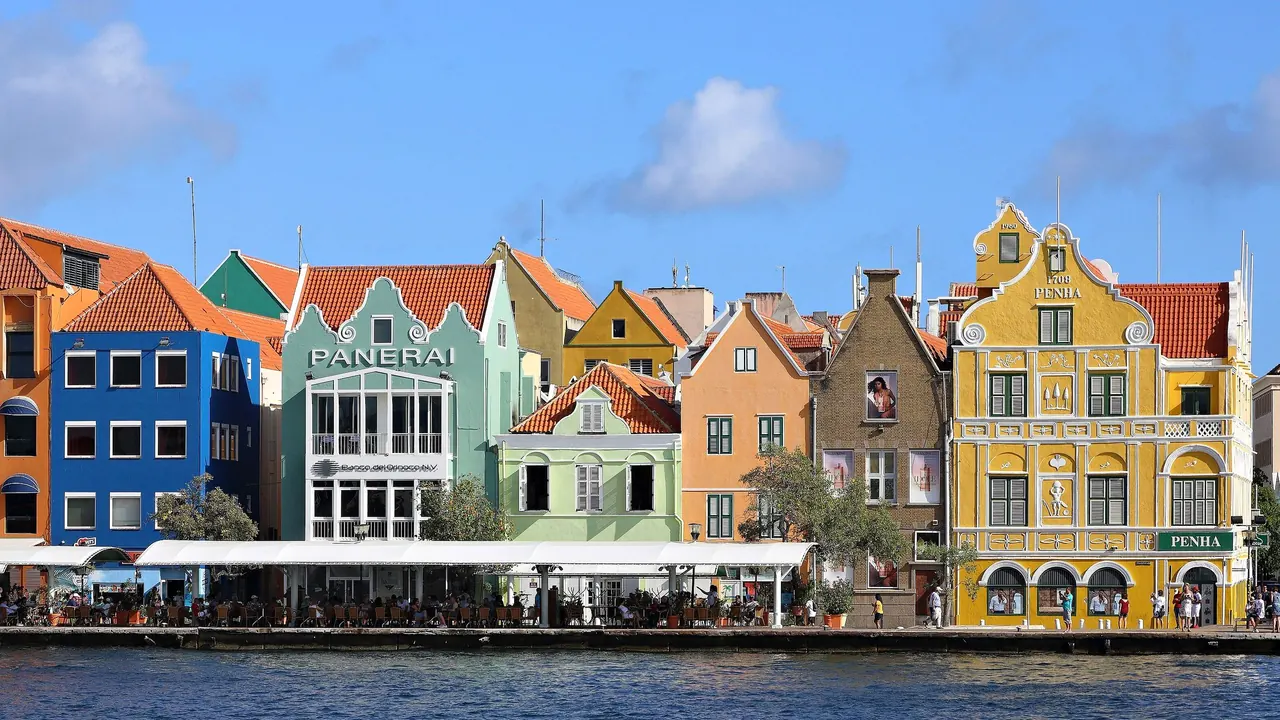
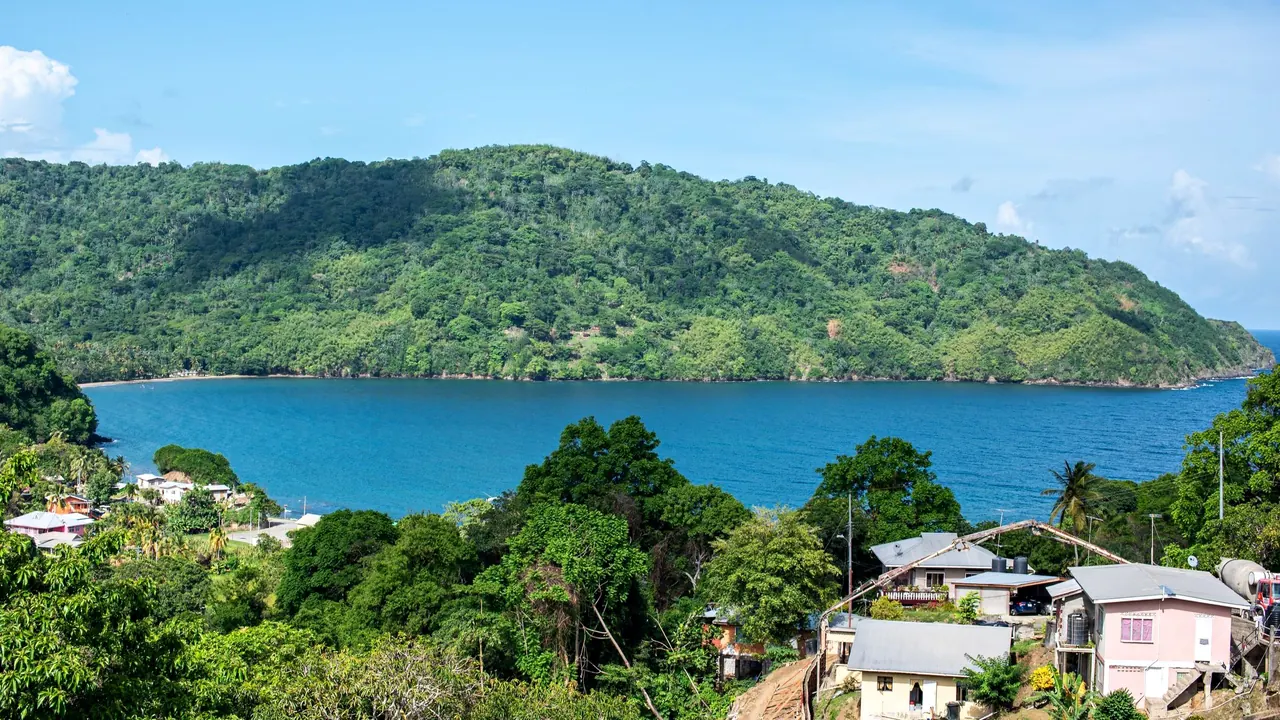
Photos: Curaçao by Martin Falbisoner, CC BY-SA 4.0, cropped; Tobago by Dominik Gryzbon, Pexels License.
Curaçao or Tobago?
Our verdict in twelve categories, each scored against the same fixed benchmark cities, and the climate month by month, so you can choose for your trip.
Choose Curaçao for
- culture and sights
- shopping
- nightlife
Curaçao suits travellers who want a town attached to their beach time. Willemstad's UNESCO-listed harbour front, the old synagogue in Punda and the Kura Hulanda museum give you a few days of real sightseeing. Pietermaai keeps the evenings going later, and the island is easier to drive around. The dry climate also makes it a safer bet for most of the year.
Choose Tobago for
- nature and the outdoors
- prices
- live music and the arts
Choose Tobago if you'd rather have green hills, rainforest trails and birdlife than cactus country and colonial streets. It's the quieter, simpler island and a little kinder on spending. It's best for people who want fishing villages, forest walks and drift dives off Speyside more than museums or a night out.
Scoreboard
Twelve categories on one fixed scale from 0 to 100. The shaded stretch is the gap between the two.
Your match
Pick a travel style or drag the sliders, and both match scores follow your weighting.
Wins on culture and sights and shopping with your weighting.
Wins on nature and the outdoors and prices with your weighting.
What matters to you?
Category by category
What the scores mean for a trip.
Beaches & swimming
Both islands have excellent warm swimming on a sheltered coast and heavy surf on the other, so the difference is the setting. Curaçao's beaches are small sandy coves cut into dry limestone on the west and south coasts, and many charge for entry and loungers. The reef is so close that a swim at Grote Knip or Playa Lagun turns into snorkelling with turtles.
Tobago's beaches feel softer and greener. The south-west has the shallow turquoise water of Pigeon Point and Store Bay, and the quiet Caribbean coast has palm-backed bays such as Englishman's Bay and Pirate's Bay, with forested hills behind instead of cactus.
Food & drink
Neither island is a food destination, and on both you eat best by eating local rather than in resort restaurants. Curaçao's Antillean cooking has Dutch roots: keshi yena and goat stobá at the shared tables of the Punda market hall, and huge plates of grilled meat from roadside trucks late at night. Pietermaai's waterfront also adds a slightly wider choice of restaurants.
Tobago's food follows Trinidad, with Indian influences: curry crab and dumpling, roti and doubles at the Store Bay food huts, and the day's catch in Castara or Charlotteville.
Culture & sights
This is where the two islands differ most. Curaçao has a real historic city. Willemstad's UNESCO-listed centre has the painted Dutch gables of the Handelskade, the Queen Emma pontoon bridge, the Mikvé Israel-Emanuel synagogue of 1732 and the Kura Hulanda museum on the slave trade. Out in the countryside there are plantation houses such as Landhuis Knip.
Tobago's history is spread thin: Fort King George and its small museum above Scarborough, Fort James and the water wheel at Arnos Vale. Half a day covers it, and you'll find more of the island's culture in its villages and churches than at any sight.
Nightlife
Curaçao has more going on after dark, though the scene is still small. Pietermaai's cocktail bars and terraces in old mansions fill up from Thursday to Saturday. The beach bars at Mambo Beach and Jan Thiel turn into weekend parties, and salsa and merengue nights draw locals and visitors alike.
On Tobago, a night out mostly means a rum punch at a beach bar near Crown Point and an early night. The one big night is Sunday School in Buccoo, a street party where steel pan gives way to soca. For a full fete season, people go across to Trinidad.
Nature & outdoors
Tobago's outdoors is richer and greener. The Main Ridge Forest Reserve, protected since 1776, has rainforest trails such as Gilpin Trace, and its birdlife draws serious birdwatchers. Little Tobago has colonies of tropicbirds, the drift dives off Speyside bring manta rays, and leatherback turtles nest on the beaches from March to August.
Curaçao's strength is almost all under water: a reef runs along the whole leeward coast, and you can dive or snorkel it straight from the shore. On land there is dry cactus scrub, the climb up Mount Christoffel, the sea caves of Shete Boka and flamingos in the salt pans.
Day trips
The difference here is one of kind: a day out from Curaçao means the sea, while from Tobago it can mean a city. Curaçao's one true excursion is the boat to Klein Curaçao, a flat uninhabited islet with a lighthouse, a long white beach and turtles. Aruba and Bonaire can only be reached by short flights, so neither works for a casual day away.
From Tobago, Trinidad is about two and a half hours by fast ferry. Port of Spain has the Queen's Park Savannah, a much bigger food scene and real city life. Otherwise you stay on the island, and the drive out to Speyside and Charlotteville takes you along more of the same quiet coast rather than somewhere new.
Good for families
Curaçao has a little more to fill a family week. In its sheltered leeward coves, children can snorkel among fish close to the sand, and the resort beaches at Jan Thiel and Mambo Beach have facilities on hand. The Sea Aquarium area, the Hato caves and an ostrich farm make good half-day outings.
Tobago is simpler. It has calm, shallow water at Pigeon Point and Store Bay, a glass-bottom boat out to the waist-deep Nylon Pool, and turtle nesting in season. Beyond that there's little made for children, and the winding roads to the north-east are tiring with small ones.
Getting around
On both islands you need a car once you leave the main town or resort strip, but Curaçao is the easier of the two. Willemstad's quarters are walkable and linked by a free ferry and the pontoon bridge. The roads are decent, and the far west end is about an hour's drive away.
On Tobago only the Crown Point area is walkable. Driving is on the left, and the narrow, steep coast road to Castara and Charlotteville makes short distances slow. Buses and route taxis serve locals rather than sightseers.
Shopping & style
Neither island is worth a trip for the shopping, but Curaçao has more to browse. Punda has jewellery, watch and perfume shops aimed at cruise passengers, Otrobanda has a waterfront shopping complex, and there's a large mall on the city's edge. Good souvenirs include chichi dolls, Dutch cheese and the orange liqueur.
Tobago has craft stalls by Store Bay and Pigeon Point and the Scarborough market for pepper sauce and cocoa. For any serious shopping you have to go to Trinidad.
Affordability
Tobago is the somewhat cheaper of two expensive islands. Car hire and resort prices are typical for the Caribbean, but you can cut costs by staying in family-run guesthouses around Crown Point or Castara, eating at food huts and buying fish in the villages.
Curaçao costs more. Beachfront resorts and restaurants charge above mid-range European prices, groceries are imported and a rental car is hard to avoid. Apartments in the west, food trucks and free public coves help, and because shore diving needs no boat, dive packages are fairly good value.
Live music & performing arts
There's little formal theatre or concert programming on either island, and the music mostly comes with festivals. Curaçao's own sound is tumba, at its loudest in the long Carnival season before Lent, and bars and hotels add live Latin, jazz and steel-band music. Tobago has steel pan, calypso and soca, the Tobago Jazz Experience in spring and the village dances and drumming of the Heritage Festival in July and August.
Wellness & relaxation
The two islands have the same small choice of treatments, a few spas in the larger resorts and not much more, so the real choice is the kind of quiet you want. On Curaçao it is dry and open. You stay in a villa or small hotel near Westpunt, with a cove a short walk away and coral to float over before breakfast, and the constant breeze keeps the heat bearable. If you like some structure to the day, Willemstad and Jan Thiel also have massage studios and yoga classes.
Tobago's calm is greener and closer to village life. In Castara or Charlotteville the day runs to the village's routine, not a resort timetable. Boats come in on the bay below forested hills, and nights are slow and end early. Apart from a couple of resort spas, a treatment on Tobago usually means a massage from a therapist on the sand at Crown Point.
When should you go?
Pick your month. The climate figures are measured averages, not a forecast.
Curaçao in July
Tobago in July
Daytime high, °C
Rainfall in the month, mm
Where the figures come from
Tobago's sunshine is measured 84 km from the centre, at Piarco International Airport, Trinidad.
Temperature and rainfall are climate normals, averaged over the years shown. Curaçao: 1991-2020 normals, Hato Airport, Curacao (10.8 km from centre). Tobago: 1991-2020 (rainfall 1981-2010) normals, Crown Point Airport, Tobago (2.8 km from centre).
Both islands are hot every month, with daytime highs never far from 30°C, and the sea is always warm enough to swim. The real difference is the rain. Where most visitors stay on Curaçao, the island is very dry from February to August and sunniest in July and August. The wet spell is short, from October to December, and peaks at 141mm in November. Late summer and early autumn are the hottest months, so walks around Willemstad are best done early in the day.
Tobago is greener because it's wetter. Around the main resort area the dry season runs from January to May, and February is the driest month at 50mm. From June the rain climbs steeply to 227mm in August, and there are noticeably fewer sunshine hours through the second half of the year. For a dry trip, go to Tobago in the first months of the year. Curaçao works from late winter right through the summer.
Which traveller are you?
On a culture and arts trip, Curaçao is the clear choice. Willemstad's gabled Handelskade, Fort Amsterdam, the sand-floored synagogue and Kura Hulanda will fill two or three days. Tobago's forts and the Arnos Vale water wheel take half a day.
For an outdoors trip, Tobago has more variety. The Main Ridge rainforest, Gilpin Trace, the motmots and hummingbirds, the seabirds of Little Tobago and the drift dives off Speyside add up to more than Curaçao's dry cactus country. Curaçao's shore diving is easier, though.
On a tight budget, your money goes a little further on Tobago. Neither island is cheap, but family-run guesthouses in Castara, the Store Bay food huts and fish bought in the villages keep costs down. On Curaçao, imported groceries, resort prices and a rental car you can hardly avoid push spending up.
Before you go
| Measure | Curaçao | Tobago |
|---|---|---|
| Official language | English, Dutch, Papiamento | English |
| Currency | Caribbean Guilder (XCG) | Trinidad and Tobago Dollar (TTD) |
| Sockets | AB120 V, 55 Hz | AB115 V, 60 Hz |
| Driving side | Right | Left |
| Time zone | UTC-4 | UTC-4 |
| Emergency number | 911 | Police 911/999, ambulance 811, fire 990 |
| Main airport | Hato International Airport (CUR)21 non-stop destinations | A.N.R. Robinson International Airport (TAB)5 non-stop destinations |
| Public holidays this year | 14 days | 12 days |
By the numbers
| Measure | Curaçao | Tobago |
|---|---|---|
| Population | 152,849 | 60,874 |
| People per km² | 344 | 203 |
| Swim season, months above 21 °C | 12 months | 12 months |
Where else could you go?
Every comparison below shares a destination with this one, so you can follow Curaçao or Tobago somewhere new.
- Bonairevs Curaçao
- Arubavs Curaçao
- Martiniquevs Tobago
- Bonairevs Tobago
- Arubavs Tobago
- Cayman Islandsvs Curaçao