Photos: Manaus by Jardelsliumba, CC BY-SA 4.0, cropped; Paramaribo by Junie609, CC BY-SA 4.0, cropped.
Manaus or Paramaribo?
Our verdict in twelve categories, each scored against the same fixed benchmark cities, and the climate month by month, so you can choose for your trip.
Choose Manaus for
- live music and the arts
- beaches
- nature and the outdoors
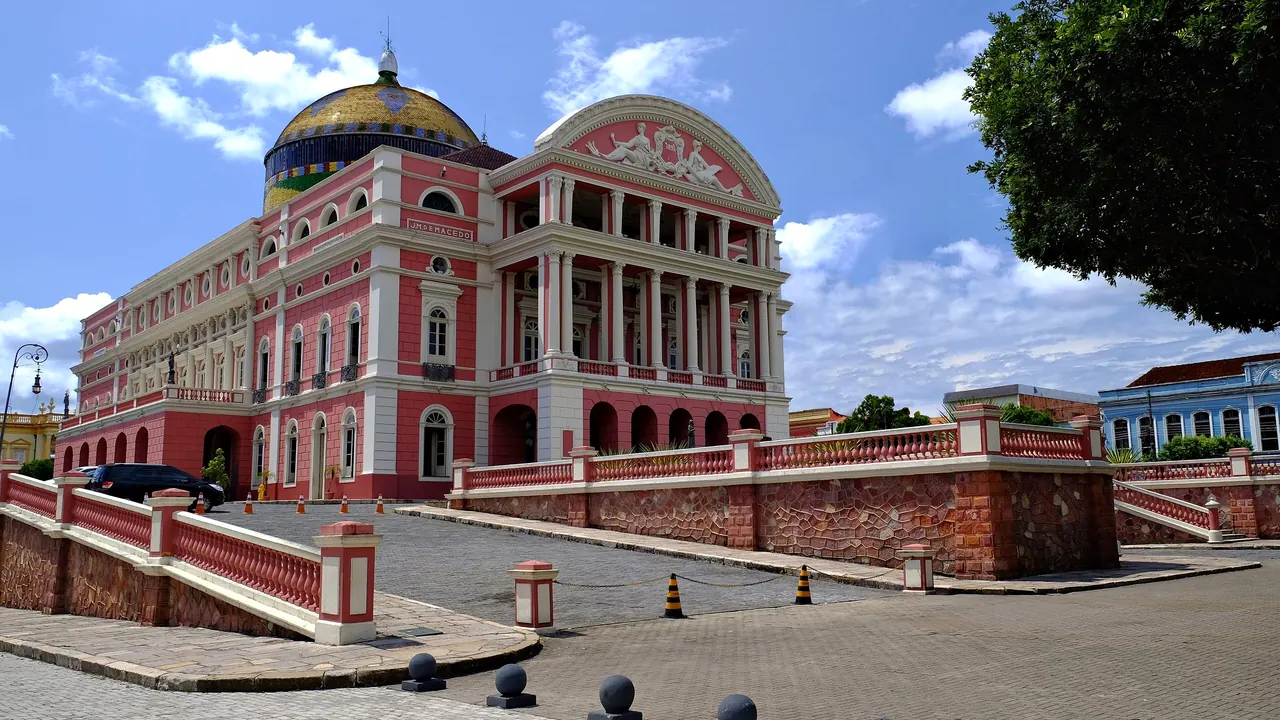
Manaus is for travellers whose real destination is the Amazon itself. The boat trips to the Meeting of the Waters, the flooded forest, the Anavilhanas islands and nights at a river lodge make up most of the trip, and the city is where you sleep before and after. The Teatro Amazonas, with an opera or a concert on its rubber-boom stage, rounds off the city part of the stay.
Choose Paramaribo for
- day trips
- culture and sights
- wellness
Paramaribo works better as a destination in its own right. Its wooden Dutch colonial centre is a pleasure to walk, the Javanese, Hindustani and Creole cooking is unusual, and plantations, forts and the ruined Jodensavanne settlement are all close enough for an easy day out. The forest here is gentler and nearer to town, which suits a varied trip more than a single deep expedition.
Scoreboard
Twelve categories on one fixed scale from 0 to 100. The shaded stretch is the gap between the two.
Your match
Pick a travel style or drag the sliders, and both match scores follow your weighting.
Wins on live music and the arts and beaches with your weighting.
Wins on day trips and culture and sights with your weighting.
What matters to you?
Category by category
What the scores mean for a trip.
Beaches & swimming
Neither city is a beach destination, but Manaus at least has somewhere to swim. Ponta Negra's river beach on the Rio Negro has a promenade and sunset views, and in the low-water months white sandbanks appear upriver around Tupé. Water quality and the season decide whether swimming is worthwhile.
Paramaribo's coast is mud and mangrove, and nobody goes into the brown sea. Swimming means driving an hour or so to the forest creeks, where dark water runs over white sand. That makes a lovely lazy day out, but it is an excursion rather than a beach.
Food & drink
Both cities eat well and cheaply in their own way, and the difference is in where the cooking comes from. Manaus cooks from the river and the forest: tambaqui ribs, pirarucu, tacacá broth with tingling jambu leaves, and Amazon fruits such as cupuaçu and camu-camu at the Adolpho Lisboa market.
Paramaribo's table comes from its peoples: Javanese bami and saoto soup, Hindustani roti, and Creole pom and peanut soup, with Chinese kitchens filling the gaps. It offers a little more variety from one meal to the next. In both cities the upmarket tier is thin.
Culture & sights
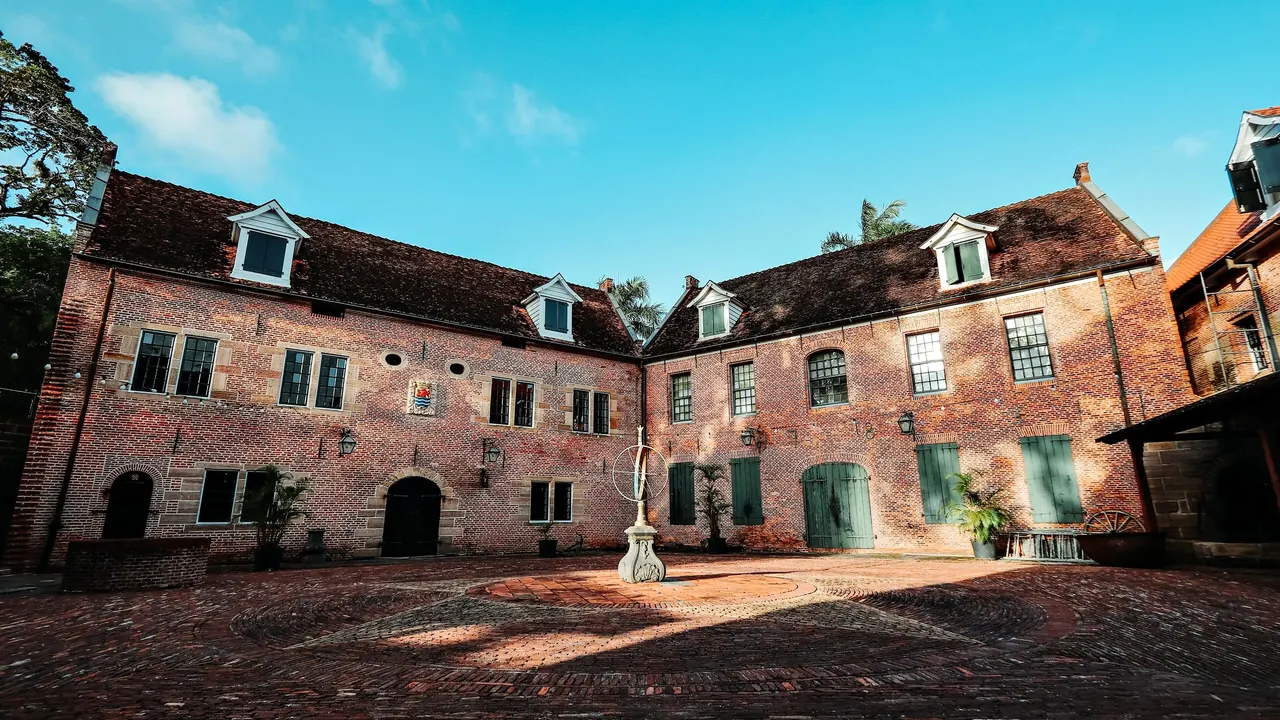
Paramaribo has the slightly more rewarding sightseeing because its heritage is a whole townscape. The UNESCO-listed grid of white wooden houses, the vast wooden cathedral, and the synagogue and mosque standing side by side make the walk itself the attraction, and Fort Zeelandia adds a museum.
Manaus has one show-stopper in the Teatro Amazonas, along with a cluster of rubber-boom buildings such as the Rio Negro Palace and the iron market hall. Around them the old centre is shabby and busy. Each city's sights take a day or two.
Nightlife
Going out is casual and local in both cities, and both need taxis between scattered venues. Manaus leans towards plastic-table bars in Adrianópolis and Vieiralves and dance halls playing forró and boi-bumbá, though jungle-bound travellers tend to call it an early night.
Paramaribo has more of a dance-club side, with kaseko, dancehall and Latin music at weekends, and early evenings on the Waterkant with a beer and the sunset over the river. Casinos also play a part. Midweek is quiet in both.
Nature & outdoors
Manaus is one of the great wildlife gateways of the world, and the difference shows. Boats from its port reach the Meeting of the Waters, channels full of giant water lilies, pink river dolphins and the island maze of the Anavilhanas, and the forest changes between flooded treetops and dry trails as the river rises and falls. INPA and the Museu da Amazônia canopy tower bring it into the city.
Paramaribo offers milder, nearby nature: Guiana dolphins where two rivers meet, scarlet ibis on the mangrove coast, monkeys in Peperpot, and Brownsberg's waterfalls about two hours south. Its truly wild interior takes days and usually a flight to reach.
Day trips
Paramaribo is far better for days out. Across the river in Commewijne you can cycle between old plantations, Fort Nieuw Amsterdam and the Marienburg sugar works, and the forest ruins of Jodensavanne, a World Heritage site, are about two hours away by road.
From Manaus there is little to tour beyond the river itself. Presidente Figueiredo's waterfalls and caves are the one road trip, and the Amazon towns such as Parintins are many hours away by boat. Time outside the city goes on boat excursions rather than places.
Good for families
Manaus has more for animal-loving children: manatees and otters at the Bosque da Ciência, the army centre's small Amazon zoo and dolphin-spotting boat trips. Paramaribo's pleasures are quieter, such as a bike ride through Commewijne or an afternoon in the sandy shallows of a forest creek, and suit families who like low-key days outdoors.
Both cultures welcome children warmly, but little in either is built for them. Heat, mosquitoes, poor pavements and reliance on taxis make life with small children tiring, and in Paramaribo medical care is basic outside the capital.
Getting around
Getting around is much the same in both: a small walkable core, then a sprawl that means taxis. Paramaribo's historic centre puts the cathedral, fort, riverfront and market a short walk apart, and flat Commewijne can be explored by bicycle. Its minibuses are hard for visitors to read, and hire cars drive on the left.
In Manaus, the walkable area around the Teatro Amazonas is smaller and harder going, and the centre is best avoided on foot after dark. Cheap ride-hailing covers the rest, and anything on the river means an organised boat or a ferry from the port.
Shopping & style
Manaus offers a little more to buy. Indigenous basketry, seed jewellery, feather work and Amazon oils are sold around the market and the theatre, and as a free-trade zone the city fills its old streets with electronics and its large malls with national brands.
Paramaribo's shopping is smaller and practical. The best finds are Maroon woodcarvings, Javanese batik and local gold jewellery, from the Domineestraat and the stalls near the fort, plus Indian and Indonesian textiles upstairs at the Central Market. Neither city has a fashion or design scene.
Affordability
Costs follow the same pattern in both cities: cheap in town and expensive once you head into the forest. Manaus is slightly kinder in town, with its business hotels reasonably priced and theatre tickets modest, while jungle lodges and private boats push the budget up.
In Paramaribo, warungs, roti shops and taxis cost little, but the larger hotels charge closer to international rates. Trips to the interior often need flights, which makes them the bigger expense.
Live music & performing arts
Manaus is well ahead here, because the Teatro Amazonas is a working opera house rather than just a monument. The Amazonas Philharmonic, the state ballet and the annual opera festival perform beneath its painted dome, and boi-bumbá drumming and dancing can be heard in city shows.
Paramaribo has no opera or orchestra. Its historic Thalia theatre stages local plays, and kaseko and kawina mostly turn up at parties and street events, especially around the turn of the year and the Keti Koti emancipation festival in July.
Wellness & relaxation
Manaus is hot, loud and congested, while Paramaribo keeps an unhurried pace, with shaded afternoons and slow river views from the Waterkant. In town, rest in both cities comes down to a hotel pool or the occasional hotel spa.
The real calm lies outside. From Manaus it is a river lodge with hammocks, forest sounds and early nights. Around Paramaribo it is a jungle lodge upriver or a creek resort within easy reach of the city.
When should you go?
Pick your month. The climate figures are measured averages, not a forecast.
Manaus in July
Paramaribo in July
Daytime high, °C
Rainfall in the month, mm
Where the figures come from
Paramaribo's temperatures are measured 45 km from the centre, at Zanderij.
Paramaribo has no rain gauge within 25 km of the centre, so its rainfall comes from a gridded climate dataset read at the destination rather than from a gauge further away.
Temperature and rainfall are climate normals, averaged over the years shown. Manaus: 1991-2020 normals, Manaus (1.7 km from centre). Paramaribo: 1991-2020 (sunshine 1981-2010) normals, Zanderij (44.7 km from centre).
Both cities are hot all year, with daytime highs only moving between about 31°C and 35°C, so the weather comes down to rain. Manaus has one long wet season, from December to May, peaking around March and April at well over 300mm a month. From June to October it is much drier and sunnier, with August the driest month, though September and October are also the hottest and make walking the centre tiring by midday. The river runs on its own calendar: high water from roughly May to July for boating through flooded forest, low water from about September to December, when the sandbanks for swimming appear.
Paramaribo has two wet seasons. The heavy one runs from April to July, with May and June the wettest, and a shorter one falls around December and January. September and October are the driest and sunniest months, with only about 65mm of rain, and February and March make a reasonable second choice. The sea stays warm all year but is too silty for swimming. For a trip that takes in both, late August to October is the time when both cities are at their driest.
Which traveller are you?
On an outdoors trip, Manaus is the clear choice. Its rainforest is larger and wilder, and it begins at the city's own port, with no flight needed. Paramaribo's nearby nature is gentler, and its wild interior takes days to reach.
For a short city break, Paramaribo is the better fit. Its compact UNESCO-listed wooden centre fills a day or two on foot, the cooking is cheap and varied, and Commewijne's plantations make an easy day out across the river.
On a culture and arts trip, Manaus wins overall, because its evenings at the Teatro Amazonas make up for thinner sights. By day, Paramaribo's wooden cathedral and colonial streets are the better walk, but after dark it has little on stage.
Before you go
| Measure | Manaus | Paramaribo |
|---|---|---|
| Official language | Portuguese | Dutch |
| Currency | Brazilian Real (BRL) | Surinam Dollar (SRD) |
| Sockets | CN60 Hz | CF127 V, 60 Hz |
| Driving side | Right | Left |
| Time zone | UTC-4 | UTC-3 |
| Emergency number | Police 190, ambulance 192, fire 193 | 112 |
| Elevation | 92 m | 3 m |
| Main airport | Eduardo Gomes International Airport (MAO)9 km from centre21 non-stop destinations | Johan Adolf Pengel International Airport (PBM)44 km from centre14 non-stop destinations |
| Public holidays this year | 14 days | 19 days |
By the numbers
| Measure | Manaus | Paramaribo |
|---|---|---|
| Population | 2,303,732 | 223,757 |
| People per km² | 202 | 1,229 |
| Museums within 10 km | 13 | 15 |
| UNESCO World Heritage sites within 50 km | 1 | 1 |
| Swim season, months above 21 °C | - | 12 months |
Where else could you go?
Every comparison below shares a destination with this one, so you can follow Manaus or Paramaribo somewhere new.
- Georgetownvs Paramaribo
- Puerto Maldonadovs Manaus
- Cuscovs Manaus
- Quitovs Manaus
- Salvadorvs Manaus
- Recifevs Manaus