Photos: Cusco by Pedro Szekely, CC BY-SA 2.0, cropped; Manaus by Jardelsliumba, CC BY-SA 4.0, cropped.
Cusco or Manaus?
Our verdict in twelve categories, each scored against the same fixed benchmark cities, and the climate month by month, so you can choose for your trip.
Choose Cusco for
- day trips
- culture and sights
- getting around
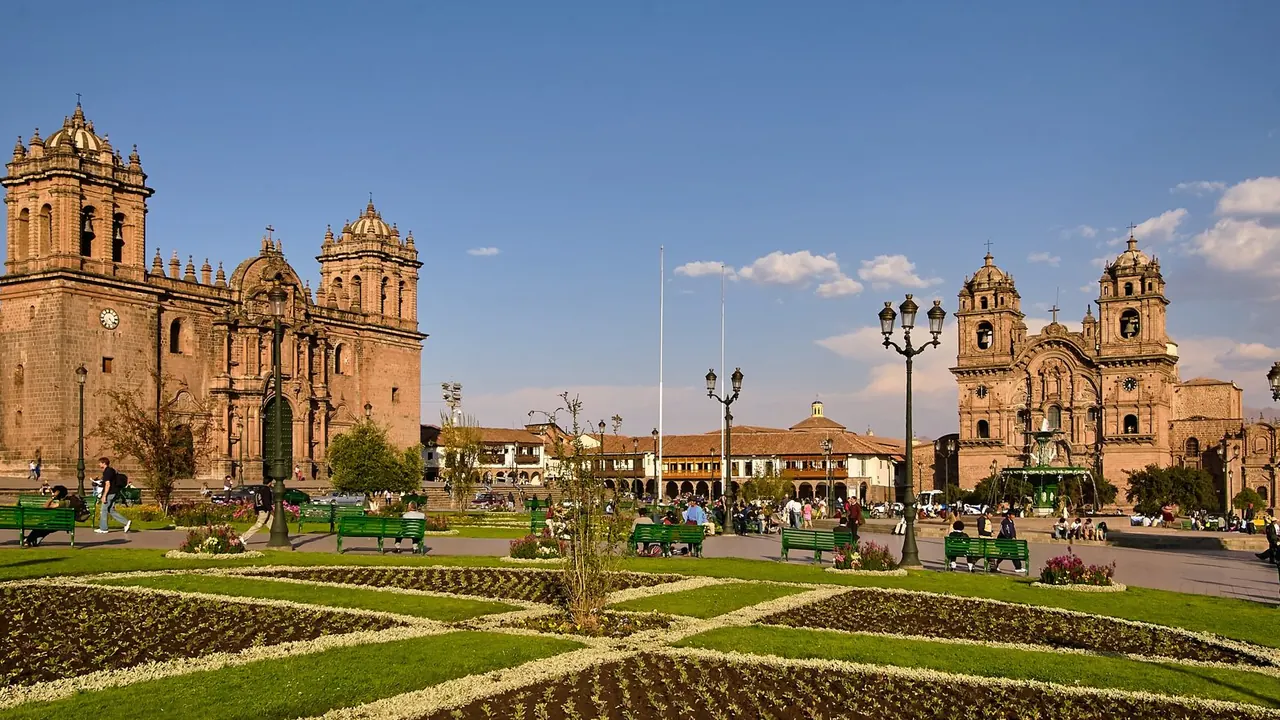
Cusco suits travellers who want history they can touch and mountains to walk in. The Inca walls of the centre, Qorikancha and Sacsayhuamán, and a valley full of terraced sites an hour away fill a week easily, with Machu Picchu at the end of it. It is also easier to walk, cheaper from day to day and better for buying textiles. The altitude makes it a poor choice with small children.
Choose Manaus for
- beaches
- families
- live music and the arts
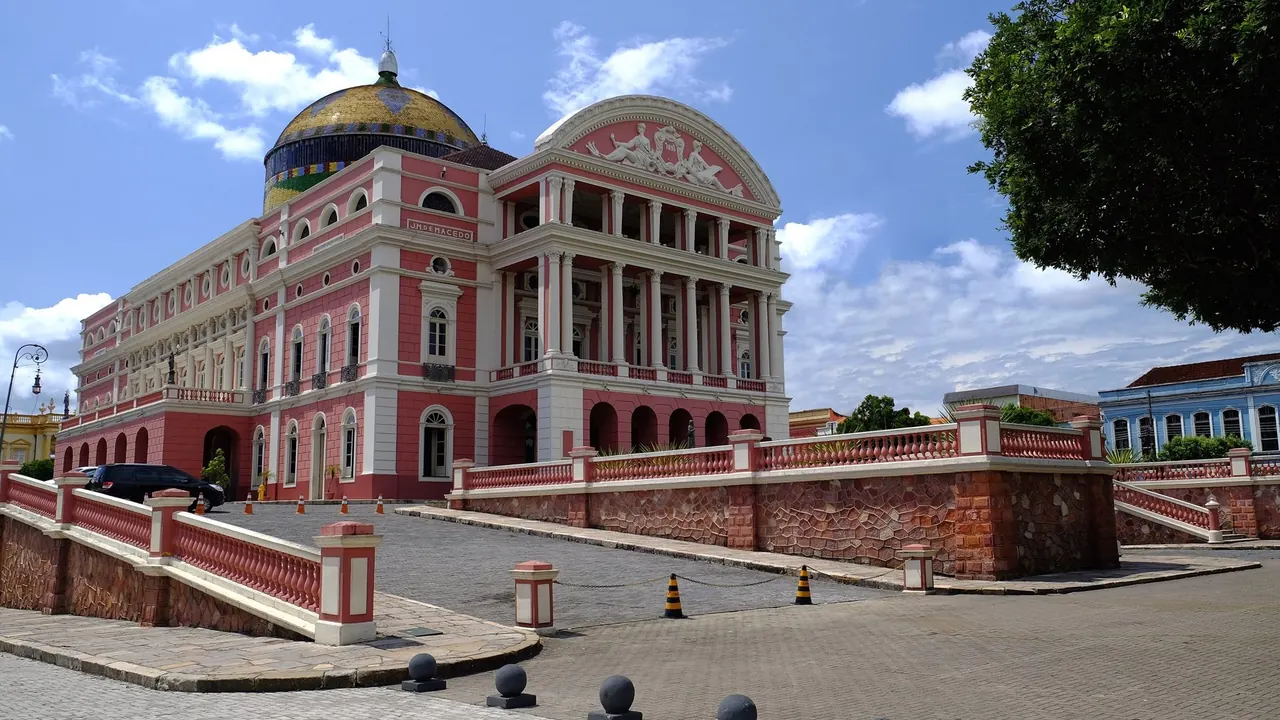
Pick Manaus if the point of the trip is the rainforest itself: boats through flooded forest, pink river dolphins and a few nights at a river lodge. The city is a gateway more than a destination. It has two days of rubber-boom buildings and an opera house where you can see a real performance. Families with children who love animals will find it easier than the thin air of the Andes, though the heat never lets up.
Scoreboard
Twelve categories on one fixed scale from 0 to 100. The shaded stretch is the gap between the two.
Your match
Pick a travel style or drag the sliders, and both match scores follow your weighting.
Wins on day trips and culture and sights with your weighting.
Wins on beaches and families with your weighting.
What matters to you?
Category by category
What the scores mean for a trip.
Beaches & swimming
Cusco has no swimming at all. It is high in the Andes and the lakes in the hills are glacial, so for a beach you would have to fly down to the Pacific.
Manaus has something, though it is a modest extra. Ponta Negra has a promenade and sunsets over the warm, dark Rio Negro, and in the low-water months white sandbanks appear upriver around Tupé. Water quality is not always good, and in the flood season the beaches disappear.
Food & drink
The two are evenly matched, and both are worth eating in for their local food rather than for range. Cusco cooks from the highlands, with many kinds of potato and maize, trout, alpaca, cuy and hearty picantería stews. Its Novoandino tasting menus around San Blas give it more choice at the top end.
Manaus cooks from the river and the forest: tambaqui ribs, pirarucu, tacacá from street stalls in the late afternoon, and fruits such as cupuaçu and camu-camu that you will not find in the Andes. In both cities the choice thins quickly once you look beyond the regional cooking.
Culture & sights
Cusco is far richer here. The Inca capital is still standing under the colonial city: walls of fitted stone line whole streets, Santo Domingo rises from the sun temple of Qorikancha, and the cathedral holds the Cusco School paintings. Sacsayhuamán is a walk uphill from the centre.
The sights in Manaus all come from one short period, the rubber boom. The Teatro Amazonas and the iron market hall are well worth seeing, but the old centre is shabby, the museums are small and two days covers everything.
Nightlife
Neither is a reason to travel, and the difference lies in who you go out with. Cusco's bars and clubs sit together just off the Plaza de Armas and are full of backpackers and pub crawls, and you can walk between them.
Manaus is more local, with beer at plastic tables and dance halls playing forró and boi-bumbá. It is spread out across Ponta Negra and Vieiralves, so you need taxis. In both cities early tour departures keep most nights short.
Nature & outdoors
Both are among the great natural gateways of South America, but they could hardly be more different. From Cusco you walk at altitude: Humantay lake, Rainbow Mountain above 5,000m, and multi-day routes such as the Inca Trail and Salkantay, with rafting and condors on the side.
Manaus is about water and forest. Boats take you to the Meeting of the Waters, the Anavilhanas islands and flooded forest full of dolphins and sloths. The heat rules out long hikes, and the wildlife really needs a few nights at a lodge rather than day trips.
Day trips
Cusco is the much better base. The Sacred Valley lies about an hour away and has a full set of outings: the citadel above Pisac, the lived-in Inca streets of Ollantaytambo, the weavers of Chinchero, and Moray and the Maras salt pans. Machu Picchu is possible in a very long day by road, train and bus.
Manaus offers almost nothing in the same sense. Within reach there is forest, river villages and the waterfalls of Presidente Figueiredo, so time outside the city goes on the water.
Good for families
Neither city is easy with children, but Manaus is the more forgiving. Cusco's altitude is a real risk for children who cannot say how they feel, and its steep cobbles, narrow pavements and early starts wear everyone out. Families often retreat to the lower Sacred Valley.
Manaus has animals that children remember, from river dolphins to the monkeys and manatees of the Bosque da Ciência, and Brazilians make children welcome. Heat, mosquitoes and long boat days still make it hard going for toddlers.
Getting around
Cusco is easier, because nearly everything is a walk from the Plaza de Armas. The climbs are hard in thin air at first, but cheap taxis cover the uphill stretches.
Manaus is a sprawling city where only the few blocks around the theatre can be walked, and the heat and broken pavements make even those tiring. Ride-hailing is how you reach Ponta Negra, and anything on the river means a boat from the port.
Shopping & style
Cusco is the better place to bring an empty bag. Its alpaca knitwear and naturally dyed weaving from cooperatives such as Chinchero are genuine finds, and San Blas adds ceramics and silverwork, though much of the stock around the square is the same factory-made goods.
Manaus has interesting indigenous crafts, including basketry, seed jewellery and feather work, plus guaraná and fruit sweets to take home. Beyond that, its free-trade streets sell electronics and its malls sell national brands, which few travellers come for.
Affordability
Both are cheap day to day, and in both the expense lies in the main excursion. Cusco keeps the edge: set lunches, taxis and guesthouses cost very little, and one combined ticket covers many of the sites. The Machu Picchu train and guided treks are where the money goes.
In Manaus, the city itself is inexpensive and business hotels are reasonably priced. The river trips and remote jungle lodges that justify the journey cost far more than a stay in town.
Live music & performing arts
Manaus has the better evenings. The Teatro Amazonas is a working opera house with its own philharmonic, ballet and an annual opera festival, and boi-bumbá drumming carries over into shows and dance halls.
Cusco's stages are mostly folkloric dinner shows put on for visitors. Its strength is the festival calendar: Inti Raymi at Sacsayhuamán around the June solstice, and masked dancers at Corpus Christi and Qoyllur Rit'i.
Wellness & relaxation
Neither city is a place to travel to for rest, but Cusco makes it easier to find. The town has more to fall back on, with inexpensive massage near the plaza and hotel spas that help guests cope with the altitude. The calm lodges of the Sacred Valley, with yoga and riverside gardens, are only about an hour down the road. The catch is the first few days, when thin air, cold nights and pre-dawn departures leave little room to slow down.
Manaus gives you much less to work with in the city itself: a hotel pool, heat, traffic and noise. Calm starts only once you leave by boat for a lodge on the river, so in Manaus rest comes as part of the jungle trip. You cannot really fit it around time in town.
When should you go?
Pick your month. The climate figures are measured averages, not a forecast.
Cusco in July
Manaus in July
Daytime high, °C
Rainfall in the month, mm
Where the figures come from
Cusco's station stands 151 m below the city centre, so the centre is likely a little cooler than the figures say.
Temperature and rainfall are climate normals, averaged over the years shown. Cusco: 1991-2020 normals, Cuzco (3.7 km from centre). Manaus: 1991-2020 normals, Manaus (1.7 km from centre).
Cusco's temperature barely changes. Afternoons stay at about 20°C all year and the nights are cold, so the streets are pleasant to walk in any month. The rain is what changes. May to September is almost dry, with clear skies for trekking and long views over the Sacred Valley. The rain builds from October and peaks in January at about 159mm, when trails turn muddy and the peaks disappear into cloud.
Manaus is hot every month, so walking around town is tiring at any time. The rainy season runs from December to May, with more than 300mm a month at its height. July to September is the driest and sunniest stretch, with only about 58mm in August, though it is also the hottest, with highs reaching 35°C in September. Those three months are the best time to combine the two: the Andes are dry and the Amazon is at its brightest.
Which traveller are you?
For a culture and arts trip, Cusco is the clear pick. Its streets of Inca stonework, the sun temple under Santo Domingo and the Cusco School paintings outweigh Manaus's rubber-boom centre, although Manaus does offer the better evening at the opera.
On a family trip with young children, Manaus is the safer of the two. Cusco's altitude is a real risk for small children. In Manaus, children get dolphins, monkeys and manatees at the Bosque da Ciência, as long as parents can manage the heat and the mosquitoes.
For a beach and sun trip, neither city is really the answer, but Manaus at least has warm river beaches at Ponta Negra and sandbanks upriver when the water falls. Cusco is landlocked and high up in the Andes, with cold nights.
Before you go
| Measure | Cusco | Manaus |
|---|---|---|
| Official language | Spanish, Aymara, Quechua | Portuguese |
| Currency | Sol (PEN) | Brazilian Real (BRL) |
| Sockets | ABC220 V, 60 Hz | CN60 Hz |
| Driving side | Right | Right |
| Time zone | UTC-5 | UTC-4 |
| Emergency number | 111 or 911 | Police 190, ambulance 192, fire 193 |
| Elevation | 3,399 m | 92 m |
| Main airport | Alejandro Velasco Astete International Airport (CUZ)5 km from centre6 non-stop destinations | Eduardo Gomes International Airport (MAO)9 km from centre21 non-stop destinations |
| Public holidays this year | 16 days | 14 days |
By the numbers
| Measure | Cusco | Manaus |
|---|---|---|
| City population | 428,450 | 2,303,732 |
| People per km² | - | 202 |
| Museums within 10 km | 11 | 13 |
| UNESCO World Heritage sites within 50 km | 2 | 1 |
Where else could you go?
Every comparison below shares a destination with this one, so you can follow Cusco or Manaus somewhere new.