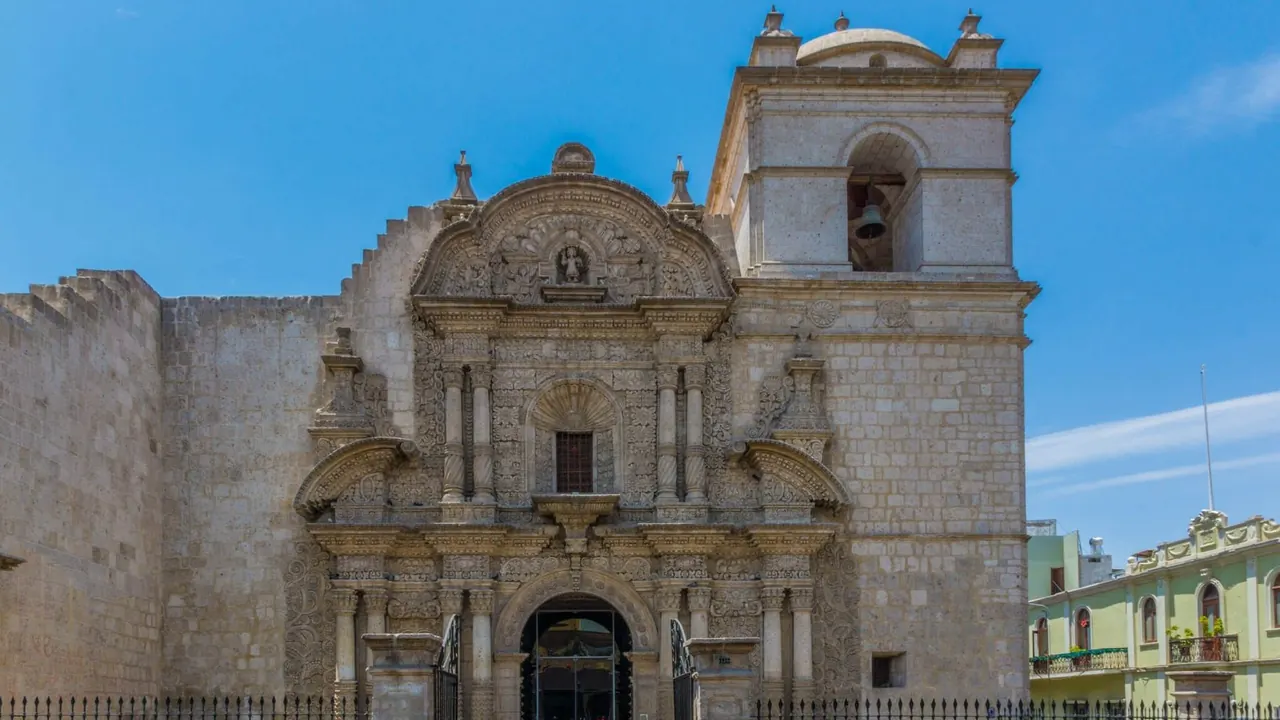
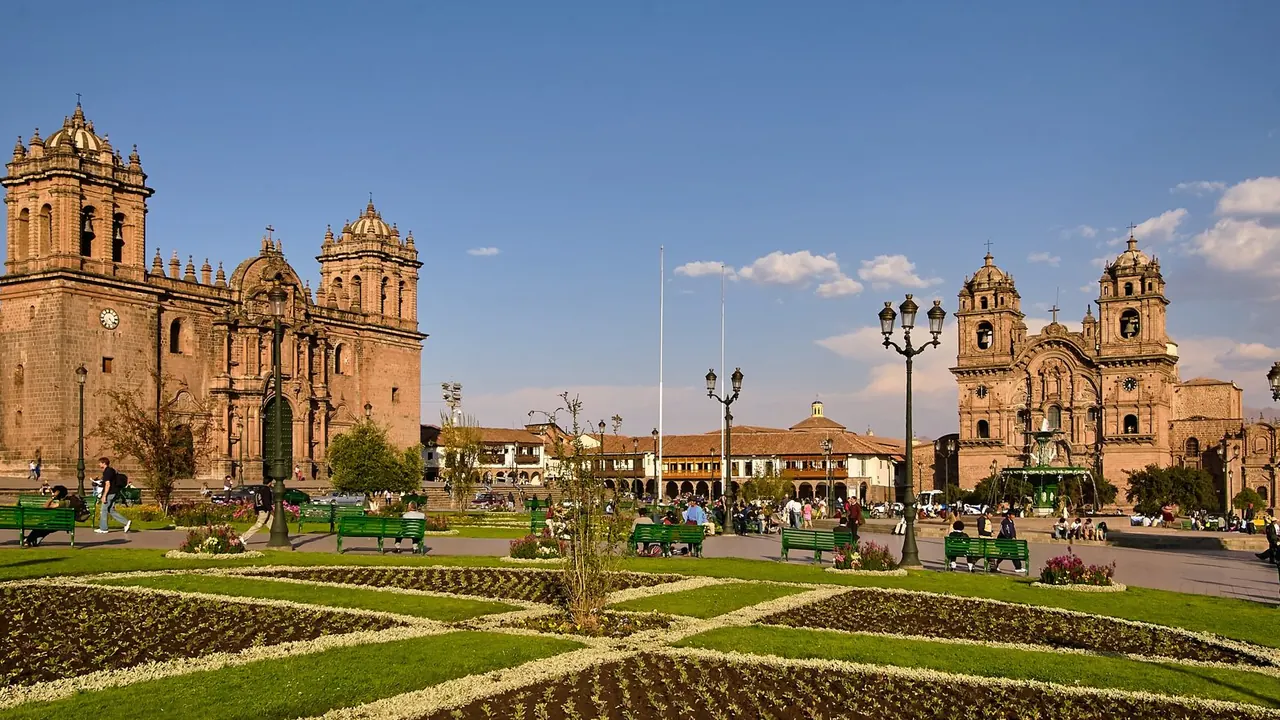
Photos: Arequipa by DocSlyper, CC BY-SA 2.0, cropped; Cusco by Pedro Szekely, CC BY-SA 2.0, cropped.
Arequipa or Cusco?
Our verdict in twelve categories, each scored against the same fixed benchmark cities, and the climate month by month, so you can choose for your trip.
Choose Arequipa for
- families
- food and drink
- prices
Arequipa suits travellers who want southern Peru at an easier pace. It sits a thousand metres lower than Cusco, its white stone centre is flat and simple to walk, and lunch in a picanteria is among the best eating in the country. It is also kinder on the budget and on young children. The trade-off is that Colca Canyon is its one big excursion, and the city's own sights fill two or three days rather than a week.
Choose Cusco for
- day trips
- culture and sights
- nature and the outdoors
Choose Cusco if the Incas are the reason for the trip. The fitted stone walls under the colonial city, Sacsayhuamán above it, the Sacred Valley and Machu Picchu add up to a depth of history and a run of outings that Arequipa cannot match, and the treks to Salkantay and Ausangate are some of the best on the continent. In return you get thin air, steep cobbled streets and expensive trains and tours.
Scoreboard
Twelve categories on one fixed scale from 0 to 100. The shaded stretch is the gap between the two.
Your match
Pick a travel style or drag the sliders, and both match scores follow your weighting.
Wins on families and food and drink with your weighting.
Wins on day trips and culture and sights with your weighting.
What matters to you?
Category by category
What the scores mean for a trip.
Beaches & swimming
Neither city is a beach destination, and swimming plays almost no part in either trip. Arequipa does at least have a coast you can reach by road. Mollendo and Mejia, about two hours away, have wide sandy beaches, though the Humboldt Current keeps the water cold. From Cusco, the only way to reach the sea is to fly down to the Pacific.
Food & drink
Arequipa is the better place to eat, mainly because of its own regional cooking. A long lunch in a picanteria, with rocoto relleno, river-shrimp chowder and chicha de guinapo, is a reason to visit in itself. The Sunday adobo and the queso helado sold from street carts are local dishes you will not find done the same way in Cusco.
Cusco's cooking is plainer highland food: potatoes, trout, alpaca and cuy, with San Pedro market as the everyday starting point. Its advantage is at the top end, in the Novoandino tasting menus around San Blas and in the Sacred Valley. Near the main square, though, many menus are aimed at tour groups, a problem Arequipa has far less of.
Culture & sights
Cusco has the deeper history. A visitor walks along Inca walls like Hatun Rumiyoc, sees the Santo Domingo monastery rising from the sun temple of Qorikancha, and climbs up to the zigzag ramparts of Sacsayhuamán. You see two civilisations at once, one built on top of the other, and the Cusco School paintings in the cathedral add a third layer.
Arequipa's appeal is architectural and more uniform. It is a whole UNESCO centre of pale sillar stone, carved in a mestizo baroque that mixes Andean motifs with Spanish ones. Santa Catalina Monastery and the Juanita mummy are first-rate, but together they fill a few days, not the longer stay Cusco can.
Nightlife
Neither city is built for big nights, and Cusco has slightly more going on. Its bars and clubs off the Plaza de Armas fill with backpackers and trekkers, with hostel pub crawls and a few quieter cocktail bars in San Blas.
Arequipa's scene on Calle San Francisco belongs more to local students, with salsa and reggaeton late on weekends and quiet weeknights. In both cities, pre-dawn tour departures cut evenings short, and in Cusco the altitude makes drinks hit harder.
Nature & outdoors
Cusco has the wider mountain country on its doorstep. The terraced Sacred Valley lies just below the city. Day hikes reach Humantay lake and Rainbow Mountain, and longer treks follow the Inca Trail, the Salkantay route and the circuit around Ausangate, with rafting and downhill biking as well.
Arequipa is more focused but just as dramatic. You can climb El Misti, or Chachani, one of the more accessible 6,000m peaks. Colca Canyon has condors at Cruz del Condor and treks down to oases on the canyon floor. For gentler days, the green campina offers easy walks right at the edge of the city.
Day trips
This is where the two differ most. From Cusco, a full list of Inca and colonial sites lies about an hour away: Pisac, Ollantaytambo, Chinchero, Moray with the Maras salt pans, and the quieter route south-east to Andahuaylillas and Tipón. Then there is Machu Picchu, a long day by road, train and bus.
Arequipa's easy outings are smaller country trips, such as the Sabandia mill, the Mansion del Fundador and the Sunday restaurants of Characato. Colca and the Toro Muerto petroglyphs are three hours or more each way, so they work better as overnight trips than day trips.
Good for families
Arequipa is much easier with children. It sits around 1,000m lower than Cusco, so altitude is far less of a worry, and the flat centre with its calm plazas is easy to manage with a pushchair or small legs. It has no zoos or theme parks, but older children usually enjoy Santa Catalina and the frozen mummy.
Cusco is hard going with young children. Altitude sickness is a real risk at 3,400m, the cobbled lanes are steep and narrow, and the days are built around ruins and early starts. Families often base themselves lower down in the Sacred Valley, where the llamas and alpacas are the highlight.
Getting around
Both centres are compact enough to walk, with cheap taxis for anything further. Arequipa is the more comfortable on foot, because its grid around the Plaza de Armas is almost level, though the pavements are narrow and the traffic is heavy.
In Cusco, the walks up to San Blas or Sacsayhuamán are steep climbs in thin air, and the uneven cobbles need care. Getting further out is also more complicated there, with minibuses to the Sacred Valley and a train from outside the city for Machu Picchu.
Shopping & style
Both cities are about alpaca, and Cusco gives you more to browse. There are natural-dye weaving cooperatives in Chinchero, ceramics and silver workshops in San Blas, and large craft halls. The catch is that much of what is sold near the plaza is the same factory-made stock, and not every label claiming alpaca is honest.
Arequipa's range is narrower, but the quality is more reliable. Buying direct from the mill outlets and showrooms of Peru's alpaca industry is the safe way to get real baby alpaca or vicuna, and Fundo El Fierro adds local craft.
Affordability
Arequipa is the cheaper stay overall. Colonial guesthouses, picanteria lunches and taxis cost little, and the main extra cost is a Colca tour or a guided climb.
Cusco is also cheap day to day, but its big outings are hard to avoid and they are expensive. The Machu Picchu train and entry, and treks like the Inca Trail, are priced for foreigners, and the boutique mansion hotels charge close to international rates.
Live music & performing arts
Arequipa's stage life is the more formal kind. The Teatro Municipal and the university cultural centres put on theatre and the regional symphony orchestra, and on weekends the penas have Andean folk bands and dancers performing over dinner. Its big moment is the founding anniversary in mid-August, when parades, folk dance and concerts fill the streets.
Cusco has little formal theatre or classical music, but folkloric dance shows run most evenings in the centre, and panpipe and charango bands play in many restaurants. Its real strength is its festivals: Inti Raymi at Sacsayhuamán around the June solstice, and the masked dancers of Corpus Christi and the Qoyllur Rit'i pilgrimage in the mountains.
Wellness & relaxation
Arequipa is the easier place to slow down. Dry, sunny and unhurried, it is good for long lunches and quiet hours in a cloister courtyard. The old volcanic thermal pools at Yura are under an hour away, and the open-air springs near Chivay make a good end to a day at Colca.
Cusco is tiring at first, with thin air, cold nights and early tour starts. In town, the comforts are cheap massages around the main square and hotel spas, some of which pump oxygen into the rooms. For real rest, many visitors move down to a riverside lodge in the Sacred Valley.
When should you go?
Pick your month. The climate figures are measured averages, not a forecast.
Arequipa in July
Cusco in July
Daytime high, °C
Rainfall in the month, mm
Where the figures come from
Arequipa's station stands 203 m above the city centre, so the centre is likely a little warmer than the figures say.
Cusco's station stands 151 m below the city centre, so the centre is likely a little cooler than the figures say.
Temperature and rainfall are climate normals, averaged over the years shown. Arequipa: 1991-2020 normals, Arequipa (9.2 km from centre). Cusco: 1991-2020 normals, Cuzco (3.7 km from centre).
Neither city has real seasons of heat and cold. Daytime highs stay around 20°C to 22°C in both all year, so walking the streets is comfortable in any month, though both are too high and too far inland for a beach trip. The difference is rain. Arequipa is desert-dry from April to December, and even its wettest stretch, January to March, brings only light rain, peaking at about 36mm in February.
Cusco has a proper wet season. Rain builds from October, and January is the wettest month at around 159mm, with heavy rain lasting through March. That means cloud over the mountains and muddy trails. May to September is the dry window for treks and Machu Picchu. So Cusco needs planning around the calendar, while Arequipa works almost any time and is the safer choice from December to March.
Which traveller are you?
On a family trip with young children, Arequipa is far easier. It sits much lower, so altitude sickness is less of a worry, the centre is flat, and Santa Catalina's coloured lanes and the Juanita mummy interest older children without long days on the road.
For a culture and arts trip, Cusco is the stronger choice. Inca walls run beneath the colonial churches, Qorikancha and Sacsayhuamán are a short walk apart, and the Sacred Valley ruins and Machu Picchu turn the history into a week of sights.
On an outdoors trip, Cusco wins for its range of treks: the Inca Trail, Salkantay, Ausangate, Humantay lake and Rainbow Mountain, plus rafting on the Urubamba. Arequipa has Colca and its volcano climbs, but fewer routes to choose from.
Before you go
| Measure | Arequipa | Cusco |
|---|---|---|
| Official language | Spanish, Aymara, Quechua | Spanish, Aymara, Quechua |
| Currency | Sol (PEN) | Sol (PEN) |
| Sockets | ABC220 V, 60 Hz | ABC220 V, 60 Hz |
| Driving side | Right | Right |
| Time zone | UTC-5 | UTC-5 |
| Emergency number | 111 or 911 | 111 or 911 |
| Elevation | 2,335 m | 3,399 m |
| Main airport | Rodríguez Ballón International Airport (AQP)7 km from centre2 non-stop destinations | Alejandro Velasco Astete International Airport (CUZ)5 km from centre6 non-stop destinations |
| Public holidays this year | 17 days | 16 days |
By the numbers
| Measure | Arequipa | Cusco |
|---|---|---|
| City population | 1,008,290 | 428,450 |
| People per km² | 1,551 | - |
| Museums within 10 km | 3 | 11 |
| UNESCO World Heritage sites within 50 km | 1 | 2 |
Where else could you go?
Every comparison below shares a destination with this one, so you can follow Arequipa or Cusco somewhere new.