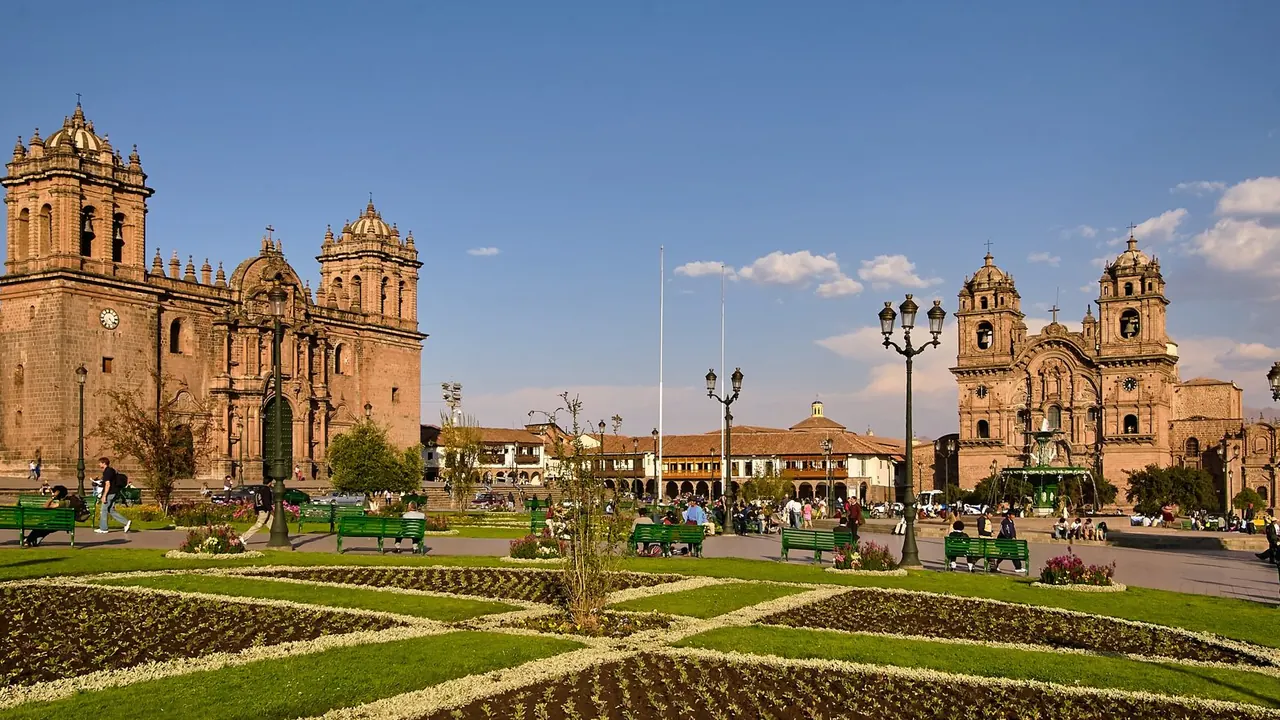
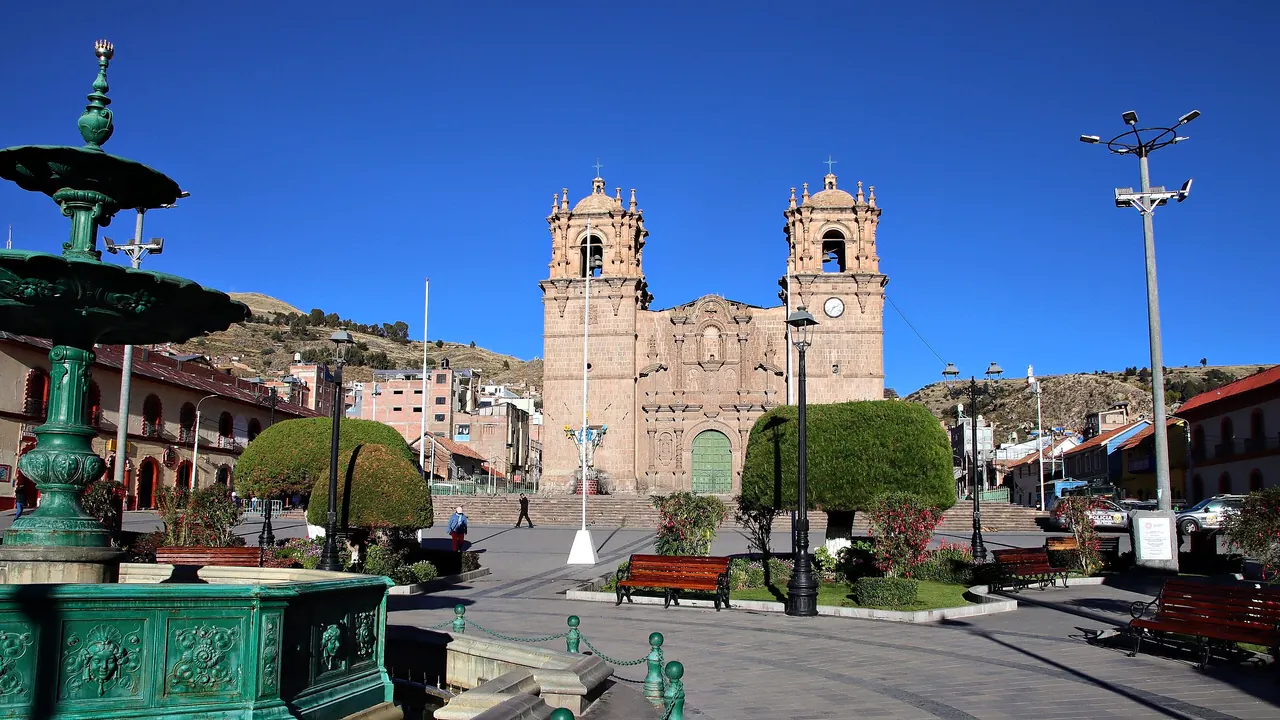
Photos: Cusco by Pedro Szekely, CC BY-SA 2.0, cropped; Puno by Draceane, CC BY-SA 4.0, cropped.
Cusco or Puno?
Our verdict in twelve categories, each scored against the same fixed benchmark cities, and the climate month by month, so you can choose for your trip.
Choose Cusco for
- culture and sights
- nightlife
- food and drink
Cusco is the better pick for most travellers to the southern Andes. The old Inca capital still shows in its streets, from the fitted walls of Hatun Rumiyoc to Qorikancha under its monastery. The Sacred Valley and Machu Picchu are within reach, and the great treks start here. It also eats better, keeps livelier evenings and sells finer crafts, so it rewards a longer stay built around history and mountains.
Choose Puno for
- prices
- live music and the arts
- beaches
Puno makes more sense as a cheaper, quieter stop where the lake matters more than the town. You come for the reed islands of the Uros, the weavers of Taquile, a night with a family on Amantaní and the burial towers of Sillustani, and you spend very little doing it. If you can time it for February, the Candelaria festival brings the town's dance tradition out in full.
Scoreboard
Twelve categories on one fixed scale from 0 to 100. The shaded stretch is the gap between the two.
Your match
Pick a travel style or drag the sliders, and both match scores follow your weighting.
Wins on culture and sights and nightlife with your weighting.
Wins on prices and live music and the arts with your weighting.
What matters to you?
Category by category
What the scores mean for a trip.
Beaches & swimming
Neither city is a place to swim, and a beach vacation means flying down to the Pacific coast. The difference is that Cusco has no water to speak of, only glacial lagoons in the hills. Puno at least lies on Lake Titicaca, where a few island coves allow a brief, bracing dip on a sunny afternoon in water of around 10 to 14°C.
Food & drink
Cusco eats noticeably better. San Pedro market, with its juice stalls and set-lunch counters, is a good start, and the picanterías serve slow-cooked highland dishes with chicha. Around San Blas and the main square, Novoandino kitchens turn native potatoes, quinoa and alpaca into tasting menus, and there are more serious tables out in the Sacred Valley.
Puno's cooking is plainer altiplano fare built on lake trout, quinoa stews and chairo soup, with good early breakfasts at the Mercado Central. Most of the restaurants on Jirón Lima serve the same trout, pizza and set menus, and there is no top tier to aim for.
Culture & sights
There is no real contest here. In Cusco the Inca capital is still standing under the Spanish one: mortarless walls along whole streets, the sun temple of Qorikancha beneath Santo Domingo, the cathedral and La Compañía facing each other across the Plaza de Armas, and the zigzag ramparts of Sacsayhuamán above town. You could spend several days on it.
Puno's own sights fill an afternoon. They are the carved baroque front of the cathedral, the view from Kuntur Wasi, a coca museum and the Victorian steamship Yavari. Its culture lies out on the lake, and to see it you take a boat.
Nightlife
Cusco has a real if narrow night out. The bars and clubs off the Plaza de Armas fill with backpackers and trekkers and stay open late at weekends, and San Blas has calmer cocktail and craft beer spots. Puno has a few pubs around Jirón Lima and freezing streets, so most evenings end after dinner. In both towns the altitude and dawn departures keep the drinking moderate, but Puno quietens down much sooner.
Nature & outdoors
Cusco is the gateway to bigger mountain country. The terraced Sacred Valley lies below the snow peaks of the Cordillera Urubamba, and from Cusco you can hike to Humantay lake and the Rainbow Mountain, take the Inca Trail or Salkantay treks, and go rafting on the Apurímac. This is a place for people who want to push themselves on foot.
Puno's landscape is wide and open, not steep. Lake Titicaca runs to the Bolivian peaks, its reed beds hold the flightless Titicaca grebe, and the outdoor activities are kayaking off Capachica and short, breathless island climbs. It is a place for looking and birdwatching more than for long treks.
Day trips
Cusco has the richer list of excursions. Pisac, Ollantaytambo, Chinchero, and the terraces of Moray with the salt pans of Maras are all about an hour away, and Tipón and Andahuaylillas make quieter days to the south-east. Machu Picchu is the great prize, though the road, train and bus make it a very long day.
Puno's outings mostly happen on the water: the floating Uros islands close to port, Taquile's weaving community further out and Amantaní with an overnight homestay. On land there are Sillustani's burial towers and the colonial churches of Juli and Lampa. It has fewer big names, but they feel quite different from Cusco's string of Inca sites.
Good for families
Neither city is easy with small children. The altitude is the main worry in both, and almost nothing is designed for young visitors. Cusco offers an escape, since families can drop down to the lower Sacred Valley and meet llamas and alpacas there. Puno is higher and colder, and many guesthouses are poorly heated, so families tend to keep the stay short. Older children usually enjoy its boat to the reed islands and the reed watchtower.
Getting around
Both centres are small enough to walk, and neither has a metro or tram. Cusco is the easier of the two in practice. Its steep cobbled climbs to San Blas are hard work at first, but taxis are plentiful for the uphill trip home, and tours, drivers and minibuses connect smoothly with the Sacred Valley and the Machu Picchu trains.
Puno's centre is compact, with the port an easy walk downhill. Getting further means crowded colectivos and tricycle taxis in heavy, chaotic traffic, and boats from the port for the islands.
Shopping & style
Both towns sell alpaca and woven textiles, and neither has fashion or design shops. Cusco offers more beyond the knitwear: San Blas workshops make ceramics, carved saints and silver, and the weaving cooperatives of Chinchero use natural dyes. Puno comes down to one long craft market by the port where quality varies, but buying on Taquile straight from the island's knitters is the most rewarding purchase of either trip.
Affordability
Puno is the cheaper stay. Guesthouses, market counters, tricycle taxis and shared island boats cost next to nothing, and only the lakeside hotels and traveller restaurants charge more. Cusco is also inexpensive from day to day, but the Machu Picchu train and tickets, guided treks and the colonial mansion hotels around the square push a typical trip's cost well above Puno's.
Live music & performing arts
Puno has the edge, almost entirely because of February. During the Virgen de la Candelaria festival, tens of thousands of masked, sequined dancers parade through the city for days to brass bands, and it is one of the largest festivals in South America.
Cusco's big moments are Inti Raymi at Sacsayhuamán around the June solstice, Corpus Christi and the Qoyllur Rit'i pilgrimage. For the rest of the year both towns offer much the same: folkloric shows and panpipe bands over dinner, with little formal theatre or classical music.
Wellness & relaxation
Cusco offers more ways to recover. Cheap massages are sold all around the main square, hotel spas pump oxygen into rooms to ease the altitude, and riverside lodges in the Sacred Valley offer yoga and quiet gardens, with hot springs further out at Aguas Calientes and Lares.
Puno has little beyond a massage in one of the better lakeside hotels. Its calm comes from the islands at dusk, while the town centre is noisy with traffic.
When should you go?
Pick your month. The climate figures are measured averages, not a forecast.
Cusco in July
Puno in July
Daytime high, °C
Rainfall in the month, mm
Where the figures come from
Cusco's station stands 151 m below the city centre, so the centre is likely a little cooler than the figures say.
Puno's temperatures are measured 42 km from the centre, at Juliaca.
Puno has no rain gauge within 25 km of the centre, so its rainfall comes from a gridded climate dataset read at the city rather than from a gauge further away.
Temperature and rainfall are climate normals, averaged over the years shown. Cusco: 1991-2020 normals, Cuzco (3.7 km from centre). Puno: 1991-2020 normals, Juliaca (42.3 km from centre).
Both cities sit high in the Andes and share the same pattern. Days are mild all year and the year is split into dry and wet seasons rather than warm and cold ones. From May to August almost no rain falls in either place, often under 10mm a month, and the clear skies make this the best time for walking, treks and boat trips. The nights in these months are the coldest of the year. Cusco is a little warmer by day, with highs of around 21°C, while Puno rarely gets past 19°C, and Puno's guesthouses feel the cold more.
The rains build from October and peak in midsummer. In Cusco January is the wettest month at about 159mm, with muddy trails and cloud on the peaks. Puno is wettest in February, the month of Candelaria, but stays fairly dry into November, a little longer than Cusco does.
Which traveller are you?
For a culture and arts trip, Cusco wins easily. Inca stonework lines its streets, Qorikancha and the cathedral's Cusco School paintings fill a day in the centre, and Sacsayhuamán and the Sacred Valley ruins carry the story on beyond town.
On an outdoors trip, Cusco is again the stronger base, with the Inca Trail, Salkantay and Ausangate treks, Rainbow Mountain, rafting and mountain biking. Puno has gentler options instead: kayaking in the reed beds, birdwatching and short island walks.
For a trip on a tight budget, Puno stretches the money further. Guesthouses, market breakfasts, tricycle taxis and shared boats to the islands all cost very little. In Cusco, the train and entry for Machu Picchu and guided treks take a large share of the budget.
Before you go
| Measure | Cusco | Puno |
|---|---|---|
| Official language | Spanish, Aymara, Quechua | Spanish, Aymara, Quechua |
| Currency | Sol (PEN) | Sol (PEN) |
| Sockets | ABC220 V, 60 Hz | ABC220 V, 60 Hz |
| Driving side | Right | Right |
| Time zone | UTC-5 | UTC-5 |
| Emergency number | 111 or 911 | 111 or 911 |
| Elevation | 3,399 m | 3,830 m |
| Main airport | Alejandro Velasco Astete International Airport (CUZ)5 km from centre6 non-stop destinations | Inca Manco Capac International Airport (JUL)44 km from centre1 non-stop destination |
| Public holidays this year | 17 days | 17 days |
By the numbers
| Measure | Cusco | Puno |
|---|---|---|
| City population | 428,450 | 128,637 |
| Museums within 10 km | 11 | 1 |
| UNESCO World Heritage sites within 50 km | 2 | 1 |
Where else could you go?
Every comparison below shares a destination with this one, so you can follow Cusco or Puno somewhere new.