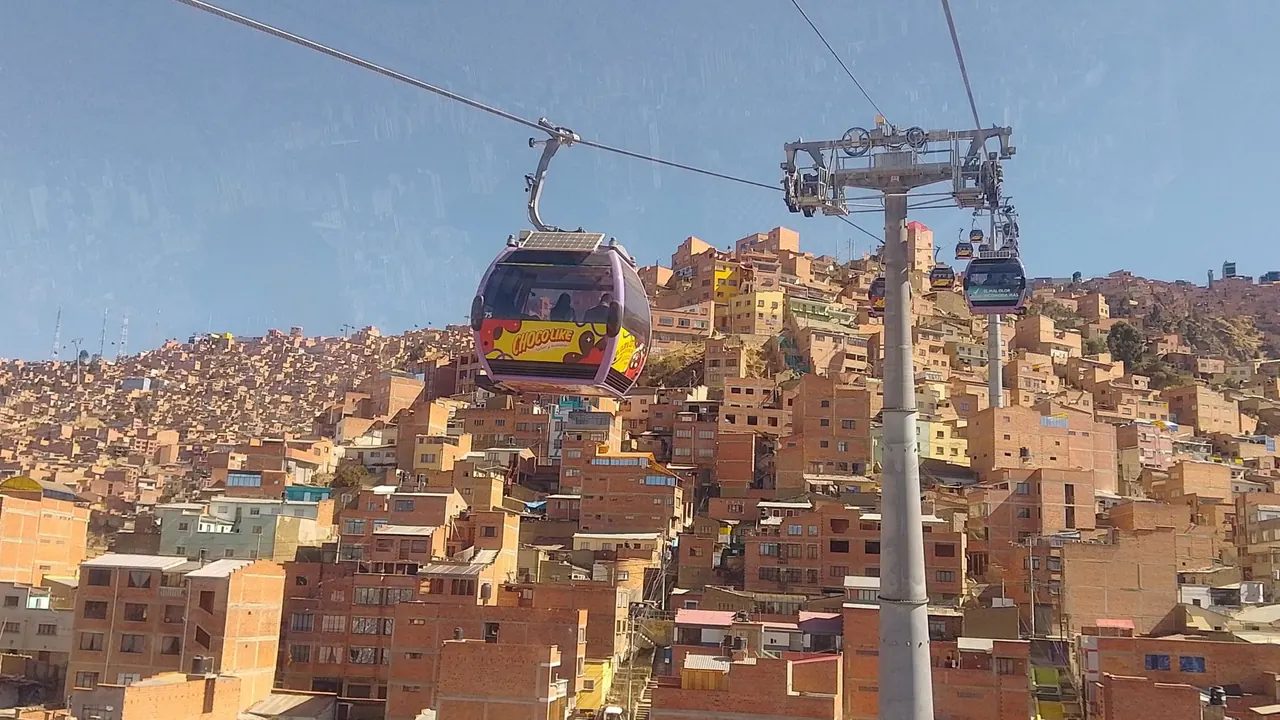
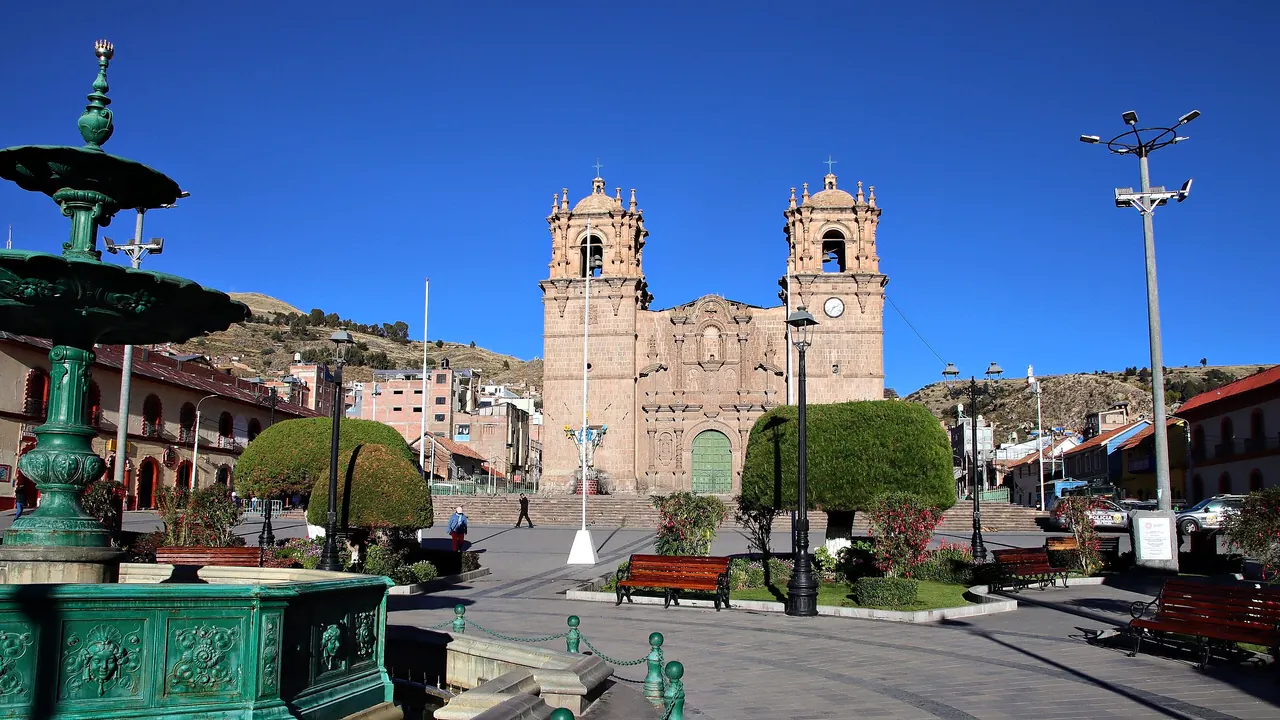
Photos: La Paz by Arabsalam, CC BY 4.0, cropped; Puno by Draceane, CC BY-SA 4.0, cropped.
La Paz or Puno?
Our verdict in twelve categories, each scored against the same fixed benchmark cities, and the climate month by month, so you can choose for your trip.
Choose La Paz for
- nightlife
- culture and sights
- nature and the outdoors
La Paz suits the traveller who wants a real city at altitude: a capital with markets, museums, a restaurant scene that cooks seriously with Andean ingredients, and evenings in Sopocachi. It is also the stronger base for adventure, with the glaciers of the Cordillera Real, Huayna Potosí and the Death Road ride all within reach. Choose it if you want plenty to do in town as well as outside it.
Choose Puno for
- day trips
- beaches
- live music and the arts
Puno is less a destination in itself than a doorway to Lake Titicaca. The town is plain and quiet, but the reed islands of the Uros, the weaving communities of Taquile, homestays on Amantaní and the burial towers of Sillustani all sit close by. It suits a slower trip built around the lake and its villages, where days are spent on boats and evenings end early.
Scoreboard
Twelve categories on one fixed scale from 0 to 100. The shaded stretch is the gap between the two.
Your match
Pick a travel style or drag the sliders, and both match scores follow your weighting.
Wins on nightlife and culture and sights with your weighting.
Wins on day trips and beaches with your weighting.
What matters to you?
Category by category
What the scores mean for a trip.
Beaches & swimming
Neither city is a place to swim. La Paz is in a landlocked canyon, about two hours from Lake Titicaca. Puno sits right on the lake shore, but its waterfront is a working port lined with reeds. The lake is too cold for a proper swim, although in Puno a few island coves allow a brave dip on a sunny afternoon. For a beach, plan a separate stop on the Pacific coast.
Food & drink
La Paz gives a curious eater more to explore. Street food sets the rhythm of the day, from hot purple-corn api at dawn to anticucho grills on the corners after dark. The markets stock more than a hundred kinds of potato alongside tropical fruit brought up from the Yungas, and there is something local to drink as well: wine from Tarija and singani, Bolivia's grape spirit.
Puno's cooking stays close to what the lake and the altiplano provide. Trout appears on almost every menu, next to chairo soup, alpaca steak and, for festive meals, roast cuy, all washed down with hot coca tea. It is warming, filling food with little range beyond it, and many travellers save their appetite for the bigger cities further along the route.
Culture & sights
La Paz has far more to see within the city itself. The carved front of San Francisco, the cathedral and government buildings on Plaza Murillo, and the small museums along Calle Jaén are a good start. The ethnography museum's Andean textiles and masks fill a rewarding morning. Beyond these, the city's living culture is on show in the Witches' Market, in the cholitas in bowler hats and in the cholet mansions of El Alto.
Puno's own sights fit into an afternoon: the cathedral façade, the Kuntur Wasi viewpoint, the coca museum and the Victorian steamship Yavari. Its real cultural draw is the life of the lake communities, which means taking a boat.
Nightlife
La Paz offers a real choice of places to go in the evening, while Puno offers a drink after dinner. Sopocachi's craft beer and cocktail bars draw students and young professionals, the Sagárnaga area fills with travellers just back from the Death Road or a climb, and the southern zone has clubs at weekends.
Puno has a few pubs on Jirón Lima serving pisco sours. Early boat departures and freezing nights mean most evenings there end with dinner, except in the festival season, when the whole town comes out onto the streets.
Nature & outdoors
Both settings are dramatic, but La Paz offers more ways to get out into the mountains. Illimani rises behind the city, the glaciers of the Cordillera Real are close enough for a day out, and Huayna Potosí takes two or three days to climb. Chacaltaya's high moonscape and the clay spires of the Valle de la Luna make easy half-days, Condoriri and the Zongo valley are good for trekking, and the Death Road drops by bike from the snowline into cloud forest.
In Puno, the main outdoor attraction is the lake itself. You can watch birds in the totora reed reserve, kayak off the Capachica peninsula and walk the short, steep island trails. The outdoors here is gentler, and the even thinner air sets the pace.
Day trips
Day trips are where Puno comes out ahead. Uros is a short crossing, Taquile makes a full day on the water, and Sillustani's burial towers are under an hour away by road. Chucuito, Juli, Lampa and Pucará add colonial churches and village life on the shores of the lake and the altiplano.
From La Paz, the standout trip is Tiwanaku, a major pre-Inca site and well worth the drive. Most other trips from La Paz, including Copacabana, Isla del Sol, Coroico and Sorata, need an overnight stay to be worthwhile.
Good for families
Both cities are a poor choice with young children, mainly because of the altitude. La Paz's airport is at about 4,000m, and Puno is not much lower. La Paz has slightly more to keep children busy, such as the cable-car rides and the zoo at Mallasa, but its steep streets and heavy traffic are tiring. In Puno, the reed islands and their watchtowers are the main highlight. Its cold nights in poorly heated guesthouses are the bigger drawback there.
Getting around
Getting around is about equally easy in both, but in very different ways. La Paz is a sprawling city where the Mi Teleférico cable cars carry you over the rooftops between the centre, El Alto and the southern suburbs. It has no metro, and road traffic is often jammed. Puno is small enough to walk, with the plaza, market and port only minutes apart. Boats, colectivos and tricycle taxis cover the rest, though in both cities the uphill walk back leaves newcomers out of breath.
Shopping & style
La Paz has the wider choice. The craft lanes of Sagárnaga and Linares sell alpaca knitwear, silver and musical instruments. The Mercado Negro and the sprawling 16 de Julio fair in El Alto give a real taste of everyday trade, and the southern malls cover the basics.
Puno is all about textiles, with a long craft market near the port selling sweaters, ponchos and chullo hats. Its best buys come from the islands, where you can buy Taquile knitting and weaving directly from the people who make it.
Affordability
Both are among the cheapest stops in the Andes, and La Paz stretches a budget a little further. Comfortable rooms in Sopocachi or the centre, cable-car rides and market lunches all cost very little. In Puno, guesthouses, colectivos and shared island boats are just as cheap. The cost rises at its lakeside hotels and in the restaurants on Jirón Lima, while in La Paz the bigger costs are guided climbs and Death Road tours, where a reputable operator is worth paying for.
Live music & performing arts
Both cities are known mainly for folk dance rather than concert halls, and each is famous for one great festival. In La Paz it is Gran Poder, and the city also has the Teatro Municipal and a national symphony orchestra. Puno's Candelaria in February is one of the largest festivals in South America. For the rest of the year, both rely on peñas and restaurant shows of panpipes, charangos and costumed dancers.
Wellness & relaxation
Central La Paz is noisy and the lake around Puno is slow and quiet, but in both the altitude makes the first nights tiring, so coca tea and an early bed are the usual remedy. La Paz has the Urmiri hot springs about two hours away, and the leafy streets of Sopocachi are a break from the traffic.
Puno's calmest moments are out on the lake, especially on the islands at dusk. Massages in a few lakeside hotels are the only spa treatments it has.
When should you go?
Pick your month. The climate figures are measured averages, not a forecast.
La Paz in July
Puno in July
Daytime high, °C
Rainfall in the month, mm
Where the figures come from
La Paz has no weather station within reach, so its figures come from a gridded climate model rather than a measured record, and read a broad area rather than the city itself.
Puno's temperatures are measured 42 km from the centre, at Juliaca.
Puno has no rain gauge within 25 km of the centre, so its rainfall comes from a gridded climate dataset read at the city rather than from a gauge further away.
Temperature and rainfall are climate normals, averaged over the years shown. La Paz: 2001-2020 normals, NASA POWER reanalysis grid, no weather station within 90 km. Puno: 1991-2020 normals, Juliaca (42.3 km from centre).
Neither city ever gets hot. Both have cool days all year and cold nights, and both follow the same Andean pattern: a dry season from May to September and a wet summer from December to March. La Paz stays cooler by day, at around 14°C in every month, while Puno's afternoons run a few degrees warmer, reaching about 20°C in November. The rain hits Puno hardest in February, at about 169mm, while La Paz is at its wettest in January.
For walking, sightseeing and clear mountain views, June to August is the best time in both. Puno is almost completely dry then, and La Paz gets only light showers. Pack warm layers whenever you go, because the nights are cold all year, and the dry-season nights are the coldest. Neither city has any beach season.
Which traveller are you?
On a culture and arts trip, La Paz is the better choice. It has the mestizo baroque front of San Francisco, the museums along Calle Jaén, the national art and ethnography collections, and the street life of the Witches' Market and El Alto. In Puno, you can see the town's own sights in an afternoon.
For a food and nightlife trip, choose La Paz. It has salteñas and the big covered markets by day, ambitious Bolivian cooking in Sopocachi, and a proper bar district after dark. Puno's evenings are mostly trout dinners on Jirón Lima and an early night.
For travellers who come to see Lake Titicaca's island communities, Puno is the place to stay. The Uros reed islands are a short boat ride away, and Taquile's weavers and the family homestays on Amantaní are easy to reach. From La Paz, the lake is hours away.
Before you go
| Measure | La Paz | Puno |
|---|---|---|
| Official language | Spanish, Aymara, Quechua, Guarani | Spanish, Aymara, Quechua |
| Currency | Boliviano (BOB) | Sol (PEN) |
| Sockets | AC50 Hz | ABC220 V, 60 Hz |
| Driving side | Right | Right |
| Time zone | UTC-4 | UTC-5 |
| Emergency number | 911 | 111 or 911 |
| Elevation | 3,640 m | 3,830 m |
| Main airport | El Alto International Airport (LPB)6 km from centre12 non-stop destinations | Inca Manco Capac International Airport (JUL)44 km from centre1 non-stop destination |
| Public holidays this year | 12 days | 17 days |
By the numbers
| Measure | La Paz | Puno |
|---|---|---|
| City population | 755,732 | 128,637 |
| People per km² | 1,601 | - |
| Museums within 10 km | 21 | 1 |
| UNESCO World Heritage sites within 50 km | 1 | 1 |
Where else could you go?
Every comparison below shares a destination with this one, so you can follow La Paz or Puno somewhere new.