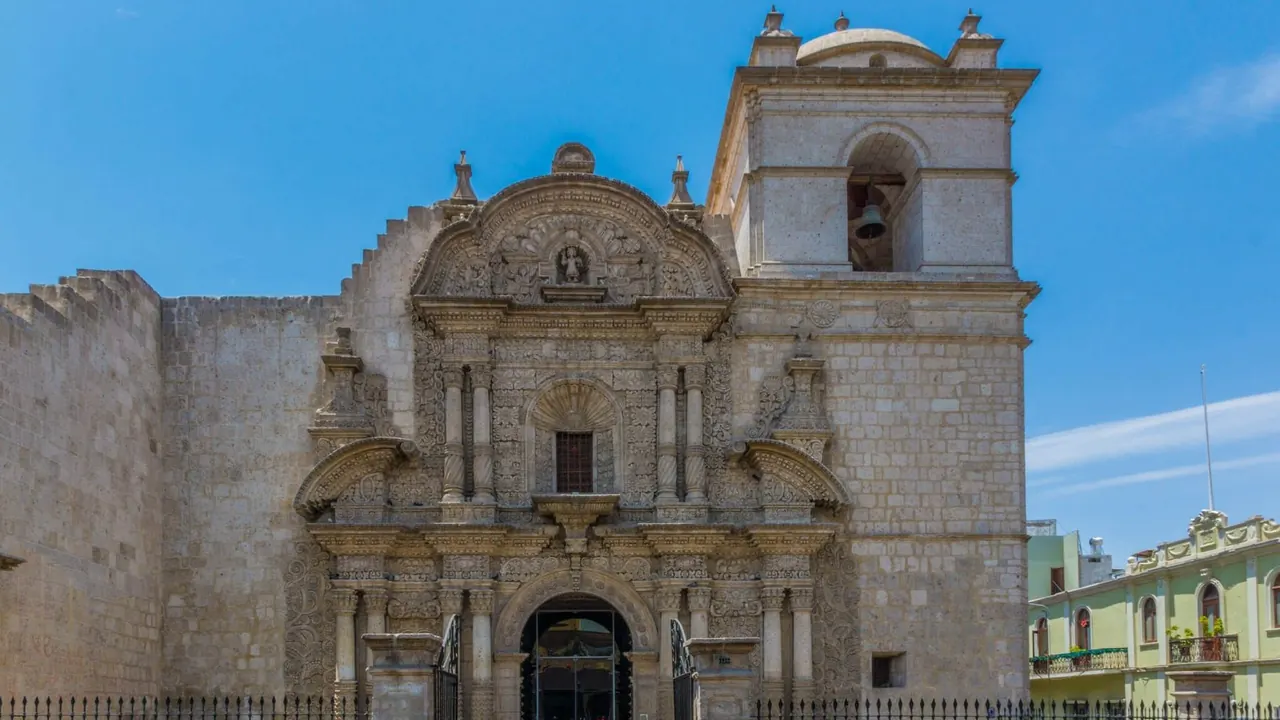
Photos: Arequipa by DocSlyper, CC BY-SA 2.0, cropped.
Arequipa or La Paz?
Our verdict in twelve categories, each scored against the same fixed benchmark cities, and the climate month by month, so you can choose for your trip.
Choose Arequipa for
- families
- wellness
- food and drink
Arequipa is the easier and more rounded stay. It suits travellers who want a handsome colonial centre to walk, long picantería lunches and a gentle altitude that lets them settle in on the first day. Families, couples after a calm few days and anyone who cares about regional cooking will get more from the White City, with Colca Canyon as the big outing at the end.
Choose La Paz for
- day trips
- prices
- nature and the outdoors
La Paz is for travellers who come for the mountains and the raw street life. The glaciers of the Cordillera Real, the Death Road ride and climbs such as Huayna Potosí are closer and more dramatic, Tiwanaku makes a proper day trip, and the city is even cheaper. In return you get a hard altitude, steep streets and far less comfort, so it rewards fit, adventurous adults more than anyone looking to unwind.
Scoreboard
Twelve categories on one fixed scale from 0 to 100. The shaded stretch is the gap between the two.
Your match
Pick a travel style or drag the sliders, and both match scores follow your weighting.
Wins on families and wellness with your weighting.
Wins on day trips and prices with your weighting.
What matters to you?
Category by category
What the scores mean for a trip.
Beaches & swimming
Neither city is a place to swim, but the gap differs in kind. From Arequipa the Pacific is a two-hour drive to wide sandy beaches at Mollendo and Mejía, though the Humboldt Current keeps the water cold and the surf rough.
La Paz is landlocked, and its nearest big water, Lake Titicaca, is around 12°C and suited to boat trips rather than bathing. In both cities a swim means the hotel pool.
Food & drink
Arequipa eats noticeably better. Its picanterías, loud family dining rooms with clay stoves, serve one of Peru's great regional cuisines: rocoto relleno, river-shrimp chowder and Sunday adobo, washed down with dark chicha. San Camilo market and the modern Peruvian kitchens around the plaza add depth.
La Paz's strength is the street and the market: mid-morning salteñas, anticucho grills after dark, and set lunches at shared tables in Mercado Rodríguez. A few Sopocachi restaurants cook ambitiously with quinoa and llama, but the everyday range is narrow and heavy, and altitude blunts many visitors' appetites at first.
Culture & sights
Arequipa has the richer set of sights. Its whole centre of pale sillar stone is a UNESCO site, and Santa Catalina's walled town of ochre and indigo lanes alone fills half a day, with Juanita at the Museo Santuarios Andinos and La Compañía's carved portal close by.
La Paz has a smaller colonial core around San Francisco, Plaza Murillo and Calle Jaén, plus good national art and ethnography museums. Its pull is living culture rather than monuments: the Witches' Market, cholitas in bowler hats, El Alto's cholet mansions and the view from the cable cars.
Nightlife
Arequipa's nights out happen on one street. Pisco bars, terraces and a few dance clubs on Calle San Francisco and its side streets fill with students from Thursday to Saturday and can run late to salsa and reggaeton. On weeknights the centre goes quiet early, which suits anyone leaving for Colca before dawn.
La Paz spreads its evenings across several districts: small cocktail and craft beer bars in Sopocachi, traveller bars around Sagárnaga full of climbers and bikers comparing stories, and bigger weekend clubs in the southern zone. The cold and the way alcohol hits at altitude cut most nights short, and a taxi is the way home.
Nature & outdoors
Both sit under great volcanic or glaciated peaks, but La Paz has more on its doorstep. Illimani rises over the suburbs, the Cordillera Real glaciers are a day out, Huayna Potosí is a two or three day climb, and the Death Road ride, Valle de la Luna and Chacaltaya are all easy to arrange.
Arequipa answers with El Misti and Chachani for guided climbs and the terraced campiña for gentle walks and cycling. Its showpiece, Colca Canyon with its condors, lies three to four hours away, so it takes more travelling to reach.
Day trips
La Paz has the stronger single day out. Tiwanaku, about an hour and a half across the Altiplano, is one of South America's major pre-Inca sites, and El Alto's market makes an easy half-day. Copacabana and Isla del Sol are better done with an overnight stay.
From Arequipa the short outings are pleasant but small: Sabandía's mill, colonial country estates and Sunday lunches in Characato or Tingo. Colca's villages and the Toro Muerto petroglyphs are too far for a day trip.
Good for families
Arequipa is far kinder to children. Its moderate altitude, flat centre and relaxed plazas make city days manageable, and Santa Catalina's maze of lanes appeals to older children, though there are no zoos or theme parks and Colca's high roads are tough on little ones.
In La Paz, landing at around 4,000m is a genuine risk for small children, and the steep streets and fierce traffic wear everyone down. The cable cars and the Mallasa zoo are the only real treats, so it suits families with teenagers who handle altitude well.
Getting around
Arequipa is simpler on foot. The plaza, Santa Catalina, the museums and most hotels lie a few flat blocks apart, and taxis cover the campiña and Yanahuara.
La Paz is harder to walk, because its streets climb steeply at a height where any slope leaves you breathless, and traffic jams are daily. Its saving grace is Mi Teleférico, the cable-car network that links the centre, the southern zone and El Alto with mountain views, backed by cheap taxis.
Shopping & style
Both are about alpaca and crafts rather than fashion, and neither has luxury streets. Arequipa is the home of Peru's alpaca industry, so the mill outlets selling baby alpaca and vicuña are where quality is most reliable. La Paz is the livelier hunt: the stalls of Sagárnaga and Linares, silver and musical instruments, the Witches' Market and El Alto's vast 16 de Julio fair, but quality varies and you need to look closely.
Affordability
Both are inexpensive, and La Paz is cheaper still. Market lunches, salteñas, cable-car rides and central hotels cost very little, and the main outlay is a reputable operator for the Death Road or Huayna Potosí.
Arequipa gives a little more comfort for slightly more spending, with colonial guesthouses and picantería meals. Its big costs are Colca tours and volcano climbs.
Live music & performing arts
La Paz offers more to watch. Its peñas stage morenada, caporales and diablada dancers to charangos and panpipes, the National Symphony plays at the historic Teatro Municipal, and the Gran Poder festival fills the streets with tens of thousands of costumed dancers each year.
Arequipa's scene is thinner: weekend folk dinners in the peñas, a regional orchestra and university theatre. The mid-August anniversary parades are its main moment.
Wellness & relaxation
Arequipa is much the better place to slow down. Dry sunshine, cloister courtyards and long lunches set an easy pace, the volcanic thermal pools at Yura are under an hour away, and the open-air springs near Chivay end a day at Colca well.
La Paz works against rest. The centre is loud and smoky, sleep suffers at altitude for the first nights, and the nearest hot springs at Urmiri are two hours out, leaving coca tea and the leafy streets of Sopocachi as the main comforts.
When should you go?
Pick your month. The climate figures are measured averages, not a forecast.
Arequipa in July
La Paz in July
Daytime high, °C
Rainfall in the month, mm
Where the figures come from
Arequipa's station stands 203 m above the city centre, so the centre is likely a little warmer than the figures say.
La Paz has no weather station within reach, so its figures come from a gridded climate model rather than a measured record, and read a broad area rather than the city itself.
Temperature and rainfall are climate normals, averaged over the years shown. Arequipa: 1991-2020 normals, Arequipa (9.2 km from centre). La Paz: 2001-2020 normals, NASA POWER reanalysis grid, no weather station within 90 km.
Arequipa's weather barely changes all year. Afternoons stay around 21°C in every month, and the only rain falls from January to March, when even the wettest month, February, brings just 36mm. From April to December it is almost completely dry, so any month suits walking the centre. May to November has the clearest skies for Colca and the volcanoes.
La Paz is much cooler at its altitude, with daytime highs around 14°C all year and cold evenings, so warm layers are needed whatever the month. It has a proper wet season from December to March, peaking at 136mm in January, when clouds can hide the peaks. May to September is dry and clear, the best time for both cities on one route. Neither is ever warm enough for a beach trip.
Which traveller are you?
On a family trip with young children, base yourselves in Arequipa. Most children adjust to its height within a day, so you can plan city days from the start rather than rest days. In La Paz, small children can't easily tell you when the thin air is making them ill.
For a relaxing and wellness trip, Arequipa lets you build slow days: easy mornings in the centre, afternoons by the hotel pool and a night in the Colca valley for its hot springs. In La Paz even rest takes effort, and there is no bathing tradition.
On an outdoors trip with plenty of height and adrenaline, choose La Paz. Serious mountaineering and big bike rides start close to town, and staying in the high city helps you acclimatise. Arequipa suits a gentler plan built around one canyon trip and a guided volcano climb.
Before you go
| Measure | Arequipa | La Paz |
|---|---|---|
| Official language | Spanish, Aymara, Quechua | Spanish, Aymara, Quechua, Guarani |
| Currency | Sol (PEN) | Boliviano (BOB) |
| Sockets | ABC220 V, 60 Hz | AC50 Hz |
| Driving side | Right | Right |
| Time zone | UTC-5 | UTC-4 |
| Emergency number | 111 or 911 | 911 |
| Elevation | 2,335 m | 3,640 m |
| Main airport | Rodríguez Ballón International Airport (AQP)7 km from centre2 non-stop destinations | El Alto International Airport (LPB)6 km from centre12 non-stop destinations |
| Public holidays this year | 17 days | 12 days |
By the numbers
| Measure | Arequipa | La Paz |
|---|---|---|
| City population | 1,008,290 | 755,732 |
| People per km² | 1,551 | 1,601 |
| Museums within 10 km | 3 | 21 |
| UNESCO World Heritage sites within 50 km | 1 | 1 |
Where else could you go?
Every comparison below shares a destination with this one, so you can follow Arequipa or La Paz somewhere new.