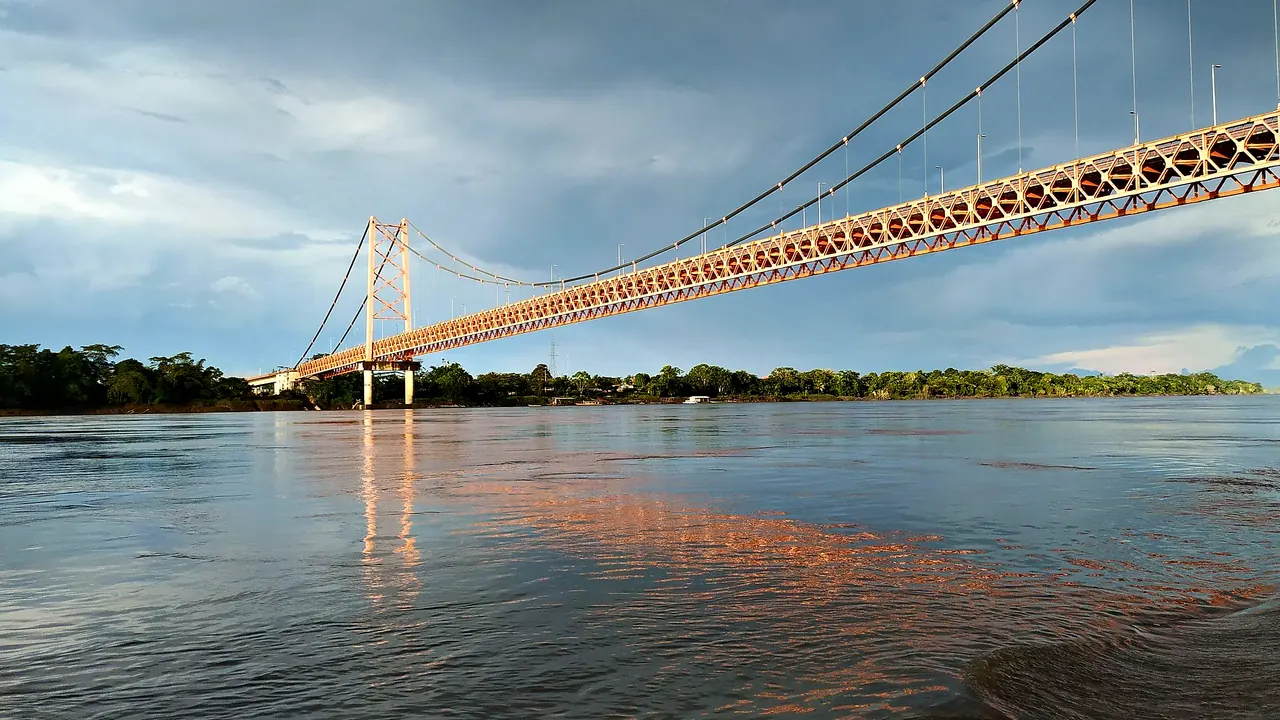
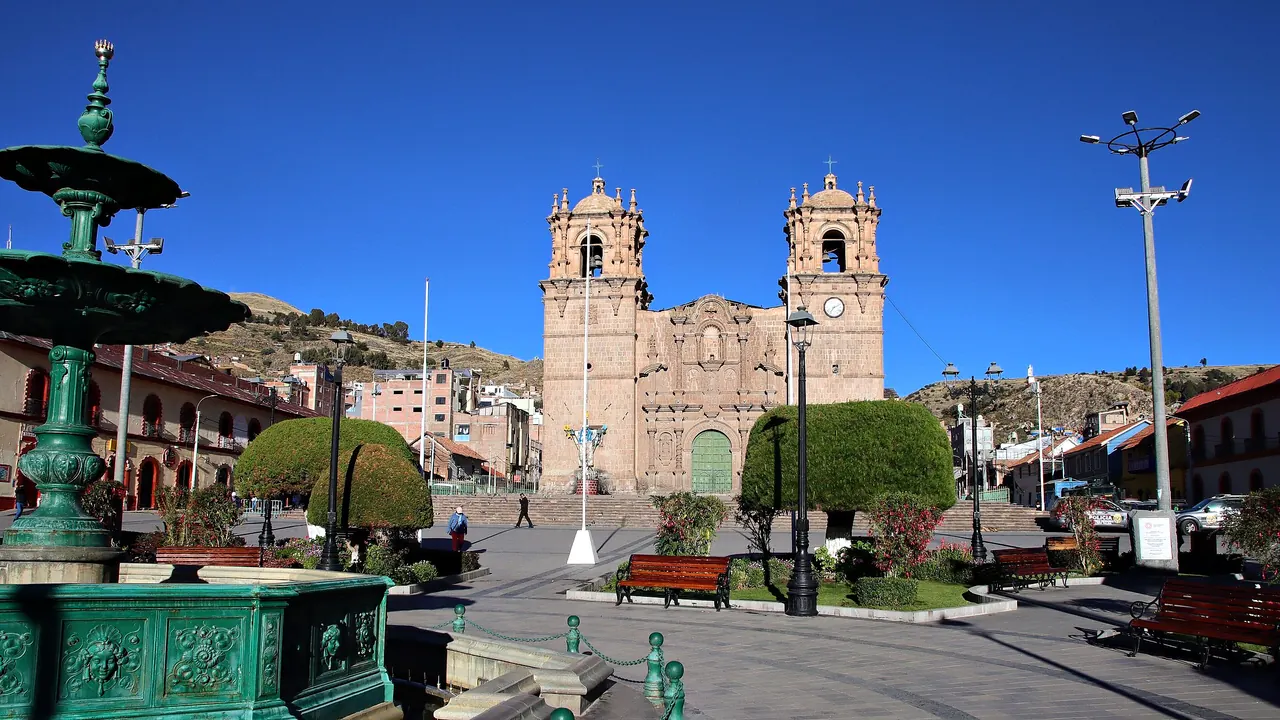
Photos: Puerto Maldonado by FERNANDO HUAMANI, Pexels License; Puno by Draceane, CC BY-SA 4.0, cropped.
Puerto Maldonado or Puno?
Our verdict in twelve categories, each scored against the same fixed benchmark cities, and the climate month by month, so you can choose for your trip.
Choose Puerto Maldonado for
- nature and the outdoors
- families
- wellness
Puerto Maldonado is for travellers who want the Amazon itself: guided walks through the forest, macaws at the clay licks at dawn, giant otters on Lake Sandoval and nights in a lodge on the river. The town has little to offer, so the forest is the trip. It suits people who are happy to let a lodge and its guides plan their days, and older children who love animals can enjoy it too.
Choose Puno for
- day trips
- live music and the arts
- shopping
Choose Puno for Lake Titicaca and the Andean culture around it. It is a cheap, practical base for boat trips to the Uros and Taquile, the burial towers of Sillustani and the colonial churches along the shore. It also has better textile shopping and a real dance tradition. The cost is the altitude, so it suits adults who can take time to adjust, not young families.
Scoreboard
Twelve categories on one fixed scale from 0 to 100. The shaded stretch is the gap between the two.
Your match
Pick a travel style or drag the sliders, and both match scores follow your weighting.
Wins on nature and the outdoors and families with your weighting.
Wins on day trips and live music and the arts with your weighting.
What matters to you?
Category by category
What the scores mean for a trip.
Beaches & swimming
Neither is a place to swim, and for opposite reasons. Puerto Maldonado's rivers are warm but brown and fast, with caimans and stingrays, so you swim only where a lodge guide says it is safe. A pool is the realistic way to cool off.
In Puno the problem is cold. Lake Titicaca stays at about 10°C to 14°C all year, and only a few sandy coves on the islands tempt hardy visitors into a quick dip.
Food & drink
Both cook simple regional food, with little range beyond it. Puerto Maldonado eats like the Amazon: juane steamed in bijao leaves, tacacho with smoked cecina, river fish such as paiche, and juices of camu camu and aguaje. Most meals, though, end up being the set food of a lodge.
Puno eats like the high plateau: lake trout cooked every way, quinoa stews, alpaca and endless coca tea. Breakfast at the Mercado Central counters is the best meal in town, and the traveller restaurants on Jirón Lima are the fallback.
Culture & sights
Puno has more to see, though neither is a sightseeing city. Its stone cathedral with a baroque façade, the Kuntur Wasi viewpoint, the coca museum and the Yavari, a Victorian steamship carried over the Andes in pieces, fill a day. The living lake culture is just offshore.
Puerto Maldonado is a frontier town built on rubber, gold and Brazil nuts. Its plaza, the Obelisco tower and the bridge over the Madre de Dios take an hour or two.
Nightlife
Neither offers much after dark, and the little there is differs. In Puerto Maldonado, weekend discotecas and karaoke bars play cumbia for local people, while visitors are usually out at a lodge on a caiman walk. Puno has a few traveller pubs on Jirón Lima serving pisco sours, but freezing nights, the altitude and early boats send most people to bed after dinner, except in festival season.
Nature & outdoors
Puerto Maldonado is the much stronger choice for nature. It is the gateway to the Tambopata reserve and Bahuaja-Sonene, with macaws at the clay licks at dawn, otters and hoatzins on Lake Sandoval, monkeys, capybaras and canopy towers. You reach it all by canoe and explore it with guides.
In Puno, nature means landscape more than wildlife: the huge lake under a hard sky, reed beds home to the flightless Titicaca grebe, kayaking off the Capachica peninsula and short island climbs that leave you out of breath. It is beautiful, but the altitude limits how active you can be.
Day trips
This is where Puno is far ahead. The floating Uros islands are a short boat ride away, and Taquile and Amantaní are longer crossings. Sillustani's burial towers are under an hour away, and the southern shore road leads to Chucuito and the churches of Juli.
From Puerto Maldonado there is nowhere to go except deeper into the forest. The roads lead into cattle ranches and gold-mining country, so the lodge itself is the outing.
Good for families
Puerto Maldonado is the easier of two hard choices for families. Older children who love animals get monkeys, caimans by torchlight and a butterfly farm, and some lodges keep the walks short. Even so, the heat, the insects, basic medical care and long boat rides make it hard with young ones.
Puno is harder still. Altitude sickness can hit small children quickly, and many guesthouses have little heating on freezing nights. Apart from climbing a reed watchtower on the Uros, there is little for children to do.
Getting around
Puno is easier to get around on your own. The plaza, Jirón Lima and the market are minutes apart on foot, and colectivos and tours reach the islands' port, Sillustani and the shore villages. The catch is that the slopes leave newcomers breathless and the commercial streets are clogged with traffic.
In Puerto Maldonado, mototaxis get you around the hot, low town. Beyond it every journey is by lodge boat and arranged for you, so you can hardly explore on your own.
Shopping & style
Puno is the place to shop, and textiles are the thing to buy. The craft market by the port sells alpaca sweaters, chullo hats and woven belts of mixed quality, and the best pieces come straight from the knitters and weavers on Taquile. Puerto Maldonado offers Brazil nuts, nut sweets and a few stalls of seed jewellery and carvings, and little else to take home.
Affordability
Puno is the cheaper trip overall. Guesthouses, market breakfasts, set lunches, tricycle taxis and shared island boats all cost little, and only the lakeside hotels and the traveller restaurants on Jirón Lima charge noticeably more.
Puerto Maldonado's town is cheap as well, but few visitors stay in it. The all-inclusive rainforest lodges are what you come for, and the further upriver they are, the more they cost. Choosing a lodge near town or a day trip to Lake Sandoval keeps the cost down.
Live music & performing arts
Puno has a real dance tradition and Puerto Maldonado does not. Each February the Candelaria festival fills Puno with tens of thousands of masked dancers, brass bands and panpipes, and for the rest of the year restaurants stage Andean music over dinner. In Puerto Maldonado, live performance comes down to occasional folk dancing on the plaza and a little music at some lodges.
Wellness & relaxation
Neither has a spa culture, but Puerto Maldonado is the more restful of the two. A lodge on the river means hammocks, no traffic and the sounds of the forest at night between early walks. A few lodges offer massages, though the heat and insects make lounging hard.
In Puno, the first days are tiring rather than calming while your body adjusts to the altitude, and the centre is noisy with traffic. The quiet is out on the islands at dusk, or sitting in the sun with a cup of coca tea.
When should you go?
Pick your month. The climate figures are measured averages, not a forecast.
Puerto Maldonado in July
Puno in July
Daytime high, °C
Rainfall in the month, mm
Where the figures come from
Puno's temperatures are measured 42 km from the centre, at Juliaca.
Puno has no rain gauge within 25 km of the centre, so its rainfall comes from a gridded climate dataset read at the destination rather than from a gauge further away.
Temperature and rainfall are climate normals, averaged over the years shown. Puerto Maldonado: 1963-2025, 28 years observed (rainfall 1981-2010) normals, Puerto Maldonado (4.1 km from centre). Puno: 1991-2020 normals, Juliaca (42.3 km from centre).
Puerto Maldonado is hot every month, with daytime highs between 30°C and 34°C, so the rain decides when to go, not the heat. From December to March it pours, at around 300mm a month. The rivers run high and the trails turn to mud. June to August is the dry spell, when rainfall drops to a fraction of that and forest walks are easiest. September is the hottest month, just as the rain starts to come back.
Puno never gets warm. Highs stay near 18°C all year and the nights are cold, so a sunny afternoon is as good as it gets. Its dry season runs from May to August, when almost no rain falls. January to March is the wet season, with the most rain in February at about 169mm. Both cities are at their best in the same months, roughly June to August, but in Puerto Maldonado that means steamy heat and in Puno crisp days.
Which traveller are you?
For an outdoors trip, Puerto Maldonado is the clear choice. Lodges up the Tambopata offer macaw clay licks, giant otters on Lake Sandoval, canopy towers and night walks. Puno's lake and reed beds are striking, but the thin air limits how much you can do.
On a culture and arts trip, Puno has much more. There is the Yavari steamship, the baroque cathedral, the weaving traditions of the islands and the towers of Sillustani, and every February the Candelaria festival fills the streets. Puerto Maldonado has little beyond its plaza.
On a tight budget, Puno makes your money go further. Guesthouses, breakfasts at the market counters and shared boats to the islands all cost little. Puerto Maldonado's town is cheap too, but the rainforest lodge stays that are the reason to go take most of the budget.
Before you go
| Measure | Puerto Maldonado | Puno |
|---|---|---|
| Official language | Spanish, Aymara, Quechua | Spanish, Aymara, Quechua |
| Currency | Sol (PEN) | Sol (PEN) |
| Sockets | ABC220 V, 60 Hz | ABC220 V, 60 Hz |
| Driving side | Right | Right |
| Time zone | UTC-5 | UTC-5 |
| Emergency number | 111 or 911 | 111 or 911 |
| Elevation | 183 m | 3,830 m |
| Main airport | Padre Aldamiz International Airport (PEM)5 km from centre2 non-stop destinations | Inca Manco Capac International Airport (JUL)44 km from centre1 non-stop destination |
| Public holidays this year | 17 days | 17 days |
By the numbers
| Measure | Puerto Maldonado | Puno |
|---|---|---|
| Population | 85,024 | 128,637 |
| Museums within 10 km | 0 | 1 |
| UNESCO World Heritage sites within 50 km | 0 | 1 |
Where else could you go?
Every comparison below shares a destination with this one, so you can follow Puerto Maldonado or Puno somewhere new.
- Arequipavs Puno
- La Pazvs Puno
- Cuscovs Puerto Maldonado
- Cuscovs Puno
- La Pazvs Puerto Maldonado
- Arequipavs Puerto Maldonado