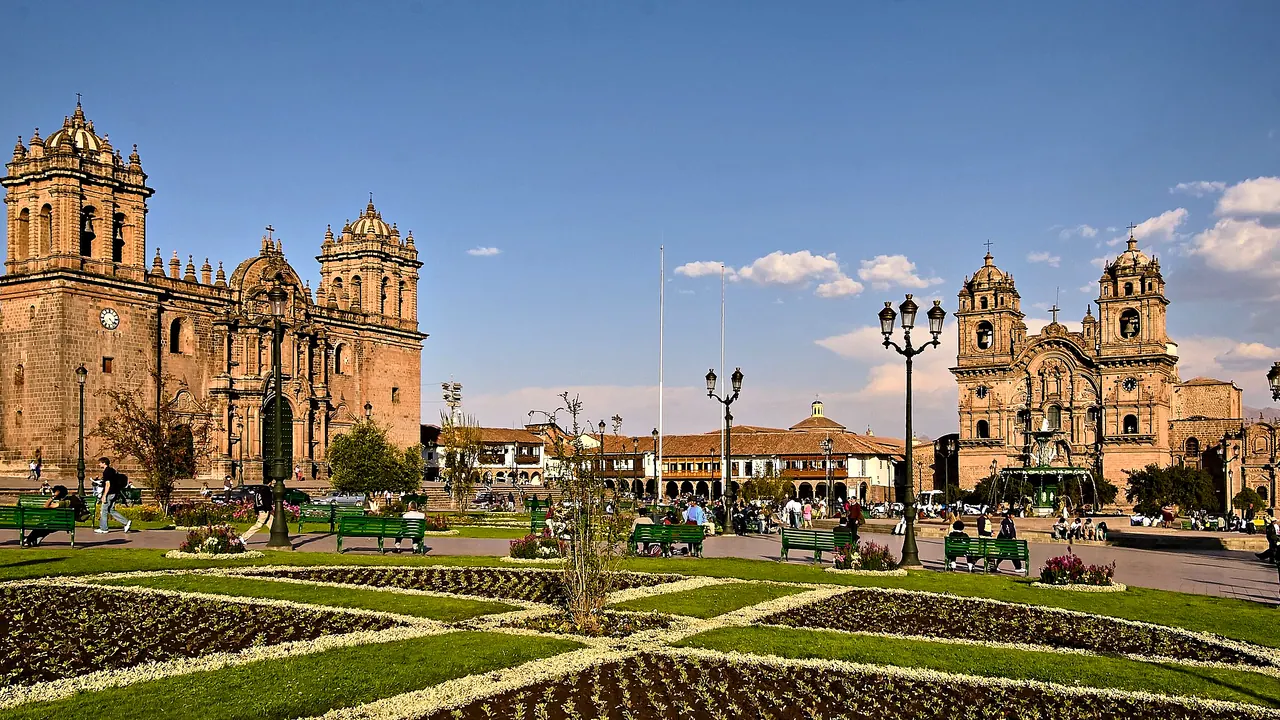
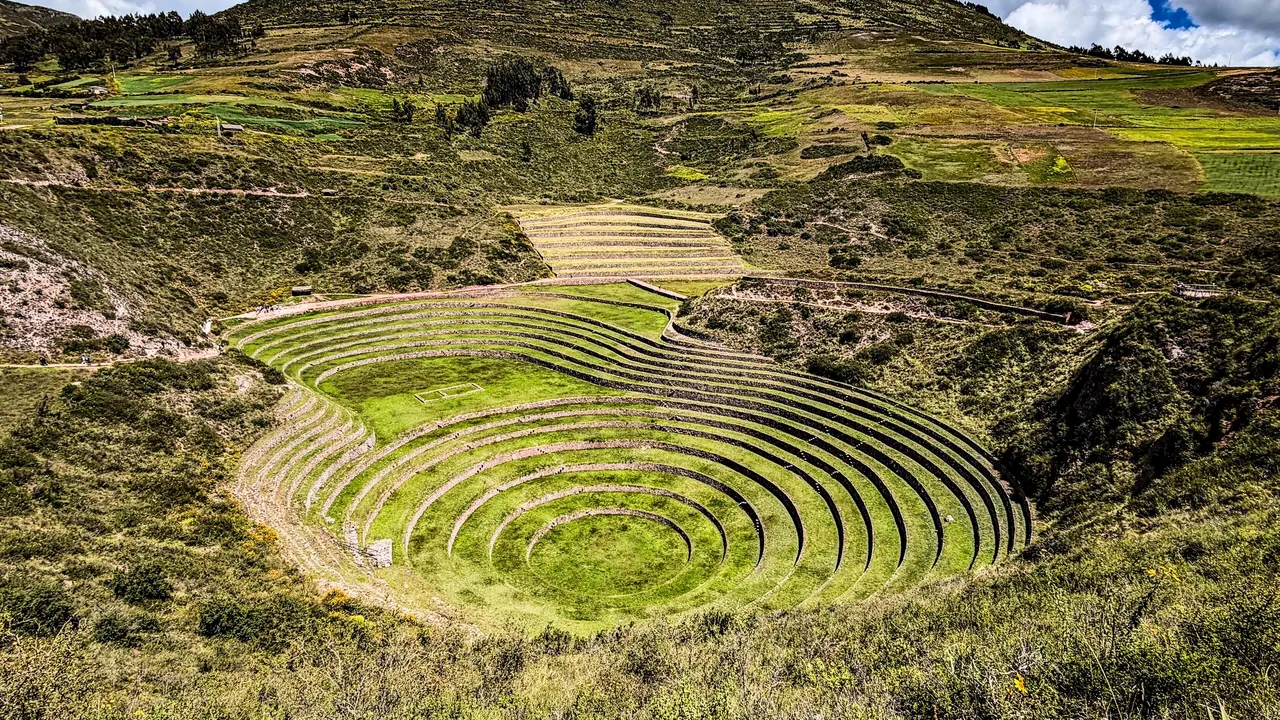
Photos: Cusco by Pedro Szekely, CC BY-SA 2.0, cropped; Sacred Valley by Jay Galvin, CC BY-SA 4.0, cropped.
Cusco or Sacred Valley?
Our verdict in twelve categories, each scored against the same fixed benchmark cities, and the climate month by month, so you can choose for your trip.
Choose Cusco for
- nightlife
- day trips
- getting around
Choose Cusco if you want a town to come back to each evening. It has Inca walls under colonial churches, bars and restaurants off the Plaza de Armas, folkloric shows and the widest choice of food in the region, and the Sacred Valley and Machu Picchu work as outings from it. It is cheaper day to day and easier to get around on foot and by taxi. It is also higher, steeper and harder on small children.
Choose Sacred Valley for
- wellness
- families
- nature and the outdoors
The Sacred Valley suits travellers who would rather wake up among the ruins and trailheads than drive out to them. Ollantaytambo is on the train line to Machu Picchu, the lodges around Urubamba offer gardens and quiet, and the lower altitude is kinder to families and to sleep in the first few nights. In return you give up nights out, a wide choice of food and any kind of stage, and reaching the outlying sites means hiring drivers or joining tours.
Scoreboard
Twelve categories on one fixed scale from 0 to 100. The shaded stretch is the gap between the two.
Your match
Pick a travel style or drag the sliders, and both match scores follow your weighting.
Wins on nightlife and day trips with your weighting.
Wins on wellness and families with your weighting.
What matters to you?
Category by category
What the scores mean for a trip.
Beaches & swimming
Neither has anywhere to swim. Cusco at about 3,400m and the valley at 2,900m are both far from the Pacific, and their rivers and lagoons run cold. The one practical difference is that some of the valley's country lodges have a heated pool, which is as close to a swim as either place gets.
Food & drink
Cusco eats better and more widely. Between the San Pedro market, the picanterías with their soups and chicharrón, and the Novoandino tasting menus around the Plaza de Armas and San Blas, you can choose anything from a quick lunch to a long dinner, even if food from outside Peru is hard to find.
The valley has the same produce on its doorstep, including native potatoes, giant Urubamba corn and river trout, and a few remarkable tables near Moray and in the country lodges. Day to day, though, dinner in Ollantaytambo or Pisac usually means pizza, soup or alpaca steak, and there are no cafés or street food to fall back on.
Culture & sights
Both are Inca country of the first rank, but you experience them differently. Cusco is a city built in layers: the mortarless walls along Hatun Rumiyoc, Qorikancha with Santo Domingo on top, the cathedral's Cusco School paintings and a handful of small museums, with Sacsayhuamán on the hill above.
The valley is almost all open air: Ollantaytambo's lived-in Inca street grid, the ruins along the ridge above Pisac, Moray's sunken circles, the Maras salt pans and, at the end of the railway, Machu Picchu. There is little to see indoors, and many of the sites mean steep climbs.
Nightlife
This is one of the biggest differences between the two. Cusco has a compact cluster of bars and clubs off the Plaza de Armas that fill with backpackers and trekkers and can stay open into the early hours at weekends, plus quieter cocktail and craft beer bars in San Blas.
In the valley, a night out is a pisco sour with dinner in Ollantaytambo or Pisac and an early night before a dawn train. Anyone who wants to go out should stay in Cusco and visit the valley by day.
Nature & outdoors
Both are superb bases for the Andes, and the difference is mostly about position. From Cusco the big draws are long day hikes reached by early drives: the glacial lake of Humantay under Salkantay, the Rainbow Mountain at over 5,000m, and the remote Ausangate circuit for those with more time.
The valley puts you at the start of the Inca Trail and the Lares treks, with shorter outings close by: rafting on the Urubamba, biking down to Maras and Moray, the granaries above Ollantaytambo and the via ferrata on the cliffs. You spend less of each day in a vehicle.
Day trips
Cusco has the longer list of outings because the whole Sacred Valley is an hour or so away: Pisac, Ollantaytambo, Chinchero, Moray and Maras, plus Tipón and the painted church of Andahuaylillas to the south-east. Machu Picchu means a long day by road, train and bus, so many people from Cusco spend a night in the valley.
From the valley, Cusco itself is the one big day out, with the sites to its south-east as a longer extension. Beyond that, the outings are the valley sites you are already staying among, so there is little change of scene.
Good for families
Neither is easy with small children, but the valley is the kinder of the two. It sits about 500m lower, the garden lodges around Urubamba give children room to play, and older children can go rafting, take a zipline, ride horses and meet alpacas.
Cusco brings the full 3,400m of altitude, narrow cobbled pavements and days built around churches and early tour departures. Families who do base themselves there often end up spending most of their time down in the valley.
Getting around
Cusco is the easier place to be without a car. Its historic centre is small enough to walk, though the climbs to San Blas and Sacsayhuamán are hard work at first, and cheap taxis cover the rest, including the ride back uphill at night.
In the valley each town is walkable, but the towns are spread out and linked only by shared minivans along the main road. Moray, Maras and Chinchero really need a driver or a tour, so independent travellers spend more time arranging transport. The one advantage is that Ollantaytambo is where the train to Machu Picchu leaves from.
Shopping & style
In both places shopping means Andean textiles, and in both the best pieces come from the weaving cooperatives around Chinchero. Cusco has more besides: the San Blas workshops for ceramics, carved religious images and silverwork, the San Pedro market and the big craft halls, though the shops near the main square repeat the same factory-made stock.
The valley has the cooperatives on their home ground, where you can watch wool being dyed with plants and woven on backstrap looms, and the market that spreads across Pisac's plaza. Beyond that the choice is small, and there are no boutiques at all.
Affordability
Both are cheap day to day and expensive when it comes to Machu Picchu, but your money goes further in Cusco. Market lunches, taxis and simple guesthouses cost little, and a combined ticket covers many of the churches and Inca sites.
The valley's family guesthouses and shared minivans are also inexpensive, but more of a stay tends to go on things priced for foreigners. That means site tickets, drivers for the outlying ruins and the country lodges around Urubamba, which are often the reason people choose the valley in the first place.
Live music & performing arts
Cusco has more to watch, though not a great deal. Folkloric dance shows run most evenings, panpipe and charango bands play in restaurants, and the festivals are strong, with Inti Raymi at Sacsayhuamán around the June solstice and Corpus Christi filling the streets.
The valley has no stage at all. Its performances come with the patron-saint fiestas in Pisac, Ollantaytambo and the villages, when masked dancers and brass bands take over the plazas, and with the music and dance some lodges put on for their guests.
Wellness & relaxation
The valley is the better place to slow down, and plenty of people based in Cusco go down there to do just that. Between Urubamba and Yucay, riverside lodges sit in wide gardens, some with a spa or heated pool, and small yoga and meditation retreats gather around Pisac.
Cusco has cheap massage on the streets near the square and hotel spas, some of which pump oxygen into the rooms. But its higher altitude, colder nights and departures before dawn make it harder to rest. Neither place has a bathing tradition, and the hot springs at Lares and Aguas Calientes are some way from both.
When should you go?
Pick your month. The climate figures are measured averages, not a forecast.
Cusco in July
Sacred Valley in July
Daytime high, °C
Rainfall in the month, mm
Where the figures come from
Cusco's station stands 151 m below the city centre, so the centre is likely a little cooler than the figures say.
Sacred Valley has no weather station within reach, so its figures come from a gridded climate model rather than a measured record, and read a broad area rather than one spot.
Temperature and rainfall are climate normals, averaged over the years shown. Cusco: 1991-2020 normals, Cuzco (3.7 km from centre). Sacred Valley: 1991-2020 normals, TerraClimate 4 km grid at the town, no weather station within 90 km.
Both follow the same Andean pattern. Daytime temperatures barely change through the year, around 20°C in Cusco and a degree or two warmer in the valley, so the choice is about rain rather than heat. May to September is the best time for both, with almost no rain in June and July and clear skies for the ruins and the treks. Neither place is ever too hot for walking, and neither has a beach season at any time of year.
The rains build from October and peak in January, when Cusco gets about 159mm and the valley about 114mm. The valley stays a little drier through the whole wet season. April and October are good in-between months in both places, greener than the driest part of the year with only scattered showers. From December to March the problems are muddy trails and cloud over the peaks.
Which traveller are you?
For a food and nightlife trip, Cusco is the clear choice. The San Pedro market, the local picanterías and the Novoandino tasting menus in San Blas give far more range than the valley has. The bars off the Plaza de Armas stay open late, while the valley towns go to bed early.
On a relaxing and wellness trip, the Sacred Valley wins. Riverside lodges between Urubamba and Yucay, yoga retreats around Pisac and quiet evenings make it easy to rest. Cusco has cheap massage, but also steeper streets, thinner air and tours that leave before dawn.
On a family trip with children, the Sacred Valley is the gentler base, though neither is easy. It sits lower, the garden lodges near Urubamba give children space, and older ones can go rafting, ride horses and meet alpacas. Cusco's steep cobbles and altitude are harder on the young.
Before you go
| Measure | Cusco | Sacred Valley |
|---|---|---|
| Official language | Spanish, Aymara, Quechua | Spanish, Aymara, Quechua |
| Currency | Sol (PEN) | Sol (PEN) |
| Sockets | ABC220 V, 60 Hz | ABC220 V, 60 Hz |
| Driving side | Right | Right |
| Time zone | UTC-5 | UTC-5 |
| Emergency number | 111 or 911 | 111 or 911 |
| Elevation | 3,399 m | - |
| Main airport | Alejandro Velasco Astete International Airport (CUZ)5 km from centre6 non-stop destinations | Alejandro Velasco Astete International Airport (CUZ)6 non-stop destinations |
| Public holidays this year | 17 days | 17 days |
By the numbers
| Measure | Cusco | Sacred Valley |
|---|---|---|
| Population | 428,450 | - |
| Museums within 10 km | 11 | - |
| UNESCO World Heritage sites within 50 km | 2 | - |
Where else could you go?
Every comparison below shares a destination with this one, so you can follow Cusco or Sacred Valley somewhere new.