Peru
Sacred Valley
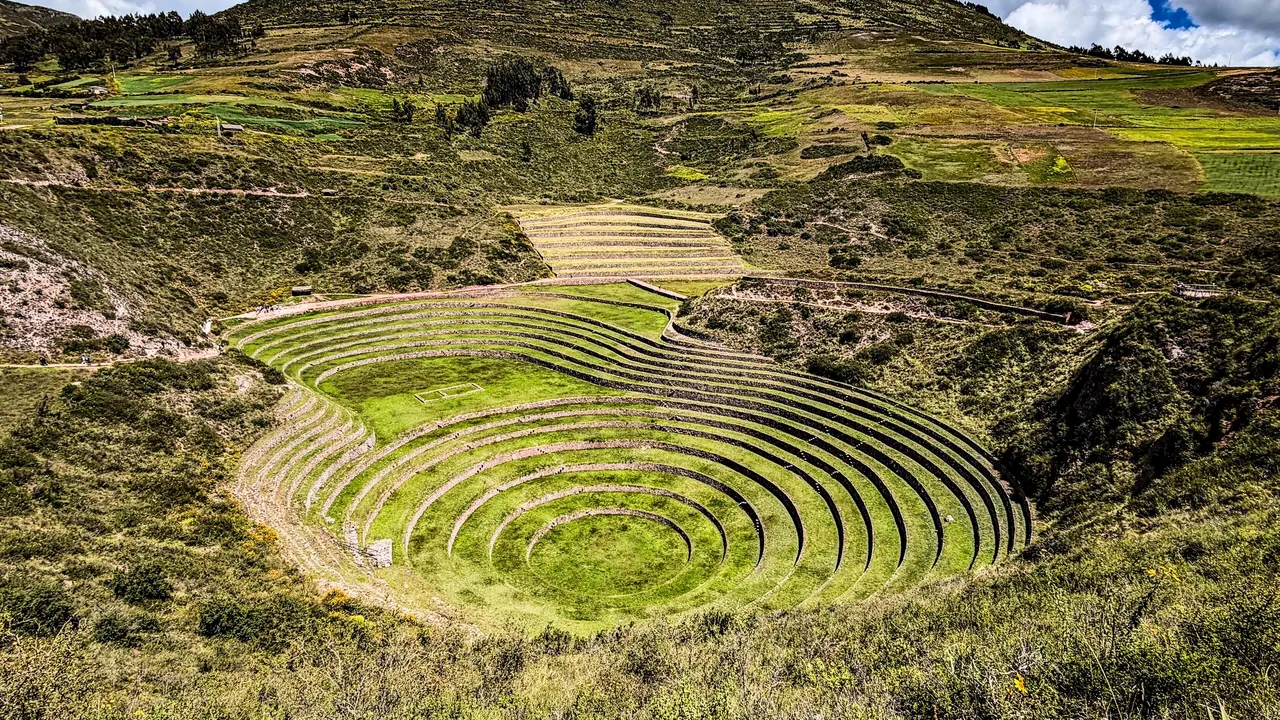
The circular Inca terraces of Moray
- Nature & outdoors87
- Culture & sights80
- Affordability62
Photo: Jay Galvin, CC BY-SA 4.0, cropped
Match
41
Every category weighted equally
- Beach & sun39
- Culture & arts44
- Food & nightlife35
- Family trip43
- Outdoors50
- Relax & unwind44
- Shopping & style39
- On a budget43
Sacred Valley in twelve categories
Our verdict on each, scored 0 to 100 against the same fixed benchmark cities, so a score means the same thing on every page.
Beaches & swimming. Scores 3 out of 100.
Food & drink. Scores 40 out of 100.
Culture & sights. Scores 80 out of 100.
Nightlife. Scores 6 out of 100.
Nature & outdoors. Scores 87 out of 100.
Day trips. Scores 58 out of 100.
Good for families. Scores 22 out of 100.
Getting around. Scores 30 out of 100.
Shopping & style. Scores 40 out of 100.
Affordability. Scores 62 out of 100.
Live music & performing arts. Scores 12 out of 100.
Wellness & relaxation. Scores 52 out of 100.
Sacred Valley category by category
Beaches & swimming
3There is no swimming here. The Sacred Valley is a high Andean valley about 2,900m up, a long way from the Pacific coast, and the Urubamba River runs cold, fast and silty. If you want a swim, look for a lodge with a heated pool.
Food & drink
40Food here comes from the land around you: hundreds of native potatoes, giant white Urubamba corn, quinoa, trout from the river and cuy roasted for feast days. Urubamba and Pisac have the best spread, with local markets, wood-fired bread ovens in Pisac and simple picanterías serving chicha de jora by the jug. Some of the most ambitious Andean cooking in Peru happens out in the fields near Moray and in the kitchens of the valley's country lodges, where tasting menus are built on produce grown at altitude.
The range is narrow, though. Evenings in Ollantaytambo and Pisac mostly mean pizza, soup and alpaca steak aimed at trekkers. There is no café culture, no street-food scene and almost nothing international.
Culture & sights
80The valley was the Inca heartland, and the stonework is everywhere. Ollantaytambo is still a working town laid out on its Inca street plan, below a terraced temple-fortress. Above Pisac there are ruins spread along a ridge, with agricultural terraces curving around the mountainside. Moray has its circular terraces sunk into the plateau, the Maras salt pans spill down a ravine in thousands of white pools, and Chinchero has a colonial church built on Inca walls.
Machu Picchu crowns it all. A visit takes a full day: the train runs downriver from Ollantaytambo to Aguas Calientes, then a bus climbs to the citadel. Museums are few and small, so the experience is the sites themselves, many of them steep and high in thin air.
Nightlife
6Evenings are short. Ollantaytambo and Pisac have a handful of small bars and restaurants with a pisco sour on the menu, and most visitors are asleep early because the Machu Picchu trains and the trekking starts leave before dawn. If you want a night out, stay in Cusco.
Nature & outdoors
87The valley is a deep green trench of farmland and eucalyptus between steep mountainsides, with the snow peaks of Verónica and Pitusiray above it. This is where the classic Andean treks begin. The Inca Trail runs from near Ollantaytambo through cloud forest to Machu Picchu, the Salkantay route crosses a high glacier pass, and the Lares treks pass through weaving villages and herds of alpaca and llama, often to hot springs at the end of the day.
There is more for shorter stays. You can raft the Urubamba, mountain bike from the Chinchero plateau down to Maras and Moray, climb to Inca granaries above Ollantaytambo or take the via ferrata on the cliffs. The dry season from May to September brings clear skies and cold nights. In the rains the slopes turn greener and the trails turn muddy.
Day trips
58The great day out is Cusco, about an hour by road over the plateau. You get the Inca walls under colonial churches, the cathedral, Qorikancha and the San Blas quarter, plus Sacsayhuamán on the hill above. Beyond Cusco, a longer day takes in the Inca water gardens at Tipón, the pre-Inca city of Pikillacta and the painted church at Andahuaylillas. After that the options run out, and the other outings stay within the valley.
Good for families
22Families with older, active children do well here: rafting, ziplines, horse riding and alpacas at the textile centres. Younger children struggle. The valley is lower than Cusco, but at 2,900m altitude still matters, and the ruins mean steep, unfenced terraces and long stairways. Machu Picchu is a very long day, and nothing in the region is made for small children. The calmer country lodges around Urubamba, with gardens, make the easiest base.
Getting around
30The valley towns are small. You can walk all of Ollantaytambo and Pisac, but there is little to link the towns. Shared minivans run along the valley road between Pisac, Urubamba and Ollantaytambo. Sites such as Moray, Maras and the Chinchero plateau are easiest with a hired driver or a tour. The drives are short, usually under an hour, on paved but winding roads. Machu Picchu has no road access, so you take the train from Ollantaytambo and then the bus up to the gate. Plan this ahead.
Shopping & style
40Shopping here means textiles. In Chinchero and the villages above Urubamba, weaving cooperatives show how wool is dyed with plants and woven on backstrap looms, and their alpaca and sheep's-wool pieces are the real thing. Pisac's market spreads across the plaza and nearby streets with ceramics, silver and woven goods. Much of it is mass-produced souvenirs, so go to the cooperatives for quality. There are no boutiques or fashion shops.
Affordability
62Daily life in the valley is cheap. Family guesthouses in Ollantaytambo and Pisac, set lunches in local eateries and shared minivans cost very little. The expense is Machu Picchu: the tourist trains, the entrance, the shuttle bus and often a guide add up to a big share of most budgets. Site tickets for the other ruins, guided treks and the country lodges and spa hotels in Urubamba are also priced for foreigners.
Live music & performing arts
12There is no stage here. Live performance happens at the patron-saint fiestas in Pisac, Ollantaytambo and the villages, when masked dance troupes and brass bands fill the plazas for days, and at the Andean music and dance some lodges and restaurants put on for guests. Formal concerts and theatre mean a trip to Cusco.
Wellness & relaxation
52The valley's way of relaxing is slow and rural, not bathing. Around Pisac there are small yoga and meditation retreats and Andean ceremonies led by local healers. Between Urubamba and Yucay, country lodges sit in wide gardens by the river, and some have a spa or a heated pool. Days start early and end early, and the town evenings are quiet.
There is no bathing tradition. The hot springs at Lares and the municipal thermal pools at Aguas Calientes are simple, warm pools in the mountains, pleasant after a hike but not worth a trip on their own. The altitude also gets in the way of rest. At 2,900m the first nights often bring poor sleep and headaches, so plan a gentle start.
Where to stay in Sacred Valley
Ollantaytambo is the practical base for Machu Picchu and the treks. The trains downriver leave from here, the Inca Trail starts nearby, and the town is small enough to walk, its Inca street plan laid out below the terraced fortress. Family guesthouses keep costs low, and evenings end early. It suits walkers, trekkers and anyone catching a dawn train.
Pisac, at the eastern end of the valley and the closest valley town to Cusco, suits a slower stay. Its market spreads across the plaza, there are wood-fired bread ovens and simple places to eat, and small yoga and meditation retreats sit around the town, with the ridge-top ruins above.
Between Urubamba and Yucay, in the middle of the valley, country lodges stand in wide gardens by the river, some with a spa or heated pool. This is the easiest base for families with children and for a quiet, restful stay. It is also central for drives to Moray, Maras and Chinchero with a hired driver. On a first visit, a few nights here or in Pisac followed by a night in Ollantaytambo before the train works well, with only one move along a short valley road. If nightlife matters, stay in Cusco and see the valley on day trips.
When should you go?
Pick a month to see what it is like. The climate figures are measured averages, not a forecast.
Sacred Valley in July
Daytime high, °C
Rainfall in the month, mm
The whole year
Shaded against this destination’s own year: the deepest cell is its best month for that figure and the palest its weakest.
Where the figures come from
Sacred Valley has no weather station within reach, so its figures come from a gridded climate model rather than a measured record, and read a broad area rather than one spot.
Temperature and rainfall are climate normals, averaged over the years shown. Sacred Valley: 1991-2020 normals, TerraClimate 4 km grid at the town, no weather station within 90 km.
Before you go
| Measure | Sacred Valley |
|---|---|
| Official language | Spanish, Aymara, Quechua |
| Currency | Sol (PEN) |
| Sockets | ABC220 V, 60 Hz |
| Driving side | Right |
| Time zone | UTC-5 |
| Emergency number | 111 or 911 |
| Main airport | Alejandro Velasco Astete International Airport (CUZ)6 non-stop destinations |
| Public holidays this year | 17 days |
Compare Sacred Valley with
Every comparison with a written verdict behind it.