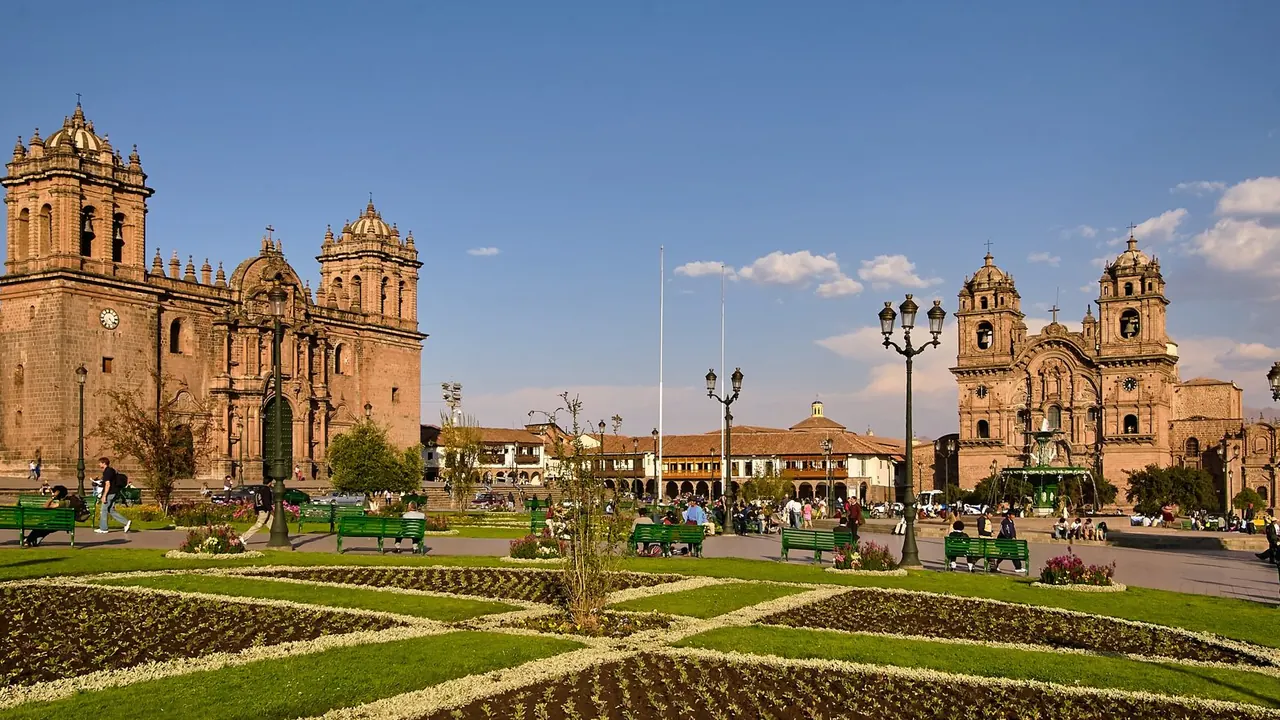
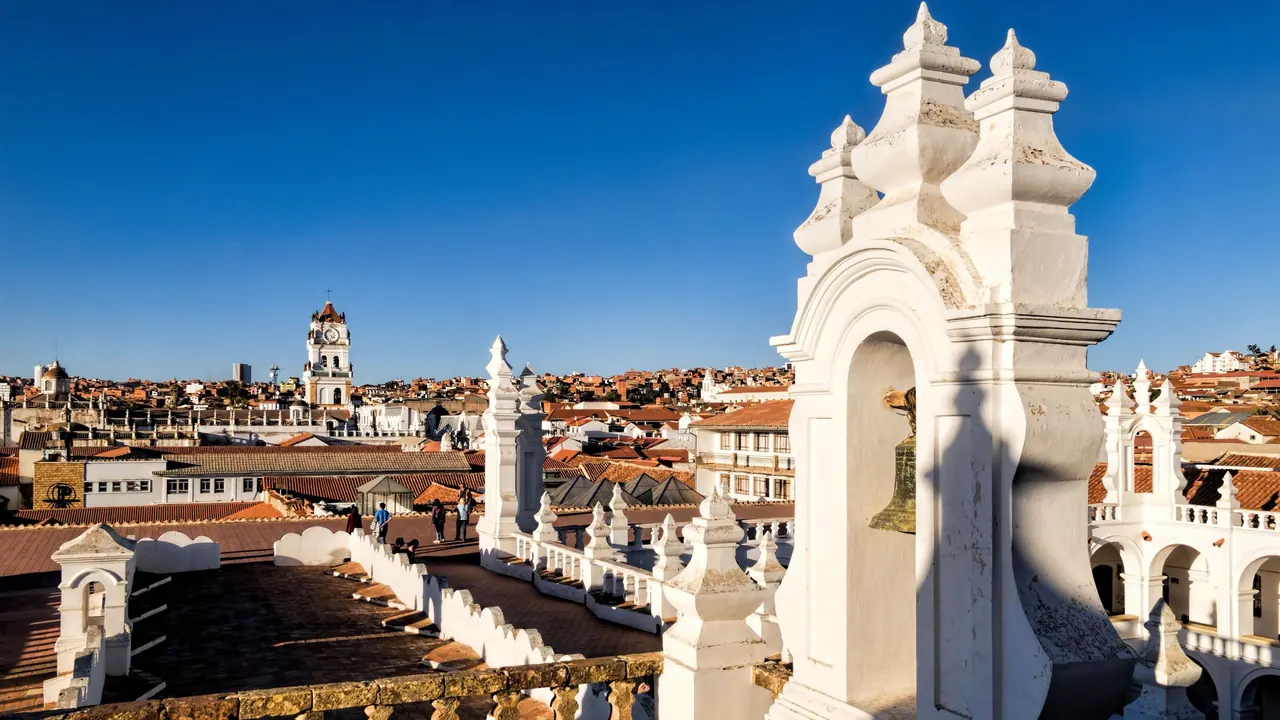
Photos: Cusco by Pedro Szekely, CC BY-SA 2.0, cropped; Sucre by Dan Lundberg, CC BY-SA 2.0, cropped.
Cusco or Sucre?
Our verdict in twelve categories, each scored against the same fixed benchmark cities, and the climate month by month, so you can choose for your trip.
Choose Cusco for
- day trips
- nature and the outdoors
- culture and sights
Cusco is the choice if you want the Inca world at full scale and the high Andes on your doorstep. The city's mortarless stone streets, Qorikancha and Sacsayhuamán lead straight on to the Sacred Valley, Machu Picchu and treks such as the Inca Trail and Salkantay. It suits fit adults ready for thin air, early starts and a bigger bill for the major excursions.
Choose Sucre for
- families
- prices
- getting around
Sucre is a gentler place, lower and calmer, with a whitewashed colonial grid that you can see in a few unhurried days. It costs very little, it is easier with children thanks to the dinosaur footprints at the Parque Cretácico, and its mild pace makes it a good place to rest for a week or two. Travellers who want spectacle and a long list of excursions will find more in Cusco.
Scoreboard
Twelve categories on one fixed scale from 0 to 100. The shaded stretch is the gap between the two.
Your match
Pick a travel style or drag the sliders, and both match scores follow your weighting.
Wins on day trips and nature and the outdoors with your weighting.
Wins on families and prices with your weighting.
What matters to you?
Category by category
What the scores mean for a trip.
Beaches & swimming
Neither city has a beach, and this one is a draw. From Cusco the nearest beach is a flight away on Peru's Pacific coast, and the glacial lagoons in the hills are far too cold for a swim. Bolivia has no coastline at all, so in Sucre a hotel or municipal pool is the only water you will find.
Food & drink
Cusco eats better and more widely. The San Pedro market covers everyday highland cooking, from trout and alpaca to roast cuy and slow-cooked picantería dishes, while the Novoandino restaurants around the Plaza de Armas and in San Blas build tasting menus on native ingredients. Beware the tourist menus right by the square.
Sucre's table is plainer and more local: morning salteñas, spicy chorizos chuquisaqueños and set lunches upstairs at the Mercado Central. Its standout is chocolate from long-established makers on the main square. Beyond a few traveller cafés there is little fine dining.
Culture & sights
Both have colonial centres worth walking, but Cusco has a second, older city underneath. Inca walls line streets like Hatun Rumiyoc, the Santo Domingo monastery rises from the foundations of Qorikancha, and the zigzag ramparts of Sacsayhuamán stand above the town. The Cusco School paintings in the cathedral add to the depth.
Sucre is a smaller, tidier set. Its whitewashed UNESCO-listed grid holds the Casa de la Libertad, where Bolivia declared independence, and the Recoleta convent sits above the rooftops. The weaving collection at the Museo de Arte Indígena and the dinosaur trackway give it a character of its own, but two or three days will cover it.
Nightlife
Cusco has more going on after dark. A tight knot of bars and clubs just off the Plaza de Armas fills with backpackers and trekkers, stays open late at weekends and runs hostel pub crawls, with calmer cocktail and craft beer bars up in San Blas.
Sucre's night out belongs to its students. A handful of bars and a couple of clubs near the square get busy on Fridays and Saturdays, but midweek the town turns in early, and a glass of singani after dinner is the usual end to the evening.
Nature & outdoors
Cusco opens onto some of the greatest mountain country on the continent. You have the terraced Sacred Valley below the snow peaks of the Cordillera Urubamba, hard dawn hikes to Humantay and the 5,000m Rainbow Mountain, and the long treks on the Inca Trail, Salkantay and Ausangate. Add rafting, downhill biking, condors and vicuñas.
Sucre's outdoors is drier and quieter, in folded red and ochre hills. The highlight is a guided one-to-three-day walk in the Cordillera de los Frailes, past the striped bowl of the Maragua crater and Jalq'a villages. Closer in, the Siete Cascadas make an easy half day.
Day trips
Cusco has far more to fill extra days. Within about an hour lie the Sacred Valley towns of Pisac, Ollantaytambo and Chinchero, the circular terraces of Moray and the Maras salt pans, with Tipón and Andahuaylillas to the south-east. Machu Picchu crowns the list, though the road, train and bus make it a very long day, often better split with a night in the valley.
From Sucre the list is short. Tarabuco's Sunday textile market is the classic outing, and La Glorieta and Yotala make half days. Potosí is far enough away to be the next stop on your route rather than a day out.
Good for families
Sucre is much easier with children. It sits around 600m lower than Cusco, its centre is calm and compact, the main square has room to run around, and the dinosaur models and real footprints at the Parque Cretácico are a sure hit.
Cusco asks a lot of a family. The altitude is a real risk for small children, the cobbled streets are steep, and the days are built around ruins, churches and pre-dawn departures. Families with young children often base themselves down in the Sacred Valley, while older children who like history and walking can do well in the city.
Getting around
Sucre is the easier city to move about on foot. Its regular colonial grid is simple to read, and almost everything lies within a few blocks of the Plaza 25 de Mayo, with only the climb to the Recoleta to puff over. A tourist bus serves the dinosaur park.
Cusco's centre is also compact, but the climbs to San Blas and Sacsayhuamán in thin air, along with narrow pavements, make walking slower work. Taxis do the uphill runs, and the Sacred Valley usually means a tour or driver, with the Machu Picchu train leaving from stations outside town.
Shopping & style
Cusco is the bigger shopping trip. Alpaca and baby alpaca knitwear, ponchos and blankets are everywhere, the best from natural-dye weaving cooperatives such as those in Chinchero, and San Blas workshops add ceramics, carved saints and silver. Much of the stock around the main square is factory-made, and not every "alpaca" label is honest.
Sucre's range is narrower but distinctive: dark Jalq'a weavings with their imagined creatures and bright Tarabuco geometrics in fair-trade shops, plus a bag of the city's chocolate.
Affordability
Both are cheap day to day, but Sucre is cheaper still and has no unavoidable splurge. Market lunches, salteñas, taxis and guesthouses in colonial houses all cost very little, which is why language students stay for weeks.
In Cusco, daily costs stay low, but the Machu Picchu train and entry, along with guided treks like the Inca Trail, take a large share of any budget, and the boutique mansions and restaurants on the square charge close to international rates.
Live music & performing arts
Neither has a deep programme, and both lean on folkloric dance and Andean bands. The difference is in the extras. Cusco's strength is its festivals: Inti Raymi staged at Sacsayhuamán around the June solstice, and masked dancers at Corpus Christi and the Qoyllur Rit'i pilgrimage.
Sucre has the more formal stage. The nineteenth-century Teatro Gran Mariscal hosts the national symphony from time to time, and weekend peñas give a more local setting for charango and panpipes than Cusco's dinner shows staged for visitors.
Wellness & relaxation
Neither is a spa town, and both rest more on mood than on facilities. Cusco offers cheap massage on every street around the square and hotel spas that pump oxygen into rooms. For real calm you go down to the Sacred Valley's riverside lodges, or out to hot springs at Aguas Calientes or Lares.
Sucre has fewer treatments but an easier rhythm. The altitude is lower, the climate milder, there are shaded courtyards and plaza benches, and the Recoleta arcade at sunset makes it a natural place to stop and recover after the harsher altiplano.
When should you go?
Pick your month. The climate figures are measured averages, not a forecast.
Cusco in July
Sucre in July
Daytime high, °C
Rainfall in the month, mm
Where the figures come from
Cusco's station stands 151 m below the city centre, so the centre is likely a little cooler than the figures say.
Temperature and rainfall are climate normals, averaged over the years shown. Cusco: 1991-2020 normals, Cuzco (3.7 km from centre). Sucre: 1991-2020 normals, Sucre (5.4 km from centre).
Both cities have a mild highland climate with no beach weather at any point. Cusco's daytime highs stay around 20°C all year. Sucre is much the same but warms a little in the southern spring, reaching 23°C in November, which makes it slightly more pleasant for walking the streets late in the year. The dry months from May to September are the best time to visit either city, with almost no rain. In Cusco these months also bring the clear skies for trekking and Machu Picchu.
The wet season starts in October, when both cities already get about 50mm. From then on Cusco gets more rain, rising to 159mm in January against 125mm in Sucre, so expect cloudier mountain views and muddy trails around the Sacred Valley. Sucre's rains are a little lighter through November and the peak months, and they turn its red hills green. In the shoulder months, Sucre dries out a little faster in April, while October is a draw.
Which traveller are you?
On an outdoors trip, Cusco is the clear pick. Humantay lake, the Rainbow Mountain, multi-day routes such as the Inca Trail and Ausangate, and rafting on the Urubamba add up to far more than Sucre's Frailes treks and waterfall walks.
On a family trip with children, Sucre is the safer choice. It sits lower, its centre is calm and compact, and the life-size dinosaurs at the Parque Cretácico appeal to children. Cusco's altitude, steep cobbles and long days on trains are hard on young children.
For a trip on a tight budget, Sucre stretches money furthest. Market lunches, guesthouses in colonial houses and cheap taxis keep costs low, with no unavoidable big-ticket outing like the Machu Picchu train and entry that take up so much of a budget in Cusco.
Before you go
| Measure | Cusco | Sucre |
|---|---|---|
| Official language | Spanish, Aymara, Quechua | Spanish, Aymara, Quechua, Guarani |
| Currency | Sol (PEN) | Boliviano (BOB) |
| Sockets | ABC220 V, 60 Hz | AC50 Hz |
| Driving side | Right | Right |
| Time zone | UTC-5 | UTC-4 |
| Emergency number | 111 or 911 | 911 |
| Elevation | 3,399 m | 2,810 m |
| Main airport | Alejandro Velasco Astete International Airport (CUZ)5 km from centre6 non-stop destinations | Alcantarí International Airport (SRE)25 km from centre3 non-stop destinations |
| Public holidays this year | 17 days | 12 days |
By the numbers
| Measure | Cusco | Sucre |
|---|---|---|
| City population | 428,450 | 360,544 |
| People per km² | - | 204 |
| Museums within 10 km | 11 | 4 |
| UNESCO World Heritage sites within 50 km | 2 | 1 |
Where else could you go?
Every comparison below shares a destination with this one, so you can follow Cusco or Sucre somewhere new.