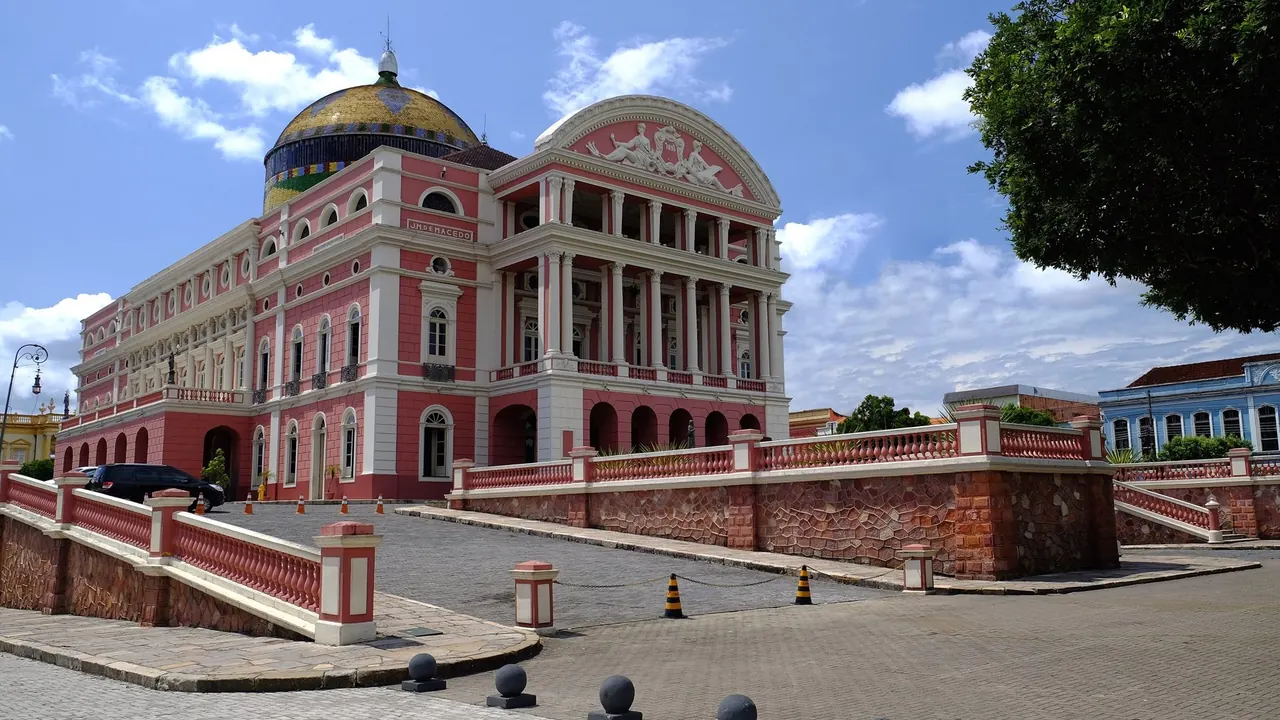
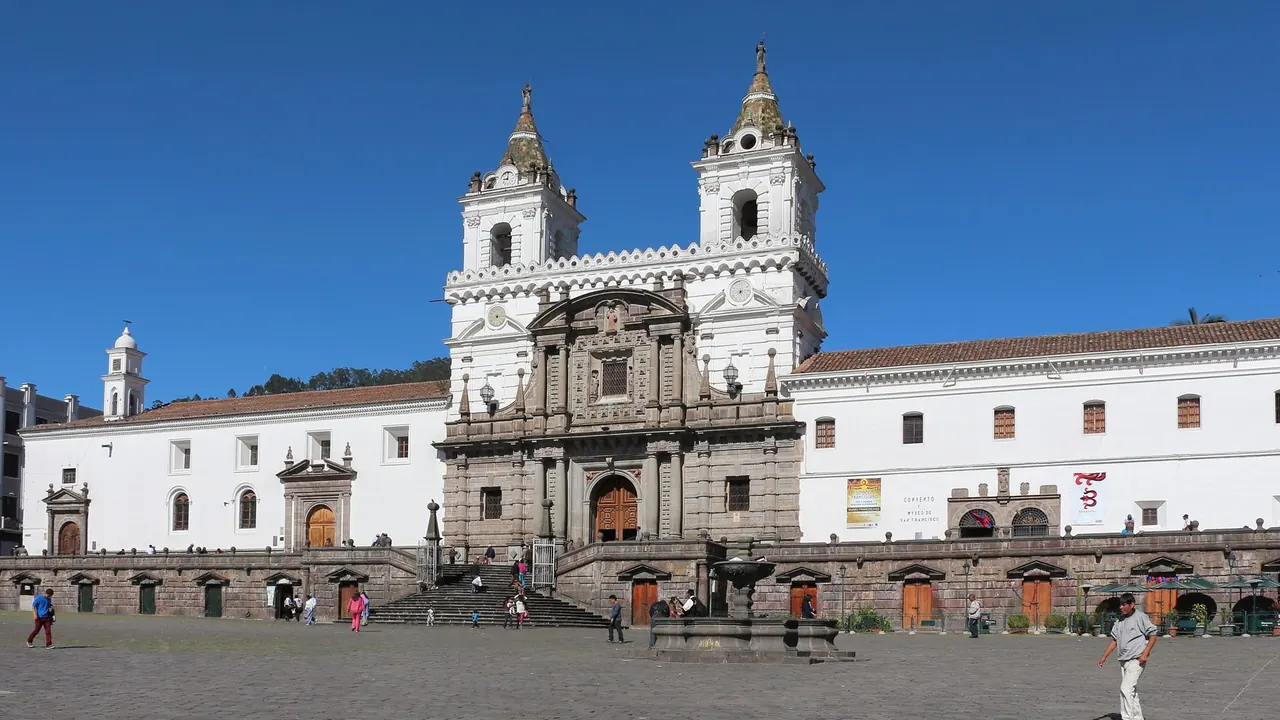
Photos: Manaus by Jardelsliumba, CC BY-SA 4.0, cropped; Quito by Bernard Gagnon, CC BY-SA 3.0, cropped.
Manaus or Quito?
Our verdict in twelve categories, each scored against the same fixed benchmark cities, and the climate month by month, so you can choose for your trip.
Choose Manaus for
- beaches
- live music and the arts
- families
Manaus is for travellers whose trip is really about the Amazon. The city is a launch pad: you spend a day or two on the rubber-boom sights and an evening at the opera house, then head out by boat to the Meeting of the Waters, the flooded forest and a riverside lodge. It suits people who can handle steady heat and want rainforest wildlife, river fish and a night at the Teatro Amazonas more than a long list of sights.
Choose Quito for
- day trips
- culture and sights
- wellness
Quito makes a fuller trip without leaving the city. Its colonial centre has gilded churches and good museums to fill several days, it is cheaper to stay in, and markets, the equator, cloud forest and thermal pools are all within a day's reach. Choose it if you like cool mountain air, high hiking and a varied itinerary, and if you can give yourself a few days to get used to the altitude.
Scoreboard
Twelve categories on one fixed scale from 0 to 100. The shaded stretch is the gap between the two.
Your match
Pick a travel style or drag the sliders, and both match scores follow your weighting.
Wins on beaches and live music and the arts with your weighting.
Wins on day trips and culture and sights with your weighting.
What matters to you?
Category by category
What the scores mean for a trip.
Beaches & swimming
Neither city is somewhere to go for the beach, but Manaus at least lets you swim. Ponta Negra has warm, dark Rio Negro water and a promenade for watching the sunset. In the low-water months, boats reach white sandbanks upriver around Tupé. It depends on the season and on water quality, so treat it as a bonus.
In Quito, high in its valley, swimming means a hotel pool or the warm municipal pools in the valleys below. If you want sand, you have to add the Pacific coast or the Galápagos as a separate part of the trip.
Food & drink
The two are about level, and in both the food is regional and the range narrows quickly beyond local dishes. Manaus cooks from the river and the forest: tambaqui ribs on the grill, pirarucu, tacacá broth that makes your lips tingle, and fruits such as cupuaçu and camu-camu that you will not find elsewhere.
Quito's food is highland comfort cooking: locro de papa, roast hornado pork, the set lunch at the Mercado Central and hot canelazo on cold evenings. It has the advantage for anyone who loves chocolate or coffee, since Ecuadorian cacao and highland beans are easy to taste in the old town and La Floresta.
Culture & sights
Quito is well ahead here. Its UNESCO-listed colonial centre is one of the largest and best preserved in the Americas. It runs from the gold interior of La Compañía and the San Francisco monastery to the towers of the Basílica, and Casa del Alabado and the Guayasamín collection add strong museums.
The sights in Manaus all come from one short period of wealth. The Teatro Amazonas, the palaces and the iron market hall built in the rubber boom are worth seeing, but the museums are small, and two days covers the city.
Nightlife
Neither city has much of a night out, and they differ more in style than in amount. Manaus is about plastic tables on the pavement, cold beer and dance halls playing forró and boi-bumbá drums. The bars are spread between Ponta Negra, Adrianópolis and Vieiralves, and there is no club scene.
Quito's nightlife is more concentrated. Salsa clubs and backpacker bars fill around Plaza Foch in La Mariscal at weekends, and La Floresta has quieter craft-beer and cocktail bars. In both cities you take taxis between areas after dark.
Nature & outdoors
Both are outstanding, in completely different ways. Manaus is the gateway to the lowland Amazon: pink river dolphins, flooded forest you explore by canoe, the black and brown rivers running side by side, and the islands of Anavilhanas. To see it properly you need nights at a lodge, and the humidity limits hiking.
Quito is mountain country. A cable car and a trail take you up Pichincha, Cotopaxi has glacier hikes and riding on the high plains, and the cloud forest around Mindo is one of the world's great places for birdwatching. Here the altitude, not the heat, is what slows you down.
Day trips
Quito has far more to offer here. Otavalo's Saturday market, with Cotacachi and the weaving villages, makes a full day out, the equator monument is close by, and Mindo and Papallacta each make another.
Around Manaus there is only river and forest. Presidente Figueiredo has waterfalls and caves, but other towns such as Parintins are many hours away by boat, so your time outside the city is best spent on the water.
Good for families
Both are hard going with young children, but the obstacles are different. In Manaus they are heat, humidity and mosquitoes. Children who love animals have plenty to see, with otters and manatees at the Bosque da Ciência and dolphins on the river.
In Quito the problem is altitude, which can make small children unwell for the first days, along with steep streets. The rewards are standing across the equator line, riding the TelefériQo and the lawns and pedal boats of Parque La Carolina.
Getting around
Quito is easier to get around. A metro line and bus rapid-transit corridors run along its long valley, and the old town is compact enough to explore on foot, if slowly, since the streets are steep and the air is thin.
Manaus has no rail transport at all, and visitors rarely use the buses. Outside the few blocks around the theatre and the market, you depend on taxis and ride-hailing, and every trip on the river has to be booked as a boat outing.
Shopping & style
What you take home follows the landscape. Manaus sells the Amazon: Indigenous basketry, seed jewellery, feather work and natural oils around the Adolpho Lisboa market, with guaraná powder and fruit sweets as easy gifts. Because the city is a free-trade zone, the streets of its old centre are also crowded with electronics and imported goods.
Quito's crafts are Andean: toquilla-straw Panama hats, which are made in Ecuador, alpaca textiles, tagua-nut carvings and bean-to-bar chocolate, all gathered at the artisan market in La Mariscal. Serious buyers save their money for the Indigenous market at Otavalo, and in neither city do the big malls offer a visitor much.
Affordability
Quito is the cheaper base. Set lunches, metro rides and taxis cost very little, and guesthouses in old colonial houses are good value.
In Manaus, street food, taxis and business hotels are also cheap, but most visitors come for the river trips and jungle lodges, and that is where costs rise steeply. Keep in mind that a Galápagos trip arranged from Quito costs more than either.
Live music & performing arts
Manaus is ahead here, mainly because of one building. You can see opera, ballet and the Amazonas Philharmonic inside the rubber-boom Teatro Amazonas, especially during its annual opera festival. Boi-bumbá shows add drumming and costume that are found only in the Amazon.
Quito's Teatro Nacional Sucre and its national symphony are worth an evening. The Andean folk ballet companies are the most distinctive thing to see, though the programme overall is more modest.
Wellness & relaxation
Quito is clearly better for this, because the thermal pools of Papallacta, wrapped in mist in the páramo hills, are an easy outing. Simpler public pools in the warm valleys below the city are closer still.
Manaus has no bathing tradition, and the city is not a place to slow down. Rest there means a hotel pool or a few quiet nights in a hammock at a river lodge.
When should you go?
Pick your month. The climate figures are measured averages, not a forecast.
Manaus in July
Quito in July
Daytime high, °C
Rainfall in the month, mm
Where the figures come from
Quito's station stands 208 m above the city centre, so the centre is likely a little warmer than the figures say.
Temperature and rainfall are climate normals, averaged over the years shown. Manaus: 1991-2020 normals, Manaus (1.7 km from centre). Quito: 1961-1990 normals, Izobamba-Santa Catalina (16.8 km from centre).
Manaus is hot all year, and the real difference between months is the rain. From January to April the downpours are very heavy every month. From June to October the city dries out, with August down to about 58mm and the most sunshine, though September is also the hottest month at around 35°C. The heat makes long walks hard going in any month. The low-water months later in the year bring the sandbanks that make the river beaches worth a visit.
Quito barely changes through the year. Daytime highs stay near 18°C, which is comfortable for walking all day, and evenings turn cool. The wettest stretch runs from February to May. June to August is the driest and sunniest time, with July down to about 32mm. Both cities are at their best in the middle of the year, when one is hot and dry and the other mild and clear.
Which traveller are you?
On a beach and sun trip, Manaus is the only one of the two with any swimming. Ponta Negra and the sandbanks that appear at low water are warm river beaches. Quito, high in the Andes, has no beach life at all.
For a culture and arts trip, Quito is the stronger choice. Its large colonial centre, gold-leaf churches and pre-Columbian collections can fill several days. Manaus has the finer opera house, but its rubber-boom sights take about two days.
On a relaxing and wellness trip, Quito works better because the steaming thermal pools of Papallacta are an easy outing. In Manaus, rest mostly means leaving the hot, noisy city for a hammock at a jungle lodge.
Before you go
| Measure | Manaus | Quito |
|---|---|---|
| Official language | Portuguese | Spanish, Shuar, Northern Quichua |
| Currency | Brazilian Real (BRL) | US Dollar (USD) |
| Sockets | CN60 Hz | AB120 V, 60 Hz |
| Driving side | Right | Right |
| Time zone | UTC-4 | UTC-5 |
| Emergency number | Police 190, ambulance 192, fire 193 | 911 |
| Elevation | 92 m | 2,850 m |
| Main airport | Eduardo Gomes International Airport (MAO)9 km from centre21 non-stop destinations | Mariscal Sucre International Airport (UIO)20 km from centre22 non-stop destinations |
| Public holidays this year | 14 days | 11 days |
By the numbers
| Measure | Manaus | Quito |
|---|---|---|
| City population | 2,303,732 | 1,763,275 |
| People per km² | 202 | 4,735 |
| Museums within 10 km | 13 | 16 |
| UNESCO World Heritage sites within 50 km | 1 | 2 |
Where else could you go?
Every comparison below shares a destination with this one, so you can follow Manaus or Quito somewhere new.