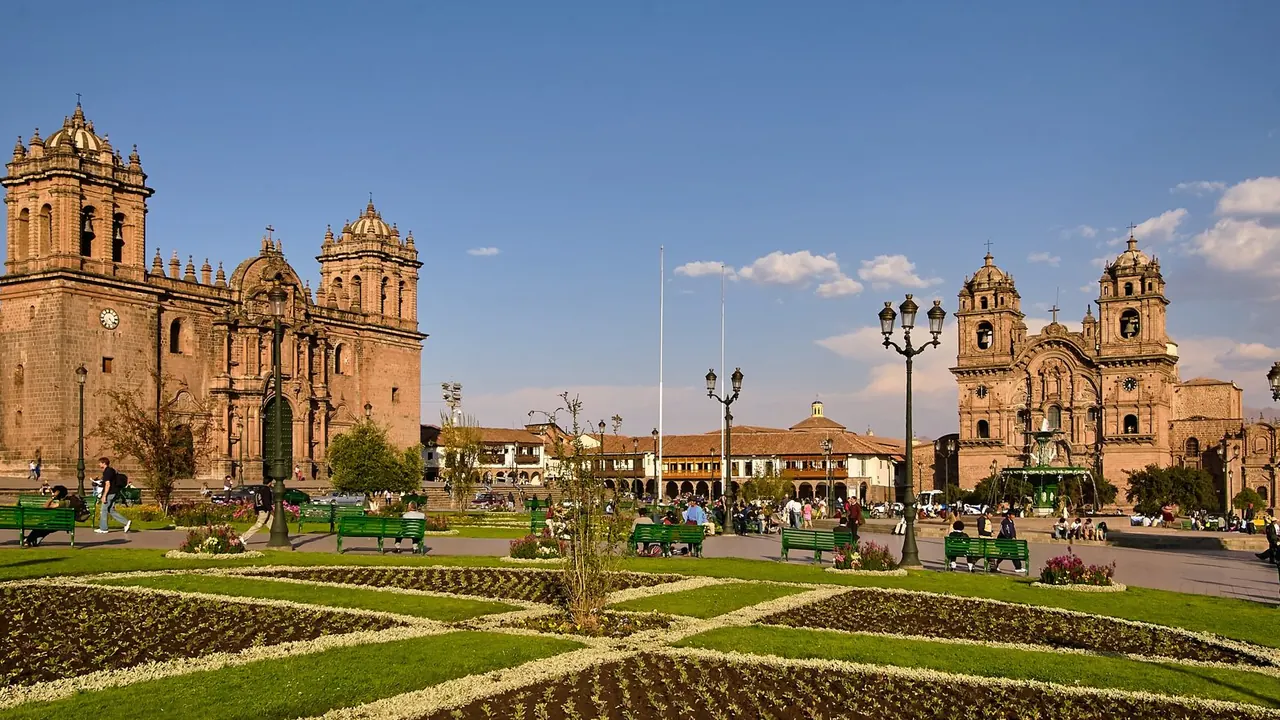
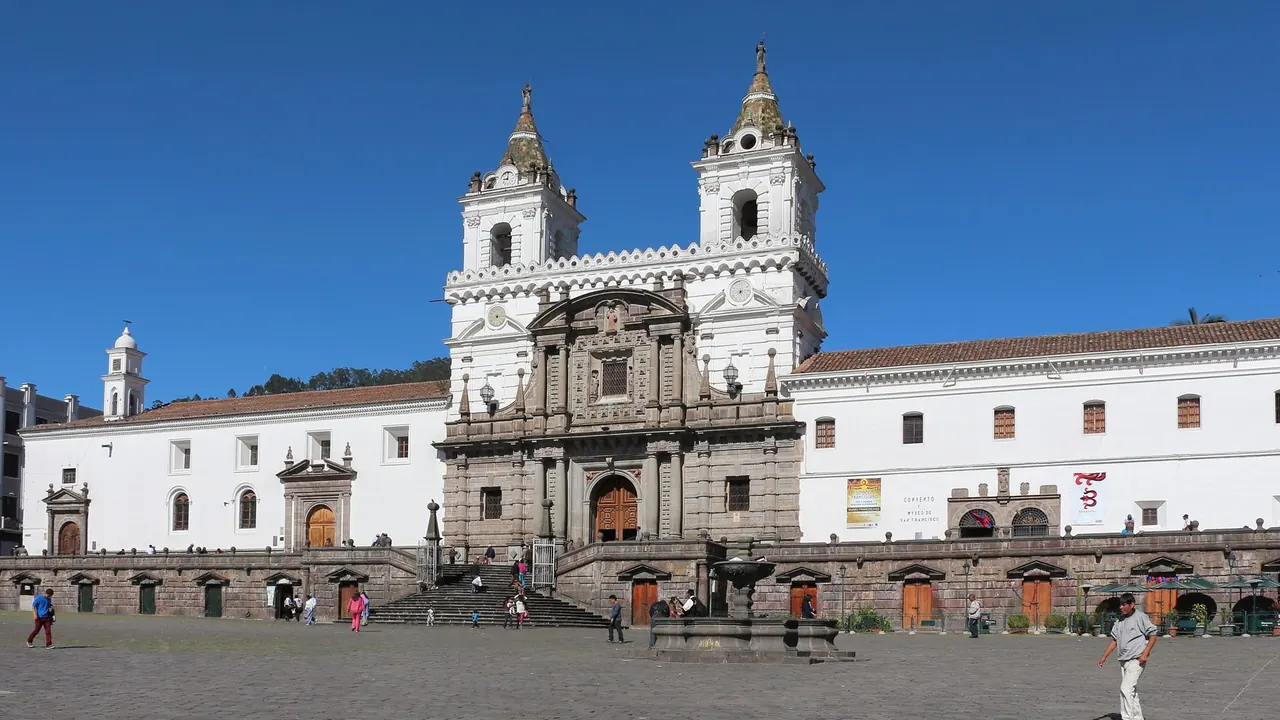
Photos: Cusco by Pedro Szekely, CC BY-SA 2.0, cropped; Quito by Bernard Gagnon, CC BY-SA 3.0, cropped.
Cusco or Quito?
Our verdict in twelve categories, each scored against the same fixed benchmark cities, and the climate month by month, so you can choose for your trip.
Choose Cusco for
- day trips
- shopping
- culture and sights
Cusco is the choice for travellers who come for the Incas. The stonework runs through the streets of the city itself, and the Sacred Valley and Machu Picchu give it a run of excursions that Quito cannot match. It suits fit adults who are ready for thin air, early starts and long days on the road and the train, and who want to come home with good alpaca knitwear and weaving.
Choose Quito for
- families
- wellness
- live music and the arts
Quito asks less of the body and offers more beyond the ruins. Its lower altitude, the cable car, the equator line and the parks make it far easier with children. The gold-leaf churches of the old town come with stronger museums, and a night at the Teatro Nacional Sucre or an afternoon in the thermal pools at Papallacta is within easy reach. Pick it if the trip mixes colonial streets with volcanoes and cloud forest, or if Quito is your starting point for the Galápagos.
Scoreboard
Twelve categories on one fixed scale from 0 to 100. The shaded stretch is the gap between the two.
Your match
Pick a travel style or drag the sliders, and both match scores follow your weighting.
Too close to call, 1 point apart
Wins on day trips and shopping with your weighting.
Wins on families and wellness with your weighting.
What matters to you?
Category by category
What the scores mean for a trip.
Beaches & swimming
Neither city has a beach, and both sit too high and too far inland for one to be part of the plan. The difference is what you can swim in. Around Cusco the glacial lagoons are only for looking at. Quito at least has hotel pools and warm municipal pools in the valleys below town, and from there the coast or the Galápagos make an easy extra leg of the trip.
Food & drink
The two eat at much the same level, and both cook hearty highland food based on potatoes and maize. Cusco brings alpaca, mountain trout and roast cuy, the picanterías and the San Pedro market, plus Novoandino tasting menus in San Blas for a special night out.
Quito is more about soups and roast pork, such as locro de papa and hornado, sugared empanadas de viento and hot canelazo on cold evenings. Its particular treat is Ecuadorian cacao and highland coffee, which are easy to taste in the old town and La Floresta. In both cities the choice thins quickly once you step away from the local cooking.
Culture & sights
These are two of the great sightseeing cities of the Andes, but the sights are of different kinds. In Cusco the Inca city is still standing under the Spanish one. You see it in mortarless walls along Hatun Rumiyoc, in Qorikancha below Santo Domingo and in the huge zigzag ramparts of Sacsayhuamán on the hill above.
Quito's draw is colonial. It has a large and little-changed old town of gilded churches such as La Compañía, the San Francisco monastery and carved Quito school altarpieces. Its museums go further than Cusco's modest collections, with pre-Columbian art at Casa del Alabado and Guayasamín's work at the Capilla del Hombre.
Nightlife
Neither is a big night-out city. Cusco's scene is a tight cluster of backpacker bars and clubs a few steps off the Plaza de Armas, built around pisco sours and pub crawls, and early tour departures and the altitude cut most nights short. Quito's nightlife is more spread out and has more of a local crowd, with salsa clubs around Plaza Foch at the weekend and cocktail bars in La Floresta. Because the areas are apart, you take taxis between them rather than walking.
Nature & outdoors
Both are first-rate bases for the mountains, but for different outdoor trips. Cusco is trekking country, with the Inca Trail, Salkantay and Ausangate, day hikes to Humantay lake and Rainbow Mountain above 5,000m, and rafting on the Urubamba.
Quito's landscape is volcanoes and forest. The cable car lifts you onto Pichincha from the edge of town, and Cotopaxi is about two hours south. To the west lies the Mindo cloud forest, which has birdwatching that the dry Cusco highlands cannot offer.
Day trips
Cusco wins clearly here. The Sacred Valley alone gives several full days: Pisac's citadel, the lived-in Inca grid of Ollantaytambo, Chinchero, and Moray with the Maras salt pans. Machu Picchu is the outing most visitors come for, although it is long enough that many stay a night in the valley.
Quito's choice is good but shorter. Its main outings are the Otavalo market with Cotacachi, the equator monument, Mindo and the hot springs at Papallacta. They are more varied in theme than Cusco's run of Inca and colonial sites, but none of them carries the weight of the Sacred Valley.
Good for families
Quito is the better place to take children, though neither is easy. At about 3,400m, Cusco brings a real risk of altitude sickness that small children may not be able to describe. The city has nothing built for them, and families often move down to the valley, where the llamas and alpacas are the highlight.
Quito is lower. It has children's attractions of its own, with the equator line, the TelefériQo, the Yaku museum and the lawns and pedal boats of Parque La Carolina, and Ecuadorians are warm towards children. Even so, short days are the rule.
Getting around
Getting about takes about the same effort in both, but the cities are shaped differently. Cusco is compact. Almost everything is a steep walk from the Plaza de Armas, there is no metro, and cheap taxis handle the climbs back uphill.
Quito runs for about 40km along its valley. A metro line and bus corridors cover its length, but they are crowded and pickpockets work them, so most visitors use the metro for long hops and taxis or ride-hailing at night.
Shopping & style
Cusco is the stronger place to shop for crafts. Its textile tradition runs deep, from natural-dye weaving cooperatives in Chinchero to the San Blas workshops making ceramics, religious carvings and silver. The catch is the factory-made stock repeated around the main square, and "alpaca" labels that are not always true.
Quito's best buys are more unusual: genuine toquilla-straw Panama hats, bean-to-bar chocolate and tagua-nut carvings. In the city itself, though, these are mostly found in one artisan market and a few galleries, and the serious buying happens at Otavalo.
Affordability
Both are cheap from day to day, with set lunches, market food and taxis costing little in either. Quito is a little kinder over a whole trip, because its big costs are optional excursions to the volcanoes or cloud forest, and the Galápagos if you add them. In Cusco the Machu Picchu train and entry and guided treks like the Inca Trail are hard to avoid, and they take a large share of the budget.
Live music & performing arts
Quito gives you more to do in the evenings. The nineteenth-century Teatro Nacional Sucre stages opera, dance and the national symphony, and there are folk ballet companies, baroque concerts in old-town churches and live bands in La Floresta.
In Cusco most nights mean a folkloric show or panpipes over dinner. The city comes into its own on festival days, though, with Inti Raymi at Sacsayhuamán around the June solstice and the masked dancers of Corpus Christi and Qoyllur Rit'i.
Wellness & relaxation
Quito has the easier escape from the effort of altitude travel. The thermal pools at Papallacta, among misty páramo hills, are about ninety minutes away and are a weekend habit for locals. El Tingo's public springs are closer still.
In Cusco, rest mostly means cheap massages around the square, hotel spas with oxygen-enriched rooms, or a riverside lodge with yoga down in the Sacred Valley. Its hot springs at Aguas Calientes and Lares are a long way from the city.
When should you go?
Pick your month. The climate figures are measured averages, not a forecast.
Cusco in July
Quito in July
Daytime high, °C
Rainfall in the month, mm
Where the figures come from
Cusco's station stands 151 m below the city centre, so the centre is likely a little cooler than the figures say.
Quito's station stands 208 m above the city centre, so the centre is likely a little warmer than the figures say.
Temperature and rainfall are climate normals, averaged over the years shown. Cusco: 1991-2020 normals, Cuzco (3.7 km from centre). Quito: 1961-1990 normals, Izobamba-Santa Catalina (16.8 km from centre).
Neither city has a hot season or a beach season. Both sit high in the Andes, with daytime highs that barely change all year: about 20°C in Cusco and 18°C in Quito. That makes either one comfortable for walking at any time of year, and the question is mainly rain. Cusco has a very clear dry season from May to September, when almost no rain falls (3mm in June) and the treks and Machu Picchu are at their best. From November the rain builds, and January to March is the wettest stretch.
Quito is damper for more of the year. Rain is heavy from October to May and peaks in April at 195mm. The drier, sunnier window is shorter, from June to September, and July brings about 200 hours of sunshine. If you are visiting both on one trip, June to August suits each of them. Outside those months Cusco dries out sooner in spring and stays dry for longer than Quito.
Which traveller are you?
On a family trip with young children, Cusco asks too much. It sits higher, and its big outings mean long days on roads and trains. Quito suits short mornings in the city, with the coast, cloud forest or Galápagos as the next leg.
On a shopping trip, leave room in your bag for Cusco. Textiles are the city's trade, and a weaving village fits easily into a day in the Sacred Valley. Quito has a shorter list of particular souvenirs rather than days of browsing.
On a relaxing and wellness trip, Cusco only works if you sleep down in the Sacred Valley, because the city runs on dawn departures. Quito is the easier choice: stay in town and add a soak in thermal springs on a slow day.
Before you go
| Measure | Cusco | Quito |
|---|---|---|
| Official language | Spanish, Aymara, Quechua | Spanish, Shuar, Northern Quichua |
| Currency | Sol (PEN) | US Dollar (USD) |
| Sockets | ABC220 V, 60 Hz | AB120 V, 60 Hz |
| Driving side | Right | Right |
| Time zone | UTC-5 | UTC-5 |
| Emergency number | 111 or 911 | 911 |
| Elevation | 3,399 m | 2,850 m |
| Main airport | Alejandro Velasco Astete International Airport (CUZ)5 km from centre6 non-stop destinations | Mariscal Sucre International Airport (UIO)20 km from centre22 non-stop destinations |
| Public holidays this year | 16 days | 11 days |
By the numbers
| Measure | Cusco | Quito |
|---|---|---|
| City population | 428,450 | 1,763,275 |
| People per km² | - | 4,735 |
| Museums within 10 km | 11 | 16 |
| UNESCO World Heritage sites within 50 km | 2 | 2 |
Where else could you go?
Every comparison below shares a destination with this one, so you can follow Cusco or Quito somewhere new.