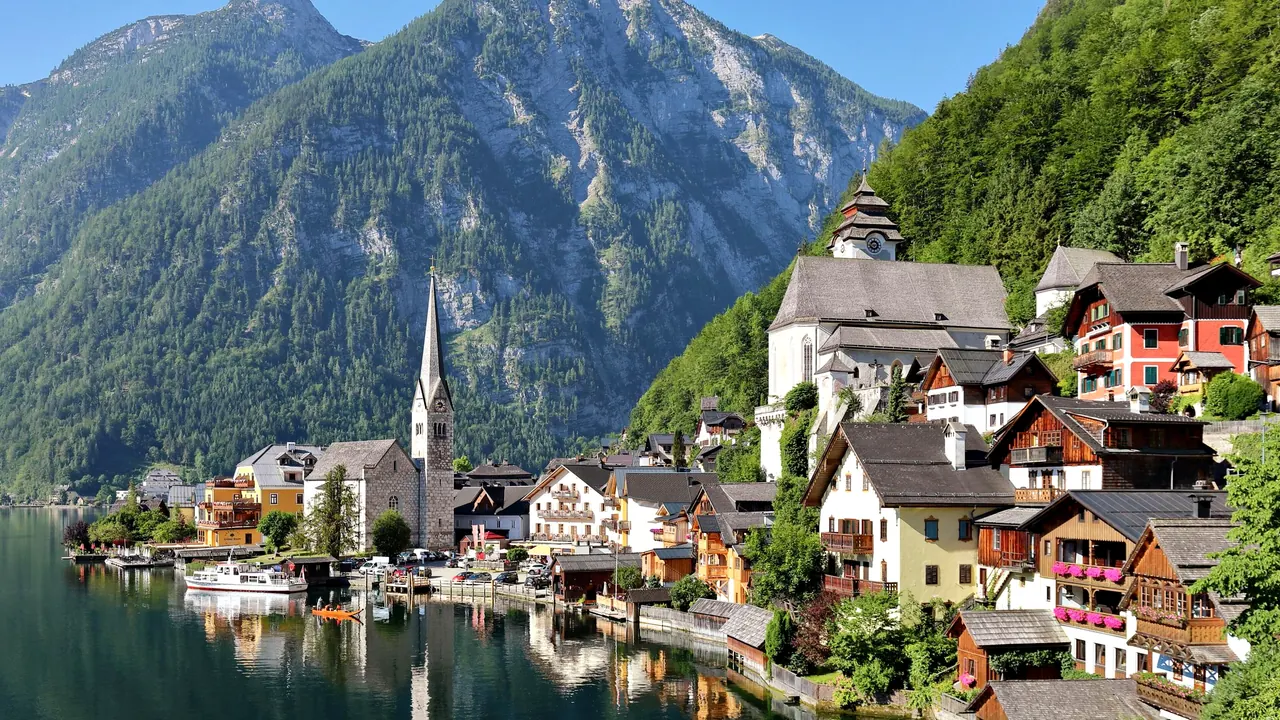
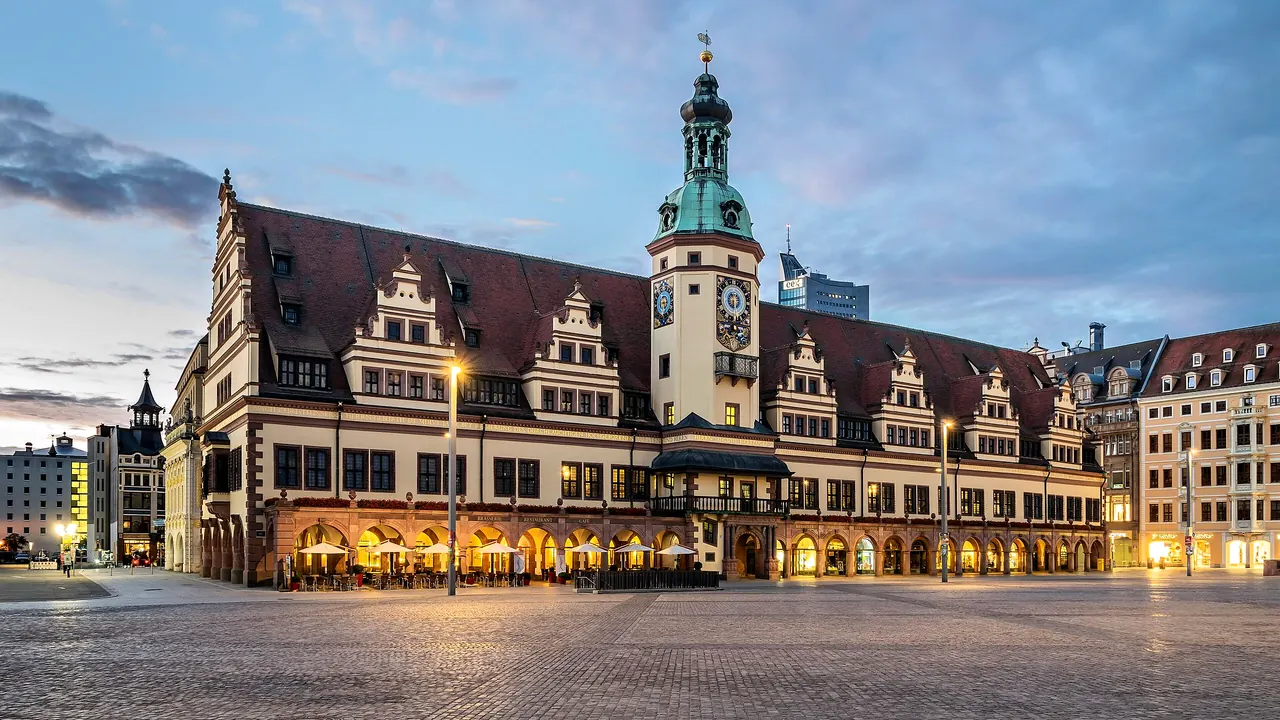
Photos: Hallstatt by C.Stadler/Bwag, CC BY-SA 4.0, cropped; Leipzig by Krzysztof Golik, CC BY-SA 4.0, cropped.
Hallstatt or Leipzig?
Our verdict in twelve categories, each scored against the same fixed benchmark cities, and the climate month by month, so you can choose for your trip.
Choose Hallstatt for
- nature and the outdoors
- wellness
Hallstatt suits travellers who want mountains, water and quiet more than a city. It works best for a few days of walking, cable cars and ice caves under the Dachstein, with early mornings on the lake and evenings after the day visitors have gone. It is small, costly to sleep in and empty after dark, so come for the landscape and not for things to do indoors.
Choose Leipzig for
- live music and the arts
- nightlife
- shopping
Leipzig is the better pick for a city trip with plenty in it. Bach's churches and the story of 1989 cover the day, and the Gewandhaus, the opera and a late club scene fill the evenings. Rooms cost less, no car is needed, and trains reach Dresden, Weimar and Berlin easily. You lose the drama of the Alps but gain far more to see, hear and eat.
Scoreboard
Twelve categories on one fixed scale from 0 to 100. The shaded stretch is the gap between the two.
Your match
Pick a travel style or drag the sliders, and both match scores follow your weighting.
Wins on nature and the outdoors and wellness with your weighting.
Wins on live music and the arts and nightlife with your weighting.
What matters to you?
Category by category
What the scores mean for a trip.
Beaches & swimming
Neither is a place for a beach vacation, and they are about level for a summer swim. The water is quite different, though. Hallstatt has a deep, dark-green Alpine lake fed by mountain water, with a lawn and jetty in the village and a lido at Obertraun. It is good for a bracing swim after a hike, but the steep shores leave little space to lie out.
Leipzig's lakes are flooded lignite mines with sandy shores and beach bars. They are a little warmer, and you can reach them by tram or bike, so there is room to spend a whole hot afternoon by the water.
Food & drink
Leipzig gives you much more to eat your way through. Alongside Saxon roasts and dumplings, there is sour, salted Gose beer, a coffee-house history going back three centuries, and casual international cooking along the Karli and the Plagwitz canals.
In Hallstatt, the meal worth having is char or whitefish from the lake, eaten with a view over the water. Beyond that it is Austrian standards in guesthouse dining rooms, and kitchens close early once the day visitors leave.
Culture & sights
Hallstatt's history goes back a very long way. People have mined salt here for millennia, an entire Iron Age culture is named after the village, and the Beinhaus with its painted skulls is like nowhere else. But the sights fit into a single rich day.
Leipzig has enough for two or three days. Bach is buried in the Thomaskirche, the Monday prayers of 1989 began in the Nikolaikirche, and there are the trade-fair arcades, the brooding Battle of the Nations monument and a strong set of museums, from fine art and musical instruments to the GDR story at the Runde Ecke.
Nightlife
This is one of the starkest contrasts between the two. After dark, Hallstatt offers a glass of wine by the water and a walk along the shore, and that is all.
Leipzig is a student city whose club culture grew up in warehouses and old factories, with electronic music, gentle door policies and weekend nights that end after sunrise. For bars, there is the Karli, alternative Connewitz and the canal-side mills of Plagwitz.
Nature & outdoors
Hallstatt sits in proper Alpine country. A cable car from Obertraun climbs to the Five Fingers platform and the giant ice caves, paths follow the Echerntal towards the glacier, and the Dachstein is reflected in the Gosausee. Summer brings via ferratas and hut-to-hut hikes, and winter brings freeride and ski touring.
Leipzig's nature is flat and gentle: the oaks of the Auwald floodplain forest, canoe routes into the centre, and cycling and sailing around the old mine lakes. For real hills you have to take the train to Saxon Switzerland, about two hours away.
Day trips
Leipzig is the easier base, because everything starts from one large station. Dresden and Weimar are a little over an hour away, Erfurt and Halle are closer, and Wittenberg, Naumburg, Dessau's Bauhaus and Berlin are all within reach without a car.
Hallstatt's outings have their own appeal: the lake towns of the Salzkammergut, the Habsburg Kaiservilla at Bad Ischl, St Wolfgang's altarpiece and Salzburg's old town. Without a car, though, the buses and lakeside railway take careful planning.
Good for families
Leipzig is the more relaxed choice with children. The centre is flat, the trams take pushchairs easily, and the zoo's covered tropical hall works in any weather, with the lakes and a theme park nearby for summer days.
Hallstatt has some great moments, such as the miners' slides in the salt mine and the cable car to the ice caves for older children. But the single steep lane is crowded at midday and awkward with a pushchair, so families often stay in Obertraun and visit for a few hours.
Getting around
Inside the village, Hallstatt takes only minutes to cross, but it is steep and stepped. Getting there and onwards is the hard part: the station is on the far shore, so you cross by boat, and the buses thin out outside summer, which is why many visitors bring a car.
Leipzig is simple. You can walk across the ring-road centre in a quarter of an hour, trams and an underground S-Bahn reach the outer districts and the lakes, and the flat streets suit a bike.
Shopping & style
Hallstatt's one real purchase is salt from its own mine, sold along a lane of souvenir shops that you can see in half an hour. Leipzig gives you more to browse. There are the old trade-fair arcades for sheltered shopping on wet days, vintage and design shops on Karl-Heine-Strasse, and galleries in the vast Spinnerei cotton mill. Most of the old town, though, is mainstream chains.
Affordability
Leipzig is the cheaper place to stay, mainly because its rooms cost less than in most big German cities, though rates climb sharply during the large trade fairs. Meals and drinks cost what they do anywhere in Germany.
Hallstatt has few beds and visitors from all over the world, so rooms and meals are priced like an Alpine resort, and the salt mine and cable car tickets add up. Staying in Obertraun or Bad Goisern and visiting by day costs much less.
Live music & performing arts
For music, Leipzig is far ahead. It has the Gewandhaus Orchestra, one of the oldest anywhere, a full opera and ballet house across the same square, and Bach's own Thomanerchor singing on weekends during term. The Bachfest in June and the Wave-Gotik-Treffen at Whitsun add to the year.
In Hallstatt, music means the brass band on feast days and the odd church concert in summer. For an evening at the theatre, the nearest options are Bad Ischl's operetta or Salzburg.
Wellness & relaxation
Hallstatt is somewhat better for a restful stay, mainly because of where it is. The brine baths and thermal complex at Bad Ischl, and the spa traditions of Bad Aussee, are close by, and the misty mornings on the lake are very calm. The crowded midday lane is the price you pay.
Leipzig offers modern sauna complexes rather than spa heritage. Its calm comes from walks in the floodplain forest and quiet Sundays in a city that rarely feels crowded.
When should you go?
Pick your month. The climate figures are measured averages, not a forecast.
Hallstatt in July
Leipzig in July
Daytime high, °C
Rainfall in the month, mm
Where the figures come from
Hallstatt's temperatures are measured 56 km from the centre, at Salzburg.
Hallstatt has no rain gauge within 25 km of the centre, so its rainfall comes from a gridded climate dataset read at the city rather than from a gauge further away.
Temperature and rainfall are climate normals, averaged over the years shown. Hallstatt: 1991-2020 normals, Salzburg (55.5 km from centre). Leipzig: 1991-2020 (sunshine 1961-1990, rainfall 1961-1990) normals, Leipzig-Holzhausen (5.7 km from centre).
The two places have almost the same temperatures through the year. Winters are cold, with highs only a few degrees above freezing, and both peak at about 25°C in July and August, the only months when lake water is pleasant for a swim. Rain is the big difference. Hallstatt's wettest season is summer, with around 178mm in July, more than twice as much as Leipzig gets in any month. Low cloud and showers come with the Alpine scenery, so leave spare days for the high viewpoints.
For walking, late May, June and September suit both places. In Hallstatt, September is warm enough for the trails and a little drier than high summer, and winter belongs to the snow on the Krippenstein. Leipzig stays fairly dry all year, gets a bit more sun from late spring into summer, and is comfortable for walking its streets from May to September. Its grey, short winter days are better spent in concert halls and museums.
Which traveller are you?
On an outdoors trip, Hallstatt is the clear choice. Serious mountain country starts at the edge of the village, with the Krippenstein cable car, the Dachstein ice caves, the walk to the Gosausee and hut-to-hut routes. In flat Leipzig the best you get is forest paths and paddling on canals.
For a culture and arts trip, choose Leipzig. You can hear the Thomanerchor where Bach worked, attend a Gewandhaus concert or an opera, and visit the Grassi museums and the old Stasi headquarters. Hallstatt has a fascinating salt mine and charnel house, but they fill one day at most.
On a food and nightlife trip, Leipzig wins easily. It has Gose beer, beer gardens and international kitchens in the Südvorstadt and Plagwitz, and clubs in old factories run past dawn at weekends. Hallstatt offers a plate of lake char and a quiet terrace, and then the village goes to sleep.
Before you go
| Measure | Hallstatt | Leipzig |
|---|---|---|
| Official language | German, Austrian Sign Language | German |
| Currency | Euro (EUR) | Euro (EUR) |
| Sockets | CF230 V, 50 Hz | CF230 V, 50 Hz |
| Driving side | Right | Right |
| Time zone | UTC+1, UTC+2 in summer | UTC+1, UTC+2 in summer |
| Emergency number | 112 | 112 |
| Elevation | 511 m | 110 m |
| Main airport | Salzburg Airport (SZG)55 km from centre64 non-stop destinations | Leipzig/Halle Airport (LEJ)13 km from centre20 non-stop destinations |
| Public holidays this year | 16 days | 11 days |
By the numbers
| Measure | Hallstatt | Leipzig |
|---|---|---|
| City population | 741 | 615,932 |
| People per km² | 12 | 2,068 |
| Museums within 10 km | 3 | 40 |
| UNESCO World Heritage sites within 50 km | 2 | 1 |
Where else could you go?
Every comparison below shares a destination with this one, so you can follow Hallstatt or Leipzig somewhere new.
- Salzburgvs Hallstatt
- Dresdenvs Leipzig
- Bledvs Hallstatt
- Grazvs Hallstatt
- Berlinvs Leipzig
- Cortina d'Ampezzovs Hallstatt