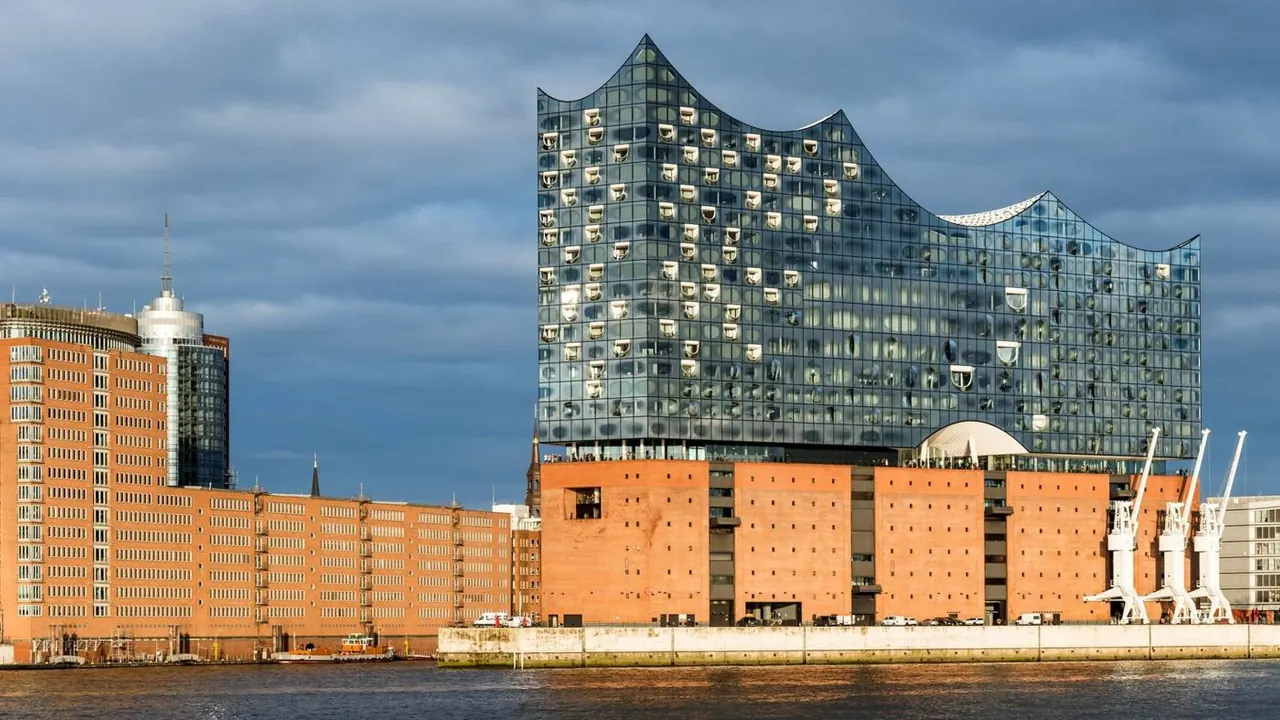
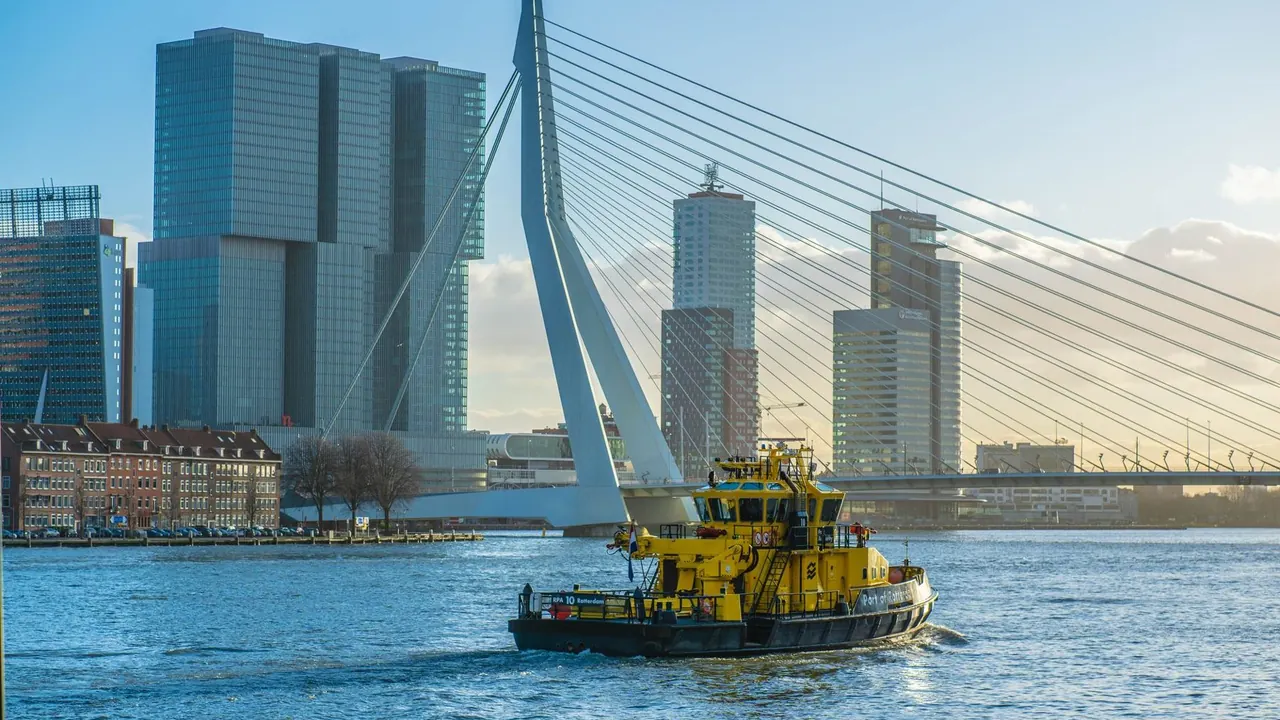
Photos: Hamburg by Wolfgang Weiser, Pexels License; Rotterdam by Bas Geerlings, Pexels License.
Hamburg or Rotterdam?
Our verdict in twelve categories, each scored against the same fixed benchmark cities, and the climate month by month, so you can choose for your trip.
Choose Hamburg for
- nightlife
- live music and the arts
- shopping
Hamburg suits travellers who want the city itself to fill the evenings. A night at the Elbphilharmonie or the State Opera can run on into St Pauli bars that stay open until dawn. Families get Miniatur Wunderland, Hagenbeck and harbour ferries, and the Jungfernstieg arcades and the Alster lakes make it the more rounded stay for a week spent in one place.
Choose Rotterdam for
- day trips
Rotterdam is the better pick if you want a base for seeing a whole region. Delft, The Hague, Amsterdam, Kinderdijk and even Antwerp are an easy train or boat ride away, and hotel rooms are easier to find than in the cities you will visit. In town, the draw is the postwar architecture, the club nights and a summer of North Sea Jazz, though going out is more local and more tied to weekends than in Hamburg.
Scoreboard
Twelve categories on one fixed scale from 0 to 100. The shaded stretch is the gap between the two.
Your match
Pick a travel style or drag the sliders, and both match scores follow your weighting.
Wins on nightlife and live music and the arts with your weighting.
Wins on day trips with your weighting.
What matters to you?
Category by category
What the scores mean for a trip.
Beaches & swimming
Neither city is a beach destination, but they fall short in different ways. Hamburg's sand is on the Elbe at Oevelgoenne and Blankenese, which is good for watching ships at sunset but not for swimming, so a real swim means an hour's trip to the Baltic resorts with their wicker beach chairs.
Rotterdam has a proper sea beach on its own metro line at Hoek van Holland, a wide North Sea strand backed by dunes. The wind and cold water mean most people walk it rather than swim.
Food & drink
Both eat well without being places you travel to for the food, and the difference is in where the cooking comes from. Hamburg leans on its own northern tradition: fish rolls, eel soup, Finkenwerder plaice, Franzbroetchen for breakfast and a long coffee culture. It also has more serious fine dining.
Rotterdam's best food comes from its immigrant communities, with Surinamese roti, Turkish bakeries and Cape Verdean and Indonesian kitchens, gathered most easily under the painted vault of the Markthal. Dutch dishes hardly go beyond herring and bitterballen, but the local craft beer is a bonus.
Culture & sights
Both cities lost their old centres in the war, and they responded in opposite ways. Hamburg's sights are about its merchant past: the UNESCO-listed Speicherstadt warehouses and Chilehaus, St Michael's and the ruined spire of St Nikolai. It also has the stronger art museum, the Kunsthalle, which runs from old masters to Caspar David Friedrich.
Rotterdam rebuilt as an experiment in modern architecture, so you spend your time looking at the buildings themselves. Its museums are solid rather than outstanding, and the old city survives mainly in Delfshaven and the Old Harbour.
Nightlife
Hamburg is the far bigger night out. The Reeperbahn is a whole district of dive bars, music clubs and cabaret that runs until dawn. The Schanzenviertel, Ottensen and the Alster offer different crowds when you want a change.
Rotterdam's bar streets, the Witte de Withstraat and the Oude Haven, are pleasant but local, and the centre empties early on weekdays. Its strength is clubbing: as the birthplace of gabber, it puts on techno and house nights in warehouse and harbour venues that draw people from all over the Netherlands.
Nature & outdoors
Both are flat, watery cities, but Hamburg gives you more variety close by. You can sail or paddle on the Alster, canoe the leafy canals, climb the wooded lanes of Blankenese, cycle through the blossoming orchards of the Altes Land, or go about an hour south to the heather of Lueneburg Heath.
Rotterdam's outdoors is mostly about cycling along dykes into polder country, the woods and lake of the Kralingse Bos, and kitesurfing in the dunes at Hoek van Holland. The Biesbosch creeks, about forty minutes away, are the best spot for canoeing and birdwatching.
Day trips
Rotterdam is the stronger base, because the dense Dutch rail network puts famous places very close. Delft is a quarter of an hour away, and The Hague, Leiden, Utrecht and Amsterdam are all within about an hour. The windmills of Kinderdijk are a water-bus ride away, and Antwerp, Bruges and Ghent bring Belgium into reach as well.
Hamburg's day trips are good but more of a theme: the brick Gothic and Hanseatic towns of the north. Luebeck is the standout, with Lueneburg, Bremen and Schwerin's lake castle close behind, and the Baltic coast is a summer option.
Good for families
Hamburg has more full days out for children. Miniatur Wunderland's model airports and harbours hold every age for hours, and Hagenbeck's moated enclosures make a second big day, with the tropical aquarium in reserve for when it rains. The museum ships at the Landungsbruecken, the planetarium in the Stadtpark and the Heide Park and Hansa-Park theme parks, each about an hour away, fill out a week.
Rotterdam is just as flat, safe and easy with a pushchair, but it has fewer big outings of its own. Blijdorp is one of the best zoos in the Netherlands, with a large ocean section, and the Maritime Museum has a hands-on harbour area made for children. Beyond those, families leave town: Madurodam's miniature Netherlands is a short train ride away in The Hague, and the Efteling theme park is about an hour by car.
Getting around
Hamburg's sights are close together. The centre, the Speicherstadt, HafenCity and the Alster are an easy walk apart, and the U-Bahn and S-Bahn cover the outer districts. The harbour ferries run on the same ticket as the trains, and the airport is on the S-Bahn.
Rotterdam's postwar centre is more spread out, with wide roads and some long, windy walks between sights, so you will mix walking with trams, the metro or a bike. The metro runs all the way to the beach at Hoek van Holland, and water taxis across the Maas make the river part of the journey. You won't need a car in either city.
Shopping & style
Hamburg is the more rewarding place to shop, especially at the top end. Luxury labels line the Neuer Wall, covered arcades lead off the Jungfernstieg, and the Alsterhaus sits on the water. The Karolinenviertel and Schanzenviertel are good for vintage and streetwear, and tea and coffee from the old trading houses make good souvenirs.
Rotterdam does the high street well around the Lijnbaan, one of Europe's first pedestrian streets, and the Bijenkorf, with independent fashion and record shops on the Meent and the Nieuwe Binnenweg. Luxury brands are scarce, and the big Binnenrotte market is the most memorable shopping experience.
Affordability
In Hamburg, the hotel takes most of the budget. Rooms cost noticeably more than the German average and rise further during trade fairs and on summer weekends. You save some of it back with a day ticket that covers the harbour ferries, with free sights such as the Elbphilharmonie plaza and the Speicherstadt, and with fish rolls and bakeries.
Rotterdam is the other way round. Rooms are plentiful and cheaper, because business hotels empty at weekends and the city has fewer tourists than the better-known Dutch destinations. Meals, beer and coffee cost the full Dutch price, though, so the Markthal counters and the Surinamese and Turkish snack shops are how you keep lunch cheap.
Live music & performing arts
This is one of the biggest gaps between the two cities. Hamburg has the Elbphilharmonie and the Laeiszhalle for concerts, a historic State Opera, an internationally known ballet and two of Germany's leading theatres. It also has large musical theatres, some reached by boat, and a dense circuit of small rock clubs in St Pauli, where the Beatles started out.
Rotterdam has a fine orchestra at De Doelen and, each July, North Sea Jazz, one of the world's major jazz festivals. But it has no resident opera, and much of the theatre is in Dutch.
Wellness & relaxation
Hamburg's saunas are in town. The art nouveau Holthusenbad in Eppendorf has pools and a sauna area a short ride from the centre, and in winter locals spend whole afternoons in the sauna landscapes of other city baths. For a quieter few hours there is the Japanese garden in Planten un Blomen or a slow boat around the Alster.
In Rotterdam you have to travel for it. The big Dutch wellness complexes, with steam rooms, outdoor pools and quiet gardens, are on the edge of the city and in nearby towns, and their sauna areas are mostly textile-free. The centre has little beyond hotel spas and a few day spas, so a calm afternoon usually means a walk in the Kralingse Bos.
When should you go?
Pick your month. The climate figures are measured averages, not a forecast.
Hamburg in July
Rotterdam in July
Daytime high, °C
Rainfall in the month, mm
Where the figures come from
Rotterdam has no rain gauge within 25 km of the centre, so its rainfall comes from a gridded climate dataset read at the city rather than from a gauge further away.
Rotterdam's sunshine is measured 52 km from the centre, at De Bilt.
Temperature and rainfall are climate normals, averaged over the years shown. Hamburg: 1991-2020 normals, Hamburg Airport (9.3 km from centre). Rotterdam: 1993-2020 (sunshine 1991-2020, rainfall 1991-2020) normals, Rotterdam Airport Zestienhoven (3.9 km from centre).
The two have much the same climate, and both are at their best from late May to early September, when Hamburg reaches about 23°C and Rotterdam a degree cooler. That is warm enough for terraces and long waterside walks, but rarely beach weather in the southern sense. Rotterdam has the North Sea on its doorstep, which peaks at around 19°C in August, so swimming there is brisk even at the height of summer. Neither city is ever too hot for walking the streets. May is a good month in both, dry and long, and Hamburg's late spring is slightly sunnier.
The difference shows from autumn into winter. Rotterdam stays milder, about 6°C in January against Hamburg's 4°C, and gets more winter sun. But it turns wetter from October, with around 80mm a month until the new year, while Hamburg's rain peaks in high summer instead. For a cold-season city break, Hamburg's grey but slightly drier late autumn and Rotterdam's softer but wetter winter come out about even.
Which traveller are you?
On a food and nightlife trip, Hamburg wins. You can eat fish rolls at the piers and Labskaus in a harbour tavern, then go out on the Reeperbahn and in the Schanzenviertel, where bars have no fixed closing time. Rotterdam's best nights are mostly weekend club events.
On a family trip with children, Hamburg has more to fill the days. Miniatur Wunderland can take a whole wet afternoon, Hagenbeck shows animals without bars, and the harbour ferries and the old Elbe tunnel turn getting around into an outing. Rotterdam's zoo is excellent, but there is less beyond it.
For travellers who come to look at modern architecture, Rotterdam is the clear choice. The city rebuilt itself after 1940 as a showcase of new building, from the Cube Houses and the Markthal to the Erasmus Bridge and the mirrored Depot Boijmans. Hamburg's appeal is older brick warehouses.
Before you go
| Measure | Hamburg | Rotterdam |
|---|---|---|
| Official language | German | Dutch |
| Currency | Euro (EUR) | Euro (EUR) |
| Sockets | CF230 V, 50 Hz | CF230 V, 50 Hz |
| Driving side | Right | Right |
| Time zone | UTC+1, UTC+2 in summer | UTC+1, UTC+2 in summer |
| Emergency number | 112 | 112 |
| Elevation | 6 m | 10 m |
| Main airport | Hamburg Helmut Schmidt Airport (HAM)9 km from centre120 non-stop destinations | Rotterdam The Hague Airport (RTM)5 km from centre53 non-stop destinations |
| Public holidays this year | 10 days | 11 days |
By the numbers
| Measure | Hamburg | Rotterdam |
|---|---|---|
| City population | 1,869,473 | 664,311 |
| People per km² | 2,476 | 2,080 |
| Museums within 10 km | 77 | 40 |
| UNESCO World Heritage sites within 50 km | 1 | 5 |
| Swim season, months above 21 °C | - | None |
Where else could you go?
Every comparison below shares a destination with this one, so you can follow Hamburg or Rotterdam somewhere new.