Hokkaido or Jeju?
Our verdict in twelve categories, each scored against the same fixed benchmark cities, and the climate month by month, so you can choose for your trip.
Choose Hokkaido for
- wellness
- nightlife
- day trips
Hokkaido is for travellers who want big landscapes and a long soak at the end of the day. It has deep winter powder at Niseko and Furano, the caldera lakes and alpine plateaus of Daisetsuzan in summer, and onsen towns almost everywhere you go. Sapporo gives it a proper city base, with Susukino for the evenings, a serious seafood table and easy train trips to Otaru and Noboribetsu. It suits a trip built around snow, hot springs and food, as long as you accept the long distances to the wild east.
Choose Jeju for
- beaches
Jeju is the better pick for a warm-weather island trip. White-sand bays sit between black lava rock, the Olle trails run round the coast and Hallasan rises in the middle. The island is small enough to cross in about an hour by car, so a week here is unhurried, with beaches, volcanic cones and seaside cafés close together. Evenings are quiet and there is little culture after dark, but for families and walkers who want sea, sun and gentle volcanic hikes, it is the easier choice.
Scoreboard
Twelve categories on one fixed scale from 0 to 100. The shaded stretch is the gap between the two.
Your match
Pick a travel style or drag the sliders, and both match scores follow your weighting.
Wins on wellness and nightlife with your weighting.
Wins on beaches with your weighting.
What matters to you?
Category by category
What the scores mean for a trip.
Beaches & swimming
Jeju is the real beach island of the two. Hyeopjae and Geumneung on the northwest coast have white sand and shallow turquoise water facing Biyangdo, and Hamdeok and Gimnyeong in the east have pale coves set against black basalt. In summer the sea is warm enough to swim in for hours.
Hokkaido's beaches are mostly for a Sapporo family's hot weekend, along the Sea of Japan coast near Otaru and Ishikari. The Shakotan coves have clear water and dramatic rocks, but the sea stays cool even at its peak and the season lasts only a few weeks.
Food & drink
Both islands are seafood country, but Hokkaido has more range and more depth. Sapporo alone has miso ramen, Genghis Khan lamb, soup curry and izakaya with long menus of crab, scallops and sea urchin. Hakodate's morning market and Otaru's sushi counters serve the catch fresh, and the island's dairy, Yubari melons and Yoichi whisky add more beyond the sea.
Jeju's table is narrower but distinctive. Charcoal-grilled black pork, abalone porridge from the haenyeo divers' catch and gogi-guksu noodles are the dishes to try, alongside grazing at Dongmun Market. Many of the best places are a drive apart, and there is little beyond Korean food.
Culture & sights
Neither island has deep classical heritage, and on both you fit the sights in between outdoor days. What differs is the story. Hokkaido's is Ainu culture at Upopoy and Lake Akan, set against Meiji-era Western buildings in Otaru's canal warehouses, Hakodate's Motomachi and the star-shaped fort of Goryokaku.
Jeju tells the story of an island that kept its own folk ways. You can see this in the thatched basalt houses of Seongeup, the Haenyeo Museum, the dol hareubang statues and the sober 4.3 Peace Park, though novelty theme museums dilute the mix.
Nightlife
Hokkaido has a genuine night out in Susukino, where towers of small bars, karaoke boxes and ramen alleys stay busy past midnight, and Niseko adds an international après-ski crowd in winter. Jeju's evenings are much shorter. Nohyeong and Sinjeju in Jeju City have Korean pubs, soju-and-barbecue places and a few clubs, but elsewhere a night usually ends with dinner or a beer on the beach.
Nature & outdoors
Hokkaido is the larger outdoor destination by a wide margin, and it becomes a different place with each season. In winter it is ski country, with deep, dry powder at Niseko and Furano that draws skiers from abroad, while Jeju's snow stays on the upper slopes of Hallasan. From summer into early autumn the same island offers caldera lakes within reach of Sapporo, high plateau hiking in Daisetsuzan and, much further east, the bears and roadless coast of Shiretoko. The cost of all that range is distance, so on a single trip you pick one region and leave the rest.
Jeju fits its outdoors into one volcano you can cross in about an hour. The walking is gentler and closer to hand, from a full day up Hallasan to short climbs up the oreum cones, and from one base the coastal Olle trails give you a different stretch of cliff each morning. It has no ski slopes and nothing as remote as Hokkaido's east, but its warmer sea offers something Hokkaido's cold coasts do not: diving among soft corals off Seogwipo.
Day trips
From Sapporo, Hokkaido offers proper excursions by train. Otaru's canal and glass workshops are close by along the coast, with Yoichi's distillery beyond. Asahikawa's zoo and the onsen country of Noboribetsu and Lake Toya also make full days out.
Jeju's day trips are mostly ferries to the small islands around it: Udo for cycling, flat Gapado and Marado in the southwest, and the Chuja fishing villages. The mainland is too far for a return in a day, so the list is short.
Good for families
Both islands are safe, clean and welcoming to children, so the choice comes down to the season. Hokkaido's highlights are the Snow Festival's ice slides, ski schools at Rusutsu and Niseko, the penguin walk at Asahiyama Zoo and summer dairy farms. The drawbacks are long journeys between areas and how cold midwinter gets for small children.
Jeju is built around the sea. Hamdeok and Hyeopjae have shallow water for toddlers, and inland there are horse-riding farms, winter tangerine picking and easy oreum climbs. The drives between sights are shorter here, but you will need to skip some of the novelty museums.
Getting around
Getting around takes about the same effort on both, but the effort is different. Hokkaido rewards a Sapporo base, with its subway, streetcar and JR expresses to Otaru, Hakodate and Noboribetsu. Reaching Shiretoko or Biei, though, means a car, long distances and sometimes demanding winter roads, or a flight east.
Jeju is a small island built for a hire car, which foreign drivers need an international permit for. Buses link Jeju City and Seogwipo but thin out quickly beyond them.
Shopping & style
Hokkaido has more to browse, all of it in central Sapporo. There are department stores around the station, underground shopping streets that are handy in winter, and the Tanukikoji arcade, with Otaru's blown glass and music boxes a short ride away. Jeju's shopping is mainly duty-free cosmetics and luxury goods, plus dried fish and tangerine sweets at Dongmun and Olle markets and a few basalt and ceramic studios along the coast.
Affordability
Hokkaido is generally the cheaper island. Sapporo business hotels, ramen and set lunches are good value, and market seafood often costs less than further south. The big exception is Niseko in ski season, which is one of Japan's most expensive places to stay.
Jeju costs about as much as a large Korean city and more in July and August, when the Jungmun resorts fill. Black pork and haenyeo seafood are priced as delicacies, and car hire is hard to avoid.
Live music & performing arts
Hokkaido has the stronger stage, centred on Sapporo's Kitara hall and its symphony orchestra. In July the city hosts the Pacific Music Festival, founded by Leonard Bernstein, and Ainu dance and mukkuri music are performed daily at Upopoy.
On Jeju, live performance is occasional: some arts-centre concerts, haenyeo work songs and shaman rituals at folk festivals, and tourist dinner shows.
Wellness & relaxation
Hot springs set Hokkaido apart. You can soak in Hell Valley's mineral waters at Noboribetsu, in the gorge at Jozankei near Sapporo, or in lakeside baths at Toya and Akan, and outdoor pools are best of all with snow falling.
Jeju relaxes in a different way. It has cedar forest walks, café stops facing the sea, hotel spas at Jungmun and the Korean jjimjilbang, along with a rare carbonated spring near Sanbangsan. In summer, though, the busy coast is less restful.
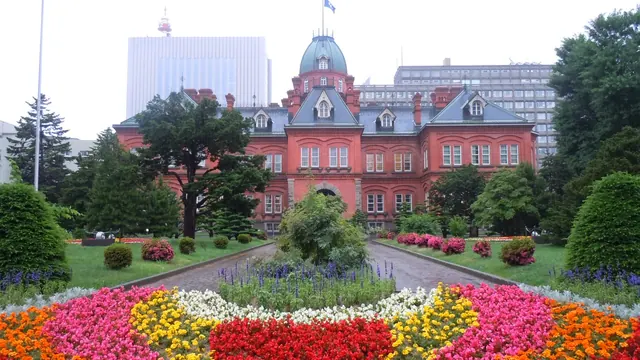
When should you go?
Pick your month. The climate figures are measured averages, not a forecast.
Hokkaido in July
Jeju in July
Daytime high, °C
Rainfall in the month, mm
Temperature and rainfall are climate normals, averaged over the years shown. Hokkaido: 1991-2020 normals, Sapporo (2.2 km from centre). Jeju: 1991-2020 normals, Cheju (1.9 km from centre).
Around Sapporo, Hokkaido has two clear seasons for visitors. From December to February daytime highs sit around freezing and snow is reliable, which is ideal for skiing and hot springs but hard going for long walks in town. June to August is mild, peaking near 26°C, and is the time for flower fields and hiking. The sea only reaches about 22°C in August, so swimming is brief. Rain builds from August into September, but early autumn is still good for the colours in the mountains.
Jeju is much milder in winter and hotter in summer. The swimming months are July to September, when highs reach 30°C and the sea warms to about 27°C. Those are also by far the wettest months, with around 281mm in August. April, May and October are dry, sunny and comfortable for climbing Hallasan and walking the Olle trails. Winter there is cool rather than cold, so the island stays walkable when Hokkaido is under snow.
Which traveller are you?
On a beach and sun trip, choose Jeju. Hyeopjae, Geumneung and Hamdeok have white sand and turquoise water that warms properly in summer. Hokkaido's swimming season is a few cool weeks on plain, functional sand around Otaru and Shakotan.
For a relaxing and wellness trip, Hokkaido is the clear choice. A ryokan night with an outdoor soak is easy to add at Jozankei, Noboribetsu or Lake Toya. Jeju offers forest walks and jjimjilbang but has no old bathing tradition of its own.
On a food and nightlife trip, Hokkaido wins on both. Sapporo pairs miso ramen, crab and Hakodate-style seafood bowls with the late-night bars of Susukino. Jeju eats well on black pork and haenyeo seafood, but most of the island goes quiet after dinner.
Before you go
| Measure | Hokkaido | Jeju |
|---|---|---|
| Official language | Japanese | Korean, Korean Sign Language |
| Currency | Yen (JPY) | Won (KRW) |
| Sockets | AB100 V, 50 and 60 Hz depending on the region | CF220 V, 60 Hz |
| Driving side | Left | Right |
| Time zone | UTC+9 | UTC+9 |
| Emergency number | Police 110, fire 119 | Police 112, ambulance 119, fire 119 |
| Main airport | New Chitose Airport (CTS)42 non-stop destinations | Jeju International Airport (CJU)38 non-stop destinations |
| Public holidays this year | 16 days | 18 days |
By the numbers
| Measure | Hokkaido | Jeju |
|---|---|---|
| Population | 5,383,579 | 583,284 |
| People per km² | - | 316 |
| Swim season, months above 21 °C | 1 month | 4 months |
Where else could you go?
Every comparison below shares a destination with this one, so you can follow Hokkaido or Jeju somewhere new.