Hokkaido or Okinawa?
Our verdict in twelve categories, each scored against the same fixed benchmark cities, and the climate month by month, so you can choose for your trip.
Choose Hokkaido for
- wellness
- getting around
- food and drink
Hokkaido is the pick for travellers who come for landscape, food and hot water. You get deep powder in winter, volcanic lakes and alpine plateaus in summer, and an onsen at the end of almost every day. The seafood, ramen and dairy are some of the best eating in Japan, and Sapporo gives the trip a proper city base with a late night out in Susukino. In return, the winters are hard and the sea is rarely worth getting into.
Choose Okinawa for
- beaches
- culture and sights
- families
Anyone after warm water and coral should look to Okinawa. The reefs and pale-blue bays of the Keramas and Miyako make it Japan's tropical sea escape, with snorkelling and diving that Hokkaido cannot offer, and the Ryukyu heritage at Shuri and the old stone castles gives it a history quite unlike the mainland. It is a slower, island-hopping trip with folk music in the evenings, but there is less to do on land and no hot-spring culture to come back to.
Scoreboard
Twelve categories on one fixed scale from 0 to 100. The shaded stretch is the gap between the two.
Your match
Pick a travel style or drag the sliders, and both match scores follow your weighting.
Wins on wellness and getting around with your weighting.
Wins on beaches and culture and sights with your weighting.
What matters to you?
Category by category
What the scores mean for a trip.
Beaches & swimming
This is Okinawa's strongest card and Hokkaido's weakest. Hokkaido's swimming is limited to a short midsummer spell on the Sea of Japan coast, where the Shakotan coves have clear water and interesting rocks, but most of the sand is plain and the water stays cool even at its warmest.
Okinawa has warm, very clear sea for half the year. The best beaches are on the outer islands: the small coral bays of Tokashiki and Zamami in the Keramas, close to Naha, and the long white sand of Miyako. Many main-island beaches have netted swimming areas because of box jellyfish, and the better ones lie north towards Onna and Motobu rather than around Naha.
Food & drink
Hokkaido is the better place to eat. It sits at the source of much of Japan's best crab, scallops, sea urchin and dairy, and Sapporo adds its own miso ramen, Genghis Khan lamb and soup curry. Hakodate's morning market and Otaru's sushi counters serve seafood bowls of the morning's catch, and Yoichi's whisky rounds it off.
Okinawa's cooking is more of a curiosity than a feast, built on pork, bitter melon, tofu and seaweed, with rafute, goya champuru and Okinawa soba, plus taco rice from the American years. The Makishi Public Market in Naha, where cooks upstairs prepare fish bought downstairs, is the highlight, but there is less depth at the top end.
Culture & sights
Okinawa has more history to see, and it looks unlike anywhere else in Japan. The Ryukyu Kingdom left Shuri with its gate, royal tombs and garden, along with curving gusuku castle walls at Nakijin and Katsuren and the sacred grove of Sefa-utaki. The memorials of the 1945 battle at Mabuni and the naval headquarters add a sober, essential layer.
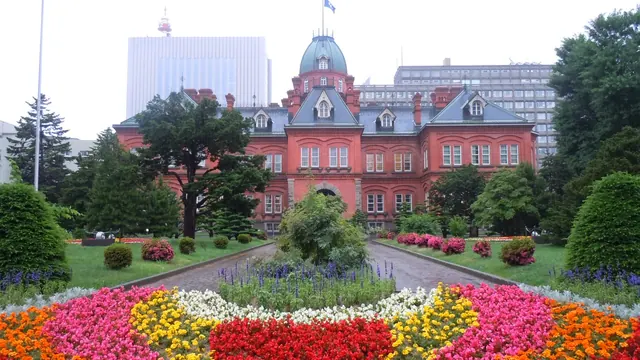
Hokkaido's heritage is younger: Ainu culture at Upopoy and Lake Akan, Meiji-era Western buildings in Sapporo, Otaru and Hakodate's Motomachi, and the star-shaped fort of Goryokaku. In both places this makes a few good days rather than the main reason to go, though Okinawa offers a little more.
Nightlife
Hokkaido has the better nights out, almost entirely because of Susukino in Sapporo, where towers of small bars, izakaya, karaoke and ramen alleys keep going well past midnight. Niseko adds an international après-ski crowd in winter.
Okinawa's evenings are friendlier but smaller. The izakaya around Kokusai-dori in Naha pour awamori to live sanshin, Mihama American Village at Chatan has a few clubs, and most resort coasts go quiet after dinner.
Nature & outdoors
Both are outstanding, but Hokkaido has more range, and most of it is on land. There is reliable powder snow, the caldera lakes of Shikotsu and Toya, high plateaus in Daisetsuzan that turn red in autumn, and in the wild east the bears of Shiretoko, the cranes of Kushiro and drift ice on the Okhotsk coast.
Okinawa's best nature is underwater: coral gardens and turtles in the Keramas, manta rays off Ishigaki, and humpback whales from January to March. On land it has the Yanbaru forest and Iriomote's mangrove rivers, but no high mountains, and the summer heat makes hiking hard.
Day trips
Hokkaido makes the easier base for day trips because Sapporo has rail lines leading out of it. Otaru's canal port is a short train ride away, and Yoichi's distillery, Asahikawa's zoo and the onsen country of Noboribetsu and Lake Toya all make full days out.
In Okinawa most outings mean a ferry to another island, and they are usually trips to the sea rather than to a town. Taketomi's coral-walled village off Ishigaki and sacred Kudaka are the most memorable, and after them the list runs short.
Good for families
Both are safe, clean and easy with children, but they make different family trips. Hokkaido's highlights change with the season: the ice slides of the Sapporo Snow Festival and gentle ski slopes in winter, then the penguin walk at Asahiyama Zoo, dairy farms and flower fields in summer. Its drawbacks are the long distances and the deep cold of midwinter.
Okinawa is a beach-and-sea family trip built around the whale sharks at Churaumi Aquarium, shallow netted beaches and reef lagoons where young children can snorkel. A car is almost essential, and summer heat can wear small children down.
Getting around
Hokkaido is easier without a car. Sapporo has a subway, a streetcar and a walkable grid, and express trains reach Otaru, Asahikawa, Noboribetsu and Hakodate. Only the far east and the lake country really need a car or a flight.
In Okinawa the monorail covers Naha and little else, so most visitors hire a car and then sit in slow traffic along the west coast. Miyako and Ishigaki each need a flight, and the ferries to the small islands can be cancelled in rough seas.
Shopping & style
Hokkaido is the better place to shop, though neither is worth the journey for shopping alone. Sapporo has a city centre built for it, which Naha lacks: department stores around the station and Odori, and the covered Tanukikoji arcade and underground streets where you can browse through a snowy afternoon. Most suitcases still fill with food, such as chocolate, butter biscuits and boxed crab, and Otaru's glass and music boxes are the craft to look for.
What Naha has instead is more distinctive craft. In the Tsuboya pottery lanes beside Kokusai-dori and at the Yomitan kilns you can buy heavy yachimun stoneware, and Ryukyu glass and bingata cloth are on sale too. Sapporo has nothing like them. Away from these crafts, Okinawa offers little more than souvenir stalls and malls, so expect to fly home with a bowl and a bag of brown sugar rather than new clothes.
Affordability
Hokkaido is slightly the cheaper of the two. Sapporo's business hotels, ramen, set lunches and market seafood cost less than elsewhere in Japan, as long as you avoid Niseko in ski season and the Snow Festival week.
Okinawa is cheap enough for a trip based in Naha, but most visitors spend more because of what they come to do: summer resort rates, a hire car, diving trips and flights to the outer islands.
Live music & performing arts
There is little between them, and they offer different things. Hokkaido leans classical, with the Sapporo Symphony at the Kitara hall in Nakajima Park and the Pacific Music Festival each July, while Ainu dance and mouth-harp music at Upopoy are its most distinctive performances.
Okinawa's music is folk and everywhere: sanshin and min'yo most nights in Naha's izakaya, court dance and kumiodori at the National Theatre in Urasoe, eisa drumming in summer and a rock tradition in Koza.
Wellness & relaxation
This is where Hokkaido pulls far ahead. Its volcanic ground feeds onsen everywhere: the mineral waters of Noboribetsu below Hell Valley, Jozankei in its gorge near Sapporo, and lakeside baths at Toya and Akan. A ryokan night with a long dinner and an outdoor bath in the snow fits almost any route.
Okinawa has no hot-spring tradition, only resort spas and a few bathhouses. Its kind of rest is the slow pace of small islands like Taketomi and Kohama, where the days are spent cycling, eating and sitting in the shade.
When should you go?
Pick your month. The climate figures are measured averages, not a forecast.
Hokkaido in July
Okinawa in July
Daytime high, °C
Rainfall in the month, mm
Temperature and rainfall are climate normals, averaged over the years shown. Hokkaido: 1991-2020 normals, Sapporo (2.2 km from centre). Okinawa: 1991-2020 normals, Naha (1.4 km from centre).
The two run on opposite calendars. Where most visitors stay in Hokkaido, July to September is the warm season, with highs around 26°C that make walking and hiking a pleasure, though the sea is warm enough to swim for only a few weeks in August. May and June are the driest months, with about 55mm of rain, and they're mild and pleasant for touring. Rain builds through late summer and peaks in September, so early autumn is cool and often wet. From December to February daytime highs stay around 0°C. That suits skiing and onsen baths in the snow, but it's bitterly cold for long days in town.
Okinawa is warm all year. Winter highs are near 20°C, which is comfortable for sightseeing, but the sea is then too cool for most swimmers. The sea is warm from May to October and reaches 29°C in high summer. July and August are both the sunniest and the hottest months, too hot for long walks at midday. The rain comes in two wet spells, one in May and June and another in late summer into September. Spring and late autumn are the easiest months for touring the main island.
Which traveller are you?
For a beach and sun trip, Okinawa is the clear choice. The water stays warm from May to October and the Kerama and Miyako bays glow pale blue over coral. Hokkaido's sea barely warms enough to swim for a few weeks in August.
On a relaxing and wellness trip, Hokkaido wins easily. Onsen towns such as Noboribetsu, Jozankei and Lake Toya make a ryokan night simple to fit into any route. Nothing in Okinawa's resort spas compares with an outdoor bath under falling snow.
For skiers and snowboarders, Hokkaido has something Okinawa lacks entirely: light, dry powder at Niseko, Rusutsu, Kiroro and Furano. There are ski schools for children, an international après-ski scene at Niseko and a hot spring nearby to finish the day.
Before you go
| Measure | Hokkaido | Okinawa |
|---|---|---|
| Official language | Japanese | Japanese |
| Currency | Yen (JPY) | Yen (JPY) |
| Sockets | AB100 V, 50 and 60 Hz depending on the region | AB100 V, 50 and 60 Hz depending on the region |
| Driving side | Left | Left |
| Time zone | UTC+9 | UTC+9 |
| Emergency number | Police 110, fire 119 | Police 110, fire 119 |
| Main airport | New Chitose Airport (CTS)42 non-stop destinations | Naha International Airport (OKA)37 non-stop destinations |
| Public holidays this year | 16 days | 16 days |
By the numbers
| Measure | Hokkaido | Okinawa |
|---|---|---|
| Population | 5,383,579 | 1,224,726 |
| People per km² | - | 1,013 |
| Swim season, months above 21 °C | 1 month | 12 months |
Where else could you go?
Every comparison below shares a destination with this one, so you can follow Hokkaido or Okinawa somewhere new.