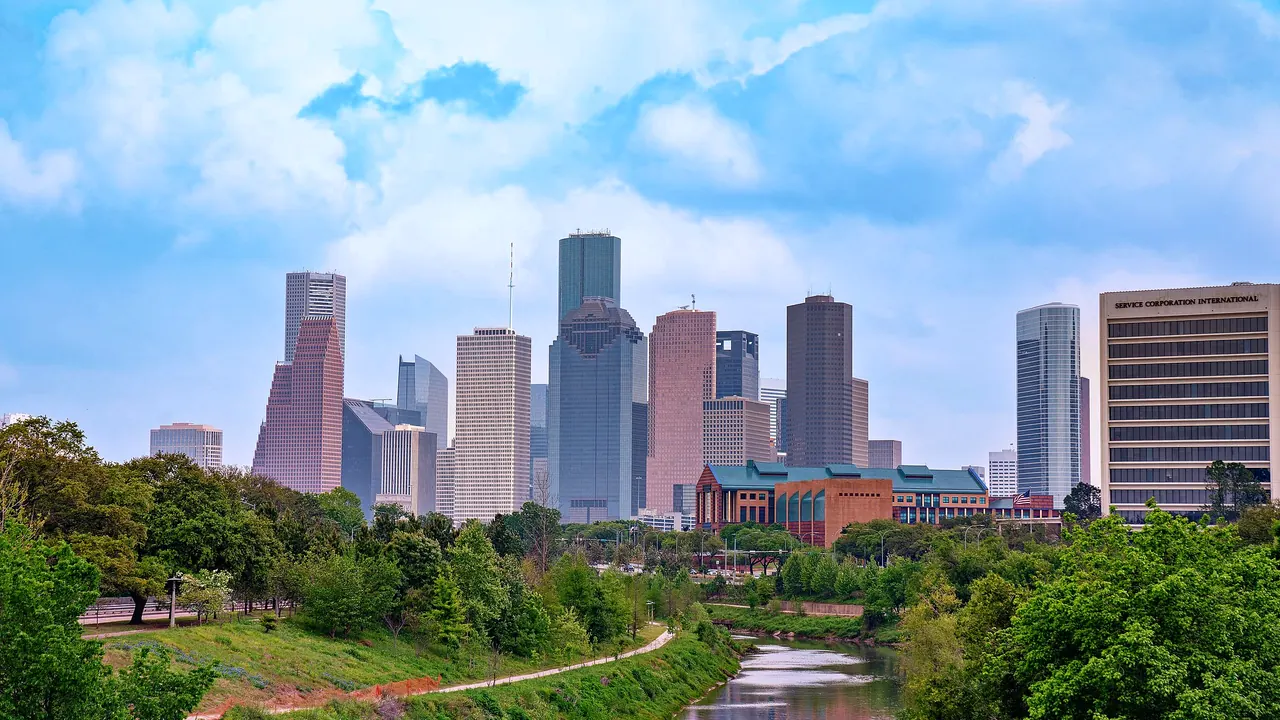
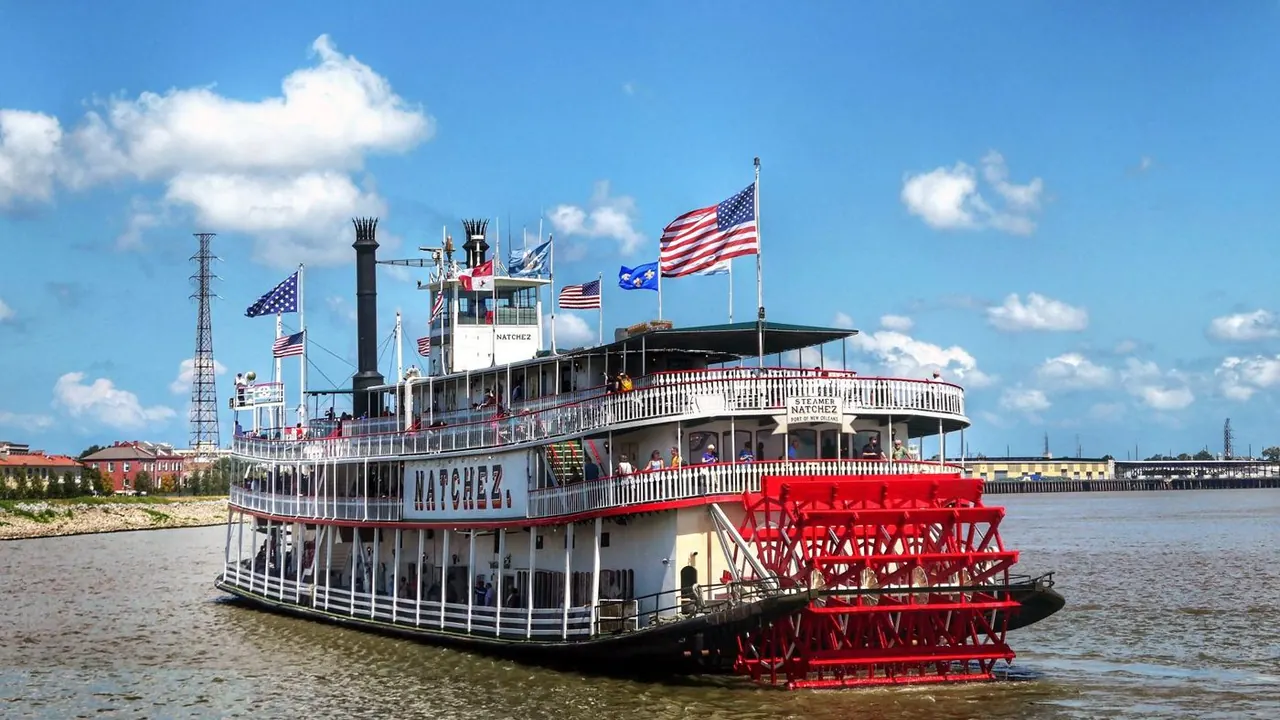
Photos: Houston by Tony Webster, CC BY 2.0, cropped; New Orleans by Bernard Spragg, CC0.
Houston or New Orleans?
Our verdict in twelve categories, each scored against the same fixed benchmark cities, and the climate month by month, so you can choose for your trip.
Choose Houston for
- beaches
- families
- shopping
Houston suits a traveller who wants big institutions and a wide, varied table and doesn't mind driving between them. Its museums, the Menil and the Rothko Chapel, Space Center Houston and a full season of opera, ballet and theatre make it the stronger choice for families and for anyone who wants a formal arts programme. It also has Galveston's beaches within reach and some of the most mixed eating in the country, from Asiatown to Texas barbecue.
Choose New Orleans for
- getting around
- nightlife
- day trips
New Orleans is the better pick for a trip spent on foot, with music and long evenings. The French Quarter and the Garden District are a real old townscape to wander, and the city's Creole and Cajun cooking is entirely its own. Jazz in the clubs of Frenchmen Street, bars that never have to close and streetcars under the oaks give it a character that Houston, built around freeways and malls, can't match.
Scoreboard
Twelve categories on one fixed scale from 0 to 100. The shaded stretch is the gap between the two.
Your match
Pick a travel style or drag the sliders, and both match scores follow your weighting.
Wins on beaches and families with your weighting.
Wins on getting around and nightlife with your weighting.
What matters to you?
Category by category
What the scores mean for a trip.
Beaches & swimming
Neither city is on the sea, but Houston is the one where a beach day fits easily. Galveston Island is about an hour away, with a seawall promenade, long quieter sands at the West End and warm, shallow Gulf water that is cloudy rather than clear.
New Orleans faces a working river and a lake that nobody bathes in. The nearest sand, on the Mississippi coast around Bay St. Louis, is a longer drive and has much the same brownish water. For most visitors a swim there means the hotel pool.
Food & drink
Both are serious places to eat, and New Orleans has the edge because its cooking is so distinctly its own. Creole and Cajun dishes, old-line French Quarter dining rooms, po'boy shops in Mid-City and cocktails such as the Sazerac make every meal feel tied to the place, though the range beyond that tradition is narrow and the food is rich.
Houston's strength is breadth. Tex-Mex and brisket sit alongside Vietnamese, Korean and Chinese food in Asiatown on Bellaire Boulevard, and there are Nigerian and Pakistani kitchens in the south-west. To eat well there, though, you need a car.
Culture & sights
New Orleans offers more to see, mainly because the city itself is the sight. The French Quarter is a rare intact colonial townscape around Jackson Square and the Cabildo, and the Garden District mansions, the above-ground tombs and the National WWII Museum fill out a stay.
Houston's culture is indoors. The Museum of Fine Arts, the Menil Collection and the Rothko Chapel are finer collections than anything in New Orleans, and Space Center Houston is unique. Outside them, though, there is little historic fabric to walk through.
Nightlife
New Orleans is clearly the better night out. Houston's going-out is friendly and sociable, but it is scattered across Montrose, Midtown, Washington Avenue and EaDo. Bars shut at 2am, and moving between areas usually means a ride. Its icehouse patios are pleasant on a warm evening, but few people plan a trip around them.
New Orleans has no legal closing time and lets you carry a drink along the street. A night can drift on foot from Frenchmen Street to the Bywater dives and old corner bars, with the neon crowds of Bourbon Street for those who want them.
Nature & outdoors
Both sit in flat, low, watery country, and New Orleans has slightly more to offer outdoors. Cypress swamps with alligators and herons are within an hour by boat or kayak, the Barataria Preserve has boardwalk trails, and City Park's lagoons and the levee path are in town.
Houston's outdoors is mostly bayou parks and woodland trails, such as Buffalo Bayou and Memorial Park, with alligators at Brazos Bend. Its standout is the spring bird migration along the coast near Galveston.
Day trips
New Orleans has the stronger day trips. The River Road plantations are about an hour upstream, where the Whitney's account of slavery is the one to see. You can also reach Baton Rouge's capitol, the small Gulf towns of Bay St. Louis and Ocean Springs and, at a stretch, the Cajun dance halls around Lafayette.
From Houston, the obvious outing is Galveston, with its iron-fronted Strand and Victorian East End, and you can stop at Kemah on the way. The San Jacinto battlefield and the wildflower roads around Brenham and Round Top make good outings too. Austin and San Antonio are too far for a single day.
Good for families
Houston gives children more, with Space Center Houston as the clear highlight. Hermann Park's zoo, miniature train and museums, along with Galveston's aquarium pyramid and waterparks, could fill a week. The cost is long drives between them.
New Orleans has the Audubon Zoo, the riverfront aquarium and the carousel and children's museum in City Park, plus streetcar and paddle-steamer rides that small children love. Parents have to plan around Bourbon Street and take care where they walk after dark.
Getting around
New Orleans is much easier to get around without a car. The French Quarter, the Marigny and the Warehouse District sit in a compact, flat band you can walk, and the St. Charles streetcar carries you on through the Garden District to Uptown. You need ride-hailing only for the airport and the swamps.
Houston is built for driving. It has one useful light rail line, from downtown through the Museum District, and slow buses. Everything else means freeways, ride-hailing or a hire car, along with rush-hour traffic.
Shopping & style
Houston has a little more to buy, and its strength is scale and luxury. You'll find the big Uptown mall with designer houses under one roof, River Oaks boutiques, independents on 19th Street in the Heights and Rice Village, and western boots and hats as the local speciality.
New Orleans is about character rather than labels. It has antique dealers and galleries on Royal Street, miles of boutiques and vintage shops on Magazine Street, and Carnival masks at the French Market. Big flagship stores are scarce.
Affordability
Costs come out roughly level, but they fall in different places. In Houston, hotels are fairly priced and several major museums are free, but car hire, fuel and parking add up fast.
In New Orleans you can manage without a car, and cheap po'boys, the streetcar and free street music help. The big expense is rooms near the Quarter, which climb sharply around Mardi Gras and Jazz Fest.
Live music & performing arts
For live music, New Orleans is the place. Any night brings jazz, brass bands, funk and zydeco on Frenchmen Street and in the bars of Tremé and the Bywater. There are street musicians on Royal Street, Sunday second-line parades and Jazz Fest in spring.
Houston wins on the formal stage. Its downtown Theater District holds a respected opera, a ballet, a symphony and the Alley Theatre, with free summer shows at Hermann Park's Miller Outdoor Theatre. New Orleans offers little of that kind of season.
Wellness & relaxation
Neither city is a place to rest. Neither has a bathing tradition, and wellness in both means hotel and day spas. Houston also has a few Korean-style bathhouses out in the suburbs.
The difference is pace. Houston's calm comes in pockets, such as an hour in the Rothko Chapel or an early walk in Hermann Park. New Orleans can be slow all day, with courtyard guesthouse mornings and streetcar rides under the oaks of St. Charles Avenue.
When should you go?
Pick your month. The climate figures are measured averages, not a forecast.
Houston in July
New Orleans in July
Daytime high, °C
Rainfall in the month, mm
Where the figures come from
Houston's temperatures are measured 26 km from the centre, at Houston Intercontinental.
Houston has no rain gauge within 25 km of the centre, so its rainfall comes from a gridded climate dataset read at the city rather than from a gauge further away.
Temperature and rainfall are climate normals, averaged over the years shown. Houston: 1991-2020 (sunshine 1981-2010) normals, Houston Intercontinental (26.4 km from centre). New Orleans: 1991-2020 (sunshine 1981-2010) normals, New Orleans Airport (2.7 km from centre).
The two cities share a Gulf climate, so their best months are the same: March to early May, and late October into November, when days are warm but comfortable for walking and eating outdoors. From June to September both are hot and humid, Houston slightly more so at around 35°C in July and August, so sightseeing is best kept to the morning. Winters are mild in both, around 18°C by day. That is too cool for the beach but fine for exploring the streets.
Rain falls all year in both cities, but New Orleans is clearly the wetter, with June the heaviest month at about 194mm. Houston's rain peaks in June and again in September, and its summers are sunnier. Off New Orleans the Gulf warms to around 29°C from June to September and is too cool for most swimmers from November to April.
Which traveller are you?
On a family trip with children, Houston is the better base. Space Center Houston, the zoo and museums of Hermann Park and Galveston's beaches and waterparks give more to do, even if it means a lot of driving.
For a food and nightlife trip, New Orleans wins clearly. You get gumbo, po'boys and cocktails born in its own bars, then live music on Frenchmen Street. The bars have no set closing time, and you can walk between them.
For a short city break, New Orleans is far easier. The French Quarter, the Marigny and the Garden District are close together, and you can cover them on foot or by streetcar. In Houston the sights are spread out, so a weekend there needs a car.
Before you go
| Measure | Houston | New Orleans |
|---|---|---|
| Currency | US Dollar (USD) | US Dollar (USD) |
| Sockets | AB120 V, 60 Hz | AB120 V, 60 Hz |
| Driving side | Right | Right |
| Time zone | UTC-6, UTC-5 in summer | UTC-6, UTC-5 in summer |
| Emergency number | 911 | 911 |
| Elevation | 13 m | -2 m |
| Main airport | George Bush Intercontinental Airport (IAH)25 km from centre191 non-stop destinations | Louis Armstrong New Orleans International Airport (MSY)18 km from centre51 non-stop destinations |
| Public holidays this year | 13 days | 14 days |
By the numbers
| Measure | Houston | New Orleans |
|---|---|---|
| City population | 2,304,580 | 383,997 |
| People per km² | 1,336 | 423 |
| Museums within 10 km | 29 | 16 |
| UNESCO World Heritage sites within 50 km | 0 | 0 |
| Swim season, months above 21 °C | - | 7 months |
Where else could you go?
Every comparison below shares a destination with this one, so you can follow Houston or New Orleans somewhere new.
- Gulf Shoresvs New Orleans
- Austinvs Houston
- Orange Beachvs New Orleans
- Pensacolavs New Orleans
- San Antoniovs Houston
- Destinvs New Orleans