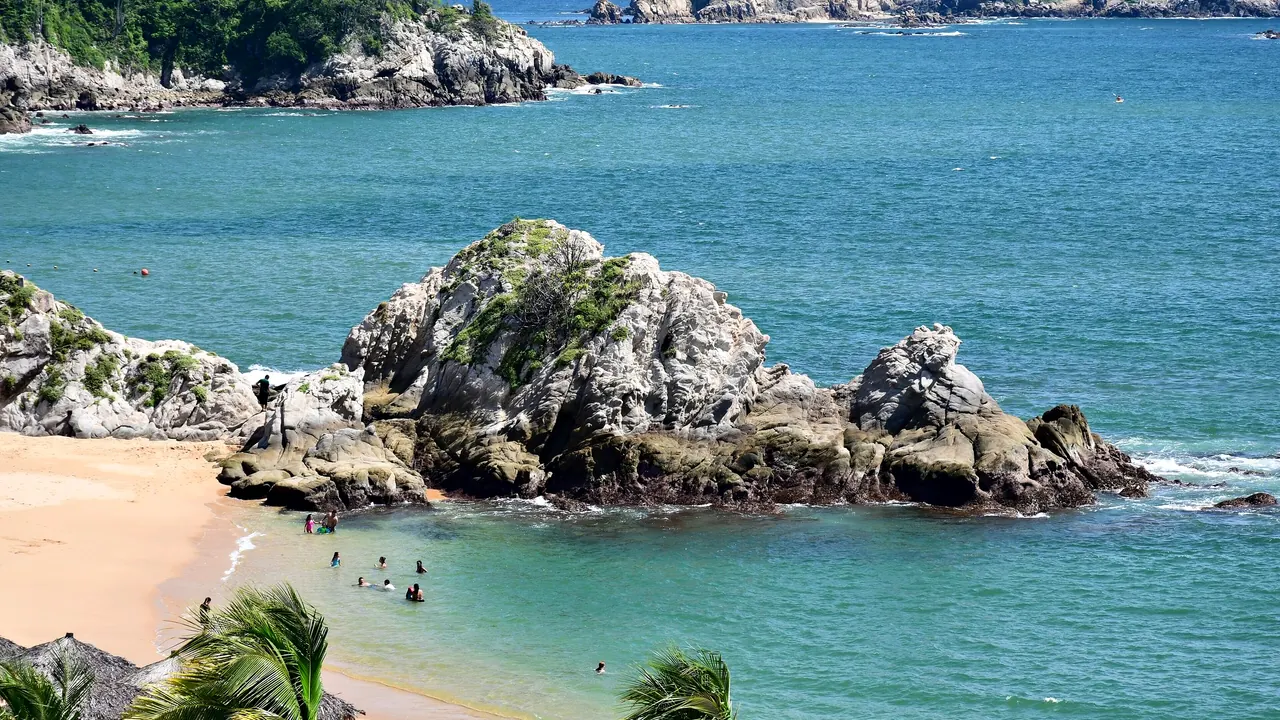
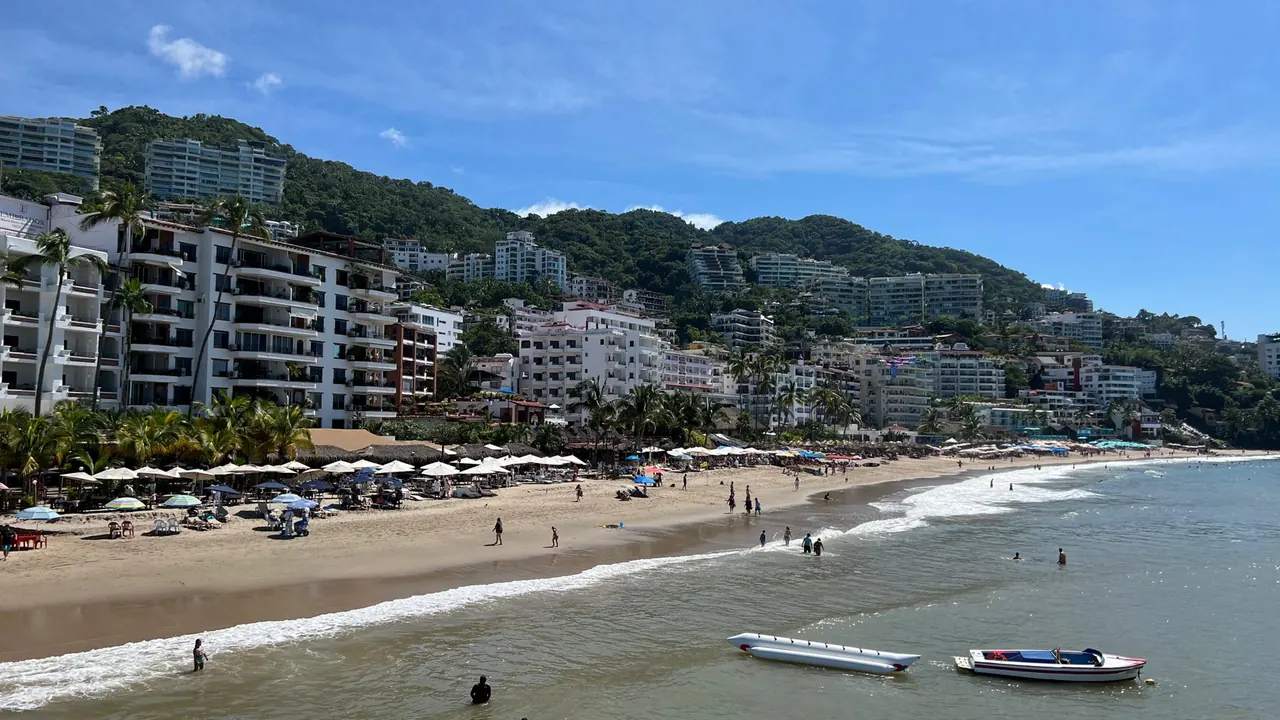
Photos: Huatulco by Gzzz, CC BY-SA 4.0, cropped; Puerto Vallarta by RL0919, CC BY-SA 4.0, cropped.
Huatulco or Puerto Vallarta?
Our verdict in twelve categories, each scored against the same fixed benchmark cities, and the climate month by month, so you can choose for your trip.
Choose Huatulco for
- prices
- beaches
Huatulco suits travellers who want the beach and very little else, done quietly. Its sheltered coves, some reachable only by boat or forest path, sit inside a protected national park, and the town around them is low-rise, calm and asleep by midnight. Choose it for snorkelling, boat days between empty bays and long, uneventful evenings over Oaxacan food.
Choose Puerto Vallarta for
- nightlife
- live music and the arts
- shopping
Puerto Vallarta is the better choice when the trip needs more than sand. It has a real old town to wander, a much wider spread of places to eat, late Malecón clubs and cabaret, more for children, and day trips to surf villages and a mountain silver town. The beaches and the jungle setting match Huatulco, so you give up little and gain a lot to do after dark.
Scoreboard
Twelve categories on one fixed scale from 0 to 100. The shaded stretch is the gap between the two.
Your match
Pick a travel style or drag the sliders, and both match scores follow your weighting.
Wins on prices and beaches with your weighting.
Wins on nightlife and live music and the arts with your weighting.
What matters to you?
Category by category
What the scores mean for a trip.
Beaches & swimming
The beaches are equally good, but they are laid out differently. Huatulco is a chain of nine small bays, mostly sheltered coves of golden sand between rocky headlands. There is coral to snorkel just off La Entrega, and wilder bays such as Cacaluta can only be reached by boat or forest path. Swimmers stay in the coves, and in the dry months the water is at its clearest.
Puerto Vallarta is one huge bay rather than a string of coves. In town, Playa Los Muertos is the busy stretch of loungers and seafood grills, Nuevo Vallarta has long, flat sands to the north, and to the south the mountains drop into small coves at Mismaloya and Las Animas. The sand is coarser, the summer rains can cloud the water, and the surf towns of the Riviera Nayarit, within about an hour, are a bigger part of a stay here.
Food & drink
Huatulco eats simply and well: Oaxacan mole, tlayudas and banana-leaf tamales at La Crucecita's market and fondas, whole fish at beach palapas, mezcal from the hills. Beyond that the choice thins quickly, and the Tangolunda resorts lean on buffets.
Puerto Vallarta gives a food-minded traveller much more. There is Pacific seafood such as wood-grilled pescado zarandeado and aguachile, corner taco stands serving birria and marlin after dark, and raicilla to try. It also has a genuine restaurant tier, up to chef-run dining rooms in the hills.
Culture & sights
Neither is a sightseeing destination, but Puerto Vallarta at least has a town worth wandering. Its whitewashed, red-tiled streets climb behind the centre to the crown-topped Guadalupe church, and the Malecón's bronze sculptures, the Cuale island museum and the galleries fill an afternoon.
Huatulco is a planned resort, and a morning covers it: the giant painted Virgin in La Crucecita's dome, the small pre-Hispanic site and clifftop walk at Copalita, and a colonial church in the old inland village.
Nightlife
The two are far apart here. In Huatulco, evenings mean dinner and a mezcal around La Crucecita's plaza or a beachfront bar by the Santa Cruz marina, and most nights the town is quiet by midnight. People who want to party go up the coast to Zipolite.
Puerto Vallarta stays out late. Open-fronted clubs along the Malecón fill after midnight, and the Zona Romántica adds rooftop and mezcal bars and one of the largest, longest-established gay scenes in Latin America. The busiest nights come in the winter season and at Christmas, New Year and Semana Santa, when Mexican visitors arrive in numbers.
Nature & outdoors
Both are equally strong outdoors, with humpback whales offshore in winter and turtles nesting on the beaches, but the scenery differs. Huatulco's strength is its protected coast, where a national park's dry forest runs down to cliffs, blowholes and easy coral snorkelling. Inland there is rafting on the Copalita River and there are waterfalls among the coffee farms.
Puerto Vallarta is greener and steeper, with jungle-covered Sierra Madre ridges rising straight from the bay. Whales calve close enough to see from shore at times, and boats run to Los Arcos and the Marietas Islands. On land there are coastal trails to Yelapa, zip-lines and mountain biking.
Day trips
Both send you along the coast, but Puerto Vallarta has more choice. Sayulita, San Pancho and Bucerías are each within an hour, boat-only Yelapa has a waterfall walk, and the old silver town of San Sebastián del Oeste adds a mountain day with real history.
From Huatulco, the best day out is the string of small villages about an hour west: Mazunte's turtle centre, Puerto Ángel and bohemian Zipolite. Puerto Escondido is further, and Oaxaca city needs an overnight stay.
Good for families
Both are easy places to take children on a beach vacation, but Puerto Vallarta has more for the days off the sand. Alongside the family resorts and calm water of Nuevo Vallarta, there are water parks, a small jungle zoo at Mismaloya, turtle releases and evening ice cream among the street performers on the Malecón. Its steep cobbled streets are awkward with a pushchair.
Huatulco's draw for families is its sheltered coves, where children can snorkel among fish close to shore, plus a small, calm town. With no zoo, aquarium or theme park, older children may get restless.
Getting around
Puerto Vallarta is somewhat easier on foot. The old centre and Zona Romántica connect along the Malecón and over the Cuale footbridges, although the town then stretches a long way north, and buses, ride-hailing and water taxis cover the rest.
In Huatulco, only La Crucecita and the walk to Santa Cruz work on foot. Every other bay means a taxi or colectivo, and the remoter ones a boat or a hired car.
Shopping & style
Neither suits fashion shoppers, but Puerto Vallarta has more worth carrying home. Its standout is Huichol yarn paintings and beadwork from the Sierra Madre communities, along with many galleries, silver and textiles at the Mercado Municipal, and a few independent boutiques.
Huatulco's stalls around La Crucecita's plaza sell good Oaxacan pieces, such as embroidered blouses, black pottery and alebrijes, mixed in with beach souvenirs. Keen craft buyers wait for Oaxaca city.
Affordability
Costs are much the same, and in both the resorts and boat tours are where the money goes. In Huatulco, the cheap way is to base yourself in La Crucecita, with its market meals, fondas and small guesthouses, and take short taxi rides to the bays.
Puerto Vallarta's local economy is larger, so the budget options spread further. There are taco stands, family restaurants a few streets back from the Malecón, guesthouses in the old centre and buses along the bay.
Live music & performing arts
Puerto Vallarta has some entertainment to plan an evening around, while Huatulco hardly has any. In the winter season the Zona Romántica runs cabaret, drag and comedy revues, bars host Latin jazz and live bands, mariachis play the plazas and the Papantla flyers spin down their pole on the Malecón.
In Huatulco, it amounts to folk dance shows in the resorts and music on the plaza during festivals.
Wellness & relaxation
For unwinding the two are evenly matched, and both offer resort spas, massage and the temazcal steam bath. The difference is setting. Huatulco is quiet everywhere, low-rise and uncrowded, so the pace does the work wherever you stay.
Puerto Vallarta has the yoga and retreat centres in the roadless villages of the south shore. Its centre and Malecón can be noisy at night, though, so a calm stay means staying south of town or in those villages.
When should you go?
Pick your month. The climate figures are measured averages, not a forecast.
Huatulco in July
Puerto Vallarta in July
Daytime high, °C
Rainfall in the month, mm
Where the figures come from
Huatulco's temperatures are measured 42 km from the centre, at Puerto Angel, Oax..
Huatulco's station stands 177 m below the city centre, so the centre is likely a little cooler than the figures say.
Huatulco has no rain gauge within 25 km of the centre, so its rainfall comes from a gridded climate dataset read at the city rather than from a gauge further away.
Puerto Vallarta has no weather station within reach, so its figures come from a gridded climate model rather than a measured record, and read a broad area rather than the city itself.
Temperature and rainfall are climate normals, averaged over the years shown. Huatulco: 1991-2020 normals, Puerto Angel, Oax. (42.2 km from centre). Puerto Vallarta: 1991-2020 normals, TerraClimate 4 km grid at the town, no weather station within 90 km.
Huatulco is hot every month, with daytime highs that barely move from 32°C, so the question is rain rather than warmth. November to April is almost completely dry and very sunny, with the clearest water. From May the rains build, peaking at around 270mm in June and staying heavy through September, when sunshine drops off and midday walks get sticky. The sea is warm enough for long swims all year, and in midwinter it is a little warmer than Vallarta's.
Puerto Vallarta has the gentler winter. Days are a few degrees cooler and the bay is fresher, dipping to about 24°C in February and March, which is still fine for swimming. Its dry season runs a month longer, through May, but summer is wetter and hotter, with close to 300mm of rain in September and highs of 34°C that make the cobbled hills hard going. In both, December to April is the safe window. Huatulco wins for the warmest sea in winter, Vallarta for more comfortable sightseeing weather.
Which traveller are you?
For a food and nightlife trip, Puerto Vallarta is the clear pick. Evening taco stands, wood-grilled fish and aguachile lead into Malecón dance clubs and Zona Romántica bars that run well past midnight, while Huatulco offers a plaza dinner and an early night.
On a family trip with young children, Puerto Vallarta fills a week more easily, with the calm flat sands of Nuevo Vallarta, whale-watching boats, a jungle zoo and water parks. Huatulco's gentle coves are lovely, but children run short of things beyond the beach.
For a relaxing and wellness trip, Huatulco has the edge in atmosphere. Both offer resort spas and the temazcal steam bath, but Huatulco's low-rise, uncrowded bays are quiet after dark, whereas in Vallarta real peace means staying away from the noisy centre.
Before you go
| Measure | Huatulco | Puerto Vallarta |
|---|---|---|
| Official language | Spanish, Nahuatl, Yucatec Maya | Spanish, Nahuatl, Yucatec Maya |
| Currency | Mexican Peso (MXN) | Mexican Peso (MXN) |
| Sockets | AB127 V, 60 Hz | AB127 V, 60 Hz |
| Driving side | Right | Right |
| Time zone | UTC-6 | UTC-6 |
| Emergency number | 911 | 911 |
| Elevation | 220 m | 101 m |
| Main airport | Bahías de Huatulco International Airport (HUX)15 km from centre13 non-stop destinations | Puerto Vallarta International Airport (PVR)5 km from centre52 non-stop destinations |
| Public holidays this year | 9 days | 9 days |
By the numbers
| Measure | Huatulco | Puerto Vallarta |
|---|---|---|
| City population | 7,409 | 224,166 |
| People per km² | - | 4,311 |
| Museums within 10 km | 0 | 2 |
| UNESCO World Heritage sites within 50 km | 0 | 1 |
| Swim season, months above 21 °C | 12 months | 12 months |
Where else could you go?
Every comparison below shares a destination with this one, so you can follow Huatulco or Puerto Vallarta somewhere new.