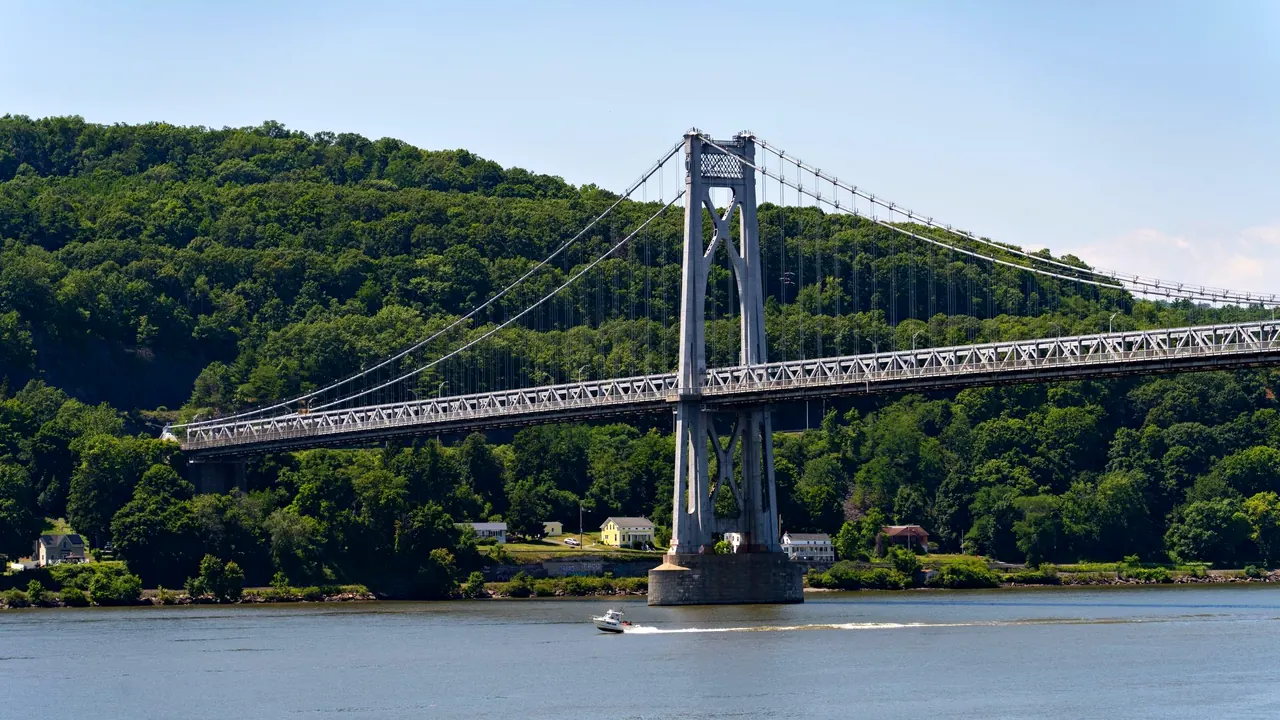
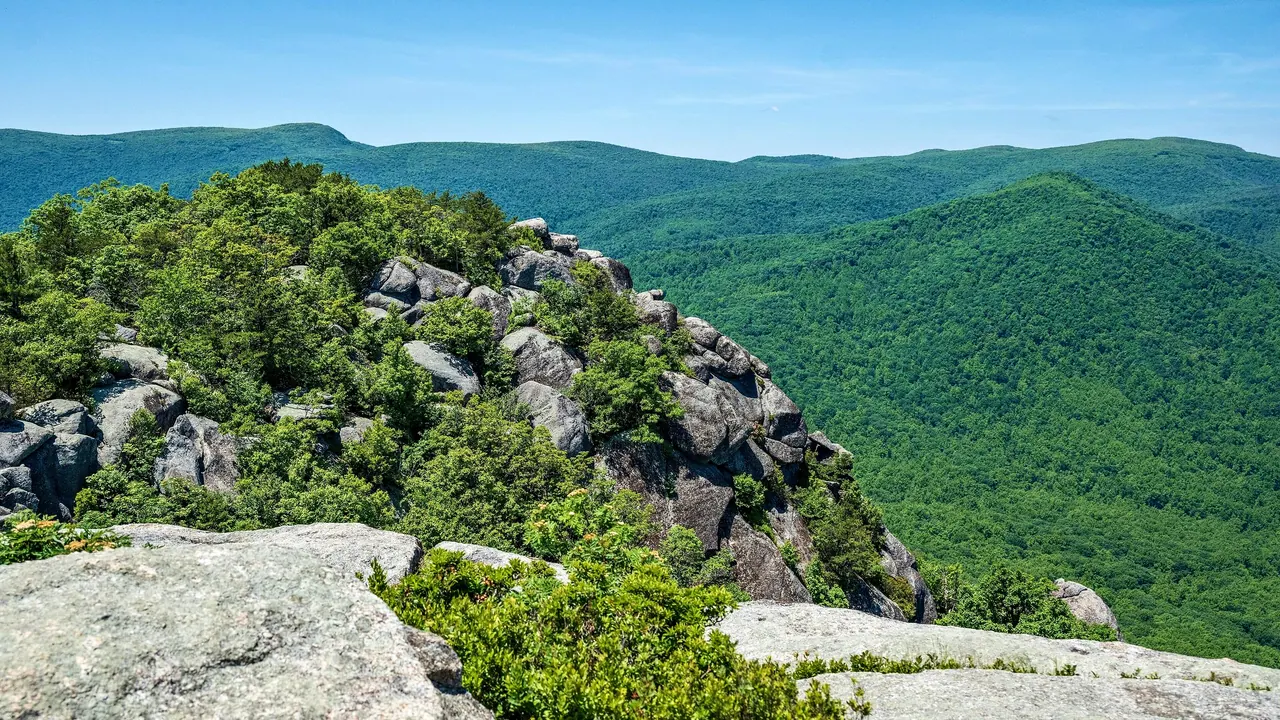
Photos: Hudson Valley by Brett A, Pexels License; Shenandoah by ShenandoahNPS, Public domain.
Hudson Valley or Shenandoah?
Our verdict in twelve categories, each scored against the same fixed benchmark cities, and the climate month by month, so you can choose for your trip.
Choose Hudson Valley for
- shopping
- culture and sights
- food and drink
The Hudson Valley is the better choice if you want a country base with plenty to do away from the trails. Along the river are presidential homes and grand estates, Dia Beacon and Storm King for modern art, farm-driven cooking in Hudson, Rhinebeck and Beacon, and antiques on Warren Street. Trains from the city make a car-free weekend in one river town possible, and Manhattan is an easy day out. You pay for all this, and autumn weekends are the most expensive time to stay.
Choose Shenandoah for
- prices
- nature and the outdoors
Choose Shenandoah if the mountains are the whole point and the budget matters. The Blue Ridge, Skyline Drive, Old Rag and the Appalachian Trail make the hiking just as rewarding, and interstate motels, cabins and campgrounds keep costs lower. Its history is Civil War battlefields and small Victorian towns rather than great estates, and the evenings are quieter still. It suits travellers happy to end the day on a porch under a dark sky.
Scoreboard
Twelve categories on one fixed scale from 0 to 100. The shaded stretch is the gap between the two.
Your match
Pick a travel style or drag the sliders, and both match scores follow your weighting.
Wins on shopping and culture and sights with your weighting.
Wins on prices and nature and the outdoors with your weighting.
What matters to you?
Category by category
What the scores mean for a trip.
Beaches & swimming
Neither region has a sea, but the Hudson Valley gives swimmers more choice. There are supervised state park beaches at Lake Welch, Lake Taghkanic and Wilson State Park, stream pools in the Catskills and Shawangunks, and lakes that warm to about 24°C in high summer. Shenandoah's water is mostly the South Fork of the river, better for tubing and wading off gravel bars than for a proper swim, plus a few mountain swimming holes and reservoirs. In both, a swim is something to add to a hot afternoon, not a reason to go.
Food & drink
The Hudson Valley eats noticeably better. Its river towns have kitchens built on local farms and dairies that can stand beside city dining, and the Culinary Institute at Hyde Park opens its student restaurants to visitors. For drinks there are cideries, craft distilleries and the Shawangunk wineries.
Shenandoah's cooking is plainer and more regional: country ham, biscuits and apple butter, bought from Mennonite markets around Harrisonburg and Dayton. The more ambitious cooking is mostly in Staunton and Harrisonburg. Breweries and wineries run the length of the valley, but outside a few downtowns the highway chains take over.
Culture & sights
Great river estates and modern art are the Hudson's heritage, while Shenandoah's is the Civil War and the small towns it passed through. Along the Hudson are Roosevelt's home and presidential library and the Vanderbilt Mansion at Hyde Park, Kykuit and Sunnyside near Sleepy Hollow, and Olana and the Thomas Cole house, where the Hudson River School painted this landscape. Dia Beacon and Storm King add two major modern art sites, though the sights are spread out and each one needs a drive.
Shenandoah's sights are smaller and more local: the battlefields at New Market and Cedar Creek, Winchester's Old Town, which changed hands again and again during the war, Staunton's Victorian downtown and Frontier Culture Museum, and the college grounds at Lexington. Each makes a good day out, but none matches the size of the Hudson's mansions or its art collections.
Nightlife
Both regions go to bed early, and neither has clubs. The Hudson Valley's evenings are wine bars, cocktails and taprooms in Kingston, Beacon and Hudson, and the train to the city is there for anyone who wants a big night. In Shenandoah you get Harrisonburg's student taprooms in term time and a few early-closing pubs in Staunton and Winchester. Otherwise the evening is a fire pit at a cabin and the stars over the ridge.
Nature & outdoors
Both are serious hiking country. Each lies on the Appalachian Trail, each is wooded rather than alpine, and each is at its best in October. The Hudson Valley has more variety: the fjord-like gorge of the Highlands with Breakneck Ridge, the white Shawangunk cliffs for rock climbing, the Catskill escarpment and Kaaterskill Falls, and the river for kayaking.
Shenandoah is built around one long park on the Blue Ridge. Skyline Drive gives overlooks without effort, Old Rag and Whiteoak Canyon reward a full day's hike, and black bears are a common sight. The Massanutten ridge and the George Washington National Forest add quieter trails, mountain biking and trout streams.
Day trips
Both regions have a great city within reach, but the trip is different. From the Hudson Valley, Manhattan is a train ride of about an hour from the lower valley. From Shenandoah, Washington is a drive of about an hour and a half when traffic allows.
Beyond that, the outings differ in kind. The Hudson Valley's are mostly towns to wander: Cold Spring, Rhinebeck and Woodstock, Albany's capitol, Saratoga Springs and the Berkshires. Shenandoah's lean towards history, with Monticello near Charlottesville, Harpers Ferry where two rivers meet, and the Antietam and Gettysburg battlefields.
Good for families
The Hudson Valley has more to fill children's days. There is the Legoland resort near Goshen, the trailside zoo and carved-animal carousel at Bear Mountain, petting farms, maple sugaring, pumpkin season around Sleepy Hollow, and the flat, safe Walkway Over the Hudson.
Shenandoah's family draws are its show caves, led by Luray Caverns, and short waterfall trails where junior ranger badges give a walk a purpose. River tubing and the indoor water park at Massanutten fill other days. Neither has an aquarium for a rainy day, and in both the drives between sights can wear on small children.
Getting around
In both regions a car does most of the work, and both clog up on autumn weekends. The real difference is the railway. On the Hudson's east bank, trains from the city stop at Tarrytown, Cold Spring, Beacon, Poughkeepsie and Hudson, so a car-free weekend in one town is realistic.
Shenandoah has only Staunton's station and a few small town bus systems. Otherwise it depends on Interstate 81, with its heavy lorry traffic, and on the slow, winding Skyline Drive.
Shopping & style
The Hudson Valley is the far better place to shop. Warren Street in Hudson is a whole street of antique dealers, interiors shops and galleries. Beacon, Rhinebeck and Saugerties add vintage and craft, Woodstock has its potters, and a large designer outlet village near Central Valley covers the brands.
Shenandoah's offer is the big antique malls of Strasburg and New Market, strong on quilts, furniture and Civil War relics. Add a few boutiques in Staunton and Winchester and preserves from the Mennonite markets. Neither region has luxury fashion or department stores.
Affordability
Shenandoah is the easier region on the budget. Interstate motels, campgrounds and rented cabins keep a stay reasonable, entry to the national park is inexpensive, and most hikes cost nothing.
The Hudson Valley is priced for weekenders from the city. Boutique inns and farm-to-table restaurants charge city prices, and costs only come down with chain motels around Poughkeepsie, Newburgh or Kingston, midweek travel and meals at diners. In both regions, October foliage weekends cost the most and a hire car adds to every day.
Live music & performing arts
The Hudson Valley has the fuller summer. There is opera, dance and theatre at Bard's Gehry-designed Fisher Center, garden concerts at Caramoor, the long-running Maverick chamber series near Woodstock and outdoor Shakespeare above the river near Garrison. Tanglewood and Bethel Woods are within a drive.
Shenandoah's highlight runs for much of the year: Staunton's Blackfriars Playhouse, a recreation of Shakespeare's indoor theatre with its own resident company. Beyond that the scene is small: the summer Bach festival, college recitals in Winchester and Harrisonburg, and bluegrass at country jams.
Wellness & relaxation
The Hudson Valley offers more ways to unwind. There are grand Victorian lake resorts with full spas on the Shawangunk Ridge, yoga and meditation retreats around Rhinebeck and the Catskill foothills, and Buddhist monasteries near Carmel and Mount Tremper that welcome visitors.
Shenandoah runs at the same slow pace, but inside the valley wellness mostly means cabins, inns and resort spas. What it has close by, and the Hudson does not, is real bathing: the eighteenth-century wooden bathhouses over warm mineral pools at Warm Springs, about an hour west of Staunton.
When should you go?
Pick your month. The climate figures are measured averages, not a forecast.
Hudson Valley in July
Shenandoah in July
Daytime high, °C
Rainfall in the month, mm
Where the figures come from
Hudson Valley's temperatures are measured 35 km from the centre, at Poughkeepsie / New Hackensack.
Hudson Valley has no rain gauge within 25 km of the centre, so its rainfall comes from a gridded climate dataset read at the destination rather than from a gauge further away.
Shenandoah has no weather station within reach, so its figures come from a gridded climate model rather than a measured record, and read a broad area rather than one spot.
Temperature and rainfall are climate normals, averaged over the years shown. Hudson Valley: 1991-2020 normals, Poughkeepsie / New Hackensack (34.5 km from centre). Shenandoah: 1991-2020 normals, TerraClimate 4 km grid at the town, no weather station within 90 km.
The two regions follow the same pattern through the year: cold winters, a green summer and an autumn of turning leaves that is the high point of both. Around the main Hudson Valley towns, July reaches about 30°C. That is hot enough to make the lake beaches welcome and a steep climb hard work at midday. At Shenandoah's measuring point, high summer stays nearer 25°C, which is kinder for long hikes. Shenandoah is also the wetter of the two. Rain is frequent from spring through summer and peaks in September at about 136mm, while the Hudson Valley's rain is spread more evenly across the year.
For walking, the best months in both are late May and June, then mid-September through October. Winters are cold and grey in each, with January highs barely above freezing (about 2°C in the Hudson Valley). The lakes and rivers are only warm enough for swimming from late June to early September.
Which traveller are you?
On a culture and arts trip, base yourself in the Hudson Valley. Its history and modern art are reason enough to go, and a summer stay adds a full festival season. Shenandoah's sights are rewarding but small, worth a day per town rather than a week.
For a shopping trip, the Hudson Valley is the only real choice of the two. Antiques, interiors, crafts and brand outlets are all there, enough to plan a weekend around. In Shenandoah, shopping is a stop on the way rather than a reason to go.
On a tight budget, Shenandoah stretches the money further. Its main attraction is the Blue Ridge itself, which costs almost nothing to enjoy. The Hudson Valley can be done cheaply, but only by giving up much of its appeal: the country inns and the cooking.
Before you go
| Measure | Hudson Valley | Shenandoah |
|---|---|---|
| Currency | US Dollar (USD) | US Dollar (USD) |
| Sockets | AB120 V, 60 Hz | AB120 V, 60 Hz |
| Driving side | Right | Right |
| Time zone | UTC-5, UTC-4 in summer | UTC-5, UTC-4 in summer |
| Emergency number | 911 | 911 |
| Main airport | New York Stewart International Airport (SWF)9 non-stop destinations | Charlottesville Albemarle Airport (CHO)6 non-stop destinations |
| Public holidays this year | 13 days | 13 days |
Where else could you go?
Every comparison below shares a destination with this one, so you can follow Hudson Valley or Shenandoah somewhere new.
- Catskillsvs Hudson Valley
- Poconosvs Hudson Valley
- The Hamptonsvs Hudson Valley
- Adirondacksvs Hudson Valley
- Finger Lakesvs Hudson Valley
- Martha's Vineyardvs Hudson Valley