India
Kashmir
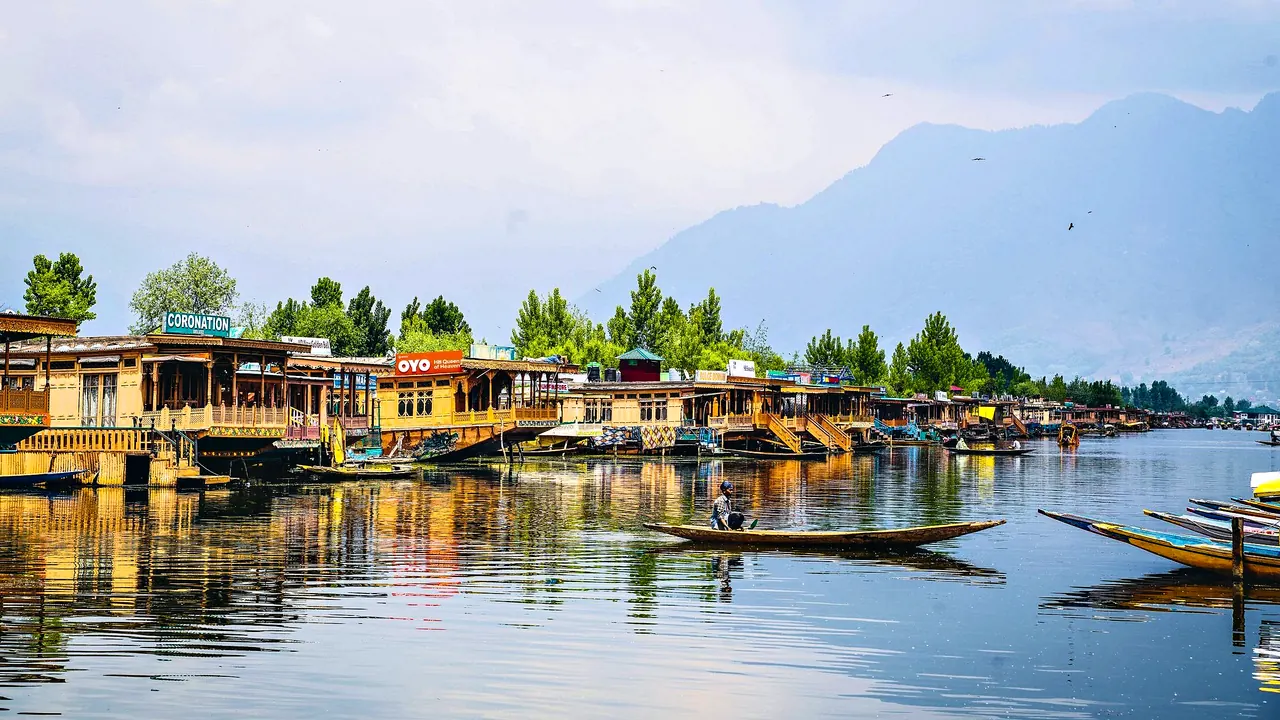
Houseboats and a shikara on Dal Lake in Srinagar
- Nature & outdoors92
- Affordability70
- Culture & sights57
Photo: Ravinder Ravi, Pexels License
Match
41
Every category weighted equally
- Beach & sun40
- Culture & arts41
- Food & nightlife36
- Family trip45
- Outdoors49
- Relax & unwind44
- Shopping & style41
- On a budget45
Kashmir in twelve categories
Our verdict on each, scored 0 to 100 against the same fixed benchmark cities, so a score means the same thing on every page.
Beaches & swimming. Scores 5 out of 100.
Food & drink. Scores 52 out of 100.
Culture & sights. Scores 57 out of 100.
Nightlife. Scores 5 out of 100.
Nature & outdoors. Scores 92 out of 100.
Day trips. Scores 38 out of 100.
Good for families. Scores 38 out of 100.
Getting around. Scores 33 out of 100.
Shopping & style. Scores 55 out of 100.
Affordability. Scores 70 out of 100.
Live music & performing arts. Scores 12 out of 100.
Wellness & relaxation. Scores 40 out of 100.
Kashmir category by category
Beaches & swimming
5Kashmir is a mountain valley far from any sea, and there is no beach life to speak of. The lakes are for looking at and floating on. Dal Lake and Nigeen Lake in Srinagar are lived on by houseboat and crossed by shikara, not swum in, and the high mountain lakes stay icy even in July. Travellers who want to swim should look for a hotel pool, and keep the water part of a stay for slow boat rides at dawn.
Food & drink
52Kashmiri cooking is one of the most distinctive regional cuisines in India. Its high point is wazwan, the multi-course feast of slow-cooked lamb dishes such as rista, rogan josh and gushtaba, cooked by hereditary wazas and best eaten at a wedding or in one of Srinagar's specialist wazwan houses. Daily life runs on noon chai, the pink salted tea, and saffron-scented kahwa, poured with breads from neighbourhood kandur bakeries, which bake girda and lavasa before dawn.
Beyond that the range is narrow. Most hotel menus are generic North Indian, there is little fine dining, and alcohol is scarce and mostly limited to a few hotels. Food lovers should base themselves in Srinagar. The resorts eat simply.
Culture & sights
57Most of the heritage lies in and around Srinagar. The Mughal gardens on the eastern shore of Dal Lake are the best known: Shalimar Bagh, Nishat Bagh and Chashme Shahi, terraced water gardens laid out by emperors against the slopes of the Zabarwan range, with Pari Mahal above them. In the old city, Downtown, the papier-mâché interior of Khanqah-e-Moula, the wooden Jamia Masjid with its hundreds of deodar pillars and the marble Hazratbal shrine show a timber and brick architecture found nowhere else in India.
Further south are the stone ruins of the eighth-century Martand Sun Temple and the temples at Awantipora. Museums are few and modest, and much of the old city is fragile and worn, so the region rewards a slow few days rather than a long sightseeing list.
Nightlife
5There is effectively no nightlife. Kashmir is a conservative Muslim-majority region, bars are almost absent and alcohol is served in only a few hotels. Streets in Srinagar go quiet soon after dark. Evenings are spent on a houseboat veranda, around a hotel fire or over a long dinner, and in the mountain resorts the day ends even earlier.
Nature & outdoors
92This is the reason to come. The Kashmir Valley is a broad green basin ringed by Himalayan and Pir Panjal peaks, with three side valleys at its edges. Gulmarg is a meadow resort whose gondola climbs to nearly 4,000m, with deep powder skiing from December to March and flower meadows in summer. Pahalgam, on the Lidder river, is a base for pine-forest walks, pony treks and routes towards the high lakes. Sonamarg opens onto glaciers and the start of the Kashmir Great Lakes trek, a week of alpine lakes and passes.
Spring brings almond and tulip blossom to Srinagar, summer opens the high trails from about June, and autumn turns the chinar trees red and gold. Rafting on the Lidder and Sindh rivers and birdlife on the lakes and wetlands add variety. The mountain infrastructure is basic, so trekkers usually go with local guides and ponies.
Day trips
38The well-known outings from Srinagar are into the mountains, and the list of separate towns and sites is short. Southwards along the Jhelum, a single day can take in the saffron fields of Pampore, which flower purple in late October, the temple ruins at Awantipora and the great stone Martand Sun Temple near Anantnag. Closer to the city are the spring-fed Kheer Bhawani temple at Tulmulla and the Sufi shrine at Charar-e-Sharif. Apple orchards and walnut groves line most of these roads in autumn. Beyond these, the region offers villages and valleys rather than other towns worth a dedicated day.
Good for families
38Kashmir appeals to families in a simple, outdoor way rather than through anything made for children. A night on a houseboat, a shikara ride past floating vegetable gardens, pony rides at Pahalgam, snow and sledging at Gulmarg and the gondola up the mountain are all things children remember. Kashmiri hospitality is warm towards them.
The effort is real, though. There are no theme parks, zoos or museums for children, the drives between valleys are long and winding, and medical care outside Srinagar is basic. Older children who like the outdoors manage best. Families with toddlers usually stay in Srinagar and Pahalgam and make short trips from there.
Getting around
33Almost every visitor relies on a hired car and driver, usually organised through a hotel or houseboat owner, and the taxi unions in the resorts control local transport. Srinagar has no metro, and its local buses are hard for an outsider to use. The old city's lanes are crowded, and traffic piles up around the lake boulevard. Shikaras are the natural way to move about the lakes.
The resorts are within reach: Gulmarg is about an hour and a half from Srinagar and Pahalgam about two and a half hours by mountain road. Expect police and army checkpoints along the main routes. In winter, snow can close the higher roads for days.
Shopping & style
55Shopping here means crafts, and some of them are among the finest made in South Asia: pashmina and shahtoosh-style shawls, hand-knotted silk and wool carpets, crewel and chain-stitch embroidery, painted papier-mâché, walnut-wood carving, copperware and Pampore saffron. Polo View and the streets around Lal Chowk and the Boulevard hold the established showrooms. Downtown's lanes are where many workshops are, and the dawn floating vegetable market on Dal Lake is a sight in itself.
There is little else to buy, and no fashion or design scene. Shopping is often steered by drivers and houseboat owners towards showrooms that pay commission. Fake pashmina is common, so it pays to buy slowly and from established sellers.
Affordability
70Day-to-day costs are low. Local meals, tea, bakery bread and simple guesthouses cost little, and a modest houseboat can be good value. What raises the bill is how a visitor has to travel: a private car and driver for most of the trip, fixed union taxi rates in Gulmarg, Pahalgam and Sonamarg, and pony and guide fees in the mountains. In the summer peak and over the ski season, the better houseboats and resort hotels charge noticeably more than comparable rooms elsewhere in northern India. Bargaining is normal for crafts, and starting prices for visitors are high.
Live music & performing arts
12Kashmir has living musical traditions, but there is little a visitor can reliably attend. These include Sufiana kalam, the classical Sufi music played on the santoor and saz, as well as folk chakri songs and the satirical folk theatre of Bhand Pather. Mostly they are heard at weddings, shrine gatherings and occasional cultural evenings, and some hotels and houseboats arrange a performance for guests. There are no theatres or concert halls with a regular programme, so music lovers should treat any performance as a lucky find.
Wellness & relaxation
40Kashmir has no bathing or spa culture of its own. Spa treatments are limited to a few of the larger hotels in Srinagar and Gulmarg. What it does offer is pace. Mornings on a houseboat on Nigeen or the quieter stretches of Dal Lake, with a shikara drifting past and kahwa on the veranda, are deeply calming, and so are long afternoons under the chinars in the Mughal gardens. In Pahalgam and Gulmarg the days slow to walks and mountain air. Travellers looking for treatments or a retreat programme will find little. Those who simply want quiet will find plenty, away from Srinagar's traffic.
Where to stay in Kashmir
Srinagar is the natural first base, and on a short trip many visitors need no other. A houseboat on Nigeen Lake or a quieter stretch of Dal Lake gives slow mornings, kahwa on the veranda and shikara rides at dawn. A hotel near the Boulevard puts the Mughal gardens, the shrines of Downtown and the wazwan houses within easy reach. The city suits food lovers, families with young children and anyone who has come for the craft workshops and the heritage, though traffic around the lake can be heavy.
Pahalgam, about two and a half hours away on the Lidder river, is the gentler mountain base. Its pine-forest walks, pony rides and rafting suit families and walkers. Gulmarg, an hour and a half from the city, is the choice for skiers from December to March, and for meadow walks and the gondola in summer. Sonamarg is simpler again and suits trekkers heading for the glaciers and the Great Lakes route.
Most first trips combine a few nights in Srinagar with two or three nights in one valley, with a single move by car and driver. Evenings are quiet everywhere and the resorts eat simply, so a second visit is the time to add another valley or a week on the trails. In winter, snow can close the roads to the higher bases for days.
When should you go?
Pick a month to see what it is like. The climate figures are measured averages, not a forecast.
Kashmir in July
Daytime high, °C
Rainfall in the month, mm
The whole year
Shaded against this destination’s own year: the deepest cell is its best month for that figure and the palest its weakest.
Temperature and rainfall are climate normals, averaged over the years shown. Kashmir: 1991-2020 normals, Srinagar (3.1 km from centre).
Before you go
| Measure | Kashmir |
|---|---|
| Official language | Hindi, English |
| Currency | Indian Rupee (INR) |
| Sockets | CM230 V, 50 Hz |
| Driving side | Left |
| Time zone | UTC+5:30 |
| Emergency number | 108 or 112 |
| Main airport | Srinagar International Airport (SXR)12 non-stop destinations |
Compare Kashmir with
Every comparison with a written verdict behind it.