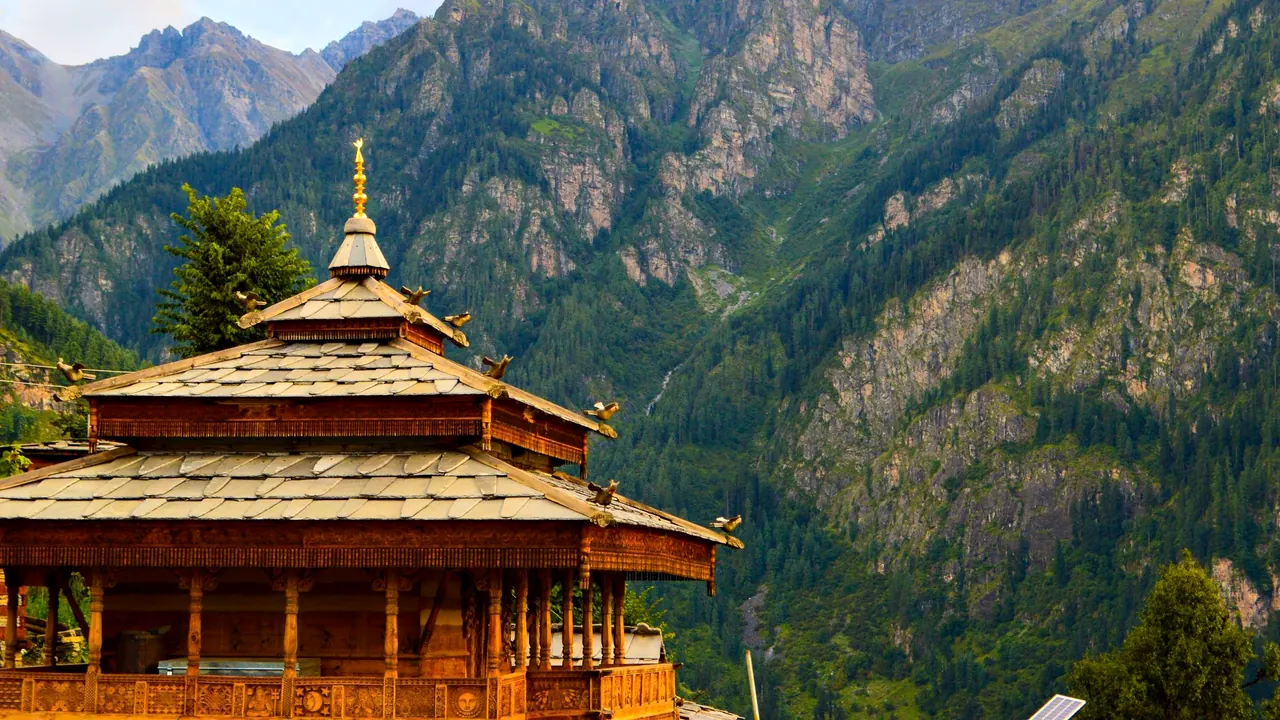
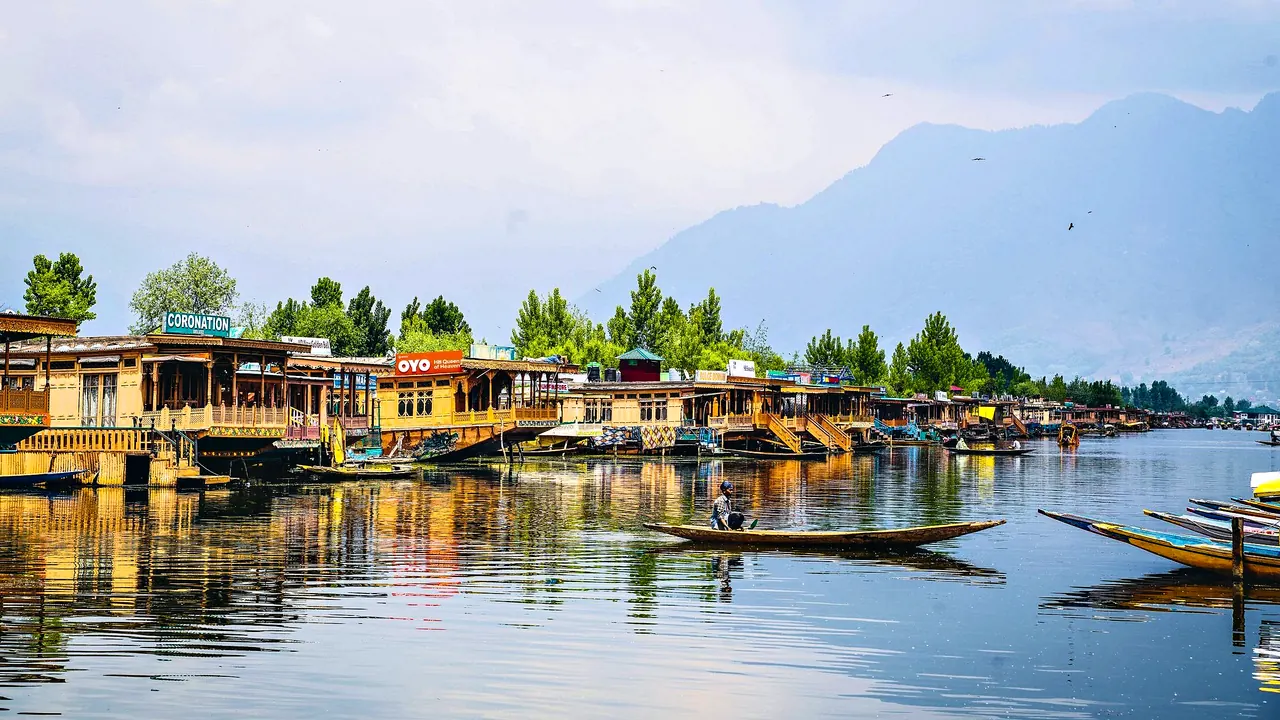
Photos: Himachal Pradesh by K S ARAVINDA Kashyap, Pexels License; Kashmir by Ravinder Ravi, Pexels License.
Himachal Pradesh or Kashmir?
Our verdict in twelve categories, each scored against the same fixed benchmark cities, and the climate month by month, so you can choose for your trip.
Choose Himachal Pradesh for
- wellness
- nightlife
- prices
Himachal Pradesh suits the traveller who wants to move between several very different bases and stay a while. It offers colonial Shimla, Tibetan McLeod Ganj with its meditation and yoga courses, backpacker evenings in Old Manali and the cold desert of Spiti. It is also the cheaper of the two, with buses and guesthouses that let a long, loose trip run on very little. The cost is time, because the main towns are a full day's drive apart.
Choose Kashmir for
- shopping
- food and drink
- getting around
Kashmir is the better choice for a slower, more settled trip built around Srinagar. You sleep on a houseboat, eat wazwan, look for fine pashmina and carpets, and take easy drives out to Gulmarg, Pahalgam and Sonamarg. The mountains are just as grand, and the cooking and crafts are richer. Evenings are very quiet, though, and nearly every journey depends on a hired driver.
Scoreboard
Twelve categories on one fixed scale from 0 to 100. The shaded stretch is the gap between the two.
Your match
Pick a travel style or drag the sliders, and both match scores follow your weighting.
Wins on wellness and nightlife with your weighting.
Wins on shopping and food and drink with your weighting.
What matters to you?
Category by category
What the scores mean for a trip.
Beaches & swimming
Neither destination is for swimming. The difference is only in what the water is for. In Himachal it means the Beas and Sutlej rivers, fast and glacier-cold, which you raft rather than swim in. In Kashmir it means the still waters of Dal and Nigeen lakes, which you drift across in a shikara or live on in a houseboat. Pools are rare in both places.
Food & drink
Kashmir has the more distinctive table. Wazwan, the slow-cooked lamb feast of rista and gushtaba, has no real equal anywhere in Himachal. Neither do the pink noon chai and the breads from the kandur bakeries baked before dawn. The catch is that the best of it is concentrated in Srinagar.
Himachal's own festive meal, the dham, is rarely served in restaurants. So eating well there means Tibetan momos and thukpa in McLeod Ganj, traveller cafés in Old Manali and trout from the Kullu valleys. It is varied and pleasant, but rarely memorable. Alcohol is easier to find in Himachal, while in Kashmir it is limited to a few hotels.
Culture & sights
There is little to choose between them in depth, but the heritage is very different in kind. Himachal's is spread across the state in layers. There is the colonial Ridge and Viceregal Lodge in Shimla, reached by the UNESCO toy train. There are Kangra Fort and the rock-cut temples at Masrur, the Dalai Lama's temple in McLeod Ganj, and the thousand-year-old murals of Tabo, days away in Spiti.
Kashmir's is concentrated around Srinagar and Islamic in character. It includes the terraced Mughal gardens of Shalimar and Nishat, the papier-mâché interior of Khanqah-e-Moula and the deodar-pillared Jamia Masjid, with the Martand ruins a drive south. It suits a slow few days in one place, where Himachal suits a longer journey between sites.
Nightlife
Himachal at least has evenings to go out in. Old Manali's strip of bars and cafés fills with backpackers in season, and the Parvati valley around Kasol is known for informal trance parties.
Kashmir has almost nothing of the kind. There are hardly any bars, Srinagar's streets go quiet soon after dark, and a good evening means the houseboat veranda or a long dinner by the fire.
Nature & outdoors
Both are high Himalayan country of the first rank, and either repays the journey. Himachal has the wider range of landscapes and activities. You can paraglide at Bir Billing, walk to Triund behind Dharamshala, explore the Great Himalayan National Park, or cross the Atal Tunnel into the moonscape of Spiti and the lake at Chandratal.
Kashmir is greener and more pastoral, with meadows at Pahalgam, glaciers at Sonamarg and the week-long Great Lakes trek. For skiers it clearly wins. Gulmarg's gondola gives access to deep powder, while the snow at Solang is modest.
Day trips
Himachal gives you more places to visit from each base. From Dharamshala you can reach the Norbulingka Institute, the tea gardens of Palampur and the artists' village of Andretta. From Manali there are Naggar's castle and the hot springs at Manikaran, and from Shimla the palace town of Chail and the ridges of Narkanda.
From Srinagar, the usual outings head into the mountains: the meadows of Gulmarg, the Lidder valley at Pahalgam and the glaciers beyond Sonamarg, all valleys and villages rather than towns. The heritage option is a day south along the Jhelum, taking in the saffron fields of Pampore, the ruins at Awantipora and the Martand Sun Temple. The shrines at Tulmulla and Charar-e-Sharif are closer to the city.
Good for families
Both are workable with children rather than built for them, and the treats differ. Himachal has the toy train to Shimla and a car-free Mall Road for strolling. Kashmir has a night on a houseboat, a shikara past the floating gardens and the Gulmarg gondola. Both offer snow and sledging in winter. Both involve long winding drives, though Himachal adds steep, stepped towns and the real altitude of Spiti.
Getting around
Kashmir is easier to cover because it is compact. Gulmarg is about an hour and a half from Srinagar and Pahalgam about two and a half hours, so one base can reach most of it. On the lakes, the shikara does the work. The drawbacks are near-total reliance on a hired driver, taxi unions in the resorts and checkpoints on the main roads.
In Himachal, moving between Shimla, Manali and Dharamshala takes most of a day each time, and monsoon landslides and winter snow can cut routes off. Its extensive state bus network is the one advantage, reaching places a Kashmir trip would only reach by car.
Shopping & style
Kashmir is the clear choice for anyone who wants to bring something fine home. You can buy pashmina, silk carpets, chain-stitch embroidery, walnut carving and Pampore saffron from the showrooms around Polo View and the workshops in Downtown. Fakes and commission-driven detours by drivers and houseboat owners mean it pays to take your time.
Himachal's crafts are humbler but have their own character. There are Kullu shawls and Kinnauri caps from weavers' cooperatives, wooden goods in Shimla's Lakkar Bazaar, and singing bowls and thangkas in McLeod Ganj, with Norbulingka's workshop pieces the best of them.
Affordability
Himachal is noticeably cheaper over a whole trip. The difference lies less in meals or rooms, which are inexpensive in both, than in how you travel. In Himachal state buses cost almost nothing, and the guesthouses of Kasol or Spiti suit long, low-cost stays.
In Kashmir a private driver is almost unavoidable. Union taxi rates, pony and guide fees and peak-season houseboat prices add up, and craft prices start high for visitors.
Live music & performing arts
Neither offers much on a regular basis, but Himachal gives you better odds. The autumn Kullu Dussehra fills the town with village deities and nati dancing. The Tibetan Institute of Performing Arts in McLeod Ganj stages opera and dance, especially around Shoton.
Kashmir's Sufiana kalam and Bhand Pather folk theatre are mostly heard at weddings and shrine gatherings. A visitor usually depends on a hotel or houseboat arranging an evening.
Wellness & relaxation
Himachal is a real destination for wellness. Dharamkot and Bhagsu draw long-stay visitors to Vipassana, Buddhist meditation, yoga and Tibetan medicine. The hot springs at Vashisht and Manikaran offer simple communal soaks, often beside a temple or gurdwara.
Kashmir offers calm without any programme. It is at its best on an early morning on Nigeen Lake with kahwa, or an afternoon under the chinars at Nishat Bagh. Treatments, though, are limited to a few hotel spas.
When should you go?
Pick your month. The climate figures are measured averages, not a forecast.
Himachal Pradesh in July
Kashmir in July
Daytime high, °C
Rainfall in the month, mm
Where the figures come from
Himachal Pradesh has no weather station within reach, so its figures come from a gridded climate model rather than a measured record, and read a broad area rather than one spot.
Temperature and rainfall are climate normals, averaged over the years shown. Himachal Pradesh: 1991-2020 normals, TerraClimate 4 km grid at the town, no weather station within 90 km. Kashmir: 1991-2020 normals, Srinagar (3.1 km from centre).
Neither destination has a beach season, so the calendar is about walking and mountain weather. Around Himachal Pradesh's main hill stations, winter is cold and fairly damp, with snow higher up, and spring warms steadily. May and June are a good window, mild at about 26°C in June and the first of the state's two best seasons for hiking. Then the monsoon sets in hard, with about 199mm in July, and brings landslides and closed roads through August and into September. October and November are the driest and clearest months, the second good window for trekking and touring.
Around Srinagar, Kashmir's wettest stretch comes earlier, in late winter and early spring. From May the weather turns dry and sunny, so May and June suit both regions. The real difference is from July to September. In those months Kashmir stays fairly dry with long sunny days and highs near 30°C, which is warm for walking the old city at midday but good for the high trails, while Himachal is under the monsoon. October suits both. It is Kashmir's driest month, with about 23mm and the chinars turning, and it is when Himachal's clear weather after the monsoon begins.
Which traveller are you?
On a relaxing and wellness trip, Himachal Pradesh is the better choice. Dharamkot and Bhagsu offer Vipassana retreats, Buddhist meditation courses and yoga teachers, and simple sulphur baths at Vashisht and Manikaran add to that. Kashmir gives you calm mornings on a houseboat but no retreat programme.
For a shopping trip, choose Kashmir. Srinagar's showrooms and the workshops of Downtown sell pashmina, hand-knotted carpets, crewel embroidery and papier-mâché of a quality Himachal's Kullu shawls and Tibetan stalls cannot match, as long as you buy slowly from established sellers.
On a trip with a tight budget, Himachal Pradesh goes further. Guesthouses in Old Manali, Kasol and Spiti cost very little, and state buses reach remote villages for next to nothing. In Kashmir, the hired car, union taxis and pony fees push the bill up.
Before you go
| Measure | Himachal Pradesh | Kashmir |
|---|---|---|
| Official language | Hindi, English | Hindi, English |
| Currency | Indian Rupee (INR) | Indian Rupee (INR) |
| Sockets | CM230 V, 50 Hz | CM230 V, 50 Hz |
| Driving side | Left | Left |
| Time zone | UTC+5:30 | UTC+5:30 |
| Emergency number | 108 or 112 | 108 or 112 |
| Main airport | Kullu Manali Airport (KUU)4 non-stop destinations | Srinagar International Airport (SXR)12 non-stop destinations |
By the numbers
| Measure | Himachal Pradesh | Kashmir |
|---|---|---|
| Population | 6,864,602 | - |
Where else could you go?
Every comparison below shares a destination with this one, so you can follow Himachal Pradesh or Kashmir somewhere new.