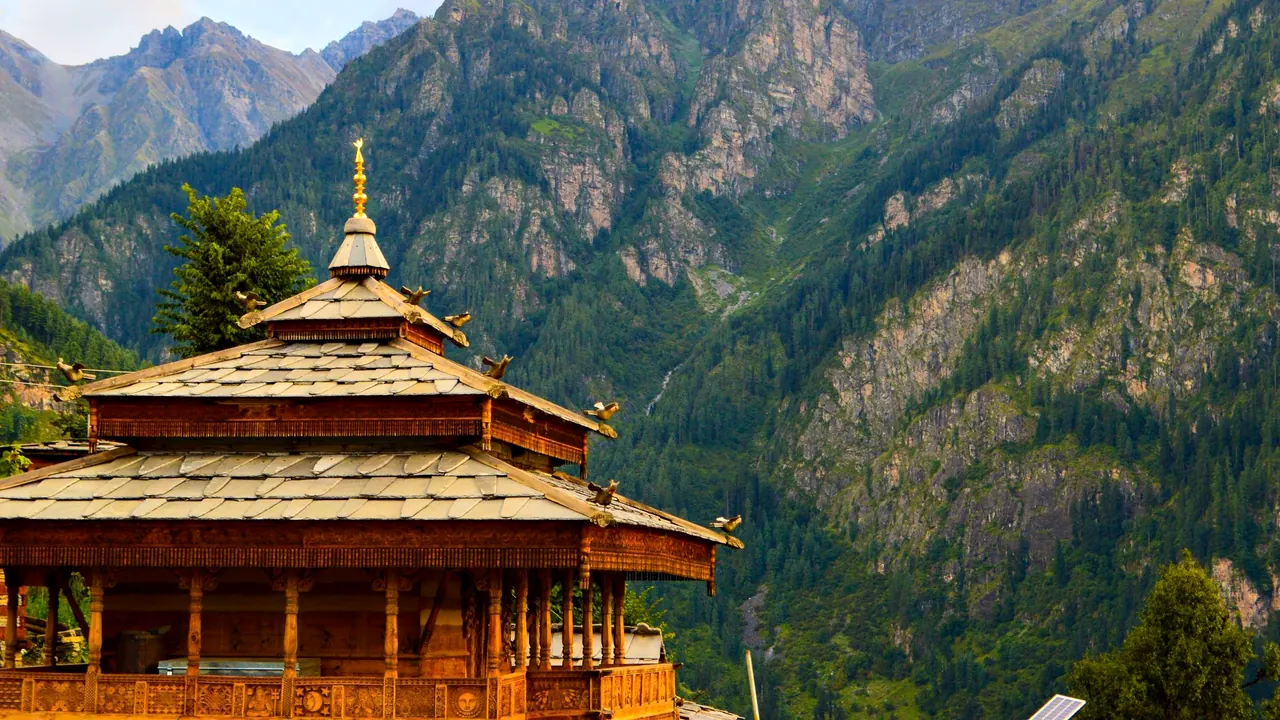
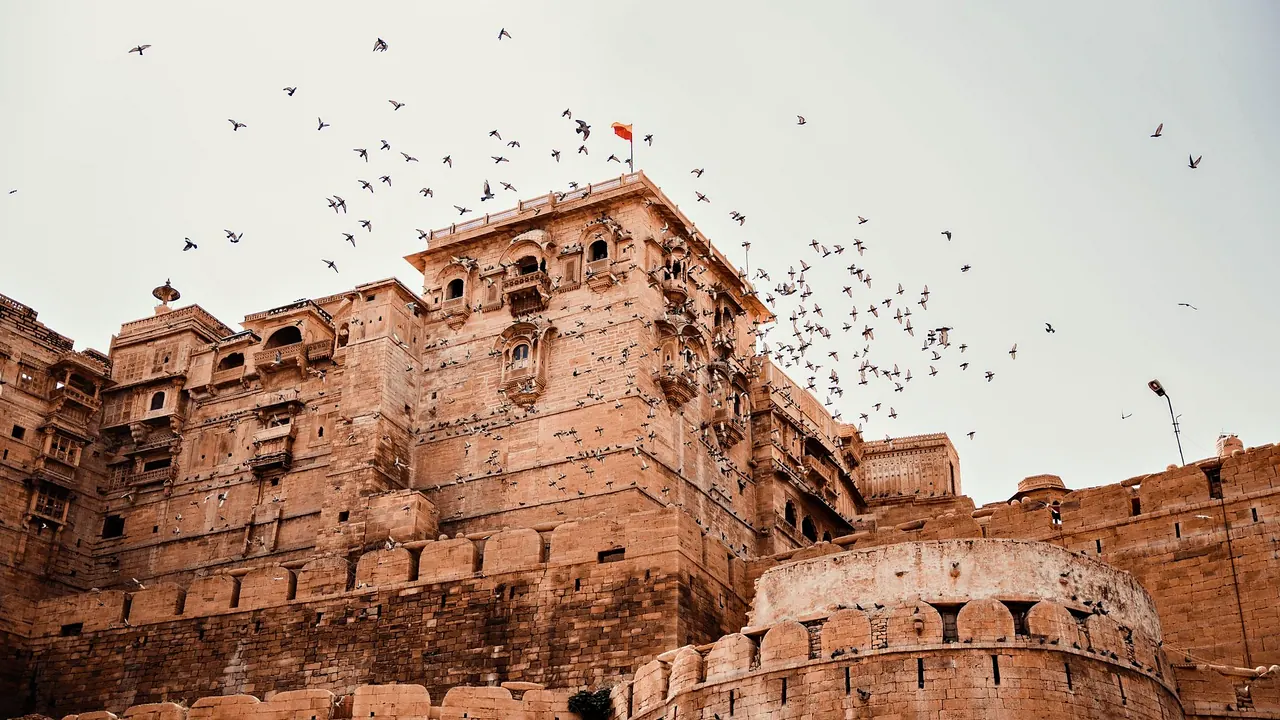
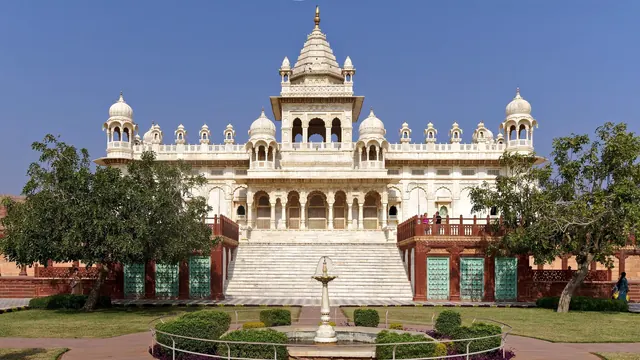
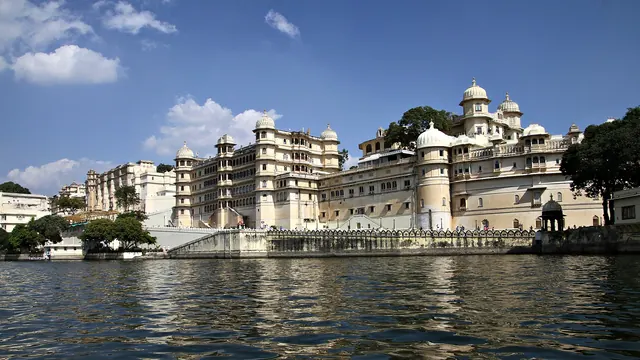
Photos: Himachal Pradesh by K S ARAVINDA Kashyap, Pexels License; Rajasthan by Luckee Bains, Pexels License.
Himachal Pradesh or Rajasthan?
Our verdict in twelve categories, each scored against the same fixed benchmark cities, and the climate month by month, so you can choose for your trip.
Choose Himachal Pradesh for
- nature and the outdoors
- wellness
- nightlife
Choose Himachal Pradesh if the mountains themselves are the reason for the trip. It suits trekkers, paragliders and anyone who wants to slow down in a Himalayan village or spend a week on a meditation course above McLeod Ganj. You give up grand monuments, serious shopping and easy travel, because every move between valleys takes most of a day on winding roads.
Choose Rajasthan for
- shopping
- culture and sights
- food and drink
Rajasthan is the better pick for a first, sight-filled journey through India. Its Rajput forts and palaces, its desert cooking and its craft bazaars come together on a classic circuit of Jaipur, Jodhpur, Udaipur and Jaisalmer, with folk music in the evenings. Wild landscapes play a smaller part here, a desert camp or a tiger safari rather than high passes, and the towns are loud places to rest in.
Scoreboard
Twelve categories on one fixed scale from 0 to 100. The shaded stretch is the gap between the two.
Your match
Pick a travel style or drag the sliders, and both match scores follow your weighting.
Wins on nature and the outdoors and wellness with your weighting.
Wins on shopping and culture and sights with your weighting.
What matters to you?
Category by category
What the scores mean for a trip.
Beaches & swimming
Both states are landlocked, so neither works for a beach or swimming trip. The difference is in the water they do have. Himachal's glacier-fed rivers are cold and fast, good for rafting but not for a swim, and few hill hotels have a pool. In Rajasthan, many palace and heritage hotels have good pools in courtyards or on lake terraces in Udaipur, where an afternoon swim is a real break from the desert heat.
Food & drink
Rajasthan is the better place to eat. Its desert cooking has a strong identity: dal baati churma, ker sangri, fiery laal maas, Jodhpur's onion kachori and Jaipur's old-city sweet shops. Dinner on a rooftop over Lake Pichola makes a meal an event.
Himachal's food is pleasant but rarely a reason to go. The Tibetan kitchens of McLeod Ganj, with momos and thukpa, and the Beas trout are the highlights. The true Himachali dham is mostly cooked for weddings and temple feasts, so on most days you will eat from dhabas and traveller cafés.
Culture & sights
Rajasthan has far more heritage to see, and more of it sits close together. Each main city has its own great fort or palace, from Jaipur's City Palace and Jantar Mantar to Mehrangarh and Jaisalmer's sandstone citadel. Beyond them lie Chittorgarh, Kumbhalgarh and the Jain marble of Ranakpur.
Himachal's heritage is different in kind and more scattered. It covers British Shimla on the Ridge, the Dalai Lama's temple complex at McLeod Ganj, and the thousand-year-old murals of Tabo. Some of it is remarkable, but Spiti's monasteries alone take days of driving to reach.
Nightlife
Neither state is made for late nights, and the evenings differ mainly in mood. Himachal's scene is a backpacker one: the bars and music cafés of Old Manali, and the informal trance parties that come and go in the Parvati valley around Kasol. Rajasthan's evenings are more polished and earlier. You get rooftop dinners with fort views and cocktails in Jaipur's heritage hotels, while Pushkar is officially dry.
Nature & outdoors
Himachal Pradesh is in a different league for the outdoors. From Manali you can reach the Solang valley and the Hampta Pass, and through the Atal Tunnel the moonscape of Lahaul and Spiti with Chandratal lake. Add the Dhauladhar walks above Dharamshala, the deodar forests of the Great Himalayan National Park and the paragliding at Bir Billing, and you have weeks of mountain trips.
Rajasthan's outdoors is narrower but distinctive. It offers a night in a dune camp near Jaisalmer, wild tigers among the ruins at Ranthambore, and winter birdlife at Keoladeo. Its good season is the cool months, when Himachal's high country is snowed in.
Day trips
Rajasthan gives you more worthwhile outings from each base. Jaipur has the Abhaneri stepwell, Bhangarh and Samode within a couple of hours, plus Ajmer and Pushkar for a long day. From Udaipur, the fort of Chittorgarh and the Kumbhalgarh and Ranakpur run each fill a day.
Himachal's outings are gentler and smaller in scale. Around Dharamshala there are the tea gardens of Palampur, the artists' village of Andretta and Norbulingka. Manikaran's hot springs and Naggar's castle lie near Manali. Mountain roads make even short distances slow.
Good for families
Both are hard work with small children, but for different reasons. Himachal's draws are gentle: the toy train to Shimla, the car-free Ridge, and the snow, sledging and yak rides at Solang and Kufri. Against that, the winding roads cause carsickness, the towns are full of steps and Spiti's altitude is unwise for little ones.
Rajasthan is better for older children who like adventure. Forts with ramparts, camel rides, a desert night under canvas and a tiger safari all appeal, and hotel pools help between outings. The drawbacks are chaotic traffic, few pavements and extra care over food and water.
Getting around
Rajasthan is easier to travel through. Trains link Jaipur, Jodhpur, Udaipur, Jaisalmer and Bikaner, some of them overnight across the desert, and in the towns rickshaws and ride-hailing are always to hand. Walking is tiring because of the traffic, but Udaipur's lake district and Jaisalmer's fort are calm on foot.
In Himachal, almost everything goes by mountain road. Shimla to Manali or Dharamshala takes most of a day, landslides and snow close routes, and the narrow-gauge railways are for the views rather than for getting anywhere. In both states a car and driver is the usual way to travel.
Shopping & style
In Himachal, shopping is something you do along the way. You might buy a Kullu shawl from a weavers' cooperative near Bhuntar, a Kinnauri cap, a singing bowl or thangka in the lanes of McLeod Ganj, or a finely made piece from the Norbulingka workshops. Beyond these crafts, the Mall Road stalls mostly sell the same souvenirs, and there is no fashion or design shopping.
Rajasthan offers far more, and each city on the circuit has its own speciality, so shopping becomes part of the route itself. Jaipur is where traditional printing and jewellery sit beside contemporary boutiques, while Jodhpur is the place for old furniture and Jaisalmer for mirror-work. The bazaars also ask more of you: you are expected to haggle, guides steer you towards commission shops, and gems need real caution.
Affordability
Both are very cheap for a visitor, and the difference lies in where the money goes. In Himachal it goes on the car and driver for the long mountain routes. Guesthouses in Old Manali or Spiti cost little, and most temples and monasteries are free. Rajasthan has the same cheap street food and trains, but its forts and palaces charge foreigners more at the gate. Its palace hotels can lift a trip to the top of India's price range if you let them.
Live music & performing arts
Rajasthan has much more to hear and watch. Manganiyar and Langa singers, Kalbelia dancers and string puppets turn up at desert camps and heritage hotels. The nightly show at Bagore ki Haveli in Udaipur is the most reliable place to see them done well, and the autumn folk festival at Mehrangarh is the high point of the year.
In Himachal, performances are mostly tied to festivals. The best are the nati dances of Kullu Dussehra and Tibetan opera from the Tibetan Institute of Performing Arts in McLeod Ganj, with only an occasional play at Shimla's Gaiety Theatre.
Wellness & relaxation
Himachal is the better place to slow down, and it has a real retreat culture. Dharamkot and Bhagsu above McLeod Ganj draw long-stay visitors to Vipassana and Buddhist meditation courses, yoga and Tibetan medicine. The simple sulphur baths at Vashisht and Manikaran add a modest bathing tradition.
Rajasthan's calm sits inside its hotels. You find it in Ayurvedic massage and terrace yoga in Udaipur's lakeside palaces and Aravalli forts, and in classes at Pushkar. Outside those walls, the towns are loud.
When should you go?
Pick your month. The climate figures are measured averages, not a forecast.
Himachal Pradesh in July
Rajasthan in July
Daytime high, °C
Rainfall in the month, mm
Where the figures come from
Himachal Pradesh has no weather station within reach, so its figures come from a gridded climate model rather than a measured record, and read a broad area rather than one spot.
Rajasthan has no rain gauge within 25 km of the centre, so its rainfall comes from a gridded climate dataset read at the destination rather than from a gauge further away.
Temperature and rainfall are climate normals, averaged over the years shown. Himachal Pradesh: 1991-2020 normals, TerraClimate 4 km grid at the town, no weather station within 90 km. Rajasthan: 1993-2020 (rainfall 1991-2020) normals, Jaipur / Sanganer (10.7 km from centre).
The two states peak at almost opposite times, so they rarely compete for the same dates. In the hill towns where most visitors to Himachal Pradesh stay, winter is cold, with January highs around 7°C, and the high passes close. Late spring is mild and pleasant for walking, and the monsoon brings the heaviest rain in July and August, around 199mm in July, along with landslides on the roads. October and November are the clearest and driest months, cool and ideal for trekking.
Rajasthan is a winter destination. From November to February the days are warm and dry, with January around 23°C, which is perfect for forts and bazaars. By May the heat reaches about 42°C, far too hot for sightseeing or the desert. The monsoon peaks in August at around 220mm. As a rule, plan Rajasthan for winter and Himachal for May, June, October or early November.
Which traveller are you?
On an outdoors trip, Himachal Pradesh is the clear choice. Treks to Triund and the Hampta Pass, paragliding at Bir Billing, rafting on the Beas and the cold desert of Spiti go far beyond Rajasthan's dune camps and tiger parks.
For a culture and arts trip, Rajasthan wins easily. Amber Fort, Mehrangarh, Udaipur's City Palace and the living fort of Jaisalmer fill days in each city. In the evenings there are Manganiyar musicians and Kalbelia dancers, which the quiet hill towns cannot match.
On a shopping trip, choose Rajasthan. Shopping runs through the whole circuit, with something different to buy in every city, and an afternoon of haggling in the bazaar becomes part of the trip. In Himachal, shopping mostly stops at a shawl or a Tibetan keepsake.
Before you go
| Measure | Himachal Pradesh | Rajasthan |
|---|---|---|
| Official language | Hindi, English | Hindi, English |
| Currency | Indian Rupee (INR) | Indian Rupee (INR) |
| Sockets | CM230 V, 50 Hz | CM230 V, 50 Hz |
| Driving side | Left | Left |
| Time zone | UTC+5:30 | UTC+5:30 |
| Emergency number | 108 or 112 | 108 or 112 |
| Main airport | Kullu Manali Airport (KUU)4 non-stop destinations | Jaipur International Airport (JAI)27 non-stop destinations |
By the numbers
| Measure | Himachal Pradesh | Rajasthan |
|---|---|---|
| Population | 6,864,602 | 68,548,437 |
Where else could you go?
Every comparison below shares a destination with this one, so you can follow Himachal Pradesh or Rajasthan somewhere new.
- Ladakhvs Himachal Pradesh
- Kashmirvs Himachal Pradesh
- Kashmirvs Rajasthan
- Ladakhvs Rajasthan
- Goavs Rajasthan
- Keralavs Rajasthan