Kerala or Rajasthan?
Our verdict in twelve categories, each scored against the same fixed benchmark cities, and the climate month by month, so you can choose for your trip.
Choose Kerala for
- beaches
- wellness
- live music and the arts
Kerala suits a slower trip built around water and rest. You get beach days at Varkala or Marari, a night on a backwater houseboat, a course of Ayurveda and misty mornings in the tea hills of Munnar. Its cooking is also the more varied of the two. What it gives up is grand monuments: Fort Kochi is the one place where sights come thick and fast.
Choose Rajasthan for
- shopping
- culture and sights
- day trips
Choose Rajasthan for history on a huge scale. The forts and palaces of Jaipur, Jodhpur, Udaipur and Jaisalmer fill a two-week circuit, the craft bazaars make it one of India's best shopping trips, and dunes and tigers add adventure. There is no sea, though, and rest has to be found inside a good hotel.
Scoreboard
Twelve categories on one fixed scale from 0 to 100. The shaded stretch is the gap between the two.
Your match
Pick a travel style or drag the sliders, and both match scores follow your weighting.
Wins on beaches and wellness with your weighting.
Wins on shopping and culture and sights with your weighting.
What matters to you?
Category by category
What the scores mean for a trip.
Beaches & swimming
This is the widest gap between the two. Kerala has a long, palm-lined coast, from the red cliffs of Varkala and the small bays of Kovalam to the village sands of Marari and the emptier north around Bekal. The sea is warm enough to swim in all through the dry season, but the surf is strong, so stay between the lifeguard flags.
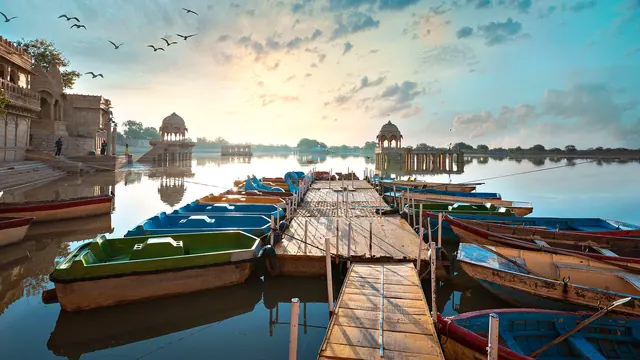
Rajasthan has no coast at all, and its lakes at Udaipur and Pushkar are for looking at, not swimming in. A courtyard pool in a heritage hotel is as close as it gets.
Food & drink
Both are cheap and excellent for everyday eating, but Kerala has the richer table. Its cooking draws on Syrian Christian, Mappila and Hindu traditions. You can go from appam and stew in Kochi to Malabar biryani in Kozhikode and a banana-leaf sadya, with grilled pearl spot fish on the backwaters.
Rajasthan's desert cooking is heavier and mostly vegetarian, built on ghee, dal baati and ker sangri, with laal maas for meat-eaters. Its best food is on the street: kachori in Jodhpur, Bikaner bhujia and Jaipur's sweet shops. Neither is a place for drinking.
Culture & sights
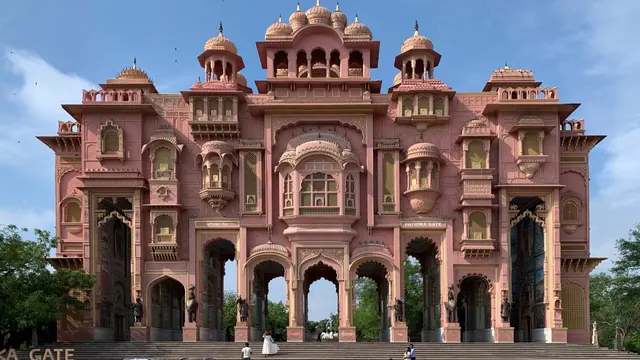
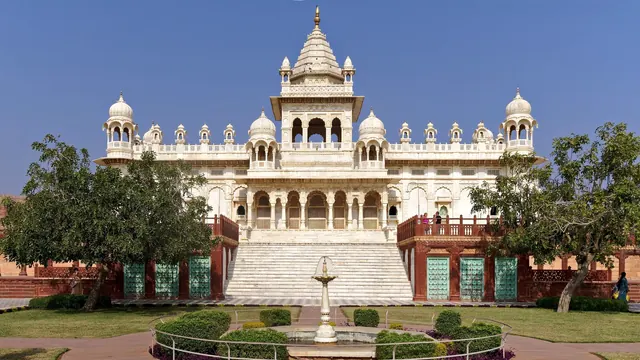
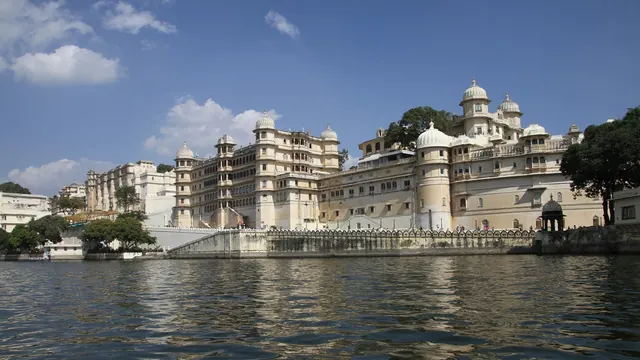
For sightseeing, Rajasthan is far ahead. Amber Fort, Mehrangarh, Udaipur's City Palace and the lived-in fort city of Jaisalmer are among India's great monuments. Beyond them are Chittorgarh, Kumbhalgarh, Ranakpur and the painted towns of Shekhawati, enough for a fortnight without repeating yourself.
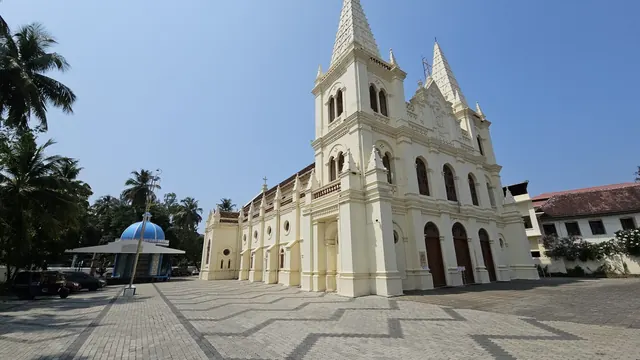
Kerala's history is quieter and kept to a few places. In Fort Kochi and Mattancherry, Portuguese, Dutch and Jewish heritage all sit within a short walk, and the wooden Padmanabhapuram Palace is outstanding. But many of the great temples admit only Hindus, so visitors often see them only from outside.
Nightlife
Neither has nightlife worth planning a trip around, and in both the evening usually ends soon after dinner. The difference is the setting. In Kerala the liveliest spot is the candlelit clifftop at Varkala in the dry season. Elsewhere it means hotel bars or a rough toddy shop.
Rajasthan's evenings are rooftop dinners facing a lit-up fort. Jaipur has cocktail bars in heritage hotels and the odd club night, while Pushkar is officially dry.
Nature & outdoors
Kerala's landscapes are greener and more varied. The backwaters around Alappuzha and Kumarakom are best seen slowly from a houseboat. Inland, the Western Ghats hold the tea hills of Munnar, wild elephants at Periyar and the trekking trails of Wayanad.
Rajasthan's scenery is drier and starker. You can spend a night in the dunes near Jaisalmer, have a real chance of seeing a wild tiger at Ranthambore and watch winter birds at Keoladeo. The range is narrower, the summer heat makes the desert punishing and the tiger parks close through the monsoon.
Day trips
Rajasthan is the better place to stay put and take outings. From Jaipur, the Abhaneri stepwell, Bhangarh and Samode are all within about two hours. Udaipur, Jodhpur and Jaisalmer each have their own temple towns, forts and villages for a full day out.
Kerala is toured as a circuit rather than from one base, so there are fewer outings. The best are the Muziris heritage sites near Kochi, the temple town of Thrissur and the long drive from Thiruvananthapuram to Kanyakumari at India's southern tip.
Good for families
Neither is easy with small children, but Kerala is the gentler of the two. It is calmer and cleaner, children enjoy a houseboat night and the boat trips at Periyar, and a resort pool at Marari makes a restful base. The sea is often too rough for young swimmers, though, and the hill roads bring on carsickness.
Rajasthan works best for older children who want adventure: ramparts to explore, camel rides, a desert camp and a tiger safari. With chaotic traffic, few pavements and long drives, it is harder going with the youngest.
Getting around
In both, most visitors hire a car and driver, and the roads are slow. Kerala has a coastal railway linking its main towns and ferries across Kochi's harbour, but reaching Munnar or Thekkady means hours of hairpin bends.
Rajasthan's distances are longer, so a trip between cities takes most of a day by train or road. In its old cities, traffic and animals make walking tiring. Udaipur's lakeside and Jaisalmer's fort are easy on foot, as are Fort Kochi and Varkala in Kerala.
Shopping & style
Rajasthan is one of India's great shopping regions, and Kerala is not. Jaipur's bazaars sell gems, silver, blue pottery and block-printed cottons from Sanganer and Bagru, and designer boutiques rework the same crafts. Each other city adds its own speciality, from Udaipur's miniature paintings to Jaisalmer's mirror-work. Expect to bargain, and expect drivers and guides to steer you to shops that pay them commission.
Kerala's shopping is smaller and simpler. There are spices and antiques in Jew Town, tea and cardamom from the hills and kasavu cloth woven at Balaramapuram.
Affordability
Both are cheap by any international measure, with food, trains and auto-rickshaws costing very little. What pushes the bill up differs. In Kerala it is a private houseboat, a backwater resort or a long Ayurveda programme. In Rajasthan it is the palace hotels, some of the most expensive stays in India, and higher room rates in Jaipur and Udaipur in winter.
Live music & performing arts
Kerala has the more striking performance culture. At Kathakali shows in Fort Kochi and Thekkady you can watch the actors being made up first, and Kutiyattam theatre is still performed in temple theatres. In north Malabar, the all-night Theyyam rituals and the drums and elephants of the Thrissur Pooram are like nothing else in India.
Rajasthan's strength is folk music: the Manganiyar and Langa singers of the desert and the Kalbelia dancers. Visitors mostly see them at hotel and desert-camp shows or at Bagore ki Haveli in Udaipur. The autumn folk festival inside Mehrangarh is the high point of the year.
Wellness & relaxation
Kerala is the home of Ayurveda, and many people come for that alone. Retreats around Kovalam and Varkala, on the backwaters at Kumarakom and in the Wayanad hills offer anything from one oil massage to weeks of supervised panchakarma. The slow pace of the place does the rest.
In Rajasthan, rest is something you have to arrange. A palace or lakeside hotel near Udaipur, or a spell of yoga classes in Pushkar, can give you a calm few days, but outside them the towns are loud.
When should you go?
Pick your month. The climate figures are measured averages, not a forecast.
Kerala in July
Rajasthan in July
Daytime high, °C
Rainfall in the month, mm
Where the figures come from
Kerala has no weather station within reach, so its figures come from a gridded climate model rather than a measured record, and read a broad area rather than one spot.
Rajasthan has no rain gauge within 25 km of the centre, so its rainfall comes from a gridded climate dataset read at the destination rather than from a gauge further away.
Temperature and rainfall are climate normals, averaged over the years shown. Kerala: 2001-2020 normals, NASA POWER reanalysis grid, no weather station within 90 km. Rajasthan: 1993-2020 (rainfall 1991-2020) normals, Jaipur / Sanganer (10.7 km from centre).
On the Kerala coast it is hot and humid all year, with highs that hardly move, so the season depends on rain. December to March is dry, the sea sits around 29°C and the hills are at their best. The monsoon builds through May and peaks in June at about 494mm, and October is still wet, so from late May into October the sea is rough and the trails are slippery. Many people still choose this season for Ayurveda.
Rajasthan's weather swings much further. January days of about 23°C are ideal for forts and bazaars. From April the heat climbs to 42°C in May, far too hot for walking the streets, and July and August bring the monsoon. The good window is October to March. Both are at their best from December to February, so a trip that combines them works well then.
Which traveller are you?
On a beach and sun trip, Kerala is the only real choice. Varkala's clifftop and the quiet village sands of Marari give you warm sea through the dry season, while landlocked Rajasthan offers nothing more than a hotel pool.
For a culture and arts trip, Rajasthan wins clearly. Its Rajput forts, palaces, Jain temples and painted havelis hold days of sightseeing in every city. Kerala's sights are mostly in Fort Kochi, and many of its temples are closed to non-Hindus.
On a relaxing and wellness trip, Kerala is the place. Ayurveda ranges from a single massage to weeks of supervised treatment, and there are retreats on the backwaters and in the hills. In Rajasthan, calm is mostly found inside its palace hotels.
Before you go
| Measure | Kerala | Rajasthan |
|---|---|---|
| Official language | Hindi, English | Hindi, English |
| Currency | Indian Rupee (INR) | Indian Rupee (INR) |
| Sockets | CM230 V, 50 Hz | CM230 V, 50 Hz |
| Driving side | Left | Left |
| Time zone | UTC+5:30 | UTC+5:30 |
| Emergency number | 108 or 112 | 108 or 112 |
| Main airport | Cochin International Airport (COK)36 non-stop destinations | Jaipur International Airport (JAI)27 non-stop destinations |
By the numbers
| Measure | Kerala | Rajasthan |
|---|---|---|
| Population | 34,523,726 | 68,548,437 |
| Swim season, months above 21 °C | 12 months | - |
Where else could you go?
Every comparison below shares a destination with this one, so you can follow Kerala or Rajasthan somewhere new.