Goa or Kerala?
Our verdict in twelve categories, each scored against the same fixed benchmark cities, and the climate month by month, so you can choose for your trip.
Choose Goa for
- nightlife
- beaches
- culture and sights
Goa is the better pick if the beach is the point of the trip. Its sands are longer and gentler, from the crowded strips of Calangute and Baga to the palm-backed coves of Palolem and Agonda, and the winter is almost rainless. The north coast also has nights out that Kerala simply does not offer. Choose Goa if you want to settle on one stretch of coast, swim, eat fish at the shacks and dance after midnight in the weeks around New Year.
Choose Kerala for
- live music and the arts
- nature and the outdoors
- wellness
Travellers drawn to landscape and slow rest will get more from Kerala. The backwaters around Alappuzha, the tea hills of Munnar and the forests of Periyar give it a range of scenery that Goa's green foothills cannot match. It is also the heartland of Ayurveda, and its evenings bring Kathakali and temple drumming in place of clubs. It is a trip to move through by train and car rather than a single base, and it makes a modest budget go a little further.
Scoreboard
Twelve categories on one fixed scale from 0 to 100. The shaded stretch is the gap between the two.
Your match
Pick a travel style or drag the sliders, and both match scores follow your weighting.
Too close to call, 2 points apart
Wins on nightlife and beaches with your weighting.
Wins on live music and the arts and nature and the outdoors with your weighting.
What matters to you?
Category by category
What the scores mean for a trip.
Beaches & swimming
Both coasts face the same warm Arabian Sea, but Goa's is the better coast for swimming. The long, flat runs of Colva, Benaulim and Varca and the sheltered coves of Palolem and Agonda have gentle surf through the winter. You can also choose between the shack-lined strips of Baga and the calmer sands of Morjim and Mandrem.
Kerala's beaches are more about the setting than the swimming. Varkala, below its red cliffs, is the memorable one, and at Marari you get the backwaters as well as the sand. But rip currents and heavy surf on many stretches keep swimmers between the flags, and dress norms are more conservative away from the tourist beaches.
Food & drink
Goa's cooking is Konkan seafood shaped by four centuries of Portuguese rule, so pork, vinegar and spice run through it: vindaloo, xacuti, sorpotel and chouriço, with soft poi bread in the morning and cashew feni to drink. The best of it is in the family restaurants of Panjim, Margao and the inland villages. On the busiest beach strips the menus turn generic.
Kerala's flavours are coconut, curry leaf, tamarind and black pepper, and its cooking comes from several communities: Syrian Christian appam and stew around Kochi, Malabar biryani in Kozhikode and the vegetarian sadya served on a banana leaf. Everyday meals are cheap and excellent, but a cold beer or a cocktail is much harder to find than in Goa.
Culture & sights
Both have a long European colonial layer over Indian tradition, and there is a similar amount to see, with Goa's heritage a little weightier. Its centrepiece is Old Goa, the UNESCO-listed former capital with the Basilica of Bom Jesus and the Sé Cathedral. Fontainhas in Panjim, the mansions of Chandor and the coastal forts add to it, though you need transport to get between them.
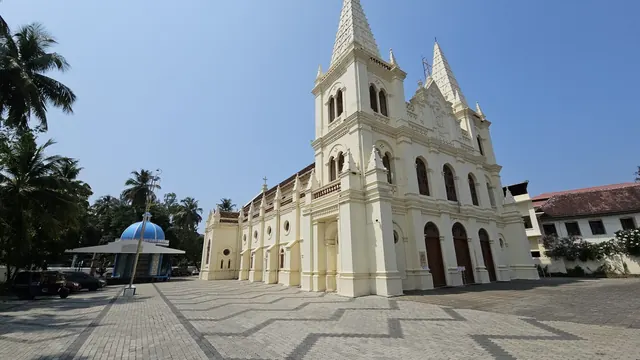
Kerala's best sights are gathered in one place. In Fort Kochi and Mattancherry, the Chinese fishing nets, the Dutch Palace and the Paradesi Synagogue are a short walk apart. Its great temples at Thrissur and Guruvayur are striking, but many admit only Hindus.
Nightlife
This is where the two differ most. Goa's north coast stays loud through the winter, from the clubs of Baga and Calangute to the clifftop electronic venues of Anjuna and Vagator, and peaks around New Year. The south keeps to sunset drinks.
Kerala has no club scene to speak of. Licensing laws push drinking into hotel bars and toddy shops, and a late evening on the Varkala clifftop is about as lively as it gets.
Nature & outdoors
Kerala has the grander outdoors. The backwaters around Alappuzha and Kumarakom are best seen slowly from a houseboat. Inland, the Western Ghats climb to the tea estates of Munnar, the elephant forests of Periyar and the trekking country of Wayanad.
Goa lies against the same range but has less of it to offer: jungle trails in the Bhagwan Mahaveer and Cotigao sanctuaries, Dudhsagar Falls, kayaking among the mangroves of the Mandovi and good winter birdwatching. It is pleasant green country, worth a few days rather than a reason to come.
Day trips
Neither works well as a base for day trips, and in both the long, slow distances shape the plan. Goa's outings mostly stay within the state: market day in Mapusa, the spice farms of Ponda or the ferry to Divar island, with the temples and beaches of Gokarna just over the border to the south.
Kerala is better toured as a circuit than from one base. From Kochi you can reach the Muziris heritage sites and the festival town of Thrissur, and from Thiruvananthapuram you can reach Kanyakumari at the southern tip of India.
Good for families
For families the two come out much the same: warm towards children, short on attractions built for them, and easiest from a resort with a pool. What differs is how the days are filled. Goa is a straightforward beach vacation on the flat, shallow sands of Varca and Cavelossim, with chaotic roads and the northern crowds to manage.
Kerala gives children more to look at, from a night on a houseboat to the elephants and boat trips at Periyar. But its sea is often too rough for small swimmers, and the winding drives into the hills test young stomachs.
Getting around
Kerala is the easier of the two to travel through. A railway along the coast links Thiruvananthapuram, Alappuzha, Kochi and Kozhikode, Kochi adds a metro line and harbour ferries, and a hired driver handles the slow climbs to Munnar and Thekkady.
Goa has no such backbone. Its buses barely serve the beaches, the Konkan trains are useful only for arriving, and driving from the north beaches to the south can take two hours. Most visitors rent a scooter or pay for taxis, which is why it makes sense to choose one stretch of coast and stay there.
Shopping & style
Neither is a place to go shopping, and both offer markets and crafts rather than fashion. Goa's draw is its market scene: the Anjuna flea market and the Saturday night market near Arpora, with shawls and silver to bargain for. Mapusa sells cashews and chouriço, and there are a few linen boutiques around Assagao.
Kerala sells what it makes and grows: spices and antiques in Jew Town, tea and cardamom in Munnar, handwoven kasavu cloth from Balaramapuram and Kathakali masks.
Affordability
Goa is cheap by international standards but not by Indian ones. Room rates in the popular villages follow the winter season, Christmas and New Year push them much higher, and taxis cost more than most visitors expect. On a tight budget, stay in huts in the far north or the quiet south and get around by rented scooter.
Kerala makes the same money go further. Homestays, local meals, trains and auto-rickshaws cost very little, so the everyday costs of a trip stay low. Spending only climbs when you add a private houseboat, a backwater resort or a long Ayurveda programme.
Live music & performing arts
Goa's own stage forms, tiatr and the mando, are made for local audiences and visitors rarely see them. The Kala Academy on the Panjim riverfront, the December arts festival and the parades of Carnival offer occasional highlights, but for most visitors live music means a cover band in a beach bar.
Kerala has far more to watch, and most of it belongs only to Kerala. At the evening Kathakali shows in Fort Kochi and Thekkady you can see the actors being made up, and kalaripayattu is staged for audiences too. In north Malabar, Theyyam rituals of fire and drumming last all night from about December to April. The temple festivals bring huge chenda drum ensembles and elephants in full regalia, most famously at Thrissur Pooram.
Wellness & relaxation
Kerala is where Ayurveda is taken most seriously, and it goes deeper than a massage. Retreats around Kovalam, Varkala, Kumarakom and Wayanad run panchakarma programmes lasting weeks, supervised by a doctor. The calm of the backwaters and the hills adds to the effect.
Goa leans towards yoga. The shala platforms and teacher-training courses of Mandrem, Arambol, Agonda and Patnem are a real draw, and ayurvedic massage is easy to find. Treatments are lighter than in Kerala, though, and the party belt around Baga is anything but restful.
When should you go?
Pick your month. The climate figures are measured averages, not a forecast.
Goa in July
Kerala in July
Daytime high, °C
Rainfall in the month, mm
Where the figures come from
Kerala has no weather station within reach, so its figures come from a gridded climate model rather than a measured record, and read a broad area rather than one spot.
Temperature and rainfall are climate normals, averaged over the years shown. Goa: 1991-2020 normals, Goa / Panjim (9.4 km from centre). Kerala: 2001-2020 normals, NASA POWER reanalysis grid, no weather station within 90 km.
Goa has a sharp two-season year. From November to April it is almost rainless, with long sunny days, highs around 33°C and a warm sea that makes hours of swimming easy. The heat makes midday walking hard work all year. The monsoon breaks in June, July brings about 957mm, and the beaches shut down for swimming until the rain eases in October.
Kerala's dry spell is shorter and less clear-cut. December to March is the reliable window for both the coast and the hills, with the sea at about 29°C. Showers build from April, the main monsoon follows, and a second wet spell leaves October at around 358mm, so the autumn months that open Goa's season are still damp in Kerala. In return the heat is a little gentler for much of the year, and the cool, moist monsoon is the time many people choose for Ayurveda.
Which traveller are you?
On a beach and sun trip, Goa is the clear choice. Its coast has the longer, gentler sands, from the busy north to the quiet coves of Palolem and Agonda, and its winter brings months of settled sky and calm, warm sea.
For an outdoors trip, Kerala offers far more. You can take a houseboat through the Alappuzha backwaters, walk the tea estates around Munnar, watch elephants in Periyar and trek in Wayanad, whereas Goa's sanctuaries and Dudhsagar Falls fill a day or two.
On a relaxing and wellness trip, Kerala is the place to go. Retreats at Kovalam, Varkala and Kumarakom run full Ayurveda programmes lasting weeks, and the early evenings help you rest. The yoga villages of Mandrem and Agonda in Goa are a lighter alternative.
Before you go
| Measure | Goa | Kerala |
|---|---|---|
| Official language | Hindi, English | Hindi, English |
| Currency | Indian Rupee (INR) | Indian Rupee (INR) |
| Sockets | CM230 V, 50 Hz | CM230 V, 50 Hz |
| Driving side | Left | Left |
| Time zone | UTC+5:30 | UTC+5:30 |
| Emergency number | 108 or 112 | 108 or 112 |
| Main airport | Goa Dabolim International Airport (GOI)24 non-stop destinations | Cochin International Airport (COK)36 non-stop destinations |
By the numbers
| Measure | Goa | Kerala |
|---|---|---|
| Population | 1,458,545 | 34,523,726 |
| People per km² | 394 | - |
| Swim season, months above 21 °C | 12 months | 12 months |
Where else could you go?
Every comparison below shares a destination with this one, so you can follow Goa or Kerala somewhere new.