Goa or Rajasthan?
Our verdict in twelve categories, each scored against the same fixed benchmark cities, and the climate month by month, so you can choose for your trip.
Choose Goa for
- beaches
- nightlife
- wellness
Goa is the choice for a winter trip built around the sea. It has long sandy beaches and a warm Arabian Sea, yoga shalas among the palms in the quiet villages and, on the north coast, nights that run well past midnight. You pick one stretch of coast and stay there, and what you get is rest rather than a long list of sights.
Choose Rajasthan for
- shopping
- culture and sights
- day trips
If you want forts, palaces and bazaars, go to Rajasthan instead. It is a touring trip that links Jaipur, Jodhpur, Udaipur and Jaisalmer by car or train, with desert camps, tiger country and some of India's best craft shopping along the way. Evenings end early and there is no sea, but there is far more to see and your money goes further.
Scoreboard
Twelve categories on one fixed scale from 0 to 100. The shaded stretch is the gap between the two.
Your match
Pick a travel style or drag the sliders, and both match scores follow your weighting.
Wins on beaches and nightlife with your weighting.
Wins on shopping and culture and sights with your weighting.
What matters to you?
Category by category
What the scores mean for a trip.
Beaches & swimming
This is the widest gap between the two. Goa is a beach destination first. The sand runs for kilometres, from Morjim and Mandrem in the north to Colva, Varca and the coves at Palolem and Agonda in the south, and the water stays warm all through the dry season.
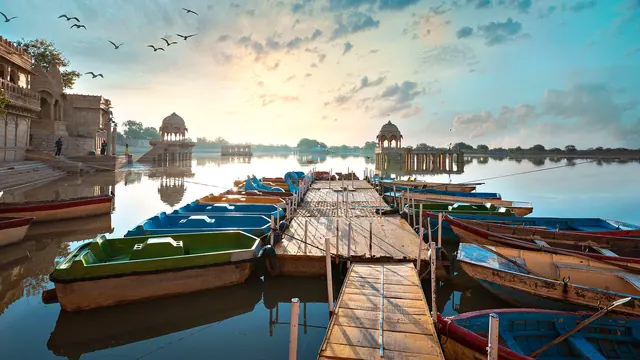
Rajasthan is a desert state with no coast within a day's travel. Its lakes at Udaipur and Pushkar are for looking at, not for swimming. The best it can offer is a pool in a palace courtyard, which is welcome in the heat but no substitute for the sea.
Food & drink
Both have a cuisine of their own, and both reward visitors who eat where locals do. Goa's cooking is coastal with a Portuguese accent: fish curry rice, prawn balchão, pork vindaloo, poi bread and feni. Fish is grilled at the beach shacks, and the best cooking is in family-run places in Panjim and Margao.
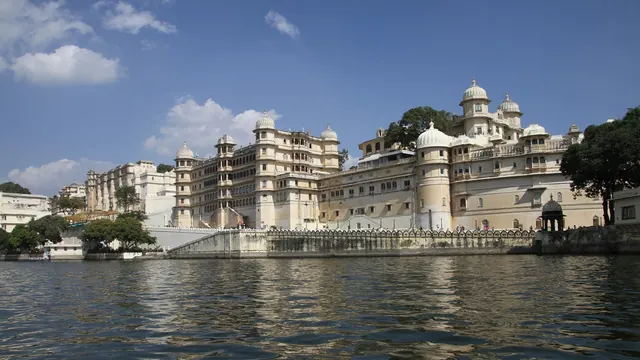
Rajasthan's is a desert cuisine, largely vegetarian and rich in ghee, with dal baati churma, ker sangri and fiery laal maas. Its strength is street food: kachori in Jodhpur, bhujia in Bikaner and the sweet shops of Jaipur. Drinking is easier in Goa. In Rajasthan the special meal is dinner on a rooftop facing a fort or Lake Pichola.
Culture & sights
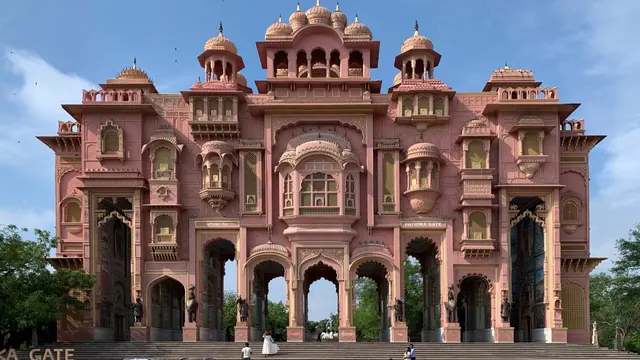
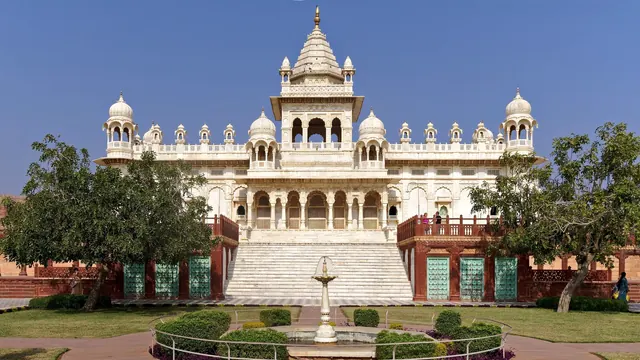
Rajasthan is one of the great sightseeing regions of India. Amber Fort and Jaipur's City Palace, Mehrangarh above blue Jodhpur, Udaipur's lakeside palace and the lived-in fort of Jaisalmer could fill two weeks on their own. Beyond them lie the hill forts of Chittorgarh and Kumbhalgarh and the marble temples of Ranakpur.
Goa's heritage is Portuguese Catholic, laid over Hindu Konkan culture. The churches of Old Goa, the lanes of Fontainhas in Panjim and the mansions of Chandor are worth a few days away from the beach. They are scattered, though, and none matches the scale of the Rajput forts.
Nightlife
Goa is the place for a night out. Through the winter season Baga and Calangute have packed clubs and bars, and Anjuna and Vagator have electronic music on the hilltops and cliffs. From Christmas to New Year the north is loud every night, while South Goa stays quiet.
In Rajasthan an evening means a rooftop dinner and perhaps a drink in a heritage hotel bar. Jaipur's lounges are the closest thing to a scene, and Pushkar is officially dry. Most visitors go to bed early for a dawn visit to a fort or a safari.
Nature & outdoors
Rajasthan's outdoors is more dramatic. You can ride a camel or jeep across the Thar dunes near Jaisalmer and spend a night in a desert camp, look for tigers at Ranthambore, or see the winter birds at Keoladeo. The summer heat makes the desert punishing and the tiger parks close for the monsoon, so this is a winter pursuit.
Goa's nature is greener and gentler. There are jungle trails in the Western Ghats sanctuaries, Dudhsagar Falls after the rains, boat trips through the mangroves of the Mandovi and dolphin trips from Palolem. All make good outings, but the heat limits serious hiking to the early morning.
Day trips
Rajasthan has more to see within a day of each base. From Jaipur, the Abhaneri stepwell and Bhangarh fort are about two hours away. From Udaipur, the road over the Aravallis leads to Kumbhalgarh and Ranakpur, and from Jaisalmer the abandoned village of Kuldhara makes an easy half day.
From Goa, most outings stay inside the state: Panjim, the spice farms around Ponda or Divar island. Gokarna and the Malvan coast are the main trips beyond it. Hampi, the great sight of the region, needs an overnight stay.
Good for families
Neither is easy with small children, but Goa is the simpler of the two. A resort on the flat, shallow sands of Benaulim or Varca, with a pool and warm water in winter, makes a straightforward beach vacation, even though little else is laid on for children.
Rajasthan suits older children better than toddlers. Ramparts to climb, camel rides, a tiger safari and puppet shows make a real adventure, but the long drives between cities and the chaotic old towns are hard going with little ones.
Getting around
In both you will rely on drivers more than timetables, but Rajasthan is the easier of the two to get around. Trains link Jaipur, Jodhpur, Udaipur, Jaisalmer and Bikaner, a car with driver handles the whole circuit, and auto-rickshaws and ride-hailing cover the towns. Journeys between cities still take most of a day.
Goa's buses are not much use for reaching the beaches and ride-hailing is limited, so visitors rent a scooter or pay for taxis on narrow, crowded roads. Driving from the north beaches to the south can take two hours, which is why most people choose one stretch of coast and stay there.
Shopping & style
Rajasthan is a shopping destination in its own right. Jaipur leads with Johari Bazaar, block prints from Sanganer and Bagru, blue pottery and designer boutiques. Jodhpur is known for antiques, Udaipur for miniature paintings and Jaisalmer for mirror-work. Expect to bargain, and expect drivers to steer you to commission shops.
Shopping in Goa mostly means the market stalls at Anjuna and Arpora, where many stalls sell the same shawls and silver. Mapusa's Friday market is good for spices and cashews, and there are a few boutiques around Assagao.
Affordability
Both are cheap by international standards, but your money goes further in Rajasthan. Thalis, trains and rickshaws cost little, haveli guesthouses offer character for modest money, and even a car with driver for the whole circuit is within reach of most budgets.
Goa is pricier than most of India. Rooms in the popular villages cost more in winter, prices rise steeply over Christmas and New Year, and taxis cost more than visitors expect. Budget travellers do best in huts in the quieter far north and south, getting around by scooter.
Live music & performing arts
Rajasthan gives a visitor more to see and hear. Manganiyar and Langa musicians and Kalbelia dancers perform at desert camps and heritage hotels, and Bagore ki Haveli in Udaipur stages folk dance every evening. The folk festival held at Mehrangarh each autumn is the high point of the year.
Goa's own traditions, tiatr theatre and mando songs, are made for local audiences. The Kala Academy in Panjim, the December arts festival and the Carnival parades are the main chances to catch a performance. Otherwise live music means a cover band or acoustic set in a beach bar.
Wellness & relaxation
Goa is the better place to slow down. Arambol, Mandrem and Ashwem in the north and Agonda and Patnem in the south are centres of yoga and ayurveda. They offer teacher training, drop-in classes and longer treatment programmes, and the southern beaches set an unhurried pace.
In Rajasthan, rest happens inside hotel walls: ayurvedic massage and yoga on the terrace at palace and lakeside retreats around Udaipur, and yoga and meditation classes in Pushkar. It works if you choose a calm base and stay a while, because the towns outside are loud.
When should you go?
Pick your month. The climate figures are measured averages, not a forecast.
Goa in July
Rajasthan in July
Daytime high, °C
Rainfall in the month, mm
Where the figures come from
Rajasthan has no rain gauge within 25 km of the centre, so its rainfall comes from a gridded climate dataset read at the destination rather than from a gauge further away.
Temperature and rainfall are climate normals, averaged over the years shown. Goa: 1991-2020 normals, Goa / Panjim (9.4 km from centre). Rajasthan: 1993-2020 (rainfall 1991-2020) normals, Jaipur / Sanganer (10.7 km from centre).
Both are at their best in winter, but they differ sharply either side of it. Goa is hot all year, with highs around 33°C and a sea near 28°C. From November to April it is reliably dry and sunny and good for the beach. The monsoon arrives in June and peaks in July with about 957mm of rain. Swimming stops then, and the rain only eases through October.
Rajasthan is the cooler choice in midwinter. Highs near 23°C in January make long days at the forts comfortable. From April the heat builds towards 42°C in May, which is too hot for walking the old cities. A lighter monsoon falls mainly in July and August, followed by a warm, dry autumn. Both work from October to March, and December to February is when Rajasthan is most comfortable for sightseeing.
Which traveller are you?
On a beach and sun trip, Goa wins outright. Its long sands run from the busy north to the palm-backed coves of Palolem and Agonda, with warm water all through the dry winter. Landlocked Rajasthan has nothing to offer beyond a hotel pool.
For a culture and arts trip, Rajasthan is the clear pick. Jaipur, Jodhpur, Udaipur and Jaisalmer each hold days of forts and palaces, and desert folk musicians play every night. Goa's churches and temples are worth a few days but are spread across the state.
On a shopping trip, Rajasthan again comes out ahead. Jaipur's bazaars sell gems, silver, block prints and blue pottery, and each city has its own craft. Goa offers flea markets selling much the same stock at every stall, plus a handful of linen boutiques.
Before you go
| Measure | Goa | Rajasthan |
|---|---|---|
| Official language | Hindi, English | Hindi, English |
| Currency | Indian Rupee (INR) | Indian Rupee (INR) |
| Sockets | CM230 V, 50 Hz | CM230 V, 50 Hz |
| Driving side | Left | Left |
| Time zone | UTC+5:30 | UTC+5:30 |
| Emergency number | 108 or 112 | 108 or 112 |
| Main airport | Goa Dabolim International Airport (GOI)24 non-stop destinations | Jaipur International Airport (JAI)27 non-stop destinations |
By the numbers
| Measure | Goa | Rajasthan |
|---|---|---|
| Population | 1,458,545 | 68,548,437 |
| People per km² | 394 | - |
| Swim season, months above 21 °C | 12 months | - |
Where else could you go?
Every comparison below shares a destination with this one, so you can follow Goa or Rajasthan somewhere new.