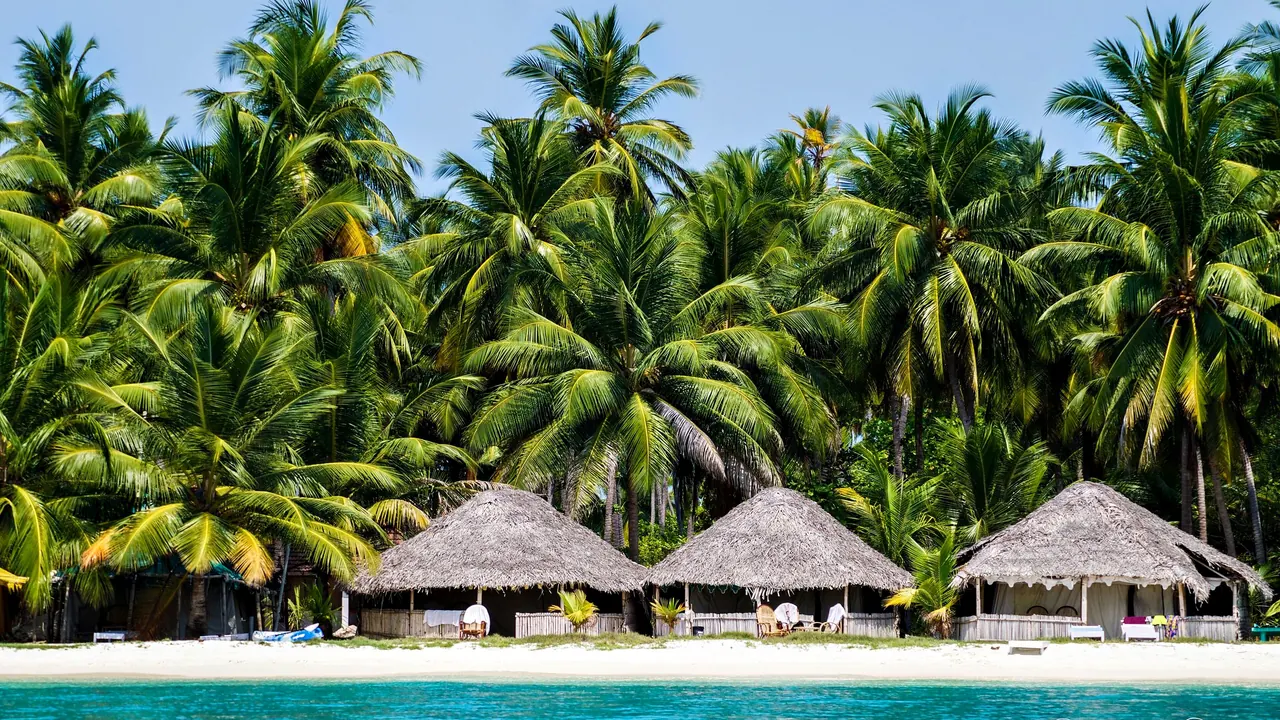
Photos: Lakshadweep by The.chhayachitrakar, CC BY-SA 4.0, cropped.
Goa or Lakshadweep?
Our verdict in twelve categories, each scored against the same fixed benchmark cities, and the climate month by month, so you can choose for your trip.
Choose Goa for
- nightlife
- food and drink
- culture and sights
Goa suits travellers who want a beach vacation with plenty around it. You can eat Goan fish curry and vindaloo in family kitchens, spend a day among the churches of Old Goa, take a yoga class in Mandrem or dance late in Baga, then go back to the sand. It is also much cheaper and easier to reach. The trade-off is busier beaches, murkier water and long drives between areas.
Choose Lakshadweep for
- beaches
- nature and the outdoors
Lakshadweep is for people who want the sea and almost nothing else. Its coral lagoons are clearer, calmer and emptier than anything on the Goan coast, and the reef outside them is the real attraction for snorkellers and divers. Getting there takes permits, planning and a bigger budget. Once you arrive there is no nightlife, little food culture and few sights, so it works best for people who are happy to switch off completely.
Scoreboard
Twelve categories on one fixed scale from 0 to 100. The shaded stretch is the gap between the two.
Your match
Pick a travel style or drag the sliders, and both match scores follow your weighting.
Wins on nightlife and food and drink with your weighting.
Wins on beaches and nature and the outdoors with your weighting.
What matters to you?
Category by category
What the scores mean for a trip.
Beaches & swimming
Lakshadweep has the better swimming. Almost every beach on the atolls faces a sheltered lagoon of pale sand and shallow water so clear you can see the bottom. On Bangaram, Thinnakara or Kadmat you may have a long strip of beach almost to yourself. The cost of that emptiness is the lack of comforts, with few sunbeds and little shade.
Goa offers sand on a far larger scale, from the crowded, shack-lined stretch between Calangute and Baga to the long, quiet beaches of Benaulim and Varca and the palm-backed coves of Palolem and Agonda. Its sea is just as warm but rarely clear, and the open Arabian Sea brings currents that keep lifeguards busy.
Food & drink
Goa has a cuisine worth travelling for. Konkan coastal cooking blended with Portuguese influence gives you prawn balchão, xacuti, sorpotel and bebinca. You can eat them in family restaurants in Panjim and Margao, in the more ambitious kitchens around Assagao, and at beach shacks grilling the morning's catch, with feni to drink.
Lakshadweep's tuna and coconut cooking is fresh and honest, and the smoked tuna called mas is worth tasting. Still, nearly every meal comes as a set menu where you sleep, and there are no restaurants or markets to explore and almost no alcohol.
Culture & sights
Goa gives you several days of sights. The UNESCO-listed churches of Old Goa, including the Basilica of Bom Jesus, are the highlight. Beyond them are the ochre and blue lanes of Fontainhas in Panjim, the old family mansions of Chandor and Loutolim, and the Hindu temples around Ponda. They are spread out, but there is plenty to see.
Lakshadweep has a few small points of interest, such as the carved Ujra Mosque on Kavaratti and Minicoy's lighthouse and boat-building villages, which have more in common with the Maldives than with India. Mostly, culture there means watching daily island life.
Nightlife
This is where the two differ most. Goa's north coast still lives up to its party reputation: packed clubs in Baga and Calangute, electronic music on the cliffs at Vagator and Anjuna, and loud nights from Christmas to New Year. Lakshadweep has no bars or clubs and restricts alcohol, so evenings end with dinner and the stars, much like the quietest corners of South Goa.
Nature & outdoors
The two are fairly evenly matched, but their scenery is completely different. Goa's nature is on land and river. Forest trails lead into the Western Ghats sanctuaries, Dudhsagar Falls is at its strongest after the monsoon, mangroves line the Mandovi and the birdwatching is excellent in the dry months.
Lakshadweep's landscape is under the water. The reef drop-offs around Kadmat, Bangaram and Agatti have sharks, rays, turtles and large shoals of fish, which makes far better snorkelling and diving than Goa's cloudy coast can offer. Above water, the islands are flat and palm-covered, with nowhere to hike.
Day trips
From a Goan beach you can spend a day in Panjim's old quarters, go to market in Mapusa, visit the spice farms near Ponda or take the little ferry to Divar island. Gokarna and the Malvan coast are within reach just over the state border.
In Lakshadweep, a day out means a boat across the lagoon from Agatti to Bangaram or the empty Parali islets for more sand and snorkelling. Other inhabited islands need a separate ship or helicopter trip.
Good for families
Goa is a little easier with children. The resort hotels along the flat sands of Benaulim, Varca and Cavelossim have pools, the water is shallow in winter, and staff are warm with children. You will still need to watch out for busy roads, strong currents on some days and what everyone eats and drinks.
Lakshadweep's lagoons are even gentler, and older children who can snorkel will love seeing turtles near the shore. The catch is basic medical care, permits and a small plane or overnight ship to get there. On both coasts there is very little built for children.
Getting around
Both are awkward, but in different ways. Goa stretches along about 100km of coast with weak public transport. In practice that means a scooter or a taxi, and the drive from the northern beaches to the southern ones can take two hours on crowded roads.
In Lakshadweep the island itself is easy, small enough to walk or cycle round. The hard part is getting there and moving between islands: an entry permit, a flight to Agatti or a long sailing from Kochi, and inter-island boats that run rarely and fill up fast.
Shopping & style
Goa at least gives you markets to browse. The Anjuna flea market and the Arpora night market sell shawls, textiles and silver, and you are expected to bargain. Mapusa's Friday market sells spices and chouriço, and a few boutiques around Assagao and Panjim stock linen and tiles. In Lakshadweep, shopping is limited to village stores and a few stalls selling coir work, shells and dried tuna.
Affordability
Goa is much the cheaper trip. Huts in Agonda or Mandrem, meals at the shacks and a rented scooter keep daily costs low, although rooms rise sharply over Christmas and taxis cost more than visitors expect.
Lakshadweep is costly by Indian standards. Rooms are scarce, stays are usually sold as packages with meals, and flights and boat transfers add to the bill. The government guesthouses on Agatti and Kavaratti help, and there is little to spend money on once you arrive.
Live music & performing arts
Goa has some stage life. The Kala Academy on the Panjim riverfront hosts concerts, dance and drama, a December arts festival fills the heritage buildings, and Carnival brings parades to the streets, though most live music is still beach-bar cover sets. In Lakshadweep, traditional dances such as Minicoy's Lava appear only at festivals or for visiting groups, so you cannot count on seeing them.
Wellness & relaxation
Goa is one of India's main centres for yoga and ayurveda. Arambol, Mandrem, Agonda and Patnem have shala platforms among the palms, teacher-training courses and ayurvedic treatment programmes, and the resorts near Cavelossim have spas.
Lakshadweep has almost no treatments, but it offers a deeper quiet than even South Goa, with no traffic, no music and nothing to do but swim and watch the sunset. That suits travellers who unwind by switching off rather than by booking sessions.
When should you go?
Pick your month. The climate figures are measured averages, not a forecast.
Goa in July
Lakshadweep in July
Daytime high, °C
Rainfall in the month, mm
Where the figures come from
Lakshadweep's temperatures are measured 66 km from the centre, at Amini Divi.
Lakshadweep has no rain gauge within 25 km of the centre, so its rainfall comes from a gridded climate dataset read at the destination rather than from a gauge further away.
Temperature and rainfall are climate normals, averaged over the years shown. Goa: 1991-2020 normals, Goa / Panjim (9.4 km from centre). Lakshadweep: 2005-2020 (rainfall 1991-2020) normals, Amini Divi (65.9 km from centre).
Both places are hot all year, with daytime highs around 33°C. The main difference is the shape of the dry season. On the Goan coast the rain stops almost completely from November to April. The sunshine is reliable and the sea stays warm. The monsoon then arrives in force, with close to 960mm in July, and beach life stops until it eases in October. Goa's best months are December to February, before the pre-monsoon heat builds in April and May.
The Lakshadweep atolls have a gentler monsoon but a longer wet season. Heavy rain begins as early as May, at around 290mm. Showers also continue through November and December, so the reliably dry window is January to April, when the lagoons are calm and visibility for snorkelling is at its best. The sea in both places stays at about 28°C to 30°C all year, so water temperature never decides the trip. Rain and rough seas do.
Which traveller are you?
On a beach and sun trip, choose Lakshadweep if what you want is clear, sheltered lagoon water and empty white sand. Turtles and reef fish are a short swim from shore, and you will see no crowds or sunbed rows like those in north Goa.
For a food and nightlife trip, Goa wins easily. It has its own Portuguese-influenced cuisine, beach shacks grilling the day's catch and club strips at Baga and Anjuna. Lakshadweep restricts alcohol, has no bars and serves most meals as set menus.
On a trip with a tight budget, Goa is the sensible choice. Beach huts, shack meals and a rented scooter cost little in the quieter villages. In Lakshadweep, flights, permits and resort packages add up before you have even swum.
Before you go
| Measure | Goa | Lakshadweep |
|---|---|---|
| Official language | Hindi, English | Hindi, English |
| Currency | Indian Rupee (INR) | Indian Rupee (INR) |
| Sockets | CM230 V, 50 Hz | CM230 V, 50 Hz |
| Driving side | Left | Left |
| Time zone | UTC+5:30 | UTC+5:30 |
| Emergency number | 108 or 112 | 108 or 112 |
| Main airport | Goa Dabolim International Airport (GOI)24 non-stop destinations | Agatti Airport (AGX)5 non-stop destinations |
By the numbers
| Measure | Goa | Lakshadweep |
|---|---|---|
| Population | 1,458,545 | 64,429 |
| People per km² | 394 | 2,013 |
| Swim season, months above 21 °C | 12 months | 12 months |
Where else could you go?
Every comparison below shares a destination with this one, so you can follow Goa or Lakshadweep somewhere new.