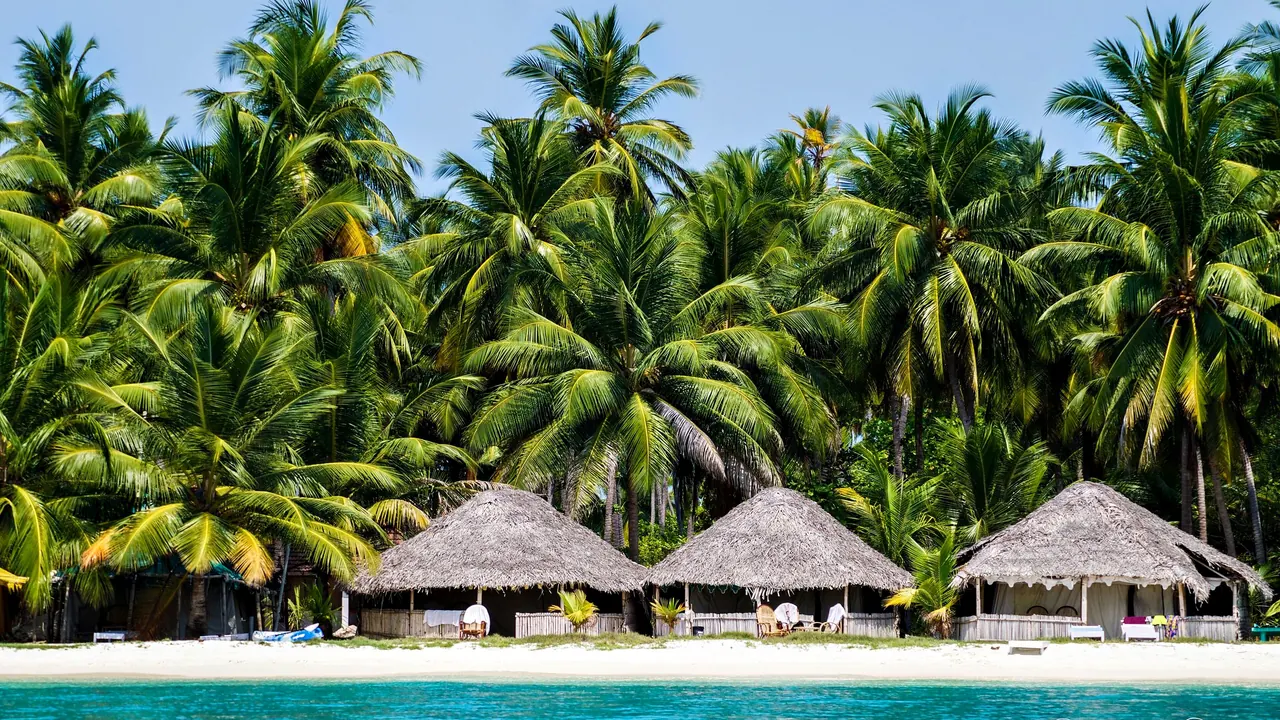
Photos: Lakshadweep by The.chhayachitrakar, CC BY-SA 4.0, cropped.
Kerala or Lakshadweep?
Our verdict in twelve categories, each scored against the same fixed benchmark cities, and the climate month by month, so you can choose for your trip.
Choose Kerala for
- wellness
- live music and the arts
- food and drink
Kerala suits a traveller who wants a varied trip, moving from place to place: a houseboat on the backwaters, tea hills at Munnar, elephants at Periyar, the old trading quarter of Fort Kochi, Kathakali in the evening and some of the best everyday food in India. It is also the home of Ayurveda, and it costs little. What you give up is an easy sea, because the coast faces heavy surf and rip currents.
Choose Lakshadweep for
- beaches
Lakshadweep is for one thing done very well: a week of swimming in lagoons and snorkelling on reefs around a coral atoll, with almost nothing else to do. Its water is calm, clear and shallow in a way the mainland coast can't match, and it is completely quiet. In return you accept entry permits, limited transport, set meals at your resort, very few sights and a much higher bill.
Scoreboard
Twelve categories on one fixed scale from 0 to 100. The shaded stretch is the gap between the two.
Your match
Pick a travel style or drag the sliders, and both match scores follow your weighting.
Wins on wellness and live music and the arts with your weighting.
Wins on beaches with your weighting.
What matters to you?
Category by category
What the scores mean for a trip.
Beaches & swimming
Lakshadweep wins easily for swimming. Its beaches face sheltered coral lagoons that are shallow and clear, where swimmers of any level can stay in the water for hours. Agatti, Bangaram and Kadmat have long white beaches with almost nobody on them, though shade and sunbeds are scarce.
Kerala's coast is longer and more varied, from the red cliffs above Varkala to the village sands at Marari. But the open Arabian Sea breaks straight onto it, and its surf and rip currents keep careful swimmers between the lifeguard flags. It is a better backdrop than a sea to swim in.
Food & drink
Kerala is one of the strongest food regions in India. Around Kochi there is Syrian Christian appam and stew, in Kozhikode there is Mappila biryani, and there are banana-leaf sadya feasts and pearl spot fish by the backwaters. Good everyday meals are cheap almost everywhere.
Lakshadweep shares some of that Malabar base, with tuna, coconut and its own smoked mas. But you eat set menus where you sleep, and there are almost no restaurants or markets to explore. Alcohol is limited in Kerala and restricted much more tightly on the islands.
Culture & sights
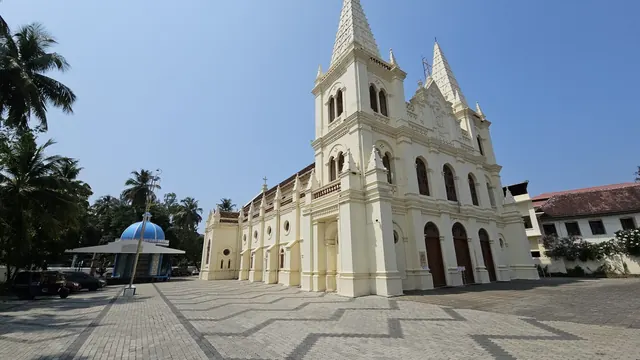
Kerala has far more to see. Fort Kochi and Mattancherry alone fit Portuguese, Dutch and British history, the Paradesi Synagogue and the murals of the Dutch Palace into a short walk. The temple architecture of Thrissur and the wooden Padmanabhapuram Palace add more, even if many temples admit only Hindus.
Lakshadweep has the carved Ujra Mosque on Kavaratti and, on Minicoy, a British-era lighthouse and villages that feel close to the Maldives. They are interesting as a picture of island life, but they fill a morning rather than a trip.
Nightlife
Neither place is for going out, but Kerala at least has some life in the evenings. In the dry season the Varkala clifftop has candlelit cafés and music until late evening, and Kochi has bars in its larger hotels. Lakshadweep has no bars at all, so nights mean dinner, a walk on the sand and the stars.
Nature & outdoors
Kerala has the wider range of landscapes. There are the backwater lagoons around Alappuzha and Kumarakom, tea estates and Nilgiri tahr at Munnar, elephants at Periyar and trekking trails in Wayanad. It suits walkers, wildlife watchers and anyone who enjoys slow travel by boat.
In Lakshadweep almost all the nature is underwater. Turtles, rays, reef sharks and dolphins gather along the reef drop-offs, and for divers and snorkellers they beat anything on Kerala's coast. On land, though, the islands are flat palm groves with no hills or trails.
Day trips
Kerala is better for outings, although most visitors travel a circuit rather than stay in one base. From Kochi you can reach the old synagogues and mosque of the Muziris heritage area or the temples of Thrissur. From Thiruvananthapuram you can go to Kanyakumari at the southern tip of India.
In Lakshadweep a day out means a boat to Bangaram, Thinnakara or the Parali islets for more sand and snorkelling. The other inhabited islands each take a separate ship or helicopter journey.
Good for families
The two suit families in different ways. Kerala has more for children to do, with nights on a houseboat, boat trips to see wildlife at Periyar, and elephants. But long, winding drives, rough seas and humid heat tire children out, and a resort with a pool at Marari or on the backwaters makes things easier.
Lakshadweep has about the gentlest sea a child could ask for and almost no traffic. Beyond that there is nothing aimed at children, and medical care is basic. It works for families who are happy with a quiet week of swimming.
Getting around
Kerala is the easier of two awkward places. A railway along the coast links the main towns, Kochi has a metro and harbour ferries, and a hired car with a driver handles the slow hill roads to Munnar and Thekkady.
Once you arrive in Lakshadweep, getting around is easy, because the islands are small enough to walk or cycle. Getting there is the hard part. You need a permit and either a small plane to Agatti or most of a day on a ship from Kochi, and moving between islands depends on ships and helicopters that run infrequently.
Shopping & style
Kerala has real things to bring home: spices and antiques from the lanes of Jew Town, tea and cardamom from Munnar, kasavu sarees woven at Balaramapuram, and Kathakali masks, though there is little fashion. Lakshadweep has village stores and a few outlets selling coir work, shell items and dried tuna, and not much more.
Affordability
Kerala is far cheaper. Homestays, trains, auto-rickshaws and local meals cost very little. Only a private houseboat, an Ayurveda programme or a car with a driver for the hills pushes the bill up much.
Lakshadweep costs well above mainland norms. Rooms are scarce and often sold as packages with meals included, and the flights and boat transfers add up. The government guesthouses on Agatti and Kavaratti are the cheaper option, and once you are there, there is little else to spend money on.
Live music & performing arts
Kerala has some of India's most striking stage traditions. In Fort Kochi and Thekkady you can watch Kathakali actors being made up before the show. There are also displays of Kalaripayattu, the local martial art, Kutiyattam theatre in temples, Theyyam in north Malabar from about December to April, and the drums and elephants of Thrissur Pooram.
Lakshadweep's Lava, Kolkali and Parichakali dances are sometimes performed at festivals or for visiting groups, but you can't plan a trip around seeing them.
Wellness & relaxation
For treatment, Kerala is the obvious choice. It is the home of Ayurveda, with everything from a single oil massage to a supervised panchakarma programme at Kovalam, Varkala, Kumarakom and Wayanad, and yoga is taught almost everywhere.
Lakshadweep offers a different kind of rest: no traffic, no nightlife and nothing to do. That suits people who unwind by switching off completely, but there is little more than an occasional massage at a resort.
When should you go?
Pick your month. The climate figures are measured averages, not a forecast.
Kerala in July
Lakshadweep in July
Daytime high, °C
Rainfall in the month, mm
Where the figures come from
Kerala has no weather station within reach, so its figures come from a gridded climate model rather than a measured record, and read a broad area rather than one spot.
Lakshadweep's temperatures are measured 66 km from the centre, at Amini Divi.
Lakshadweep has no rain gauge within 25 km of the centre, so its rainfall comes from a gridded climate dataset read at the destination rather than from a gauge further away.
Temperature and rainfall are climate normals, averaged over the years shown. Kerala: 2001-2020 normals, NASA POWER reanalysis grid, no weather station within 90 km. Lakshadweep: 2005-2020 (rainfall 1991-2020) normals, Amini Divi (65.9 km from centre).
On the Kerala coast it is hot all year, with highs around 33°C in February and March and only a little lower during the monsoon. The tea hills around Munnar are noticeably cooler and make a good break from the heat. On the coast, rain decides when to go. The dry season runs from December to March, and January is the driest month, though by February and March the middle of the day is too hot for long walks around the towns. Showers build in April, the monsoon sets in during May and peaks in June at nearly 500mm, and heavy rain carries on through October before easing in November.
Around the main Lakshadweep islands it is just as hot all year, and slightly hotter than the Kerala coast in spring, reaching 34°C. The dry season there is longer and drier. November is already much drier than on the mainland, February and March are almost rainless, and April stays mostly dry. The monsoon arrives in May, and its rough seas close most of the visiting season through September. The sea is warm in both places whenever the weather allows. Kerala's cools slightly to 27°C in July and August, while the island lagoons never drop below 28°C.
Which traveller are you?
For a beach and sun trip, Lakshadweep is the clear choice. Its coral lagoons are calm, clear and warm enough for long, easy swims, with empty white sand on Agatti and Bangaram. Kerala's surf and rip currents make its beaches better for looking at.
On a culture and arts trip, choose Kerala. Fort Kochi's colonial and Jewish quarters, the temple towns around Thrissur, and evening Kathakali or the all-night Theyyam rituals of the north fill days and nights. The atolls offer a carved mosque and a lighthouse.
For a relaxing and wellness trip, Kerala wins for anyone who wants treatment. It has Ayurveda retreats from Varkala to Wayanad and yoga almost everywhere. Lakshadweep suits only those who relax by switching off completely, since it has no spa tradition to speak of.
Before you go
| Measure | Kerala | Lakshadweep |
|---|---|---|
| Official language | Hindi, English | Hindi, English |
| Currency | Indian Rupee (INR) | Indian Rupee (INR) |
| Sockets | CM230 V, 50 Hz | CM230 V, 50 Hz |
| Driving side | Left | Left |
| Time zone | UTC+5:30 | UTC+5:30 |
| Emergency number | 108 or 112 | 108 or 112 |
| Main airport | Cochin International Airport (COK)36 non-stop destinations | Agatti Airport (AGX)5 non-stop destinations |
By the numbers
| Measure | Kerala | Lakshadweep |
|---|---|---|
| Population | 34,523,726 | 64,429 |
| People per km² | - | 2,013 |
| Swim season, months above 21 °C | 12 months | 12 months |
Where else could you go?
Every comparison below shares a destination with this one, so you can follow Kerala or Lakshadweep somewhere new.