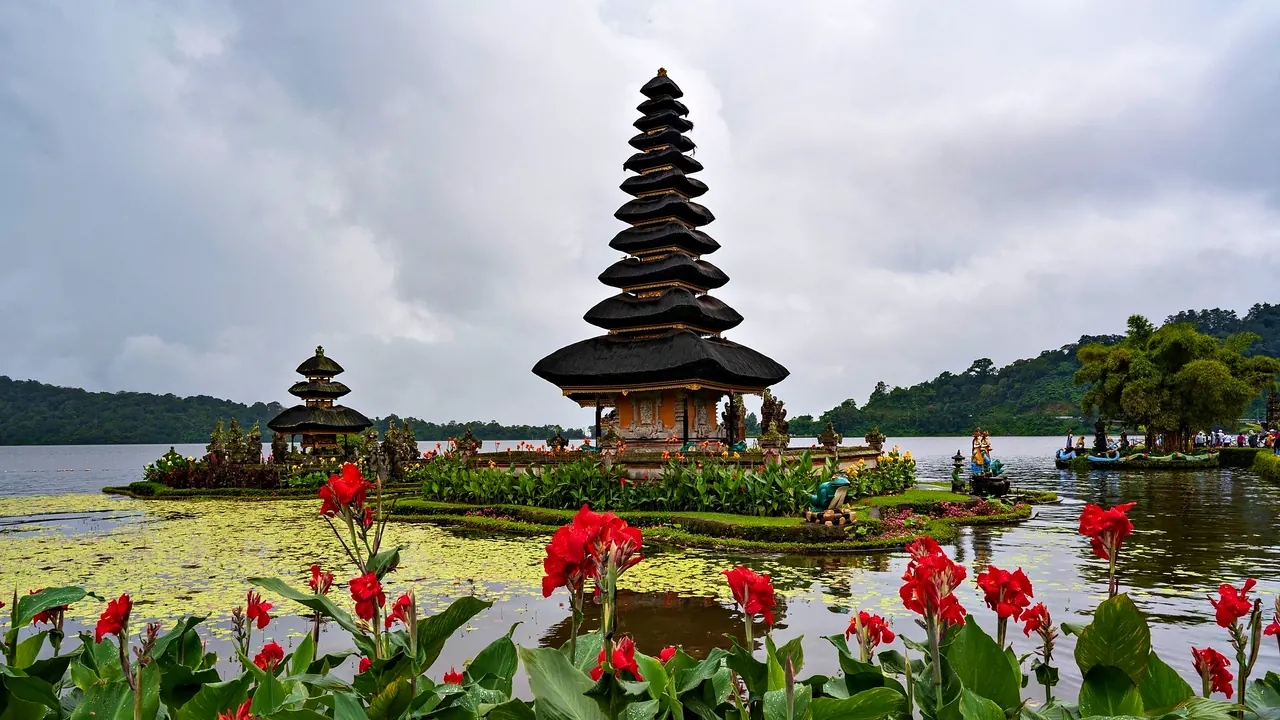
Photos: Bali by Evelin Magnus, Pexels License.
Bali or Goa?
Our verdict in twelve categories, each scored against the same fixed benchmark cities, and the climate month by month, so you can choose for your trip.
Choose Bali for
- live music and the arts
- nature and the outdoors
- shopping
Bali is the richer and more varied trip. Inland it has volcano climbs at dawn, rice terraces and crater lakes, and around the coast there are world-famous surf breaks and dive sites. It also has a temple culture you see every day in offerings, ceremonies and nightly dance in Ubud. It suits travellers who want to rest and explore on the same trip, families who base themselves in Sanur or Nusa Dua, and anyone drawn by yoga, spas and craft shopping. It is at its best in the dry months of the northern summer.
Choose Goa for
- beaches
Goa is the simpler choice, and that is its appeal. It suits a winter escape built around long sandy beaches, almost guaranteed blue skies from November to March, fish curry and vindaloo with a Portuguese accent, and the whitewashed churches of Old Goa. Come for sand, sun, ayurveda and the north-coast parties at Christmas and New Year. Expect less to do away from the shore than on Bali, but the dry season is far more reliable.
Scoreboard
Twelve categories on one fixed scale from 0 to 100. The shaded stretch is the gap between the two.
Your match
Pick a travel style or drag the sliders, and both match scores follow your weighting.
Wins on live music and the arts and nature and the outdoors with your weighting.
Wins on beaches with your weighting.
What matters to you?
Category by category
What the scores mean for a trip.
Beaches & swimming
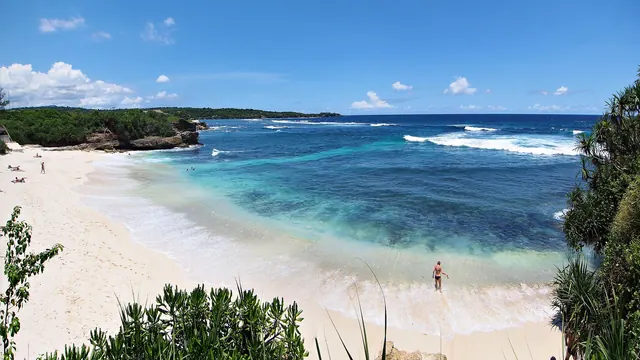
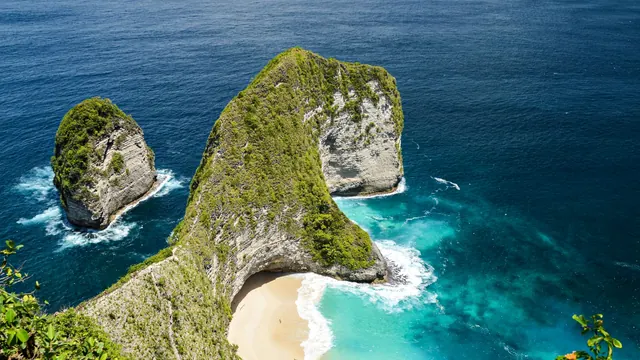
Both are true beach destinations, and they differ in the kind of beach. Bali has more variety. The west coast has surf beaches with strong rips, Sanur and Nusa Dua have reef-protected lagoons, and on the Bukit peninsula there are coves of pale sand below limestone cliffs. In the dry months the water is clear enough for snorkelling off Amed and the Nusa islands.
Goa's coast is long, open sand for walking and easy swimming in gentle winter surf. It is crowded around Calangute and Baga and far quieter at Benaulim, Varca and the palm-lined coves of the south. The water is warm but seldom clear, and in the monsoon swimming stops altogether.
Food & drink
Both places have something unusual in their own countries, a cuisine built around pork. In Bali it comes from the island's Hinduism, and in Goa from centuries of Portuguese and Catholic influence. On Bali you seek out babi guling and bebek betutu at warungs and in Denpasar's morning markets. On top of that sits a large international scene of brunch cafés, coffee roasters and ambitious tasting menus in Canggu, Seminyak and Ubud.
Goa's strength is home cooking in family-run restaurants in Panjim and Margao: xacuti, prawn balchão, sorpotel, poi bread in the morning and bebinca to finish. Fish is grilled on the sand at the shacks. In both places the busiest tourist strips serve plenty of generic food.
Culture & sights
Bali gives a visitor more. Its culture is part of daily life: offerings on the pavement, processions passing through villages, and the sea temples of Tanah Lot and Uluwatu, with Besakih on the slopes of Agung. Ubud's palace, painting museums and nearby rock shrines make a convenient base for seeing it.
Goa's heritage is mostly in its buildings, and it is mainly colonial. The baroque churches of Old Goa, the painted lanes of Fontainhas, the old family mansions of Chandor and the coastal laterite forts reward a few days. They are spread out, however, and there is little of the living ritual that makes Bali so memorable.
Nightlife
There is a similar amount of going out in each, but the style is different. Bali's signature is the beach club, where you spend the afternoon by the pool and stay as DJs take over at sunset in Seminyak, Canggu or on the Uluwatu cliffs. Kuta handles the cheap late nights, and the scene runs all year apart from Nyepi.
Goa's reputation comes from trance music on the clifftops of Anjuna and Vagator and the packed club strips of Baga. It is strongly seasonal, peaking between Christmas and New Year, and many venues close for the monsoon. Rules on outdoor music also move many parties indoors.
Nature & outdoors
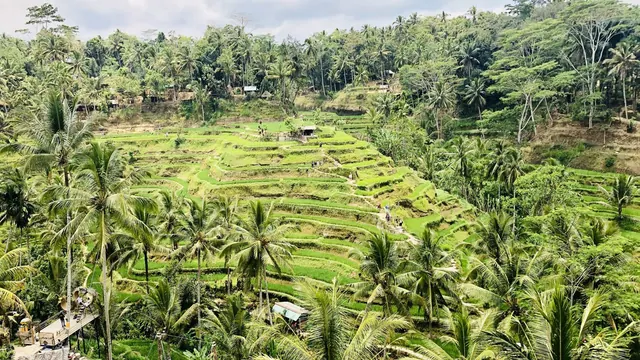
For landscape and adventure, Bali is in a different league. It is a volcanic island with a dawn climb on Mount Batur, misty crater lakes and waterfalls around Munduk, and terraced valleys for walking and cycling. Offshore there is world-class surfing on the Bukit and diving with manta rays off Nusa Penida.
Goa's outdoors is gentler. There are forest trails in the Western Ghats sanctuaries, Dudhsagar Falls after the rains, kayaking through mangroves and very good birdwatching in winter. It is green and pleasant, but the heat keeps serious hiking to the early morning.
Day trips
Neither is a place for many outings, since both are mainly stays near one base. Bali's best excursions are cultural: the walled Bali Aga village of Tenganan, the matching gateways of Penglipuran, and the fast boat over to Nusa Lembongan.
Goa's trips are mostly within the state: market day in Mapusa, spice farms near Ponda, and the little ferry to Divar island. Across the border, Gokarna and the Sindhudurg sea fort are within reach, though Hampi needs a night away.
Good for families
Bali is noticeably easier with children. Sanur and Nusa Dua have calm lagoons, flat beachfront paths and resorts with kids' clubs. Beyond the beach there are a water park, a safari park and the Monkey Forest, and a villa with a private pool makes a longer stay comfortable.
Goa offers little besides the beach: the flat, shallow sands of the south and a hotel pool, with no zoo or aquarium worth the drive. Both places need care with food, water, traffic and animals, but on Bali you get more in return for the effort.
Getting around
Neither has public transport a visitor can rely on, so in both you will need a driver, a taxi or a scooter. The difference is in the kind of obstacle. On Bali the problem is congestion: the short stretch from the airport to Canggu or Uluwatu crawls for much of the day. Ride-hailing apps for cars and motorbike taxis do help.
In Goa the problem is distance along a coast of about 100km, where the drive from the northern beaches to the southern ones can take two hours. Ride-hailing is scarce and taxis cost more than you expect. In both places the best approach is to choose one area and stay in it.
Shopping & style
Bali is the better place to shop. On the road to Ubud, whole villages specialise in silver, woodcarving or stone. East Bali produces ikat and endek weaving, and designers who live on the island run boutiques in Seminyak and Canggu selling linen, ceramics and furniture.
In Goa, shopping mostly means markets. The Anjuna flea market and the Saturday night market at Arpora have much the same shawls and silver from stall to stall, and Mapusa sells spices and cashews. Apart from a few boutiques around Assagao, there is little worth carrying home.
Affordability
Both are cheap by Western standards, and Bali gives slightly more comfort for the money. A villa with a private pool costs very little there, and prices fall further around Ubud and Sidemen, though beach clubs and cliff-top resorts charge close to Western rates.
Goa is cheap for a simple beach-hut stay but expensive for India. Its winter season pushes room prices up, rates soar over Christmas and New Year, and taxis add up. Budget travellers do best in the quieter villages at either end of the coast.
Live music & performing arts
Bali is far ahead. Its dance and gamelan are easy to see: almost every night Ubud's palace and temple courtyards stage Legong, Barong or shadow puppetry, and the Kecak is chanted at sunset on the Uluwatu cliffs. Village temple festivals add performances held for the gods rather than for visitors.
Goa's own traditions, tiatr theatre and the mando song, mostly play to local audiences. For a visitor, the stage comes down to the Kala Academy in Panjim, the December arts festival and Carnival parades. On most evenings live music means a cover band in a beach bar.
Wellness & relaxation
Both places attract people who come to slow down, and Bali is the stronger of the two. Ubud and its valleys are full of yoga studios and retreats, and spas look out over rice fields and river gorges. Balinese massage costs little, the hot springs at Banjar and Lake Batur offer a soak, and the holy spring of Tirta Empul offers a purification ritual.
Goa's offer is narrower but serious. There are shala platforms among the palms at Arambol, Mandrem and Agonda, and teacher-training courses. Ayurvedic cleansing programmes are something Bali does not offer in the same form. On both, rest away from the party areas: Kuta and Canggu on Bali, Baga and Calangute in Goa.
When should you go?
Pick your month. The climate figures are measured averages, not a forecast.
Bali in July
Goa in July
Daytime high, °C
Rainfall in the month, mm
Temperature and rainfall are climate normals, averaged over the years shown. Bali: 1991-2020 normals, Denpasar / Ngurah-Rai (3.5 km from centre). Goa: 1991-2020 normals, Goa / Panjim (9.4 km from centre).
The two destinations have opposite seasons. Bali's dry season runs from about May to September, when the rice terraces and volcano trails are at their best and the sea is clearest. From December to March heavy rain sets in, with close to 396mm in January. Daytime heat on Bali stays steady around 29°C to 32°C all year, warm enough for the beach in every month, and the sea never cools much.
Goa is almost completely dry and very sunny from November to April, which makes it a winter destination. April and May are the hottest months at around 34°C, which makes long walks in the afternoon tiring. From June to September the monsoon arrives, with about 957mm of rain in July, grey skies and rough seas that stop swimming. October is a wet but improving month in between. Choose Goa for the northern winter and Bali for the northern summer.
Which traveller are you?
On an outdoors trip, choose Bali and split the stay: a few nights inland at Munduk or Sidemen for early starts on foot, then a move to Amed or Uluwatu for diving and surf. In Goa, nature is a morning out from a beach base.
On a family trip with children, Bali offers more variety, provided you base yourself in Sanur or Nusa Dua and keep outings short, since long drives tire children quickly. Goa suits families content with the same easy beach days at Benaulim or Varca.
For a beach and sun trip, the choice depends on the month. From November to March, Goa's long southern sands and the coves at Palolem and Agonda are under almost cloudless skies. Bali's cliff coves and surf beaches are the better choice from May to September.
Before you go
| Measure | Bali | Goa |
|---|---|---|
| Official language | Indonesian | Hindi, English |
| Currency | Rupiah (IDR) | Indian Rupee (INR) |
| Sockets | CF50 Hz | CM230 V, 50 Hz |
| Driving side | Left | Left |
| Time zone | UTC+8 | UTC+5:30 |
| Emergency number | 112 | 108 or 112 |
| Main airport | Denpasar I Gusti Ngurah Rai International Airport (DPS)63 non-stop destinations | Goa Dabolim International Airport (GOI)24 non-stop destinations |
By the numbers
| Measure | Bali | Goa |
|---|---|---|
| Population | 4,404,300 | 1,458,545 |
| People per km² | 782 | 394 |
| Swim season, months above 21 °C | 12 months | 12 months |
Where else could you go?
Every comparison below shares a destination with this one, so you can follow Bali or Goa somewhere new.