India
Himachal Pradesh
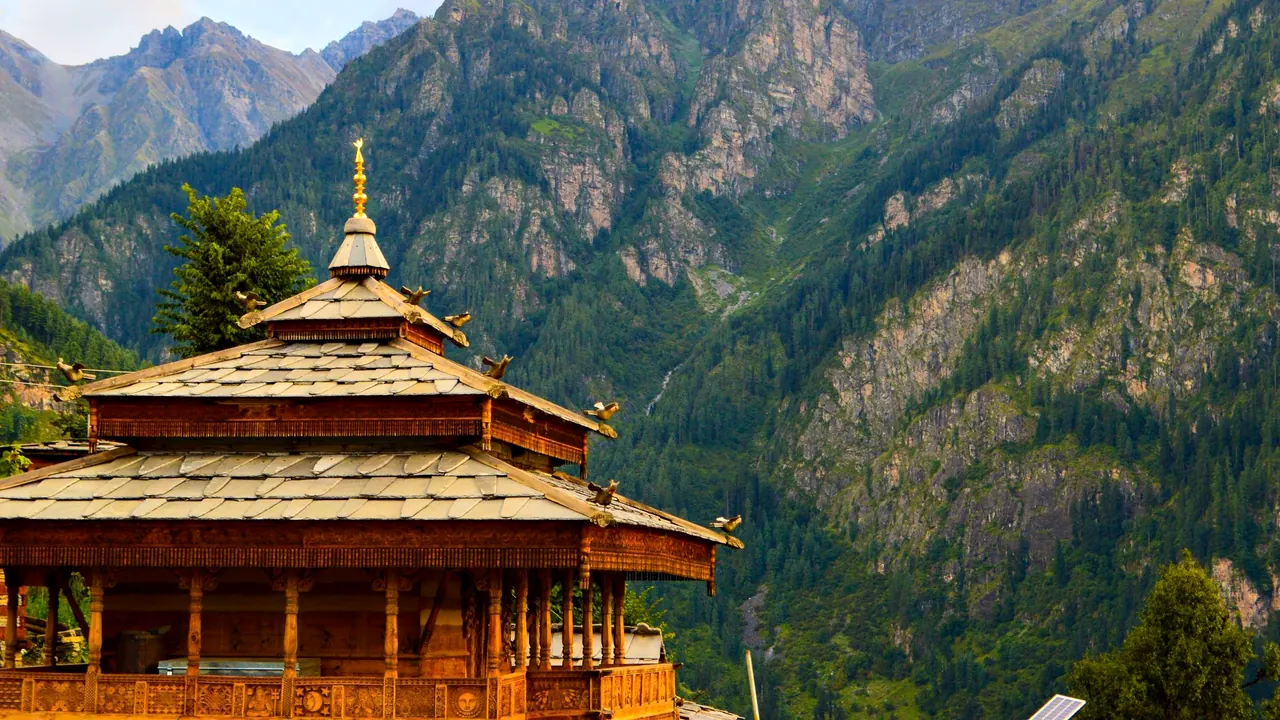
A wooden temple roof before the mountains
- Nature & outdoors92
- Affordability88
- Wellness & relaxation66
Photo: K S ARAVINDA Kashyap, Pexels License
Match
45
Every category weighted equally
- Beach & sun45
- Culture & arts44
- Food & nightlife38
- Family trip48
- Outdoors54
- Relax & unwind49
- Shopping & style41
- On a budget50
Himachal Pradesh in twelve categories
Our verdict on each, scored 0 to 100 against the same fixed benchmark cities, so a score means the same thing on every page.
Beaches & swimming. Scores 3 out of 100.
Food & drink. Scores 38 out of 100.
Culture & sights. Scores 60 out of 100.
Nightlife. Scores 25 out of 100.
Nature & outdoors. Scores 92 out of 100.
Day trips. Scores 52 out of 100.
Good for families. Scores 42 out of 100.
Getting around. Scores 20 out of 100.
Shopping & style. Scores 36 out of 100.
Affordability. Scores 88 out of 100.
Live music & performing arts. Scores 20 out of 100.
Wellness & relaxation. Scores 66 out of 100.
Himachal Pradesh category by category
Beaches & swimming
3Himachal Pradesh is a landlocked mountain state, hundreds of kilometres from any coast. Its rivers, the Beas, Parvati, Sutlej and Ravi, run fast and glacier-cold, and are for rafting and looking at, not bathing in. Swimming means a hotel pool, and few hill hotels have one. Anyone who wants sand and warm water needs a different trip.
Food & drink
38Eating here is simple mountain food plus the cooking of the people who settled in the hills. McLeod Ganj and Dharamkot are the best places to eat, with Tibetan kitchens serving momos, thukpa and thenthuk, butter tea and Tibetan bread. In Old Manali, Vashisht and the Parvati valley around Kasol, relaxed traveller cafés cook a bit of everything, and rainbow trout from the Beas and Tirthan valleys turns up on menus all over the Kullu region.
The true Himachali cuisine is the dham, a festive meal of rice, lentils and slow-cooked yoghurt dishes served on leaf plates at weddings and temple feasts. Restaurants seldom cook it. Roadside dhabas serve dal, rajma and parathas, and siddu, a steamed stuffed bread, is the local snack. Shimla's Mall Road is mostly North Indian chains and tea. There is little fine dining and little wine, so the food is pleasant but rarely the reason for the trip.
Culture & sights
60The heritage here is spread across the state and comes in three layers. Shimla, the British summer capital, has a colonial hill town along the Ridge and Mall Road: Christ Church, the Gaiety Theatre and the grand Viceregal Lodge on Observatory Hill. The Kalka-Shimla narrow-gauge railway, a UNESCO site, climbs to it through more than a hundred tunnels. In the Kangra valley there are the ruins of Kangra Fort, the rock-cut temples of Masrur and the miniature painting tradition. Chamba has its stone temples and the Bhuri Singh Museum.
The Tibetan Buddhist layer is just as strong. McLeod Ganj is home to the Tsuglagkhang, the Dalai Lama's temple complex, and the Norbulingka Institute keeps traditional arts alive near Dharamshala. In the high desert of Spiti, the thousand-year-old murals of Tabo and the fortress-like Key monastery are remarkable, but they take days of driving to reach. Around Manali, the wooden pagoda of the Hidimba Devi temple and the castle at Naggar show the old timber-and-stone architecture of the hills.
Nightlife
25Evenings in the hills are mostly quiet. Old Manali has the liveliest scene, a strip of bars and cafés with music and a backpacker crowd in the main seasons. The Parvati valley around Kasol and Tosh has a long-standing reputation for outdoor trance parties, which are informal and come and go. Shimla's Mall Road is busy with strollers early in the evening and empties well before midnight, and McLeod Ganj goes to bed early. Come for the mountains and treat a late night as a bonus.
Nature & outdoors
92This is high Himalayan country, a reason in itself to make the journey. Manali is the most useful base. From there the Solang valley offers paragliding, snow in winter and some modest skiing, and the Hampta Pass and Beas Kund treks start close by. The Atal Tunnel leads north into Lahaul and the stark cold desert of Spiti, a world of moonscape valleys, glacial lakes such as Chandratal and villages above 4,000m. From Dharamshala, the Dhauladhar range rises straight behind town, and the walk to Triund is the classic first hike.
The Great Himalayan National Park in the Tirthan and Sainj valleys protects deodar forest, alpine meadows and wildlife such as the Himalayan tahr and monal pheasant. Bir Billing is one of the world's best-known paragliding sites. The Beas is used for rafting, and Kinnaur has apple orchards beneath snow peaks. The best months for hiking are from May to June and from September to October. The monsoon brings landslides, and winter closes the high passes.
Day trips
52Every main base has a handful of outings, all on winding roads where distances take longer than the map suggests. Dharamshala has the most varied list: the Norbulingka Institute, Kangra Fort, the Masrur temples, the tea gardens of Palampur, the artists' village of Andretta and the Tibetan settlement at Bir. From Manali, people go to Naggar's castle and art gallery, to the Sikh gurdwara and hot springs at Manikaran, and up the Parvati valley to Kasol. From Shimla, visitors head to the old palace town of Chail, the ridges of Kufri and Narkanda, and the orchard villages beyond. These are pleasant small places rather than major towns, and bigger cities lie well beyond a comfortable day.
Good for families
42The hill stations have long been a family summer escape for Indian visitors, and some things work well with children. The toy train to Shimla is a highlight. Shimla's car-free Ridge and Mall Road is easy to stroll. In winter, the snow at Solang and Kufri, with sledging, pony and yak rides, delights children who have never seen it. Short forest walks around Manali and Dalhousie are manageable for young legs.
The effort is getting there and between places. Roads are long, steep and winding, so carsickness is common. Traffic jams into Manali and Shimla at peak times. Many towns are built on steep slopes and have plenty of steps. Spiti and the high passes bring real altitude, which is unwise for small children. There is little built specifically for children, so a family trip works best when it stays in one or two bases.
Getting around
20Getting around means mountain roads, and they are slow. Journeys between Shimla, Manali and Dharamshala take most of a day. Landslides in the monsoon and snow in winter can close routes, and the roads into Manali and Shimla jam at busy times. The state bus network is extensive and reaches remote villages, and hiring a car with a driver is the usual comfortable choice. The narrow-gauge railways to Shimla and through the Kangra valley are scenic, not fast. Small airports near Shimla, Kullu and Dharamshala handle limited flights. Within towns, the centres are walkable but steep, and Shimla's Mall Road and McLeod Ganj are best explored on foot.
Shopping & style
36Shopping here means crafts and small bazaars. Kullu shawls and woollens, the embroidered Kinnauri cap, Chamba rumal embroidery and Kangra-style miniature paintings are the local specialities, sold in weavers' cooperatives around Kullu and Bhuntar and along the Mall Roads. McLeod Ganj's lanes are full of Tibetan goods such as singing bowls, prayer flags, thangka paintings and carpets, and Norbulingka sells high-quality work from its own workshops. Shimla's Lakkar Bazaar is known for wooden crafts. Beyond this there is little: no fashion or design shopping to speak of, and plenty of identical souvenir stalls.
Affordability
88This is a very inexpensive region for a visitor. Guesthouses in McLeod Ganj, Old Manali, Kasol and Spiti cost very little, dhaba and café meals are cheap, state buses cost almost nothing, and most temples and monasteries are free to enter. The main expense is a private car and driver on the long mountain routes. Hotels in Shimla and Manali charge much more during the Indian summer school break and the snow season, when booking ahead pays. Even then, comfortable mid-range rooms with mountain views are modest by Western standards.
Live music & performing arts
20There is little regular performance to attend. The richest time is the Kullu Dussehra festival each autumn, when village deities are carried into Kullu and crowds dance the nati, the region's folk circle dance, alongside music and cultural shows. In McLeod Ganj, the Tibetan Institute of Performing Arts keeps Tibetan opera, music and dance alive, and it stages public performances, notably around the spring Shoton festival. Shimla's Victorian Gaiety Theatre hosts occasional plays and events. Otherwise, evening entertainment is a folk show in a hotel or monks chanting at a monastery.
Wellness & relaxation
66The draw here is retreat and slowing down, not polished spas. Dharamkot and Bhagsu, above McLeod Ganj, are the main centre. Visitors come for long stays with Buddhist meditation courses, Vipassana retreats, yoga teachers and Tibetan medicine clinics, and the presence of the monastic community gives the place a contemplative rhythm. Mountain villages in the Tirthan valley, around Naggar and in Spiti run at a pace that settles the mind within days.
There is a modest bathing tradition too. The sulphur hot springs at Vashisht near Manali, Manikaran in the Parvati valley and Tattapani on the Sutlej are used for simple public baths, often attached to temples or gurdwaras. They are basic, communal and sometimes busy, rather than places for pampering. Spa resorts exist around Shimla and Manali, but they are hotel spas, not a culture of their own.
Where to stay in Himachal Pradesh
Most visitors choose between three bases. Because the drive between any two of them takes most of a day, a first trip works best with one or two. Manali is the most practical base for the outdoors, with Solang, paragliding and the trailheads close by. Stay in Old Manali or Vashisht for traveller cafés, the hot springs and the liveliest evenings in the hills. Stay in the main town below if you are a family who wants a wider choice of rooms and shorter walks.
McLeod Ganj and Dharamkot, on the slopes above Dharamshala, suit walkers, anyone interested in Tibetan food and culture, and anyone planning a longer, quiet stay with meditation or yoga. Triund starts behind town, and the Kangra valley outings are easy from here. Expect steep lanes and early nights. Shimla suits families and anyone who enjoys colonial streets, with the toy train to arrive on and the car-free Ridge for an evening stroll.
A second visit can go further. Kasol in the Parvati valley draws backpackers and has a reputation for parties. The Tirthan valley and Naggar suit a quiet stay with forest walks and trout on the menu. Spiti needs a separate trip by car of a week or more, and its real altitude is unwise for small children.
When should you go?
Pick a month to see what it is like. The climate figures are measured averages, not a forecast.
Himachal Pradesh in July
Daytime high, °C
Rainfall in the month, mm
The whole year
Shaded against this destination’s own year: the deepest cell is its best month for that figure and the palest its weakest.
Where the figures come from
Himachal Pradesh has no weather station within reach, so its figures come from a gridded climate model rather than a measured record, and read a broad area rather than one spot.
Temperature and rainfall are climate normals, averaged over the years shown. Himachal Pradesh: 1991-2020 normals, TerraClimate 4 km grid at the town, no weather station within 90 km.
Before you go
| Measure | Himachal Pradesh |
|---|---|
| Official language | Hindi, English |
| Currency | Indian Rupee (INR) |
| Sockets | CM230 V, 50 Hz |
| Driving side | Left |
| Time zone | UTC+5:30 |
| Emergency number | 108 or 112 |
| Main airport | Kullu Manali Airport (KUU)4 non-stop destinations |
By the numbers
| Measure | Himachal Pradesh |
|---|---|
| Population | 6,864,602 |
Compare Himachal Pradesh with
Every comparison with a written verdict behind it.