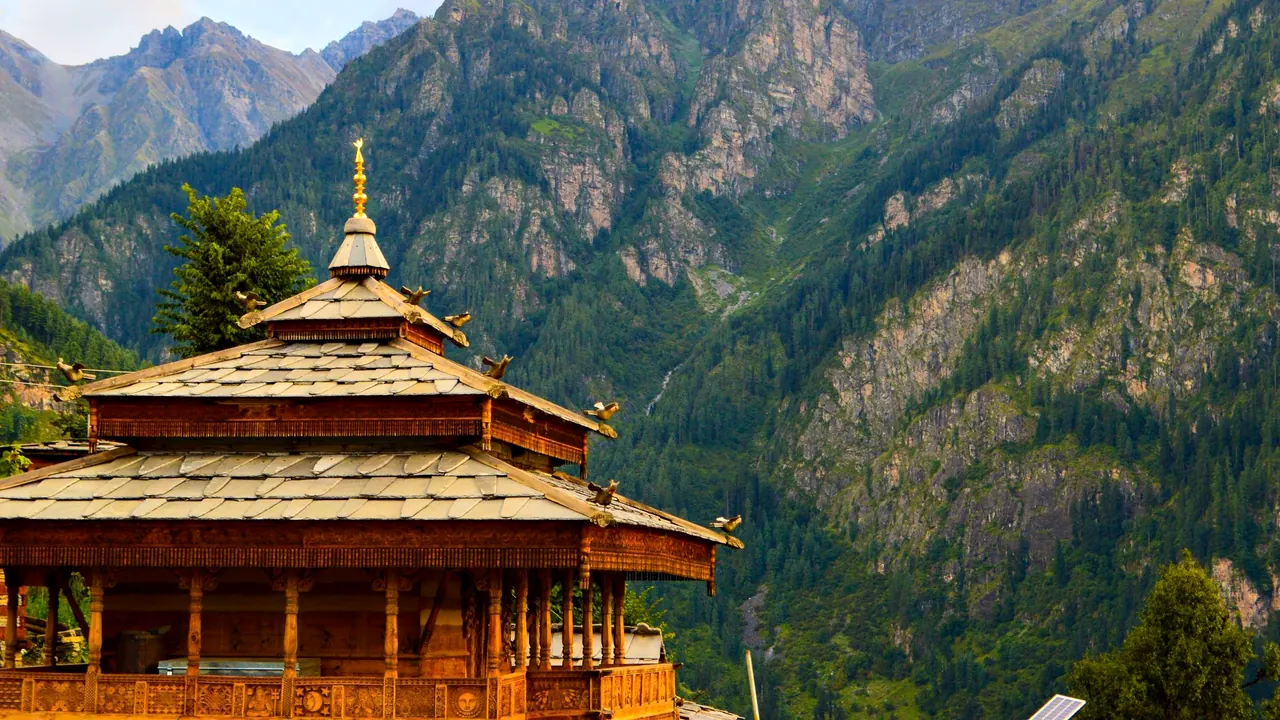
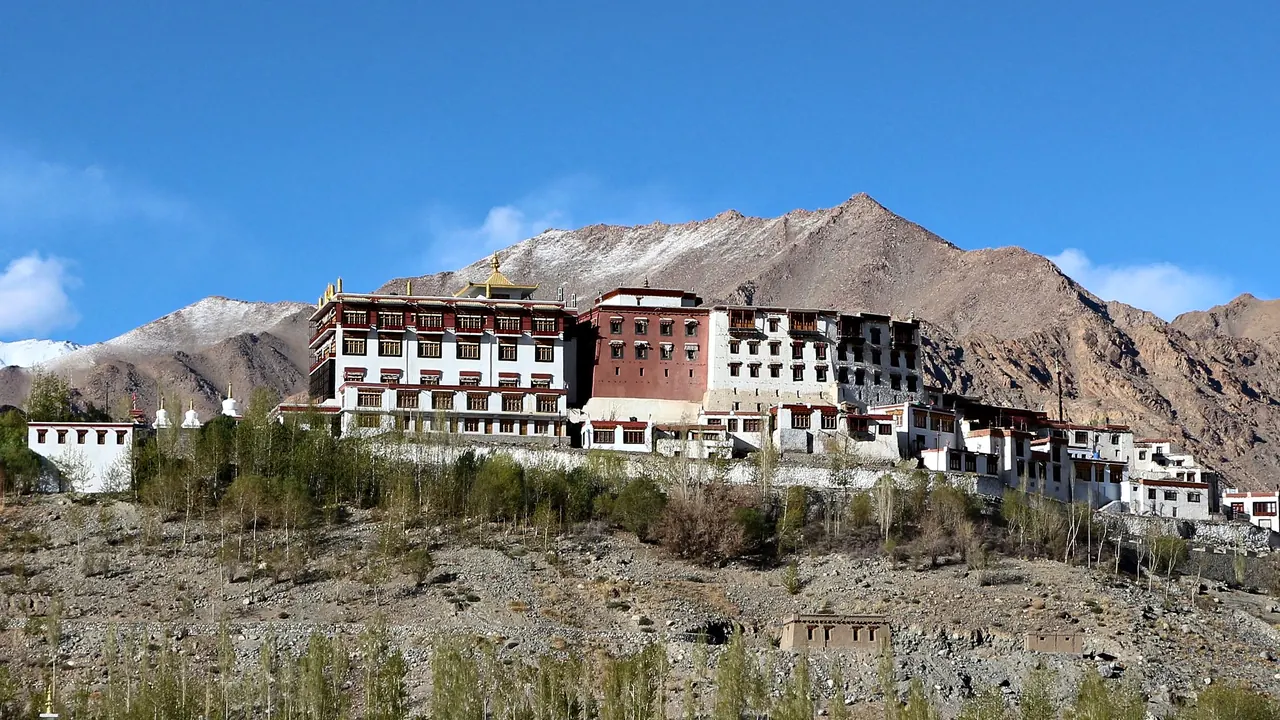
Photos: Himachal Pradesh by K S ARAVINDA Kashyap, Pexels License; Ladakh by Bernard Gagnon, CC BY-SA 4.0, cropped.
Himachal Pradesh or Ladakh?
Our verdict in twelve categories, each scored against the same fixed benchmark cities, and the climate month by month, so you can choose for your trip.
Choose Himachal Pradesh for
- families
- wellness
- nightlife
Himachal Pradesh is the easier and more varied of the two. It suits travellers who want mountains without committing to extreme altitude: a family on the toy train to Shimla, a long stay of meditation and yoga above McLeod Ganj, or a backpacker moving between Old Manali and the Parvati valley with a few evenings out along the way. It costs less, offers more to do from each base, and spreads its heritage across colonial, Hindu and Tibetan layers.
Choose Ladakh for
- culture and sights
- nature and the outdoors
Ladakh asks more of you and gives back something starker. Choose it for the high desert itself, monasteries such as Hemis, Thiksey and Alchi that are still in daily use, and treks like the Markha valley. It works best for fit adults who will take a few days to acclimatise in Leh, hire a car for long drives and go to bed early, and who are happy to trade comfort and evenings out for some of the most remote landscape in India.
Scoreboard
Twelve categories on one fixed scale from 0 to 100. The shaded stretch is the gap between the two.
Your match
Pick a travel style or drag the sliders, and both match scores follow your weighting.
Wins on families and wellness with your weighting.
Wins on culture and sights and nature and the outdoors with your weighting.
What matters to you?
Category by category
What the scores mean for a trip.
Beaches & swimming
Neither is a place to swim, and both texts say so plainly. The water also differs: Himachal's rivers, the Beas and Parvati, are fast and glacier-fed and used for rafting, while Ladakh's Pangong Tso and Tso Moriri are still, icy lakes above 4,000m that are for looking at.
Food & drink
Himachal eats a little better, mostly because there are more good places to eat in more towns. McLeod Ganj and Dharamkot have Tibetan kitchens, Old Manali and Kasol have easy traveller cafés, and Kullu trout appears on menus across the valley.
Ladakh's eating is centred on Leh's rooftop restaurants and bakeries, with similar momos and thukpa. The most rewarding meals are skyu and butter tea in village homestays, along with the apricots. Outside Leh, and outside summer, the choice narrows sharply.
Culture & sights
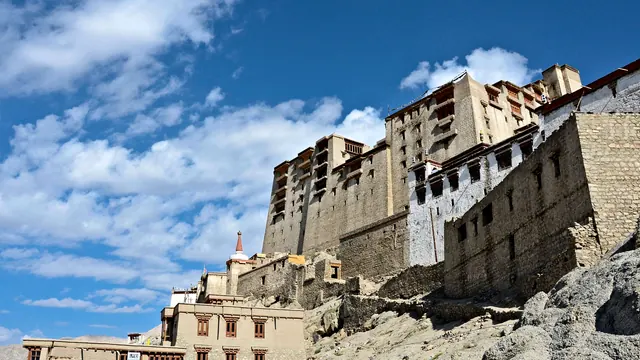
Ladakh comes out ahead because its heritage is concentrated and still in use. Leh Palace stands over the old town, a chain of monasteries runs along the Indus from Shey and Thiksey to Hemis, and the painted temples of Alchi are among the finest early Buddhist art in the Himalaya.
Himachal's heritage is broader but more scattered. It includes British Shimla and its UNESCO railway, Kangra Fort and the Masrur rock-cut temples, and the Dalai Lama's temple in McLeod Ganj. Its closest match to Ladakh, the monasteries of Tabo and Key in Spiti, takes days of driving to reach.
Nightlife
Himachal at least has evenings out. Old Manali has a strip of bars with music and a backpacker crowd, and the Parvati valley is known for informal trance parties.
Ladakh has almost nothing: a few rooftop places in Leh serving beer, and early nights before pre-dawn drives. Altitude also makes drinking a poor idea there.
Nature & outdoors
Both are outstanding, and the difference is the kind of mountain. Himachal is greener and more forested, with deodar woods and alpine meadows in the Great Himalayan National Park, the Triund hike above Dharamshala, and paragliding at Bir Billing. Its hiking seasons fall either side of the monsoon.
Ladakh is bare high desert between two ranges. It has the colour-changing waters of Pangong Tso, Bactrian camels in the Nubra dunes, the Markha valley trek, and in winter the Chadar and snow leopards in Hemis. Himachal's Lahaul and Spiti show a taste of this landscape, but Ladakh is entirely made of it.
Day trips
Himachal offers more, because each of its several bases has its own list. Dharamshala alone covers Norbulingka, Kangra Fort, the Palampur tea gardens and Bir, and Manali adds Naggar and the hot springs at Manikaran.
From Leh, the easy outings are village loops along the Indus to Likir, Basgo, Stok and Thiksey. Nubra and the high lakes are better treated as overnight trips, so the list of true day outings runs out sooner.
Good for families
This is where the two differ most. Himachal has long been where Indian families go for the summer: the toy train to Shimla, a car-free promenade, sledging and yak rides in the snow at Kufri, and short forest walks, though the winding roads can cause carsickness.
Ladakh starts at about 3,500m and climbs from there. Young children may not be able to say when they feel unwell, healthcare beyond Leh is basic, and nothing is built for them. Only fit teenagers who enjoy trekking really belong there.
Getting around
Both are slow mountain country where a car with a driver is the usual answer, and a journey can take most of a day. Himachal has more options: an extensive state bus network, narrow-gauge railways and small airports near Shimla, Kullu and Dharamshala.
Ladakh relies on flights into Leh and union taxis on fixed rates. The protected areas need permits, and the overland roads from Manali and Srinagar take two days and are open only in the warmer months. The Manali road does mean the two can be joined into one long summer journey.
Shopping & style
Himachal's crafts are more local and easier to trust. Kullu shawls from weavers' cooperatives, Chamba rumal embroidery, Kangra-style miniatures and work from Norbulingka's own workshops all come from the region.
Ladakh's shopping is mostly Leh's main bazaar: pashmina, thangkas, turquoise jewellery and dried apricots. Much of the stock repeats from stall to stall, and some is brought in from elsewhere, so it pays to look carefully before buying.
Affordability
Himachal is the cheaper of the two by a clear margin. State buses cost almost nothing, guesthouses in McLeod Ganj, Old Manali and Kasol are very cheap, and the main cost is a private driver, which is optional.
Day-to-day living in Ladakh is also inexpensive, but the fixed costs build up: summer flights to Leh, union taxis over a week of long drives, and protected-area permits.
Live music & performing arts
Both are thin on regular performance and rich in festivals, so the date you travel matters more than the destination. Himachal's highlights are folk dance at Kullu Dussehra in autumn and Tibetan opera from the institute in McLeod Ganj, with the odd play at Shimla's Gaiety Theatre.
Ladakh's performances are almost all monastic. The masked cham dances are led by the Hemis festival in early summer, and several others fall in winter.
Wellness & relaxation
Himachal is far better for slowing down. Dharamkot and Bhagsu are an established base for meditation courses, Vipassana, yoga and Tibetan medicine, and public hot springs at Vashisht and Manikaran add simple soaking.
Ladakh has the quiet of monastery prayers and village homestays, plus amchi medicine. However, the first days at altitude are tiring, and the drives over the passes take up much of the trip.
When should you go?
Pick your month. The climate figures are measured averages, not a forecast.
Himachal Pradesh in July
Ladakh in July
Daytime high, °C
Rainfall in the month, mm
Where the figures come from
Himachal Pradesh has no weather station within reach, so its figures come from a gridded climate model rather than a measured record, and read a broad area rather than one spot.
Ladakh has no weather station within reach, so its figures come from a gridded climate model rather than a measured record, and read a broad area rather than one spot.
Temperature and rainfall are climate normals, averaged over the years shown. Himachal Pradesh: 1991-2020 normals, TerraClimate 4 km grid at the town, no weather station within 90 km. Ladakh: 1991-2020 normals, TerraClimate 4 km grid at the town, no weather station within 90 km.
The two run on almost opposite calendars. In Himachal's hill towns, spring and early summer are the best time, with highs reaching about 26°C in June, and October and November bring clear, dry weather that suits hiking and sightseeing. July and August are the wet months, with nearly 199mm in July, which means landslides and blocked roads. Winters are cold but not severe, and snow falls at Solang and Kufri.
Ladakh barely gets any rain, around 10mm a month or less all year, so the monsoon that soaks Himachal hardly reaches it. That makes June to September its season, when the passes are open and Leh is mild. Winter is harsh, with daytime highs around -2°C in January and roads closed, and it suits only the Chadar walk or snow leopard tracking. Neither place has a beach season.
Which traveller are you?
On a family trip with children, Himachal Pradesh is the sensible choice. The toy train, the car-free Ridge in Shimla and the snow at Solang can all be done without going very high, while Ladakh's altitude is a real risk for young children.
For a culture and arts trip, Ladakh has the edge. The monasteries along the Indus, the mud-brick old town under Leh Palace and the early murals at Alchi form a living Buddhist landscape, and they sit closer together than Spiti's equivalents in Himachal.
On a relaxing and wellness trip, Himachal Pradesh is better. Dharamkot and Bhagsu have meditation courses, Vipassana and yoga for long stays, and Vashisht has hot springs, while in Ladakh the first days at altitude and the long drives leave less room to rest.
Before you go
| Measure | Himachal Pradesh | Ladakh |
|---|---|---|
| Official language | Hindi, English | Hindi, English |
| Currency | Indian Rupee (INR) | Indian Rupee (INR) |
| Sockets | CM230 V, 50 Hz | CM230 V, 50 Hz |
| Driving side | Left | Left |
| Time zone | UTC+5:30 | UTC+5:30 |
| Emergency number | 108 or 112 | 108 or 112 |
| Main airport | Kullu Manali Airport (KUU)4 non-stop destinations | Leh Kushok Bakula Rimpochee Airport (IXL)5 non-stop destinations |
By the numbers
| Measure | Himachal Pradesh | Ladakh |
|---|---|---|
| Population | 6,864,602 | 274,289 |
Where else could you go?
Every comparison below shares a destination with this one, so you can follow Himachal Pradesh or Ladakh somewhere new.