India
Ladakh
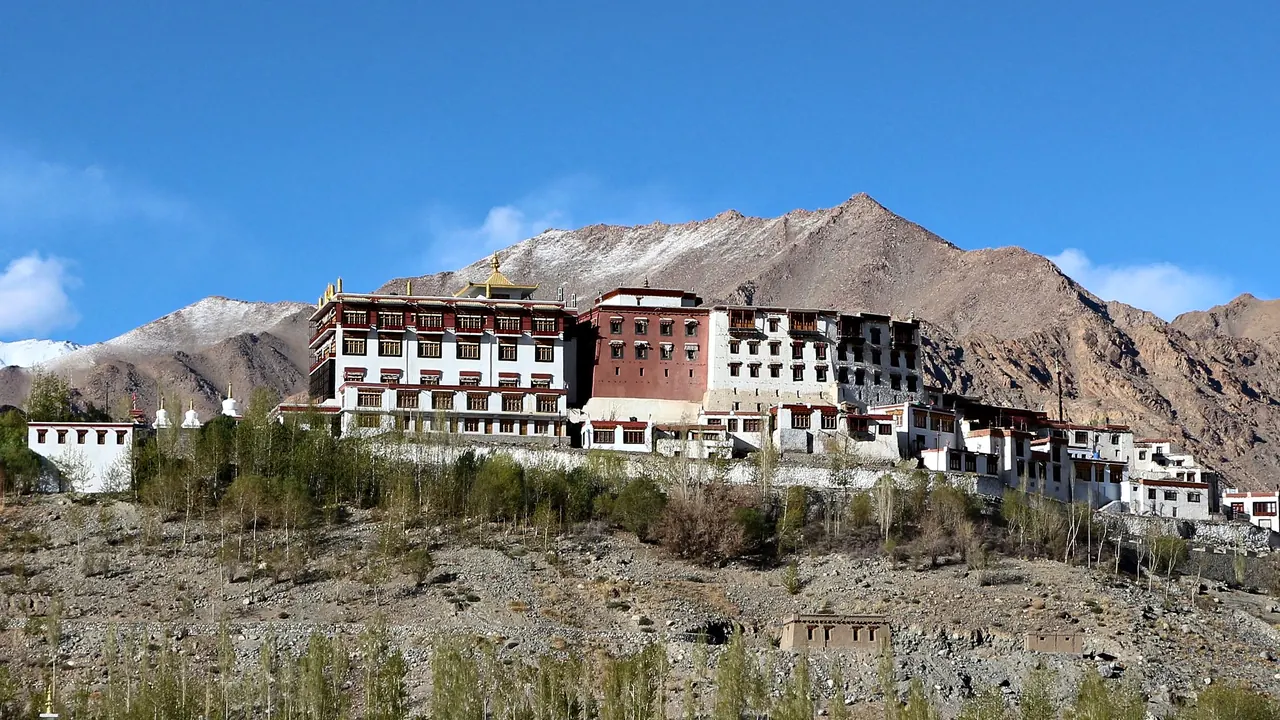
Phyang monastery in Ladakh
- Nature & outdoors94
- Affordability72
- Culture & sights68
Photo: Bernard Gagnon, CC BY-SA 4.0, cropped
Match
36
Every category weighted equally
- Beach & sun35
- Culture & arts38
- Food & nightlife30
- Family trip38
- Outdoors46
- Relax & unwind39
- Shopping & style33
- On a budget40
Ladakh in twelve categories
Our verdict on each, scored 0 to 100 against the same fixed benchmark cities, so a score means the same thing on every page.
Beaches & swimming. Scores 3 out of 100.
Food & drink. Scores 32 out of 100.
Culture & sights. Scores 68 out of 100.
Nightlife. Scores 6 out of 100.
Nature & outdoors. Scores 94 out of 100.
Day trips. Scores 45 out of 100.
Good for families. Scores 8 out of 100.
Getting around. Scores 18 out of 100.
Shopping & style. Scores 28 out of 100.
Affordability. Scores 72 out of 100.
Live music & performing arts. Scores 20 out of 100.
Wellness & relaxation. Scores 38 out of 100.
Ladakh category by category
Beaches & swimming
3Ladakh has no beaches and no swimming worth the name. Pangong Tso and Tso Moriri are striking lakes, but they lie above 4,000m, the water stays icy even in high summer, and bathing in them is discouraged. Anyone who wants to swim on this trip will need to find a hotel pool, and few exist.
Food & drink
32Most of the eating happens in Leh, where the old town and the lanes off the main bazaar are lined with rooftop restaurants and bakeries that cater to trekkers. They serve momos, thukpa and thenthuk noodle soups next to North Indian curries and backpacker staples. Ladakhi home cooking, such as skyu and chutagi pasta stews, salty butter tea and barley in many forms, is easiest to find in village homestays, and this is where the food is most rewarding.
Apricots are the local pride. They are eaten fresh in late summer and dried all year, along with apricot jam and kernel oil. Beyond Leh, menus shrink to dal, rice and noodles, and outside the summer season many kitchens close.
Culture & sights
68This is one of the best places outside Tibet to see Tibetan Buddhist heritage still in use. Leh is overlooked by the nine-storey Leh Palace and the Namgyal Tsemo gompa, and its mud-brick old town spreads out below them. The Indus valley either side holds a string of monasteries built on ridges and crags: Thiksey, with its terraced white buildings, Shey, Stakna, and Hemis, the richest of them all. Further downriver, Lamayuru sits among eroded badlands.
The outstanding site is Alchi. Its small temples from around the 11th century hold some of the finest early Buddhist murals and painted wooden sculpture in the Himalaya. Monks hold morning prayers that visitors can quietly attend. Formal museums are few and modest, and the sights are spread out, so seeing them means a car and several days.
Nightlife
6There is essentially no nightlife. Leh has a few rooftop restaurants that serve beer and a couple of quiet bars, but evenings end early. Most visitors are up before dawn for drives over high passes, and alcohol at altitude is unwise anyway. Outside Leh, nights are spent under the stars at a guesthouse or camp.
Nature & outdoors
94The landscape is the reason to come. Ladakh is a cold, high desert between the Himalaya and the Karakoram, with bare ochre and violet mountains, green barley oases along the rivers, and roads that climb over passes above 5,000m. Pangong Tso changes colour through the day along its blue length. Tso Moriri is quieter and higher still, with nomad camps and migratory birds, and the Nubra valley has sand dunes and Bactrian camels below snow peaks.
Trekking is first class: the Markha valley, the Sham villages for a gentler start, and the long routes through Zanskar. There is rafting on the Indus and the Zanskar in summer, and the frozen-river Chadar walk in deep winter, when Hemis National Park becomes a base for tracking snow leopards. June to September is the main season. Everyone needs a few days in Leh, at about 3,500m, to acclimatise first.
Day trips
45From Leh, the outings are mostly village loops along the Indus. A day in the Sham valley can take in Likir, Basgo and the orchards of apricot villages. Stok has its royal palace village, and the Shey and Thiksey side has fields, stupas and chorten walls. These outings are pleasant and easy by hired car.
The bigger destinations, Nubra and the high lakes, lie over passes that take several hours each way, and they are better done as an overnight trip than as a day out. There are no other towns of any size within reach. Kargil and Zanskar are long journeys away, so the list of outings runs out fairly quickly.
Good for families
8Ladakh is a hard place for young children. Leh sits at about 3,500m and the lake and pass excursions go far higher, which brings a real risk of altitude sickness that children often cannot describe. Roads are long and winding, healthcare outside Leh is basic, and there are no attractions aimed at children. Older, fit teenagers who enjoy trekking and camping are the exception and can have a memorable trip.
Getting around
18Leh's old town and market area can be covered on foot, slowly, because of the altitude. Everything else means hiring a car and driver or a motorbike. Local buses exist but are infrequent and slow. Roads climb over high passes and are rough in places, landslides are common, and distances that look short on a map can take most of a day. Foreign visitors heading to Nubra, Pangong or Tso Moriri need a protected-area permit, which is arranged in Leh, usually through a local travel agent.
Most visitors fly into Leh. The two long road routes in, from Manali and from Srinagar, are spectacular but take two days, and they are open only in the warmer months, roughly early summer to mid-autumn.
Shopping & style
28Shopping is concentrated in Leh's main bazaar and the Tibetan refugee market stalls nearby. The typical buys are pashmina shawls, thangka paintings, prayer flags, singing bowls, turquoise and coral jewellery, yak-wool socks and dried apricots. Much of the stock is the same from shop to shop, and some of it comes from elsewhere in India or Nepal, so it pays to look carefully. Outside Leh there is little beyond monastery stalls and village shops.
Affordability
72Day to day, Ladakh is inexpensive. Family guesthouses and village homestays are modest in price, and meals at local restaurants cost little. The real expenses are getting there and getting around. Flights to Leh in summer are not cheap, and hired cars, which must come from local taxi unions on fixed rates, add up quickly over a week of long drives. Permits and fees for the protected areas add a little more. Upmarket camps and boutique hotels exist for those who want comfort, at a clearly higher level.
Live music & performing arts
20The performances here are religious. Monasteries hold masked cham dance festivals, with monks in brocade and great painted masks dancing to horns and drums in the courtyard. The Hemis festival in early summer is the best known, and others fall through the year, several of them in winter. An autumn Ladakh festival adds folk dance and music in Leh. Outside these occasions there is no theatre, concert hall or regular live music, so it is worth planning a trip around a festival date if this matters.
Wellness & relaxation
38There is no spa culture to speak of. Hotel treatments are few, and the hot springs at Panamik in Nubra and at Chumathang on the Indus are simple bathing spots, not resorts. What Ladakh offers instead is quiet: early prayers in a monastery hall, meditation courses in and around Leh, traditional amchi medicine, and days in a village homestay where little happens beyond the harvest.
That calm comes with conditions. The first days at altitude are tiring rather than relaxing, and much of a typical trip is spent on long mountain drives.
Where to stay in Ladakh
Every trip starts in Leh, and most visitors keep it as their main base. At about 3,500m it is where everyone spends the first few days acclimatising, and it has the widest choice of guesthouses, along with the rooftop restaurants, the agents who arrange permits and the hired cars. The old town, the palace and the Indus monasteries are all within easy reach. Leh suits a first visit, walkers easing into the altitude and anyone who wants more to eat than dal and rice.
For a quieter stay, the villages of the Sham valley and Alchi have homestays among apricot orchards and barley fields. They offer the best Ladakhi home cooking and a gentle start for trekkers, and couples or fit older teenagers looking for calm often prefer them to town.
The Nubra valley and Pangong Tso each need at least one night away, in simple guesthouses or camps, because the drives over the high passes take several hours. A first visit usually loops from Leh to Nubra and Pangong, which means changing base two or three times in a week. A second trip can go further: to the nomad camps at Tso Moriri, on foot through the Markha valley, or along the long road to Zanskar. There the nights are spent in camps and village houses, and evenings end early under the stars.
When should you go?
Pick a month to see what it is like. The climate figures are measured averages, not a forecast.
Ladakh in July
Daytime high, °C
Rainfall in the month, mm
The whole year
Shaded against this destination’s own year: the deepest cell is its best month for that figure and the palest its weakest.
Where the figures come from
Ladakh has no weather station within reach, so its figures come from a gridded climate model rather than a measured record, and read a broad area rather than one spot.
Temperature and rainfall are climate normals, averaged over the years shown. Ladakh: 1991-2020 normals, TerraClimate 4 km grid at the town, no weather station within 90 km.
Before you go
| Measure | Ladakh |
|---|---|
| Official language | Hindi, English |
| Currency | Indian Rupee (INR) |
| Sockets | CM230 V, 50 Hz |
| Driving side | Left |
| Time zone | UTC+5:30 |
| Emergency number | 108 or 112 |
| Main airport | Leh Kushok Bakula Rimpochee Airport (IXL)5 non-stop destinations |
By the numbers
| Measure | Ladakh |
|---|---|
| Population | 274,289 |
Compare Ladakh with
Every comparison with a written verdict behind it.