India
Leh
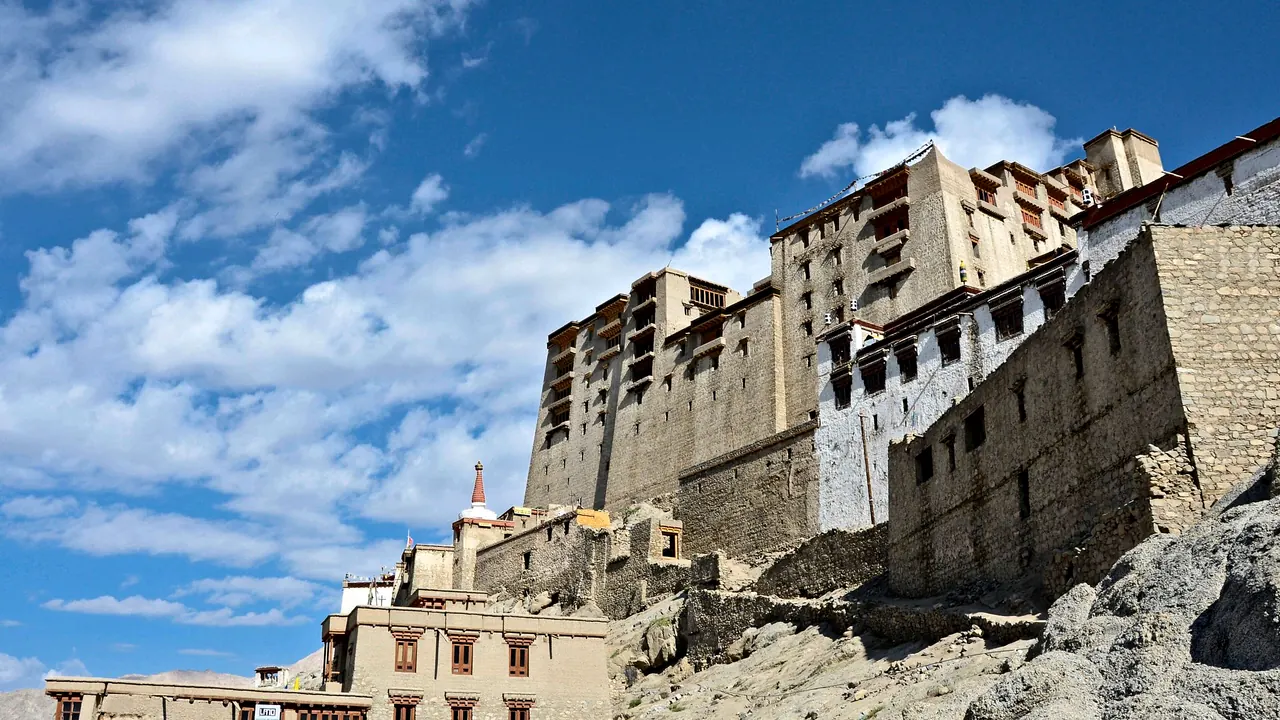
Leh Palace from the east
- Nature & outdoors92
- Affordable cities80
- Day trips68
Photo: Rayan Naqash, CC BY-SA 3.0, cropped
Match
35
Every category weighted equally
- Beach & sun35
- Culture & arts36
- Food & nightlife29
- Family trip38
- Outdoors48
- Relax & unwind37
- Shopping & style31
- On a budget40
Leh in twelve categories
Our verdict on each, scored 0 to 100 against the same fixed benchmark cities, so a score means the same thing on every page.
Beaches & swimming. Scores 2 out of 100.
Food & drink. Scores 30 out of 100.
Culture & sights. Scores 47 out of 100.
Nightlife. Scores 5 out of 100.
Nature & outdoors. Scores 92 out of 100.
Day trips. Scores 68 out of 100.
Good for families. Scores 10 out of 100.
Getting around. Scores 20 out of 100.
Shopping & style. Scores 28 out of 100.
Affordability. Scores 80 out of 100.
Live music & performing arts. Scores 14 out of 100.
Wellness & relaxation. Scores 28 out of 100.
Leh category by category
Beaches & swimming
2Leh sits at about 3,500m in the rain shadow of the Himalaya, with no coast anywhere near. The Indus and the high lakes are fed by snowmelt and stay bitterly cold even in midsummer, so swimming is not something a visitor does here. The water belongs to rafting and to the view.
Food & drink
30Eating in Leh is simple and warming. Momos, thukpa and thenthuk noodle soups come from the Tibetan kitchen, while Ladakhi dishes such as skyu, a hand-pressed pasta stew, and salty butter tea turn up in family-run places and homestays. The apricots, fresh in late summer and dried all year, are the local pride, along with sea buckthorn juice.
Around the Main Bazaar, Fort Road and Changspa, rooftop cafés and bakeries cater to trekkers with wood-fired pizza, Israeli and Indian menus and good coffee. It is pleasant and filling rather than distinctive, alcohol is low-key, and much of the scene closes down outside the summer season.
Culture & sights
47Leh's own heritage is compact and striking. The nine-storey Leh Palace, built in the 17th century in the manner of Lhasa's Potala, looms over the town, with the Namgyal Tsemo gompa and its fort ridge above it. Below lies the old town, a tangle of mud-brick houses, chortens and lanes that rewards an unhurried walk.
At the edge of town, Sankar gompa keeps an active monastic life, and the white Shanti Stupa gives the classic view across the valley at sunset. The museums are modest, the Central Asian Museum on trade-route history being the most useful. The famous painted monasteries lie a drive away, so the town itself is seen in a day or two.
Nightlife
5There is essentially no nightlife in Leh. Evenings are spent over a late dinner on a rooftop terrace, perhaps with a beer in one of the few places that serve it, and the town falls quiet early. The altitude, the cold nights and the dawn starts for monastery visits and passes all push visitors to bed.
Nature & outdoors
92Leh is a base for one of the world's great high-altitude landscapes. The town sits in the broad Indus valley ringed by bare, multicoloured mountains, with the snowy Stok range on the skyline. Treks such as the Markha valley route through Hemis National Park start within an hour or two, the road climbs to Khardung La above 5,000m, and mountain bikers come down it. The Indus and Zanskar rivers carry rafting through deep gorges.
Further out, the Nubra valley's dunes and the long blue Pangong Tso need an overnight stay. Winter brings snow leopard tracking in Hemis and the frozen-river Chadar trek. Visitors need a few days to acclimatise before doing anything strenuous.
Day trips
68The great draw of a stay in Leh is the ring of monasteries along the Indus. Shey's palace and Thiksey, stacked up its hill like a small Potala, are under half an hour away, and Hemis, the largest and wealthiest gompa in Ladakh, is about an hour. Stakna, Matho and the royal palace at Stok fill out the east side of the valley.
West of town, Likir, Basgo's ruined citadel and above all Alchi, whose thousand-year-old painted temples are among the finest early Buddhist art anywhere, make a full day. The variety is narrow, nearly all monasteries and palaces, and there are no other towns of note, but the quality is exceptional.
Good for families
10Leh is hard going with children, above all young ones. The altitude is reached in a single flight, and altitude sickness is a real risk that needs rest and careful acclimatisation. Beyond that, the outings are long drives on mountain roads to monasteries and high passes, and nothing in town is made for children. Older, robust teenagers who enjoy trekking or rafting are a different matter.
Getting around
20The centre of Leh is small enough to walk, from the Main Bazaar up to the old town and out to Changspa, though the slopes feel steep at this altitude. Beyond town, local buses are sparse and slow, so visitors rely on taxis from the fixed-rate taxi union, hired motorbikes or shared jeeps. Outings to monasteries, passes and lakes mean long drives on mountain roads, and in winter some passes close.
Shopping & style
28Shopping in Leh centres on the Main Bazaar and the lanes around it, where Tibetan and Kashmiri stalls sell pashmina shawls, thangka paintings, turquoise and coral jewellery, singing bowls and prayer flags. Ladakhi women sell dried apricots and vegetables along the street. There is good outdoor gear for treks, but much of the stock repeats from shop to shop, and quality varies widely, so it pays to look carefully.
Affordability
80Leh is cheap to stay in once you are there. Family guesthouses and homestays cost little, and simple meals of momos and noodle soup are inexpensive. The bills that add up are transport: the taxi union keeps fixed fares that are high by Indian standards, hiring a car for days out is the norm, and permits are needed for the outer valleys. Comfortable hotels charge more in the short summer season.
Live music & performing arts
14Leh has no theatre, concert hall or regular live-music scene. Its performance tradition is religious: the masked cham dances held in monastery courtyards during annual festivals, the best known being the Hemis festival in summer, along with celebrations around Losar, the Tibetan New Year. A visitor who times a stay to one of these sees something genuinely moving, but outside those days there is little to attend beyond occasional cultural evenings for tourists.
Wellness & relaxation
28Leh has no bathing or spa culture of its own beyond a few hotel treatment rooms. What it offers instead is quiet: slow mornings on a guesthouse roof, meditation courses at Buddhist centres near town, and consultations with amchi practitioners of traditional Tibetan medicine. The altitude works against true rest, though, with thin air, dry skin and broken sleep for the first days, so it suits a contemplative visitor more than one seeking pampering.
When should you go?
Pick a month to see what it is like. The climate figures are measured averages, not a forecast.
Leh in July
Daytime high, °C
Rainfall in the month, mm
The whole year
Shaded against this city’s own year: the deepest cell is its best month for that figure and the palest its weakest.
Where the figures come from
Leh has no weather station within reach, so its figures come from a gridded climate model rather than a measured record, and read a broad area rather than the city itself.
Temperature and rainfall are climate normals, averaged over the years shown. Leh: 1991-2020 normals, TerraClimate 4 km grid at the town, no weather station within 90 km.
Before you go
| Measure | Leh |
|---|---|
| Official language | Hindi, English |
| Currency | Indian Rupee (INR) |
| Sockets | CM230 V, 50 Hz |
| Driving side | Left |
| Time zone | UTC+5:30 |
| Emergency number | 108 or 112 |
| Elevation | 3,500 m |
| Main airport | Leh Kushok Bakula Rimpochee Airport (IXL)5 km from centre5 non-stop destinations |
By the numbers
| Measure | Leh |
|---|---|
| City population | 30,870 |
| Museums within 10 km | 2 |
| UNESCO World Heritage sites within 50 km | 0 |
Compare Leh with
Every comparison with a written verdict behind it.