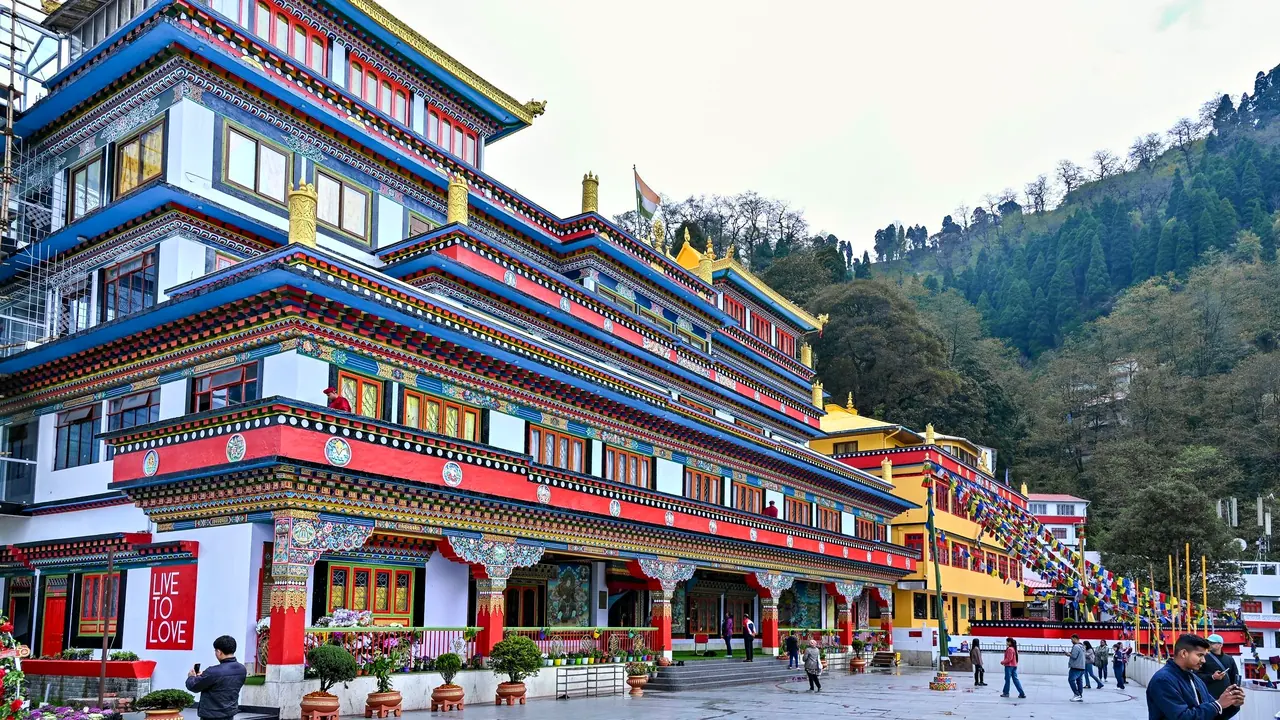
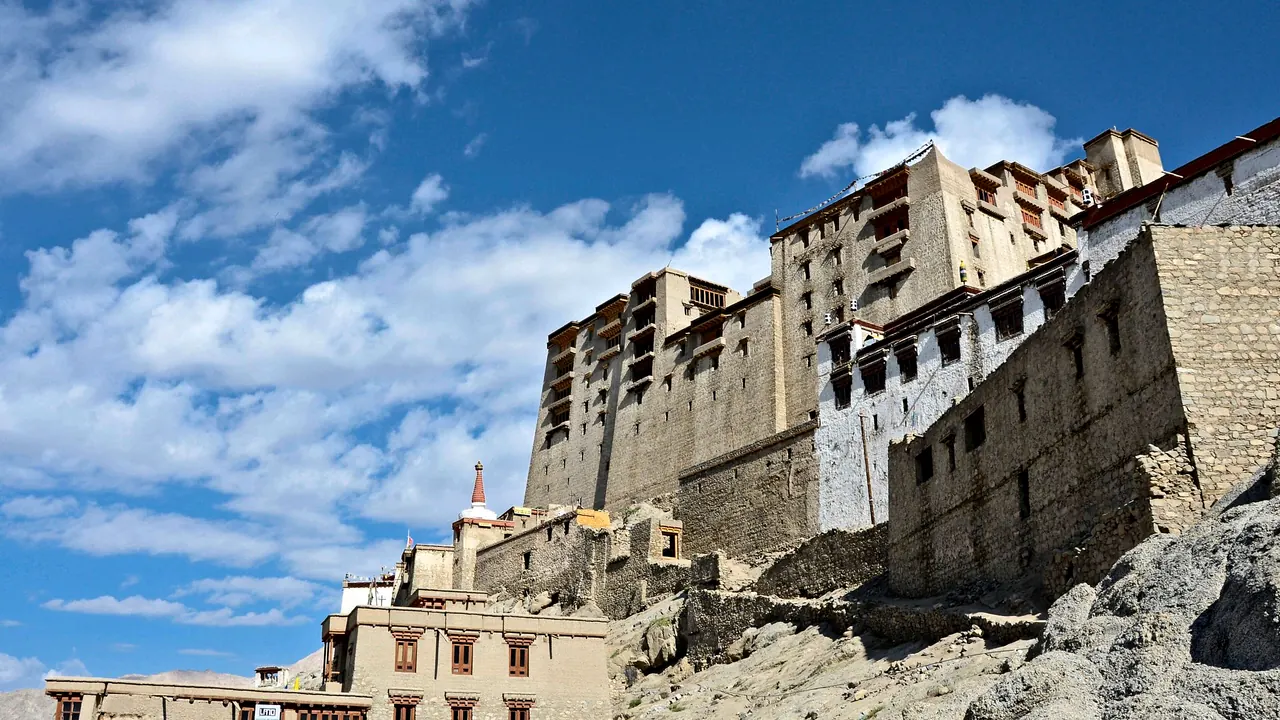
Photos: Darjeeling by Krishnendu Biswas, Pexels License; Leh by Rayan Naqash, CC BY-SA 3.0, cropped.
Darjeeling or Leh?
Our verdict in twelve categories, each scored against the same fixed benchmark cities, and the climate month by month, so you can choose for your trip.
Choose Darjeeling for
- families
- getting around
- food and drink
Darjeeling suits a gentler trip in the hills. Tea tasting, the toy train, easy walks between estates and a cool hill town make it good for families and for anyone who wants to rest. It is also simpler to get around once you arrive, and its food and shopping, both built around tea, give you more to do in town.
Choose Leh for
- day trips
- nature and the outdoors
- live music and the arts
Leh is for travellers who want the Himalaya on a bigger and harsher scale. It has high passes, serious treks and rafting, and the Indus valley is lined with monasteries such as Thiksey, Hemis and Alchi, which make far better day trips than anything around Darjeeling. It suits fit adults with time to acclimatise, and it is a poor fit for young children.
Scoreboard
Twelve categories on one fixed scale from 0 to 100. The shaded stretch is the gap between the two.
Your match
Pick a travel style or drag the sliders, and both match scores follow your weighting.
Wins on families and getting around with your weighting.
Wins on day trips and nature and the outdoors with your weighting.
What matters to you?
Category by category
What the scores mean for a trip.
Beaches & swimming
Neither town offers swimming. Darjeeling's valley rivers are fast and cold, while Leh's Indus and high lakes are fed by snowmelt and used for rafting rather than bathing. If you want a beach, plan it as a separate part of the trip from either one.
Food & drink
Darjeeling has the better table, and tea is the reason. You can taste first and second flush muscatel leaves in tea rooms around the Mall or out on an estate, which Leh has nothing to match, and the colonial-era bakeries add long breakfasts with a view.
Both towns serve the Tibetan staples of momos, thukpa and thenthuk. Leh adds Ladakhi skyu, salty butter tea and its prized apricots, but much of its eating happens in trekker cafés around the Main Bazaar and Changspa that serve pizza and coffee, and many of those close outside summer.
Culture & sights
The two are close in heritage but different in character. Darjeeling's comes from the Raj and the railway: the UNESCO-listed toy train, St Andrew's Church, the colonial schools and the Himalayan Mountaineering Institute with its Everest history, with the old monastery at Ghoom as the Buddhist side.
Leh's heritage is royal and monastic. The nine-storey palace, modelled on the Potala, rises above a mud-brick old town, and Shanti Stupa looks out over the valley at sunset. You can see either town itself in two or three days.
Nightlife
Both go to bed early, so neither is a place for evenings out. The difference is in the setting. In Darjeeling you can have a drink by the fire in an old pub or hotel bar. In Leh, a beer on a rooftop after dinner is about as far as it goes, and the cold and the altitude send most people to bed even sooner.
Nature & outdoors
Both are excellent mountain bases, but Leh goes further. From the Indus valley you can trek through Hemis National Park, cross Khardung La above 5,000m, raft the Indus and Zanskar, and stay overnight among the Nubra dunes or beside Pangong Tso. In winter there is snow leopard tracking and the frozen-river Chadar trek.
Darjeeling's strength is the view: Kangchenjunga from the town and Everest from Tiger Hill, with easy walks through tea terraces and rhododendron forest. Its great trek, the Singalila Ridge to Sandakphu, is superb, but in the monsoon cloud can hide the mountains for weeks.
Day trips
Leh is well ahead here, thanks to the monasteries along the Indus. Thiksey and Shey are under half an hour away, Hemis is about an hour, and the thousand-year-old painted temples at Alchi make a full day to the west. Almost everything is a gompa or a palace, but the quality is exceptional.
Darjeeling's outings are to other hill towns: Kurseong, Mirik with its lake, and Kalimpong across the Teesta. They are pleasant but much like Darjeeling itself, so they add less to a stay.
Good for families
Darjeeling is much the easier choice with children. The toy train, the zoo with its red pandas and snow leopards, the ropeway and pony rides give them plenty to do. The steep steps and the twisting drive up from the plains make it better for older children than for buggies.
Leh is much harder. You arrive at 3,500m in a single flight, so altitude sickness is a real risk, and the outings are long mountain drives with little made for children. Robust teenagers who want to raft or trek are the exception.
Getting around
Neither is easy, but Darjeeling takes less effort once you are there. The car-free ridge around Chowrasta and the Mall is pleasant to stroll, and shared jeeps and taxis cover the rest, though slowly on the crowded Hill Cart Road. The catch is the drive of three hours or more up from Siliguri or Bagdogra.
Leh's small centre is walkable, but the thin air makes every slope hard work. Beyond town you depend on union taxis, hired motorbikes or shared jeeps and long drives on mountain roads, and some passes close in winter.
Shopping & style
Darjeeling has the better things to take home. Shops along the Mall and Nehru Road let you taste and compare loose-leaf tea by estate and flush, and the Tibetan Refugee Self Help Centre sells carpets and thangkas made on site.
Leh's Main Bazaar has similar Tibetan and Kashmiri goods, such as pashmina, turquoise jewellery and singing bowls, plus dried apricots from street sellers and useful trekking gear. Stock repeats from shop to shop and quality varies, though, so you need to look carefully.
Affordability
Both are cheap places to stay, with low-cost guesthouses and plates of momos for very little. Darjeeling is a little easier on the budget because shared jeeps get you around cheaply. In Leh the transport adds up, with fixed taxi-union fares, a hired car for most outings and permits for the outer valleys.
Live music & performing arts
Neither has a theatre, a concert hall or regular live music. In both, the performance worth seeing is the masked cham dance at monastery festivals. Leh's Hemis festival falls in summer, its main visitor season, so it is the easier one to plan a trip around. Darjeeling adds occasional evenings of Nepali and Lepcha music and a local tradition of rock and folk bands.
Wellness & relaxation
Darjeeling is the more restful of the two. A stay in a tea-estate bungalow above the town, with mountain mornings, long walks and pots of tea in cool air, does a lot of good, as long as you stay away from the noise of the Mall.
Leh's quiet is more contemplative, with meditation courses and consultations with amchi practitioners of Tibetan medicine. For the first days, though, the thin air, dry skin and broken sleep work against real rest. Neither town has much in the way of spas.
When should you go?
Pick your month. The climate figures are measured averages, not a forecast.
Darjeeling in July
Leh in July
Daytime high, °C
Rainfall in the month, mm
Where the figures come from
Darjeeling has no weather station within reach, so its figures come from a gridded climate model rather than a measured record, and read a broad area rather than the city itself.
Leh has no weather station within reach, so its figures come from a gridded climate model rather than a measured record, and read a broad area rather than the city itself.
Temperature and rainfall are climate normals, averaged over the years shown. Darjeeling: 1991-2020 normals, TerraClimate 4 km grid at the town, no weather station within 90 km. Leh: 1991-2020 normals, TerraClimate 4 km grid at the town, no weather station within 90 km.
The two run on opposite calendars. Darjeeling is at its best in October and November and again from March to May, when the days are mild and the air is dry enough for mountain views, though the rain starts to build in May. From June to September the monsoon is extremely wet, with about 778mm falling in July, and cloud can hide the peaks for weeks. Winter is cool, about 15°C by day in January, but dry, and fine for walking the town in warm layers.
Leh hardly gets any rain all year, so the question there is cold. From June to September, daytime highs of 22°C to 25°C make it the season for treks, passes and monastery drives. October is still pleasant for sightseeing, while November and March are cold. From December to February the days are near or below freezing, with January highs of about -3°C, so winter suits only specialists. Leh's best months are exactly Darjeeling's wettest.
Which traveller are you?
On a family trip with children, Darjeeling is the clear choice. The toy train, the red pandas at the zoo and pony rides on Chowrasta keep children busy. In Leh, the altitude and the long drives on mountain roads make things hard for young ones.
For an outdoors trip, Leh has the bigger playground. Treks through Hemis National Park, mountain biking down from Khardung La and rafting in the Indus and Zanskar gorges go well beyond Darjeeling's tea-estate walks, though the Singalila Ridge is a fine rival.
On a relaxing and wellness trip, Darjeeling suits you better. Cool air, tea-estate bungalows and slow mornings with Kangchenjunga in view make it easy to rest. In Leh, the thin air and broken sleep of the first days make unwinding much harder.
Before you go
| Measure | Darjeeling | Leh |
|---|---|---|
| Official language | Hindi, English | Hindi, English |
| Currency | Indian Rupee (INR) | Indian Rupee (INR) |
| Sockets | CM230 V, 50 Hz | CM230 V, 50 Hz |
| Driving side | Left | Left |
| Time zone | UTC+5:30 | UTC+5:30 |
| Emergency number | 108 or 112 | 108 or 112 |
| Elevation | 2,115 m | 3,500 m |
| Main airport | Bagdogra Airport (IXB)40 km from centre13 non-stop destinations | Leh Kushok Bakula Rimpochee Airport (IXL)5 km from centre5 non-stop destinations |
By the numbers
| Measure | Darjeeling | Leh |
|---|---|---|
| City population | 118,805 | 30,870 |
| People per km² | 11,208 | - |
| Museums within 10 km | 7 | 2 |
| UNESCO World Heritage sites within 50 km | 1 | 0 |
Where else could you go?
Every comparison below shares a destination with this one, so you can follow Darjeeling or Leh somewhere new.
- Kathmanduvs Darjeeling
- Amritsarvs Leh
- Pokharavs Darjeeling
- Rishikeshvs Leh
- Varanasivs Darjeeling
- Delhivs Leh