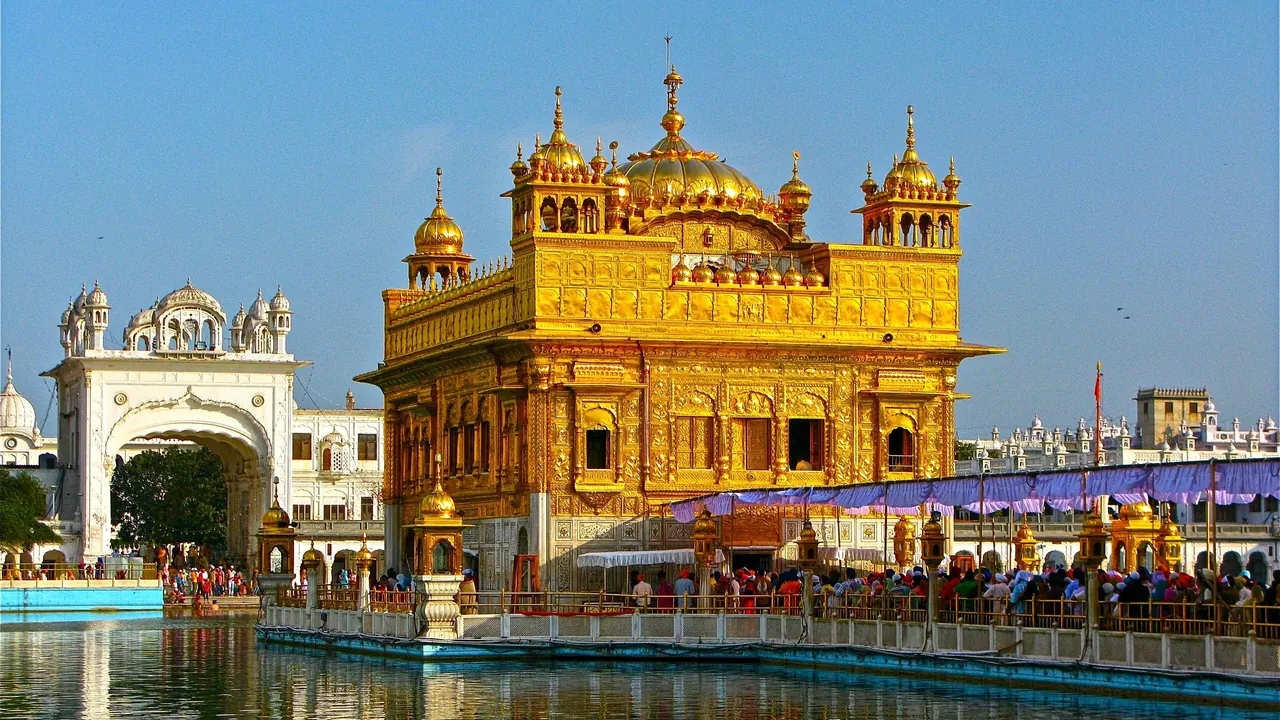
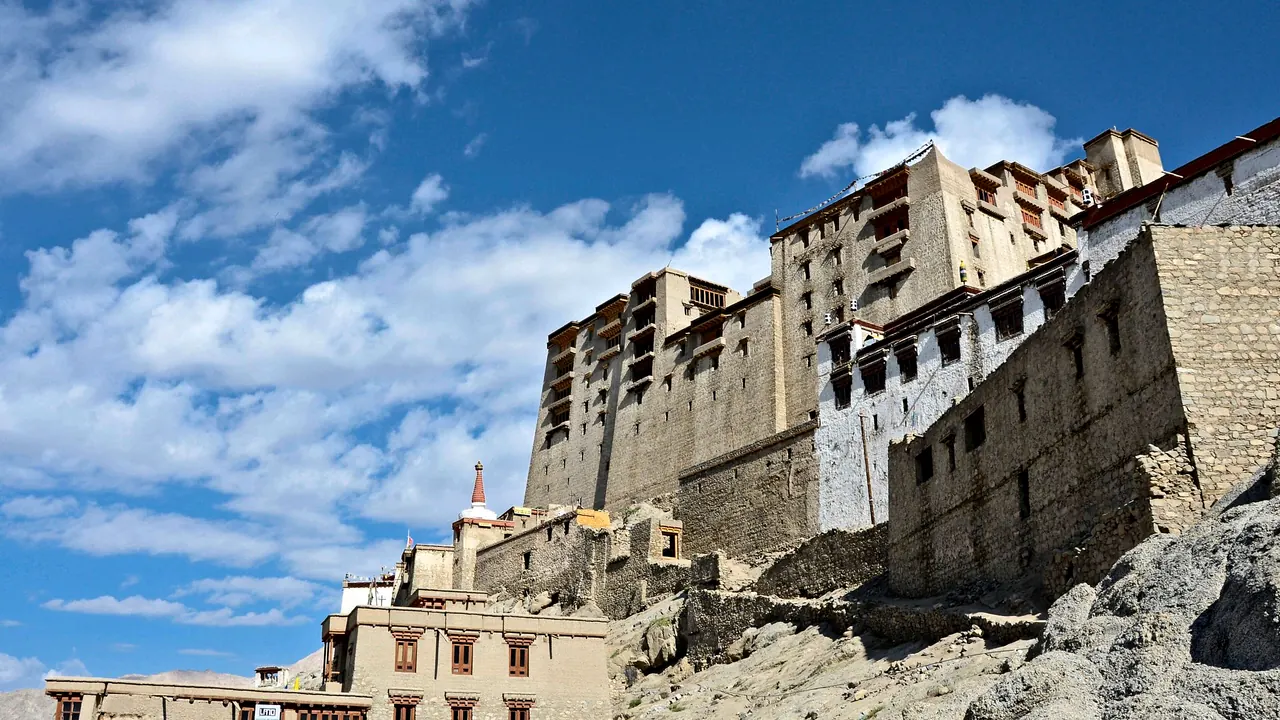
Photos: Amritsar by Ken Wieland, CC BY-SA 2.0, cropped; Leh by Rayan Naqash, CC BY-SA 3.0, cropped.
Amritsar or Leh?
Our verdict in twelve categories, each scored against the same fixed benchmark cities, and the climate month by month, so you can choose for your trip.
Choose Amritsar for
- food and drink
- culture and sights
- families
Amritsar is the pick for a short, intense trip built around one extraordinary place. The Golden Temple, the free langar, Jallianwala Bagh and the Partition Museum all sit within a short walk of each other. Around them are the old city's dhabas, where kulcha and lassi make breakfast an event, and bazaars full of phulkari and juttis. It is cheap, easy to reach on the plains and needs no acclimatising, so it suits travellers who want history, faith and food packed into a few days.
Choose Leh for
- nature and the outdoors
- day trips
- wellness
Leh rewards a slower trip and a sturdier traveller. People come for the mountains: treks into Hemis, the road over Khardung La, rafting on the Zanskar, and painted monasteries such as Thiksey and Alchi strung along the Indus valley. The food is plain and evenings end early, and the altitude asks for a few quiet days before anything strenuous. For walkers, photographers and anyone drawn to Tibetan Buddhist art in a high desert setting, it offers something Amritsar cannot.
Scoreboard
Twelve categories on one fixed scale from 0 to 100. The shaded stretch is the gap between the two.
Your match
Pick a travel style or drag the sliders, and both match scores follow your weighting.
Too close to call, 2 points apart
Wins on food and drink and culture and sights with your weighting.
Wins on nature and the outdoors and day trips with your weighting.
What matters to you?
Category by category
What the scores mean for a trip.
Beaches & swimming
Neither city has a beach, so this is not the trip for either. Amritsar's only water is the sacred pool at the Golden Temple, where pilgrims bathe as an act of devotion and visitors do not swim, so a hotel pool is the only option. In Leh, the snowmelt in the Indus and the high lakes is far too cold to swim in, though the river is good for rafting.
Food & drink
Amritsar is a food destination in its own right. Breakfast and lunch are the best meals of the day: buttery stuffed kulcha with chole, batter-fried fish and lassi in steel tumblers, often from dhabas around the walled city that make a single dish every morning. Eating at the Golden Temple langar, seated on the floor beside pilgrims, is one of the most memorable meals in India.
Leh eats to keep warm rather than to impress. Expect momos, thenthuk and skyu, with butter tea and apricots as the local touches, plus rooftop cafés in Changspa serving pizza and coffee to trekkers. It is satisfying after a long day out, but few people would plan a trip around it.
Culture & sights
Amritsar has the stronger single sight. Harmandir Sahib, with its gilded sanctum in the middle of the pool, looks different at every hour, and Jallianwala Bagh and the Partition Museum add two of the most moving chapters in modern Indian history, all within a short walk.
Leh's town heritage is smaller and quieter: the hulking Leh Palace, the Namgyal Tsemo ridge, mud-brick lanes in the old town and sunset at Shanti Stupa. You can see it in a day or two. Its real cultural wealth is the monasteries out along the valley, covered under day trips.
Nightlife
Neither city has nightlife to speak of, but Amritsar has a little more to offer after dark. It has a few hotel bars and lounges in the newer districts, and walking round the floodlit temple pool late at night is a real experience. Leh is quieter still: a beer on a rooftop if you can find one, then an early night because of the cold, the thin air and the dawn starts.
Nature & outdoors
This is Leh's strongest suit. The town sits in the Indus valley below the snowy Stok range, with the Markha valley trek, Khardung La above 5,000m, gorge rafting, the dunes of Nubra and the long blue lake of Pangong Tso all within reach. In winter there are snow leopard tracking and the frozen-river Chadar trek.
Amritsar sits among flat wheat and mustard fields. Ram Bagh and Company Bagh give some shade for a stroll, and the Harike wetland, about an hour and a half away, is worth the drive in winter when the migratory waterbirds arrive. Otherwise, nature is not why people go there.
Day trips
Leh has the better trips out of town, though nearly all of them are religious. Thiksey and Shey are a short drive away, Hemis is about an hour, and a long day to the west takes in Likir, the ruined citadel at Basgo and the thousand-year-old murals of Alchi. That makes for several days of exceptional Buddhist art.
Amritsar's standout trip is the evening flag ceremony at Wagah, about 30km away, which is loud and theatrical. After that come the Sikh pilgrimage towns of Tarn Taran and Goindwal Sahib and the French-style palace at Kapurthala, which are worthwhile but a step down.
Good for families
Neither city is built for children, but Amritsar is far easier. Families are warmly welcomed at the temple, and older children usually love the langar and the Wagah ceremony. The drawbacks are the summer heat, winter fog, crowded traffic and care over food and water.
Leh adds a problem Amritsar does not have: altitude sickness after a single flight to 3,500m, which young children handle poorly. Most outings are long mountain drives, so the only children who will really enjoy it are tough teenagers who want to trek or raft.
Getting around
Amritsar is easier to get around, at least where it matters. The temple, Jallianwala Bagh and the Partition Museum line a pedestrianised heritage street, and e-rickshaws and ride-hailing cars cover the rest of the city, noisy as the traffic is.
Leh's small centre is walkable too, but the slopes are tiring at altitude. Almost everything worth seeing is reached by long drives in union taxis or shared jeeps, or on a hired motorbike, and in winter some of the passes close.
Shopping & style
Amritsar has more to buy and a stronger local character. Hall Bazaar and Katra Jaimal Singh are packed with phulkari embroidery, stacks of juttis, shawls and suit fabric, and the lanes near the temple sell steel bangles, kirpans and papad and warian to take home.
Leh's Main Bazaar is smaller and focuses on Tibetan and Kashmiri goods: pashmina, thangkas, turquoise jewellery and singing bowls, along with dried apricots sold by Ladakhi women. It is the better place for trekking gear, but stalls often stock the same things and quality varies.
Affordability
Both are inexpensive, and Amritsar is cheaper. Its main sight and the langar meals are free, pilgrim rest houses take visitors, and getting around by rickshaw costs very little.
Rooms and simple meals in Leh are also cheap, but transport is where the money goes. Taxi union fares are fixed and high by Indian standards, you will need a car for most days out, permits are required for the outer valleys, and hotel rates go up in the short summer season.
Live music & performing arts
Amritsar's music never stops. Gurbani kirtan is sung to harmonium and tabla at the Golden Temple from before dawn until late at night, and anyone can sit by the pool and listen, with the occasional bhangra show as an extra.
Leh's performances depend on the calendar. The masked cham dances at the Hemis festival or around Losar are unforgettable if your dates match, but on most days there is little to see.
Wellness & relaxation
Leh is the better place to unwind, though in its own way. It offers meditation courses at Buddhist centres, consultations with amchi doctors and slow mornings on a guesthouse roof, all suited to a contemplative traveller, with the caveat that the thin air disturbs sleep for the first few days.
Amritsar is loud and tiring outside the temple walls. Its calm is concentrated in one place: the cool marble around the pool at dawn, with the hymns playing.
When should you go?
Pick your month. The climate figures are measured averages, not a forecast.
Amritsar in July
Leh in July
Daytime high, °C
Rainfall in the month, mm
Where the figures come from
Leh has no weather station within reach, so its figures come from a gridded climate model rather than a measured record, and read a broad area rather than the city itself.
Temperature and rainfall are climate normals, averaged over the years shown. Amritsar: 1991-2020 normals, Amritsar (1.2 km from centre). Leh: 1991-2020 normals, TerraClimate 4 km grid at the town, no weather station within 90 km.
The two cities have opposite seasons. Amritsar is at its best from October to March, with dry, sunny days and mild afternoons, though December and January mornings can be cold and foggy. From April it heats up fast, reaching around 40°C in May and June. July and August bring the monsoon, with close to 190mm a month, so lanes get muddy and the air is heavy.
Leh is a summer destination. From June to September daytime highs are a comfortable 21°C to 25°C, which is ideal for monasteries, treks and high passes, and the valley stays almost rainless all year. Winter is harsh, with January highs around -3°C and some passes closed, and that suits only the snow leopard trackers and Chadar trekkers. One option is to pair them: Leh in high summer, Amritsar in the cooler months.
Which traveller are you?
On an outdoors trip, Leh is the clear choice. Treks through Hemis National Park, rafting in the Indus and Zanskar gorges, cycling down from Khardung La and overnight trips to Pangong Tso give you weeks of mountain country, while Amritsar's flat farmland offers little beyond a winter visit to the birds at Harike.
For a food and nightlife trip, choose Amritsar, though go for the food. Tandoor-baked kulcha, river fish, thick lassi and the temple langar beat Leh's simple momos and thukpa. Neither city has much going on after dark, but a late walk round the lit-up temple pool makes up for it.
On a family trip with children, Amritsar is the safer bet, especially with older children who will enjoy the langar kitchens and the shouting crowds at Wagah. Leh's altitude, which you reach in a single flight, is a real risk for young children, and most outings mean long mountain drives.
Before you go
| Measure | Amritsar | Leh |
|---|---|---|
| Official language | Hindi, English | Hindi, English |
| Currency | Indian Rupee (INR) | Indian Rupee (INR) |
| Sockets | CM230 V, 50 Hz | CM230 V, 50 Hz |
| Driving side | Left | Left |
| Time zone | UTC+5:30 | UTC+5:30 |
| Emergency number | 108 or 112 | 108 or 112 |
| Elevation | 234 m | 3,500 m |
| Main airport | Sri Guru Ram Das Ji International Airport (ATQ)12 km from centre17 non-stop destinations | Leh Kushok Bakula Rimpochee Airport (IXL)5 km from centre5 non-stop destinations |
By the numbers
| Measure | Amritsar | Leh |
|---|---|---|
| City population | 1,159,227 | 30,870 |
| People per km² | 6,819 | - |
| Museums within 10 km | 3 | 2 |
| UNESCO World Heritage sites within 50 km | 1 | 0 |
Where else could you go?
Every comparison below shares a destination with this one, so you can follow Amritsar or Leh somewhere new.