Photos: Amritsar by Ken Wieland, CC BY-SA 2.0, cropped; Delhi by shalender kumar, Pexels License.
Amritsar or Delhi?
Our verdict in twelve categories, each scored against the same fixed benchmark cities, and the climate month by month, so you can choose for your trip.
Choose Amritsar for
- prices
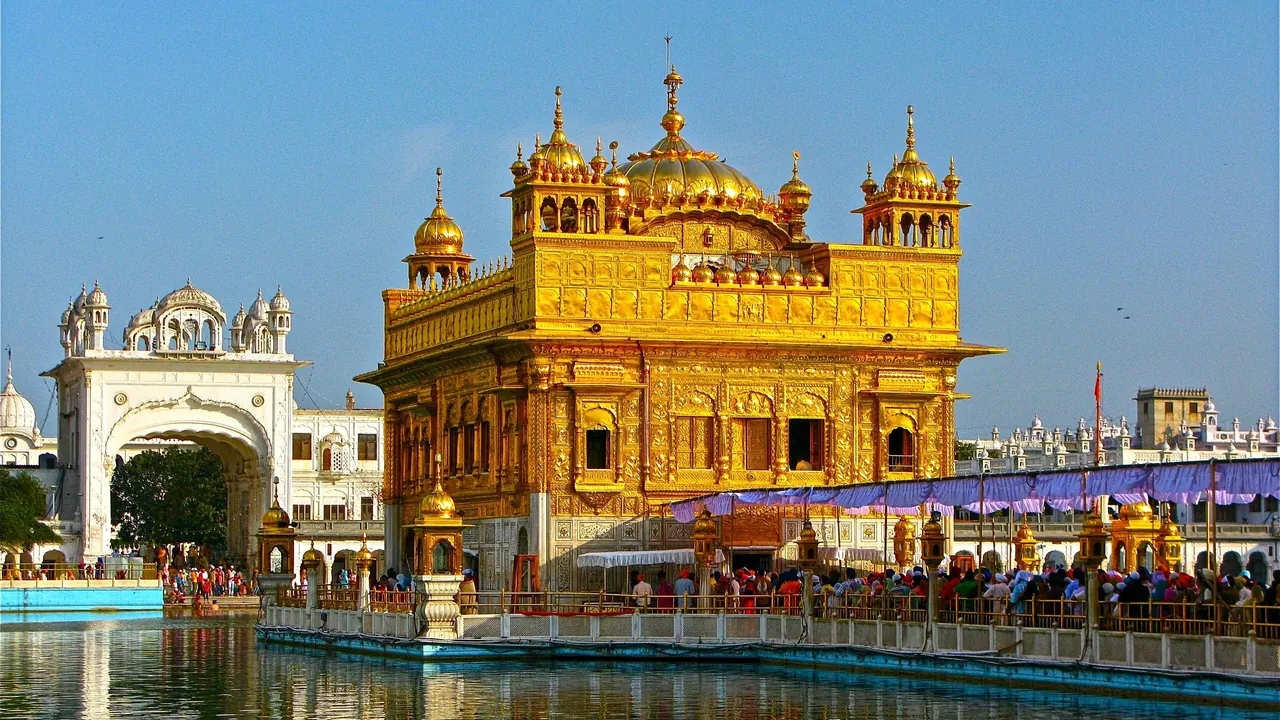
Amritsar suits a traveller who wants one extraordinary place and is happy to build a short trip around it. The Golden Temple, the langar and the evening walk around the lit pool are the whole point, with Jallianwala Bagh, the Partition Museum and the Wagah ceremony filling the rest. It is calm only inside the temple, has almost nothing to do after dark and little to keep you past a few days, but few places in India move visitors as deeply.
Choose Delhi for
- day trips
- nightlife
- shopping
Delhi is the better choice for a longer, broader trip. It has more and greater monuments, a far deeper food scene from Old Delhi stalls to tasting menus, serious markets and crafts shopping, classical music and dance, and Agra within easy reach by train. The price is size, traffic and smog, so it rewards travellers with time and some patience rather than those after a quick, focused visit.
Scoreboard
Twelve categories on one fixed scale from 0 to 100. The shaded stretch is the gap between the two.
Your match
Pick a travel style or drag the sliders, and both match scores follow your weighting.
Wins on prices with your weighting.
Wins on day trips and nightlife with your weighting.
What matters to you?
Category by category
What the scores mean for a trip.
Beaches & swimming
Neither city is anywhere near the sea, so swimming in both means a hotel pool, which is welcome in the hot months. The difference is what water means locally: in Amritsar the only pool people enter is the sacred one at the Golden Temple, where pilgrims bathe in devotion, while Delhi travellers wanting sand usually fly on to Goa or Kerala.
Food & drink
Both are excellent places to eat Punjabi food, but Delhi offers far more range. Amritsar is narrow and deep: tandoor-baked kulcha with chole and butter, batter-fried fish, lassi in steel tumblers, and the shared meal on the floor of the Golden Temple's langar, best enjoyed at breakfast and lunch.
Delhi adds Mughlai cooking in the lanes around Jama Masjid, chaat at street carts across the city, and butter chicken and dal makhani in the city that made them. Above that sits a proper restaurant scene, with kitchens from Kerala to Kashmir and modern Indian tasting menus, so evenings out are as rewarding as lunch.
Culture & sights
Amritsar has one sight of overwhelming power, the Golden Temple, worth visiting at dawn, midday and night, backed by Jallianwala Bagh with its bullet-scarred walls and the Partition Museum's personal stories of 1947. Beyond those, the list is short.
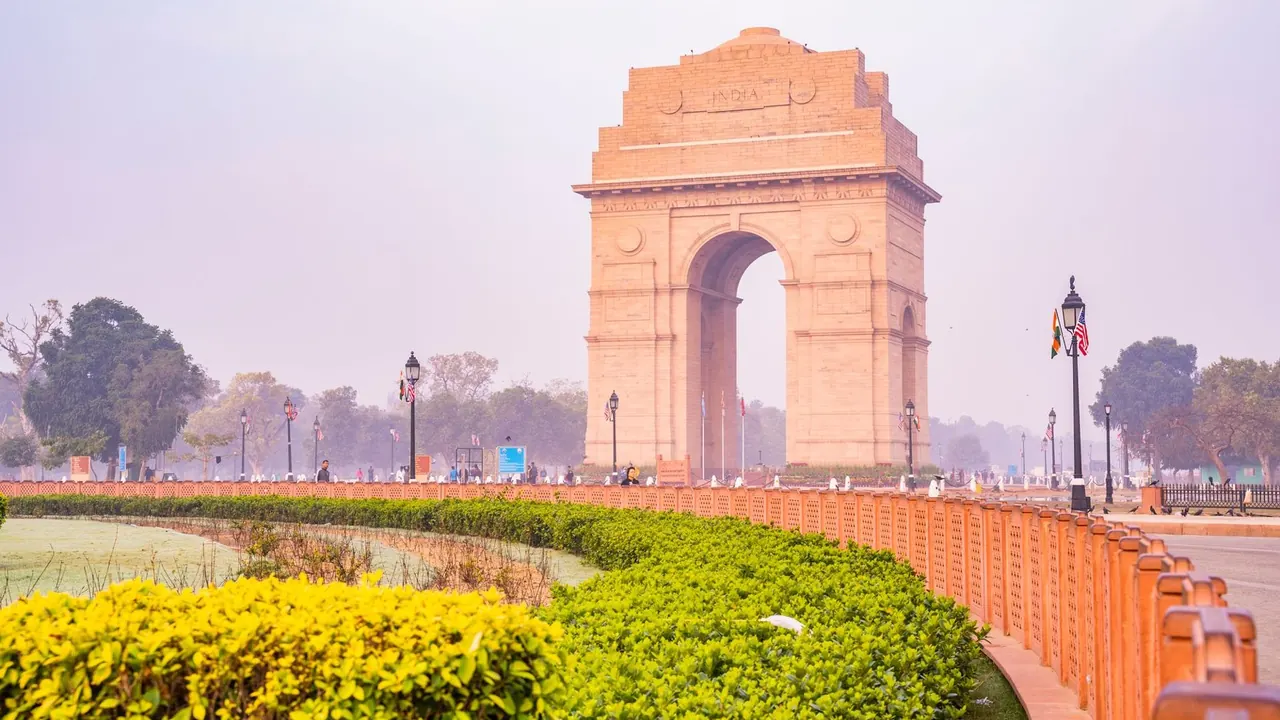
Delhi has layer upon layer of history: three UNESCO sites in the Red Fort, Humayun's Tomb and the Qutb Minar, plus Jama Masjid, the Lodi tombs and the imperial axis from India Gate to Rashtrapati Bhavan. It fills many days, though the sights are far apart and need planning.
Nightlife
Amritsar has almost no nightlife, a few hotel bars and lounges at most, and its best evening is a long dinner followed by a walk around the lit temple pool. Delhi can deliver a proper night out, with rooftop bars in Hauz Khas Village, pubs in Connaught Place and clubs and brewpubs in Gurugram. Even so, the scenes are scattered, finish early and are reached by taxi, so neither city is one to choose for its nights.
Nature & outdoors
Both sit on flat plains with the mountains far to the north, so neither is an outdoors destination. Around Amritsar the countryside is open wheat, rice and mustard farmland, and the one real outing is the Harike wetland, about an hour and a half away, where the Beas and Sutlej meet.
Delhi's green spaces are within the city itself: Lodhi Gardens and Sunder Nursery for morning walks, and the Ridge forest and Sanjay Van with trails among ruins. Both cities draw winter waterbirds, at Harike and at Okhla or Sultanpur, but Delhi's smog often rules out exercise outdoors in late autumn and winter.
Day trips
Delhi has one of the great day trips in the world: the Taj Mahal and Agra Fort, a little under two hours away by express train, with Fatehpur Sikri, Mathura and Vrindavan as further options. Amritsar's standout outing is the evening flag ceremony at the Wagah border, about 30km away, loud and memorable. Beyond that its trips are mainly for those drawn to Sikh history, such as Tarn Taran Sahib, plus the French-style palace at Kapurthala.
Good for families
Amritsar offers children a compact visit centred on the Golden Temple, where they are warmly welcomed, while Delhi has places actually built for them. In Amritsar, older children tend to be gripped by the langar kitchens and the stamping drama at Wagah. Little else is aimed at them, though: the nearest science centre is a long drive away in Kapurthala, and with the crowded old-city lanes and dense winter fog, the city suits a short cultural visit better than a relaxed one.
Delhi counters with the open-air steam locomotives of the National Rail Museum, the zoo beside Purana Qila and the Akshardham water show. The trade-off is winter smog that weighs on small lungs, chaotic traffic and long journeys across a huge city, so the clearer weeks of late winter and early spring suit families best. In both cities, summer heat and food hygiene need care.
Getting around
Delhi is easier to get around thanks to its metro, which is clean, air-conditioned, signed in English, linked to the airport and close to most major monuments. Auto-rickshaws and app taxis cover the gaps, though distances and traffic jams are large.
Amritsar has no metro and buses of little use, so beyond the pedestrianised heritage street around the Golden Temple you rely on rickshaws and ride-hailing through noisy traffic. Its saving grace is that the core sights are close enough to walk between.
Shopping & style
Delhi is the far stronger shopping city, with crafts from all of India at Dilli Haat and the state emporiums, specialist Old Delhi bazaars such as Khari Baoli for spices, Indian designers in Khan Market and Shahpur Jat, and luxury brands in the South Delhi malls. Amritsar is narrower but distinctly Punjabi: phulkari embroidery, stacks of juttis, shawls and suits in Hall Bazaar and Katra Jaimal Singh, and papad and warian to take home.
Affordability
Both are very cheap to visit, and the gap between them is small. Amritsar's edge is that its main experience costs nothing: the Golden Temple and its langar are free, and pilgrim rest houses offer simple beds.
Delhi is just as easy on the wallet for street food, metro rides and mid-range rooms. Foreigners do pay a higher fee at the major monuments, and the city's grand hotels and stylish restaurants make lavish spending much easier than in Amritsar.
Live music & performing arts
Amritsar offers one remarkable performance: the gurbani kirtan sung to harmonium and tabla in the Golden Temple from before dawn until late at night, open to anyone sitting by the pool. Beyond that there are only occasional folk shows and concerts.
Delhi has a genuine stage life. Hindustani recitals and classical dance fill the Mandi House auditoriums through the cooler months, the National School of Drama anchors the theatre, and the free qawwali at the Nizamuddin shrine is a highlight for many visitors.
Wellness & relaxation
Neither is a restful city, but Delhi offers a little more to relax with. Its large hotels run Ayurvedic spas, South Delhi has yoga and Ayurveda centres, and early mornings in Lodhi Gardens or Sunder Nursery are calm. Amritsar has only a few hotel spas, and its peace is concentrated in a single place: the cool marble around the temple pool at dawn or late at night, with hymns in the background.
When should you go?
Pick your month. The climate figures are measured averages, not a forecast.
Amritsar in July
Delhi in July
Daytime high, °C
Rainfall in the month, mm
Temperature and rainfall are climate normals, averaged over the years shown. Amritsar: 1991-2020 normals, Amritsar (1.2 km from centre). Delhi: 1991-2020 normals, New Delhi / Safdarjung (9.4 km from centre).
Neither city has a beach season, so timing is about walking in comfort. Both are at their best from late October to March, when days are dry and mild. Amritsar runs a little cooler in midwinter, around 17°C in January against Delhi's 20°C, with dense morning fog, so Delhi's winter days feel slightly gentler for sightseeing. From April to June both cities bake at up to 40°C, too hot for long days on foot.
The monsoon reaches both in July and August, but Delhi takes the heavier share, with about 236mm in August, and stays wetter into September. Amritsar also keeps more sunshine through the rainy months, so a late-summer visit there is a little less grey, though still hot and humid.
Which traveller are you?
For a food and nightlife trip, Delhi is the clear pick. Old Delhi's parathas, nihari and kebabs, the regional and modern Indian restaurants of South Delhi, and the bars of Hauz Khas and Connaught Place offer far more than Amritsar's breakfast-and-lunch dhabas and quiet evenings.
On a shopping trip, choose Delhi. Dilli Haat and the state emporiums bring together crafts from across India, Old Delhi has specialist bazaars for spices and fabric, and Khan Market adds Indian designers. Amritsar's phulkari and juttis are lovely but make a much smaller haul.
For a short city break, Amritsar works neatly. Its main sights sit within walking distance of each other around the Golden Temple, and two or three days covers them well, with Wagah an easy afternoon out. Delhi's spread-out monuments need far longer to do justice.
Before you go
| Measure | Amritsar | Delhi |
|---|---|---|
| Official language | Hindi, English | Hindi, English |
| Currency | Indian Rupee (INR) | Indian Rupee (INR) |
| Sockets | CM230 V, 50 Hz | CM230 V, 50 Hz |
| Driving side | Left | Left |
| Time zone | UTC+5:30 | UTC+5:30 |
| Emergency number | 108 or 112 | 108 or 112 |
| Elevation | 234 m | 221 m |
| Main airport | Sri Guru Ram Das Ji International Airport (ATQ)12 km from centre17 non-stop destinations | Indira Gandhi International Airport (DEL)17 km from centre144 non-stop destinations |
By the numbers
| Measure | Amritsar | Delhi |
|---|---|---|
| City population | 1,159,227 | 26,495,000 |
| People per km² | 6,819 | 18,962 |
| Museums within 10 km | 3 | 23 |
| UNESCO World Heritage sites within 50 km | 1 | 4 |
Where else could you go?
Every comparison below shares a destination with this one, so you can follow Amritsar or Delhi somewhere new.