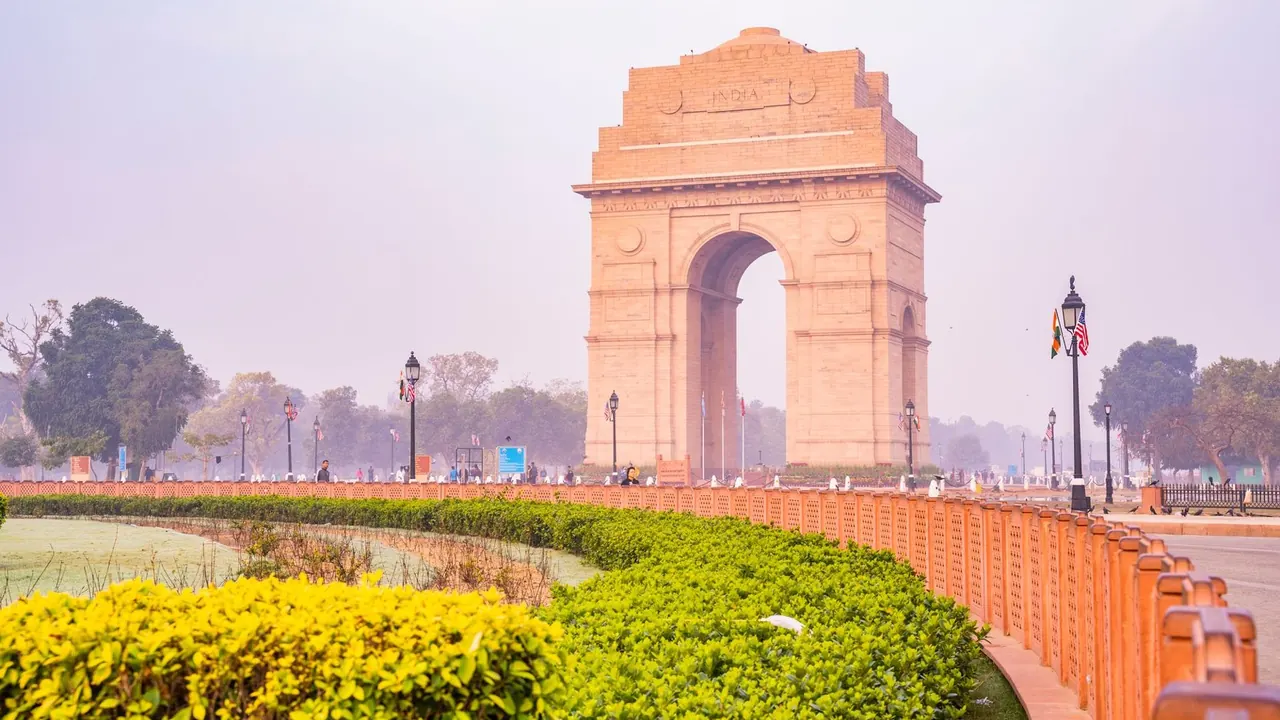
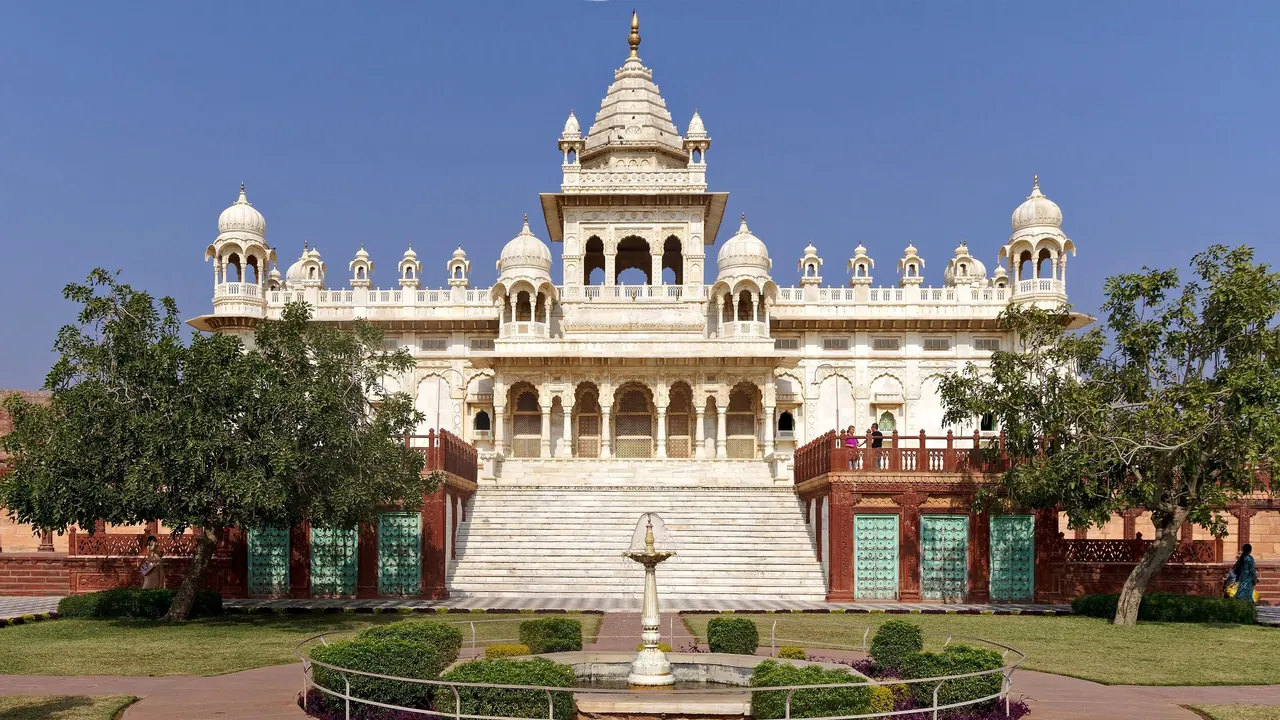
Photos: Delhi by shalender kumar, Pexels License; Jodhpur by Jakub Hałun, CC BY-SA 4.0, cropped.
Delhi or Jodhpur?
Our verdict in twelve categories, each scored against the same fixed benchmark cities, and the climate month by month, so you can choose for your trip.
Choose Delhi for
- nightlife
- day trips
- food and drink
Delhi is the better choice for a traveller who wants range: three UNESCO monuments, Old Delhi's food lanes, bazaars that gather crafts from every corner of India, classical music and dance, and Agra within a train ride. It asks more in return, with long distances, heavy traffic and a lot of noise, so it suits people happy to plan their days and lean on the metro.
Choose Jodhpur for
- nature and the outdoors
- wellness
Jodhpur is the place for a slower, more focused stay built around one great fort and the blue lanes beneath it. The sights sit close together, evenings are quiet rooftop affairs, and the desert scrub and Bishnoi country are right at the edge of town. Pick it if you want atmosphere and a sense of Rajasthan rather than a capital's breadth, and don't mind early nights and a narrower menu.
Scoreboard
Twelve categories on one fixed scale from 0 to 100. The shaded stretch is the gap between the two.
Your match
Pick a travel style or drag the sliders, and both match scores follow your weighting.
Wins on nightlife and day trips with your weighting.
Wins on nature and the outdoors and wellness with your weighting.
What matters to you?
Category by category
What the scores mean for a trip.
Beaches & swimming
Neither city has a beach, and neither has water you would swim in. Delhi's Yamuna and Jodhpur's Kaylana reservoir are for looking at, not swimming in.
What differs is the pool. In Jodhpur it is often a courtyard pool inside a heritage hotel, part of the stay itself. In Delhi it is usually a big-hotel pool you use for relief from the pre-monsoon heat. Beach lovers going from either city usually fly on to Goa or Kerala.
Food & drink
Delhi is the far bigger eating city. Old Delhi's lanes around Chandni Chowk and Jama Masjid serve parathas, nihari, kebabs and kulfi. Butter chicken and dal makhani were born here, and above the street there are regional Indian kitchens from Kerala to Kashmir and modern tasting menus in South Delhi.
Jodhpur is narrower but distinctive: mirchi vada and pyaaz kachori around the Clock Tower, saffron makhaniya lassi, and desert dishes such as ker sangri and laal maas. Beyond that it is mostly rooftop tourist menus and palace dining, largely vegetarian and with little drinking.
Culture & sights
Delhi has more to see, across centuries and across a huge area: the Red Fort, Humayun's Tomb and the Qutb Minar, plus Jama Masjid, the Lodi tombs, the imperial axis of Kartavya Path and the national collections. Seeing them means several days and a fair amount of travel between sites.
Jodhpur offers one great set piece rather than a catalogue. Mehrangarh and its museum of howdahs and miniatures rise over the blue old city, with Jaswant Thada, the Toorji ka Jhalra stepwell and Umaid Bhawan close by. It is smaller in scope but compact enough to enjoy fully in two days.
Nightlife
Delhi at least gives you a choice: rooftop bars at Hauz Khas Village, pubs under Connaught Place's colonnades, and clubs and brewpubs in Gurugram, all best at weekends and reached by taxi. It ends earlier than many capitals, but a proper night out is possible.
Jodhpur offers a rooftop dinner facing the floodlit fort, perhaps a drink in a heritage hotel bar, and an early night. There is no club scene to speak of.
Nature & outdoors
Jodhpur puts real landscape within easy reach. The Desert Rock Park's trails cross volcanic rock beneath Mehrangarh, ziplines run over the ramparts, and jeep drives into Bishnoi country find blackbuck, chinkara and peacocks, with camel rides and dune camps beyond.
Delhi's outdoors is gentler and more hemmed in: morning walks in Lodhi Gardens and Sunder Nursery, the scrubby Ridge, and winter birdwatching at Okhla and Sultanpur. Smog often makes outdoor exercise unwise in winter, just when the weather is otherwise at its kindest.
Day trips
Delhi has the great excursion: Agra, a little under two hours by express train, for the Taj Mahal, Agra Fort and the Baby Taj. Fatehpur Sikri, Mathura and Vrindavan, and Neemrana's hilltop fort add more choice.
Jodhpur's outings are smaller and more local: Osian's carved sandstone temples and dunes, Bishnoi and Salawas craft villages, and lunch at village forts such as Rohet. Ranakpur and Kumbhalgarh are too far for a comfortable day and fit better on the road to Udaipur.
Good for families
Both are hard work with small children, but in different ways. Delhi has more places made for kids, such as the Rail Museum's steam engines, the zoo, the science centre and water parks, but traffic, distances and winter smog take their toll.
Jodhpur is easier to cover and more of an adventure for older children, with the fort's cannons and armour, ziplines, camel rides and blackbuck safaris. It has no zoo or water park, though, and the old lanes are shared with motorbikes and cows. In both cities, visit in winter and book a hotel with space to unwind.
Getting around
Delhi's metro makes a vast city manageable. It is clean, air-conditioned, signed in English, links to the airport and has stations near most monuments, with autos and app taxis filling the gaps.
Jodhpur has no metro and few pavements, so it means autos with fares agreed in advance, a hired car for Mandore and Umaid Bhawan, or a steep climb on foot. What helps is how compact the core is: the Clock Tower, the blue lanes and the stepwell are all walkable from one another in the cooler hours.
Shopping & style
Delhi is the broader market. Dilli Haat and the emporiums on Baba Kharak Singh Marg sell crafts from every state at fixed prices, and Old Delhi has specialist bazaars such as Khari Baoli for spices. Khan Market and Shahpur Jat stock Indian designers, and the South Delhi malls hold the luxury brands.
Jodhpur is narrower but has its own specialities: bandhani and leheriya textiles, mojari slippers and silver around Sardar Market, and warehouses of antique doors and furniture that will ship things home. There are few boutiques here, and touts steering you to particular shops are part of the experience.
Affordability
Both cities are very cheap for street food, autos and simple rooms, and in both the expensive part is the top-end hotel. That luxury looks different in each. In Delhi it means grand international hotels and stylish South Delhi dining, and imported drinks are costly.
In Jodhpur the splurge is a night in a converted palace or haveli, and the bargains include family guesthouses in the blue city and good-value car hire for trips out of town.
Live music & performing arts
Delhi has a real performance calendar. In the cooler months, the halls around Mandi House and Lodhi Road host Hindustani recitals and Kathak and Bharatanatyam dance, the National School of Drama anchors a busy if mostly Hindi theatre scene, and there is free Sufi qawwali at the Nizamuddin shrine.
Jodhpur's music is Rajasthani folk, played by Manganiyar and Langa musicians in the fort courtyards and on hotel terraces, often with Kalbeliya dancers. It is atmospheric, and the autumn folk festival at Mehrangarh is a highlight, but there is little beyond it.
Wellness & relaxation
Neither city is restful, and in both the treatments come from Ayurvedic centres and hotel spas. The difference is in the calm you can find. In Delhi it comes from early mornings in Lodhi Gardens or the hush of a gurudwara, set against constant traffic and winter smog.
In Jodhpur it comes from shaded courtyards, palace gardens and rooftop terraces at dusk, sealed off from the horns of the old city. For a real retreat, travellers usually move on from either city, to Rishikesh or Kerala.
When should you go?
Pick your month. The climate figures are measured averages, not a forecast.
Delhi in July
Jodhpur in July
Daytime high, °C
Rainfall in the month, mm
Temperature and rainfall are climate normals, averaged over the years shown. Delhi: 1991-2020 normals, New Delhi / Safdarjung (9.4 km from centre). Jodhpur: 1991-2020 normals, Jodhpur (1.3 km from centre).
Both cities are at their best from about October to March, and neither has a beach season. Jodhpur is the warmer of the two in winter by several degrees, so its clear mornings are pleasant for walking the old city, while Delhi can feel cool, grey and short on sun in December and January. Delhi's late autumn and winter also bring smog, which makes February and March the clearer, kinder weeks there.
From April to June both are punishing, with highs near 40°C, and walking the streets after mid-morning is hard going. The monsoon sets in from late June and peaks in July and August. Delhi gets much the heavier share, up to 236mm in August, while Jodhpur, on the edge of the desert, sees about half that at 119mm. The heat also lingers longer in Jodhpur: in October Delhi has eased to around 33°C, while Jodhpur is still near 36°C, so October suits Delhi better and Jodhpur comes into its own from November.
Which traveller are you?
On a food and nightlife trip, Delhi wins easily. Old Delhi's parathas, nihari and kebabs, the chaat carts and the serious South Delhi kitchens far outrun Jodhpur's Marwari snacks, and Hauz Khas and Gurugram offer the bars that Jodhpur simply lacks.
For an outdoors trip, Jodhpur is the better base. The Rao Jodha Desert Rock Park sits under the fort, ziplines cross the ramparts, and jeep drives find blackbuck in Bishnoi country, while Delhi's green space mostly means gardens and smog-dimmed winter walks.
On a shopping trip, Delhi is the stronger pick. Dilli Haat and the state emporiums bring crafts from across India, and Khan Market and Shahpur Jat add designers. Jodhpur is excellent for tie-dyed textiles and antique furniture but has little fashion.
Before you go
| Measure | Delhi | Jodhpur |
|---|---|---|
| Official language | Hindi, English | Hindi, English |
| Currency | Indian Rupee (INR) | Indian Rupee (INR) |
| Sockets | CM230 V, 50 Hz | CM230 V, 50 Hz |
| Driving side | Left | Left |
| Time zone | UTC+5:30 | UTC+5:30 |
| Emergency number | 108 or 112 | 108 or 112 |
| Elevation | 221 m | 231 m |
| Main airport | Indira Gandhi International Airport (DEL)17 km from centre144 non-stop destinations | Jodhpur Airport (JDH)5 km from centre7 non-stop destinations |
By the numbers
| Measure | Delhi | Jodhpur |
|---|---|---|
| City population | 26,495,000 | 1,033,918 |
| People per km² | 18,962 | 4,437 |
| Museums within 10 km | 23 | 1 |
| UNESCO World Heritage sites within 50 km | 4 | 0 |
Where else could you go?
Every comparison below shares a destination with this one, so you can follow Delhi or Jodhpur somewhere new.