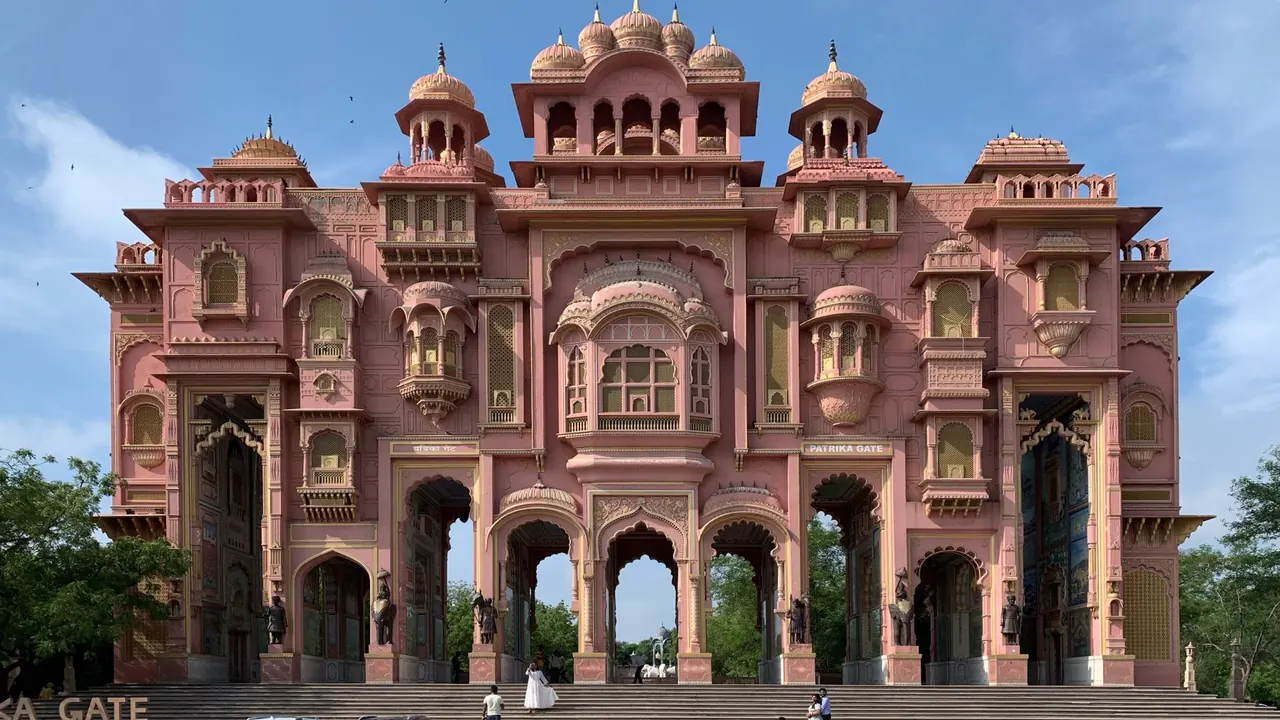
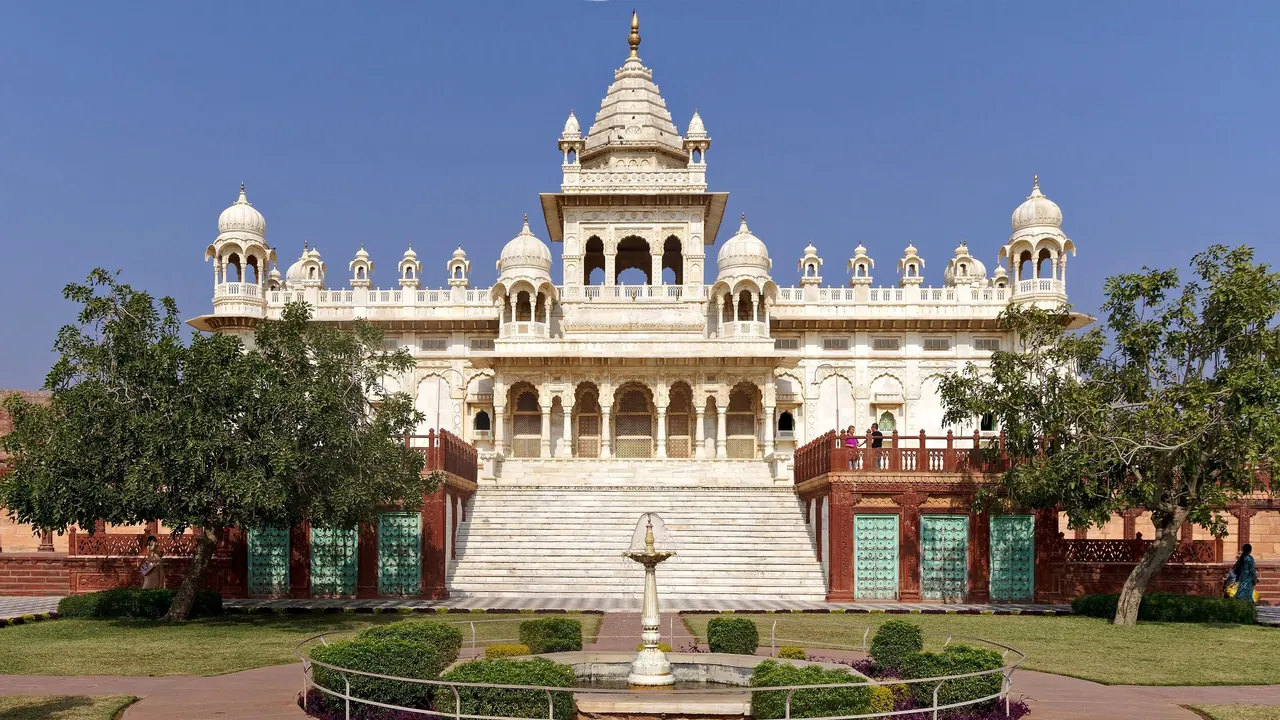
Photos: Jaipur by Chainwit., CC BY-SA 4.0, cropped; Jodhpur by Jakub Hałun, CC BY-SA 4.0, cropped.
Jaipur or Jodhpur?
Our verdict in twelve categories, each scored against the same fixed benchmark cities, and the climate month by month, so you can choose for your trip.
Choose Jaipur for
- shopping
- day trips
- nightlife
Jaipur suits the traveller with time to fill. Its monuments are denser and more varied, from the palace, observatory and Hawa Mahal inside the Pink City to Amber Fort on its ridge. Its bazaars are among the best in India for jewellery, block prints and blue pottery. And it has a wider reach of excursions, from Abhaneri's stepwell to a long day at the Taj Mahal. Evenings are a little livelier too, though only by Rajasthani standards.
Choose Jodhpur for
- families
- wellness
Pick Jodhpur for a shorter, more focused stop built around one great fort. Mehrangarh and its museum shape the whole visit, the blue old city sits right beneath it, and two days on foot cover the essentials. It is quieter and simpler than Jaipur, with fewer outings and thinner shopping. In exchange it is easier to take in, and older children get ziplines, camel rides and blackbuck drives.
Scoreboard
Twelve categories on one fixed scale from 0 to 100. The shaded stretch is the gap between the two.
Your match
Pick a travel style or drag the sliders, and both match scores follow your weighting.
Wins on shopping and day trips with your weighting.
Wins on families and wellness with your weighting.
What matters to you?
Category by category
What the scores mean for a trip.
Beaches & swimming
Neither city has anywhere to swim outdoors. Jaipur has no swimming lake, and Jodhpur's Kaylana is a reservoir you look at rather than swim in. In both, swimming means the hotel pool, so for a visit in the warmer months it is worth booking a heritage hotel that has one. In Jodhpur these are often courtyard pools.
Food & drink
The two kitchens overlap a great deal: ker sangri, gatte ki sabzi, laal maas, mirchi vada and pyaaz kachori turn up in both. Jaipur has more depth. It adds dal baati churma and seasonal sweets such as ghevar and feeni, it has long-established vegetarian canteens around Johari Bazaar and lassi stalls along MI Road, and it serves thali feasts in palace courtyards.
Jodhpur's best eating is at the snack stalls around the Clock Tower, where saffron-scented makhaniya lassi and sweet mawa kachori are the local signatures. Beyond them the choice narrows quickly, and the rooftop restaurants sell the fort view more than their cooking.
Culture & sights
Jaipur has more to see and needs longer to see it. The planned Pink City holds the City Palace, the Hawa Mahal and the Jantar Mantar observatory, and Amber, Jaigarh and Nahargarh line the ridges above. The Albert Hall Museum, the Galta temples and the Gaitore cenotaphs fill a third day.
Jodhpur rests on one great monument. Mehrangarh rises straight out of its rock with one of Rajasthan's finest museums inside, and around it lie the indigo lanes, Jaswant Thada, the Toorji ka Jhalra stepwell and the Art Deco Umaid Bhawan. That makes two rich days rather than three.
Nightlife
Neither is a city for a night out, but Jaipur offers a little more. It has a few rooftop lounges in the old city, plus clubs and lounges in C-Scheme that fill up at weekends and in the wedding season. In Jodhpur the evening ends with dinner facing the lit fort and perhaps a drink in a heritage hotel bar, and the old city falls quiet early.
Nature & outdoors
Jaipur has a slight edge, mainly thanks to Jhalana, a leopard reserve on the city's southern edge where jeep safaris often find big cats. The Aravalli ridges around Nahargarh, balloon flights over the forts and the birds of Sambhar lake add variety.
Jodhpur's outdoors is flatter and more desert-like. Its options are the trails of the Rao Jodha Desert Rock Park under the fort, ziplines over the ramparts, blackbuck and chinkara in Bishnoi farmland, and camel rides towards the Thar.
Day trips
Jaipur has the richer choice of outings. The Chand Baori stepwell at Abhaneri, the painted palace at Samode, the ruins of Bhangarh and the printing villages of Sanganer and Bagru are all easy to reach. Pushkar, Ajmer and even Agra can be fitted in as long days.
From Jodhpur the main excursion is Osian, with its carved sandstone temples and dunes, and Bishnoi and Salawas craft villages make half days. Ranakpur and Kumbhalgarh are usually visited on the road to Udaipur rather than as round trips.
Good for families
Both cities are hard going with young children, and the same things wear families down: traffic, few pavements, cows in the lanes and scorching summers, with almost nothing built for children. Winter and a hotel with a pool help in either. Jodhpur is a little easier because its core is compact and the fort keeps children busy for most of a day. Jaipur means more time in vehicles between its scattered sights.
Getting around
Getting around is equally awkward in both, but in different ways. Jaipur's sights are spread out, with Amber about 11km north, and its single short metro line misses most of them, so a car with driver or ride-hailing is the usual answer.
Jodhpur has no metro at all, but its main sights cluster together, so the old city, stepwell and market can be walked and the fort is a steep climb or a short ride above. Auto-rickshaws cover the rest, with fares agreed first.
Shopping & style
Shopping is a main reason to choose Jaipur. Each bazaar specialises: gems and silver on Johari Bazaar, lac bangles in Maniharon ka Rasta, quilts and textiles in Bapu Bazaar. Block prints, blue pottery, rugs and miniature paintings are made nearby, and C-Scheme boutiques give the crafts a modern cut. Be wary of gem scams.
Jodhpur's strength is narrower: tie-dyed bandhani and leheriya around Sardar Market, embroidered slippers, and big warehouses of antiques and carved furniture that will ship home. There is little fashion or design.
Affordability
Both are very cheap for street food, thalis, rickshaws, guesthouses and a car with driver, and in both the palace and haveli hotels charge international rates. The small differences lie elsewhere. In Jaipur foreigners pay more at the main monuments and alcohol feels expensive, while in Jodhpur even the fort's entry and audio guide are modest.
Live music & performing arts
The two are level, but each has its own tradition. Jaipur has its own school of Kathak dance and puppet shows, and Jawahar Kala Kendra and Ravindra Manch host theatre, classical music and dance. Jodhpur is about the hereditary Manganiyar and Langa folk musicians, who play in Mehrangarh's courtyards, and its autumn folk festival at the fort is worth timing a visit for.
Wellness & relaxation
Neither city is restful outside its hotels, and in both, calm means shaded courtyards, gardens and Ayurvedic massage at heritage properties. Jaipur's hotels often add yoga. Jodhpur also has massage centres in the old town itself, and rooftop terraces at dusk give a quiet hour above the noise.
When should you go?
Pick your month. The climate figures are measured averages, not a forecast.
Jaipur in July
Jodhpur in July
Daytime high, °C
Rainfall in the month, mm
Where the figures come from
Jaipur has no rain gauge within 25 km of the centre, so its rainfall comes from a gridded climate dataset read at the city rather than from a gauge further away.
Temperature and rainfall are climate normals, averaged over the years shown. Jaipur: 1993-2020 (rainfall 1991-2020) normals, Jaipur / Sanganer (11.1 km from centre). Jodhpur: 1991-2020 normals, Jodhpur (1.3 km from centre).
The two cities share the same desert-edge calendar, and both are at their best from November to February. Then the afternoons are warm and dry and the mornings are fresh enough for forts and bazaars. Jaipur is slightly cooler in midwinter, around 23°C in January, with Jodhpur a couple of degrees warmer. From April to June both bake, with highs reaching 42°C in May, and sightseeing shrinks to dawn and dusk.
The monsoon is where they differ. It arrives in July in both, but Jaipur gets far more rain, about 226mm in August against 118mm in Jodhpur, so the western city stays drier through the wet months. October is dry again in both but still too hot for long walks, which makes November the safer start.
Which traveller are you?
On a shopping trip, Jaipur is the clear pick. Each old city bazaar has its own trade, from silver and gems on Johari Bazaar to lac bangles and quilts, and block-printed cotton, blue pottery and rugs are made close by. Jodhpur's markets are narrower.
For a short city break, Jodhpur fits neatly into two days. Mehrangarh, the blue lanes, the carved stepwell and the Clock Tower market all lie within walking distance of one another. Jaipur's sights spread out as far as Amber and are best given three days and a driver.
On a family trip with children, Jodhpur has a slight edge. The fort's cannons and howdahs, ziplines over the ramparts, camel rides and blackbuck drives give older children plenty to do. Jaipur offers fort passages, puppet shows and a leopard safari, but its old city is more tiring.
Before you go
| Measure | Jaipur | Jodhpur |
|---|---|---|
| Official language | Hindi, English | Hindi, English |
| Currency | Indian Rupee (INR) | Indian Rupee (INR) |
| Sockets | CM230 V, 50 Hz | CM230 V, 50 Hz |
| Driving side | Left | Left |
| Time zone | UTC+5:30 | UTC+5:30 |
| Emergency number | 108 or 112 | 108 or 112 |
| Elevation | 431 m | 231 m |
| Main airport | Jaipur International Airport (JAI)10 km from centre27 non-stop destinations | Jodhpur Airport (JDH)5 km from centre7 non-stop destinations |
By the numbers
| Measure | Jaipur | Jodhpur |
|---|---|---|
| City population | 3,073,350 | 1,033,918 |
| People per km² | - | 4,437 |
| Museums within 10 km | 6 | 1 |
| UNESCO World Heritage sites within 50 km | 3 | 0 |
Where else could you go?
Every comparison below shares a destination with this one, so you can follow Jaipur or Jodhpur somewhere new.