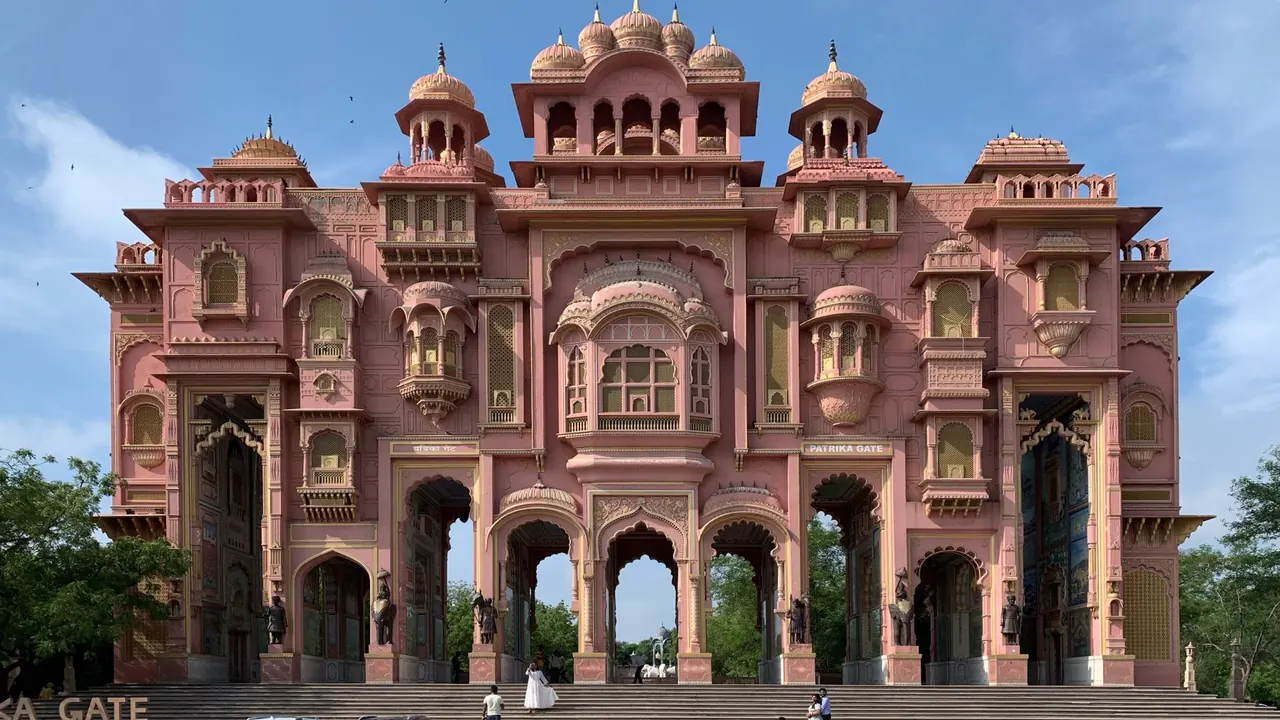
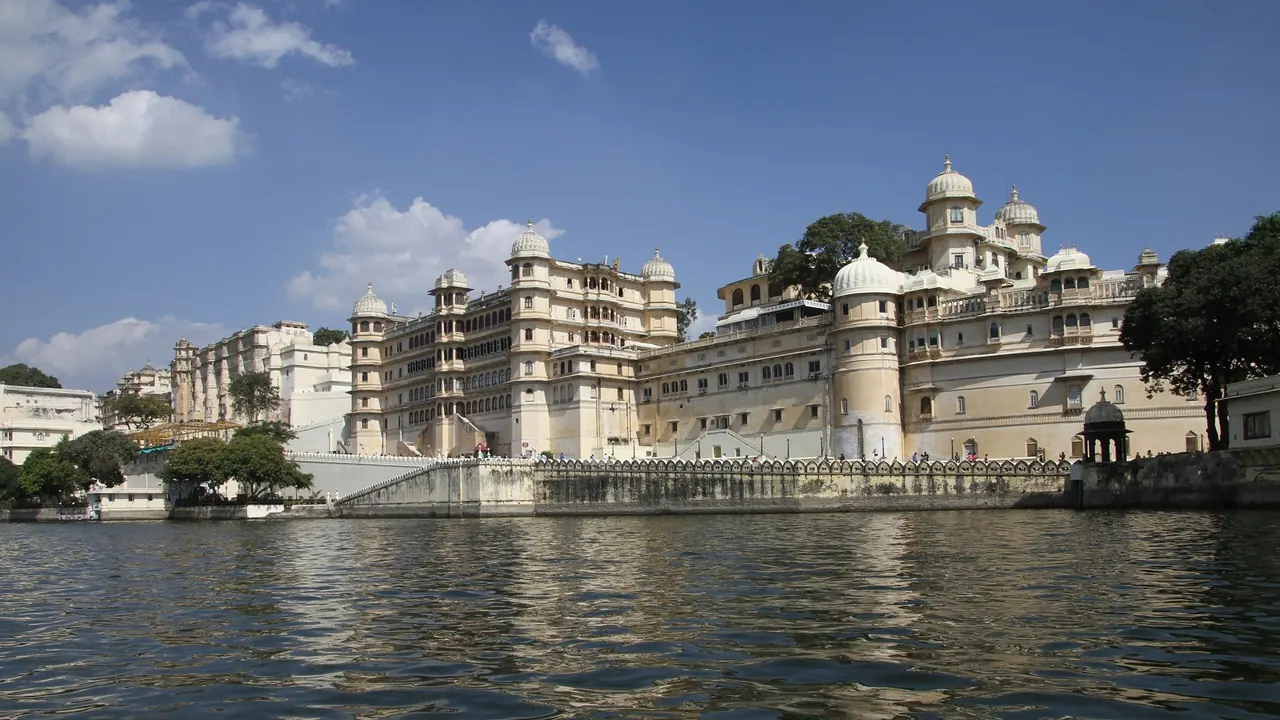
Photos: Jaipur by Chainwit., CC BY-SA 4.0, cropped; Udaipur by Gerd Eichmann, CC BY-SA 4.0, cropped.
Jaipur or Udaipur?
Our verdict in twelve categories, each scored against the same fixed benchmark cities, and the climate month by month, so you can choose for your trip.
Choose Jaipur for
- shopping
- food and drink
- culture and sights
Jaipur suits a first, busy trip into Rajasthan. It has more major sights packed close together, from the Pink City bazaars and Jantar Mantar to the Amber Fort on its ridge. It is also far better for shopping, and its street food and sweet counters are worth planning meals around. In return you get traffic, noise and long days, so choose it if you have energy to spend and want to see and buy as much as you can.
Choose Udaipur for
- wellness
- day trips
- families
Udaipur rewards a slower pace. The lakes, the island palaces and sunsets from a terrace set the mood, Ayurvedic treatments are easy to find, and the old city is quieter and smaller. It also makes a better base for excursions, with Kumbhalgarh, Ranakpur and Chittorgarh all within a long day. Couples, travellers who want rest between sights and families with curious older children will find it easier going, even though the food and shopping are more limited.
Scoreboard
Twelve categories on one fixed scale from 0 to 100. The shaded stretch is the gap between the two.
Your match
Pick a travel style or drag the sliders, and both match scores follow your weighting.
Wins on shopping and food and drink with your weighting.
Wins on wellness and day trips with your weighting.
What matters to you?
Category by category
What the scores mean for a trip.
Beaches & swimming
Neither city has a beach, and in neither can you swim in open water. A hotel pool is the only way to swim in both, and in the hot months it can be the only comfortable place to spend an afternoon.
The difference is the setting. In Udaipur you can go out on the lakes by boat, and many heritage hotels have pools overlooking Lake Pichola. Jaipur has no lake for swimming or boating, so in summer the pool matters more there.
Food & drink
Jaipur is clearly the better city for eating. Its breakfast of pyaaz kachori, mirchi vada and lassi in clay cups is a real street experience. The sweet counters around Johari Bazaar and the stalls on MI Road are reasons to come in themselves, and laal maas and ker sangri give you a proper taste of the desert kitchen.
Udaipur serves much the same Rajasthani and Mewari dishes, but the good local food is in the bazaars, away from the water. The lakeside rooftops that most visitors end up at trade on the view, with menus mixing Indian dishes and pizza. Both cities lean vegetarian and keep alcohol at arm's length, but Jaipur has more depth.
Culture & sights
Jaipur has more to see and more variety. In one walled city you get the planned 18th-century grid of the Pink City, the City Palace, the Hawa Mahal and the stone instruments of Jantar Mantar. Above it stand three forts, Amber, Jaigarh and Nahargarh, and Galta and the Gaitore cenotaphs fill a third day.
Udaipur is smaller but holds together more. The City Palace rises straight from Lake Pichola, the white island palaces float in front of it, and the havelis and ghats around the Jagdish Temple make a romantic scene rather than a long list of monuments. Two or three days are enough, and the lake makes more of an impression than any single museum.
Nightlife
Neither is a city for a night out, but Jaipur has a little more to offer. There are rooftop lounges in the old city and a few clubs in C-Scheme that fill up at weekends and in the wedding season.
In Udaipur the evening is a sunset drink over Lake Pichola and a long dinner. A few lounge bars play music at weekends, but there is nothing like a club and the old city goes quiet early.
Nature & outdoors
Udaipur has the better setting for time outdoors. Its chain of lakes in the Aravalli hills turns green after the monsoon, and boat rides, the Sajjangarh forest and cycling through hill villages are all easy to do. Further out, Kumbhalgarh sanctuary offers jungle walks.
Jaipur's countryside is drier scrubland, but it has one thing Udaipur cannot match: leopard safaris by jeep at Jhalana, on the edge of the city. You can also take balloon flights over the forts or go birdwatching at Sambhar salt lake. In both cities the outdoor season is the cool months.
Day trips
Udaipur is the stronger base for excursions. The temple towns of Eklingji and Nagda are about half an hour away, and Nathdwara about an hour. Kumbhalgarh's fort walls and the marble Jain temple at Ranakpur make one of the best combined days in India, and Chittorgarh is about two hours east.
Jaipur's easy outings are smaller: the Abhaneri stepwell, Samode's painted palace, Bhangarh, and the printing villages of Sanganer and Bagru. Its famous trips, Pushkar, Ajmer and the Taj Mahal at Agra, are long days on the road or by train.
Good for families
Udaipur is a little easier with children. Boat rides, the cable car up to the viewpoints and lakeside hotels with pools fill a day without much effort, and puppet shows round it off.
Jaipur's forts with their ramparts and secret passages, and a leopard safari at Jhalana, will thrill older children. Its traffic, crowds and sellers are more tiring, though. In both cities, go in winter with children old enough to enjoy history.
Getting around
Both cities are hard work to get around, but in different ways. Jaipur is spread out. Its short metro line misses most sights, and Amber is about 11km north, so most visitors hire a car with driver or use rickshaws.
Udaipur's old city is small enough to walk between the palace, Jagdish Temple and Gangaur Ghat, though the lanes are narrow, steep in places and full of motorbikes. Anything on the hills or out of town needs a driver.
Shopping & style
Jaipur is one of India's great shopping cities, and many people come for that alone. Its bazaars specialise in gems and silver, lac bangles, textiles and quilts. Block prints, blue pottery, rugs and miniature paintings are made nearby, and the C-Scheme boutiques give the same crafts a modern look. The catch is gem scams and drivers taking commission.
Udaipur has fewer shops but a real craft of its own. You can watch miniature painters at work near the City Palace and buy bandhani textiles and leather notebooks in Bada Bazaar. The Shilpgram fair each December is worth timing a visit around, but there is little beyond crafts.
Affordability
Day to day, both cities are very cheap. Thalis, street snacks, rickshaws and simple guesthouses cost little in either, and both are expensive only at the top end, in palace and haveli hotels.
What changes is where the money goes. In Udaipur the splurge is a room with a lake view, with plenty of mid-range lakeside stays in between. In Jaipur, foreigners pay higher entry fees at the main monuments and alcohol feels expensive, but a car with driver for the day is cheap.
Live music & performing arts
Jaipur has more range on stage. The city has its own school of Kathak dance, and two venues, Jawahar Kala Kendra, the arts centre designed by Charles Correa, and Ravindra Manch, put on theatre, classical music and dance, mostly in Hindi or without words. Most visitors, though, will see Rajasthani folk music, Kalbeliya dance and string puppets as an evening show at a hotel or at one of the village-style venues on the edge of the city.
Udaipur has fewer stages but one fixed evening event, the folk dance show in the courtyard of Bagore ki Haveli, which includes the pot-balancing dance. Lok Kala Mandal keeps the puppet shows going, and the winter fair at Shilpgram brings in folk musicians and dancers from across western India. Neither city has a season worth planning a trip around.
Wellness & relaxation
In Jaipur, rest is something you plan around your hotel. The old city is loud, crowded and hot from early in the day, and sightseeing here means early starts at the forts and long hours in the bazaars. You recover in the shaded courtyard, garden or pool of a haveli or palace hotel, because the town itself gives you very little calm.
Udaipur is the easier city to slow down in, because calm isn't limited to your room. The lake is restful in its own right, whether you take a slow boat out on Pichola or sit by the water, and the old city goes quiet early in the evening. Only the lanes back from the lakefront are as loud with horns and motorbikes as any other Indian town.
When should you go?
Pick your month. The climate figures are measured averages, not a forecast.
Jaipur in July
Udaipur in July
Daytime high, °C
Rainfall in the month, mm
Where the figures come from
Jaipur has no rain gauge within 25 km of the centre, so its rainfall comes from a gridded climate dataset read at the city rather than from a gauge further away.
Udaipur has no rain gauge within 25 km of the centre, so its rainfall comes from a gridded climate dataset read at the city rather than from a gauge further away.
Temperature and rainfall are climate normals, averaged over the years shown. Jaipur: 1993-2020 (rainfall 1991-2020) normals, Jaipur / Sanganer (11.1 km from centre). Udaipur: 1978-2025 (rainfall 1991-2020) normals, Udaipur Dabok (20.6 km from centre).
The two cities share a season. Both are at their best from November to February, when afternoons are warm and dry and walking the streets is comfortable. March is already hot, and by May the heat is punishing. Jaipur reaches 42°C, while Udaipur peaks at a slightly gentler 39°C, though that still leaves only dawn and dusk for sightseeing in either city. The monsoon follows from late June to September and brings heavy rain to both.
The monsoon is where they differ most. Udaipur gets the wetter rains, with 257mm in July and a wet September too, but the rain fills its lakes and turns the hills green, so October there is dry, a little cooler and very pretty. In Jaipur the rain eases sooner, but October stays hot at 35°C, which makes November the safer month to start.
Which traveller are you?
On a shopping trip, choose Jaipur. Each of its old-city bazaars specialises in something: jewellery on Johari Bazaar, lac bangles, block-printed cottons, blue pottery, rugs. C-Scheme adds design boutiques. Udaipur's miniature painting and textiles make good souvenirs, but the choice is much smaller.
For a food and nightlife trip, Jaipur is the better choice. You get kachori and lassi stalls along MI Road, sweet shops in the walled city and thali feasts in palace courtyards, followed by rooftop lounges or a club in C-Scheme. Udaipur's lakefront restaurants sell the view more than the cooking, and the town goes quiet early.
On a relaxing and wellness trip, choose Udaipur. Ayurvedic massage and yoga classes are all over the old city, the lake hotels run full spas, and sunset over Lake Pichola is the natural way to end the day. In Jaipur, calm is something you have to find inside your hotel.
Before you go
| Measure | Jaipur | Udaipur |
|---|---|---|
| Official language | Hindi, English | Hindi, English |
| Currency | Indian Rupee (INR) | Indian Rupee (INR) |
| Sockets | CM230 V, 50 Hz | CM230 V, 50 Hz |
| Driving side | Left | Left |
| Time zone | UTC+5:30 | UTC+5:30 |
| Emergency number | 108 or 112 | 108 or 112 |
| Elevation | 431 m | 578 m |
| Main airport | Jaipur International Airport (JAI)10 km from centre27 non-stop destinations | Maharana Pratap Airport (UDR)22 km from centre11 non-stop destinations |
By the numbers
| Measure | Jaipur | Udaipur |
|---|---|---|
| City population | 3,073,350 | 451,100 |
| People per km² | - | 12,192 |
| Museums within 10 km | 6 | 3 |
| UNESCO World Heritage sites within 50 km | 3 | 0 |
Where else could you go?
Every comparison below shares a destination with this one, so you can follow Jaipur or Udaipur somewhere new.