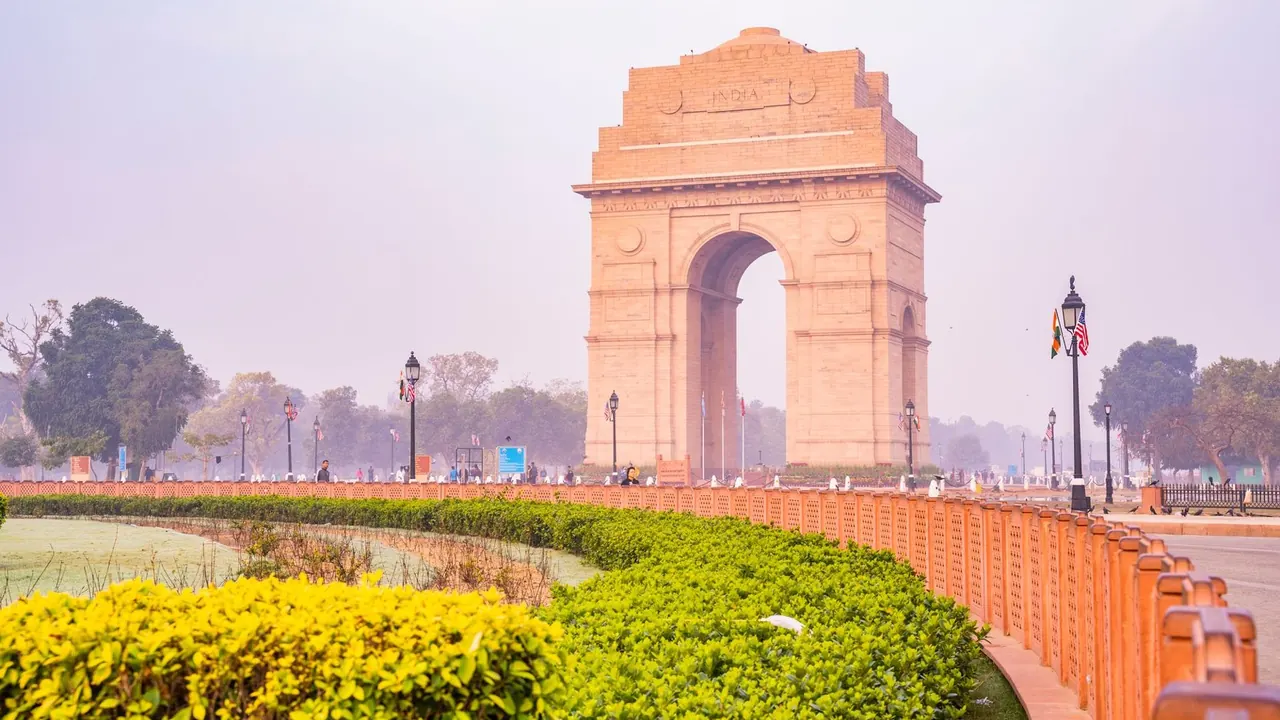
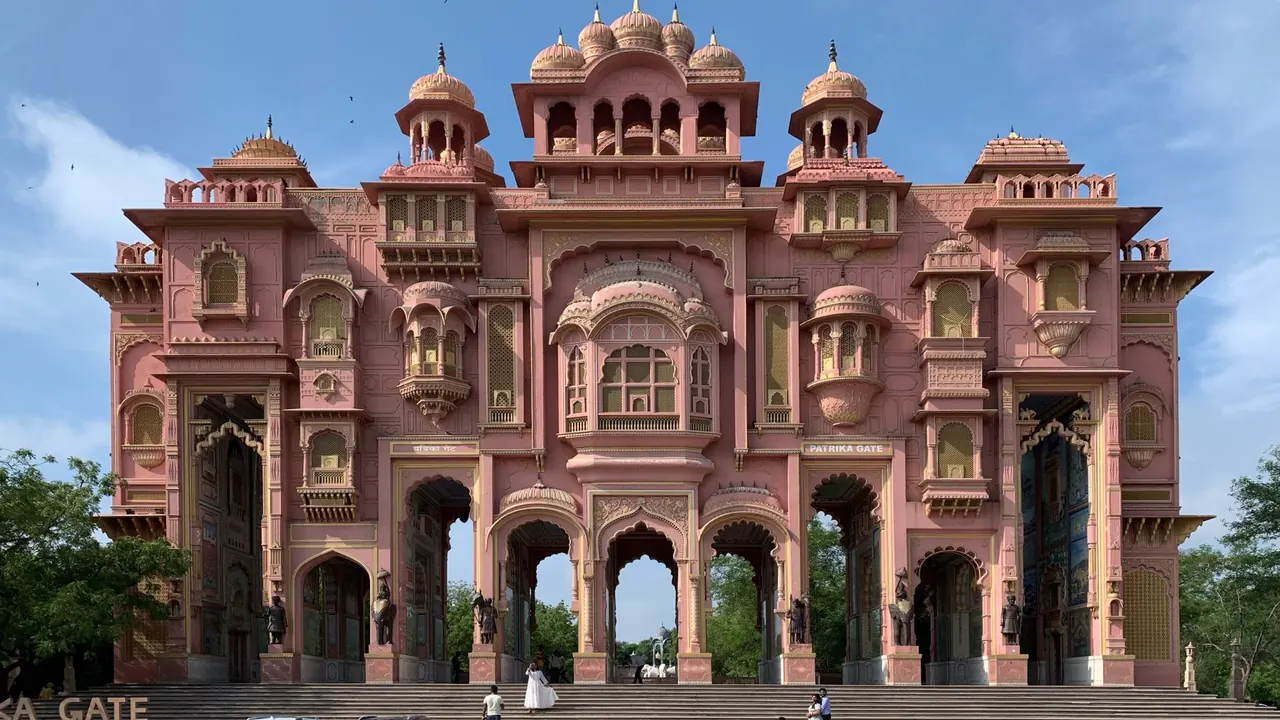
Photos: Delhi by shalender kumar, Pexels License; Jaipur by Chainwit., CC BY-SA 4.0, cropped.
Delhi or Jaipur?
Our verdict in twelve categories, each scored against the same fixed benchmark cities, and the climate month by month, so you can choose for your trip.
Choose Delhi for
- getting around
- live music and the arts
- nightlife
Delhi suits the traveller who wants a capital with range. It has the stronger food of the two, from the paratha and kebab lanes of Old Delhi to tasting menus in South Delhi. It adds a classical music and dance calendar, evenings out in Hauz Khas Village or Connaught Place, and a metro that reaches most monuments. It is also the better base for the Taj Mahal, an easy train ride away. In return you get sprawl, noise and, in winter, smog.
Choose Jaipur for
- nature and the outdoors
- wellness
Jaipur gives a smaller, more concentrated dose of Rajasthan. The Pink City's bazaars, the City Palace and the Amber Fort are a short drive apart. The rocky hills and the leopards of Jhalana bring the outdoors to the edge of town, and the block-printing villages turn shopping into part of the sightseeing. Evenings are quiet rooftop dinners rather than nights out, and you will depend on a driver or rickshaws to get about.
Scoreboard
Twelve categories on one fixed scale from 0 to 100. The shaded stretch is the gap between the two.
Your match
Pick a travel style or drag the sliders, and both match scores follow your weighting.
Wins on getting around and live music and the arts with your weighting.
Wins on nature and the outdoors and wellness with your weighting.
What matters to you?
Category by category
What the scores mean for a trip.
Beaches & swimming
Neither city has a beach or anywhere to swim outdoors. Delhi lies on the northern plains beside a Yamuna nobody swims in, and Jaipur sits in the Rajasthan scrub with no swimming lake. In both, the hotel pool is what you'll use in the hot months, and Jaipur's heritage hotels often set theirs in a shaded courtyard, which makes the afternoon retreat a little more pleasant.
Food & drink
Delhi is the better place to eat, by some distance. The lanes around Chandni Chowk and Jama Masjid serve nihari, kebabs and stuffed parathas, and butter chicken and dal makhani were invented here. Restaurants range from regional kitchens covering the whole of India to modern tasting menus.
Jaipur's eating is narrower but has a clear identity. Try dal baati churma, ker sangri and fiery laal maas, kachori breakfasts on MI Road and syrup-soaked ghevar. The city leans vegetarian, drinking mostly stays in hotels and licensed bars, and there is little choice once you look beyond Rajasthani cooking.
Culture & sights
Both are among India's great sightseeing cities, but they are built very differently. Delhi is layered, with the monuments of several capitals: the Qutb Minar, Humayun's Tomb, the Red Fort, the imperial axis of Kartavya Path and the national art collections. They are spread so widely that each day needs a plan.
Jaipur follows one coherent design. The Pink City grid laid out in 1727 has the City Palace, Hawa Mahal and Jantar Mantar at its heart, and the Amber Fort stands on its ridge just to the north. Jaipur is easier to take in over three days, while Delhi covers more eras and more faiths.
Nightlife
Delhi has the better night out, although it is still not a reason to make the trip. The rooftops of Hauz Khas Village, the colonnaded bars of Connaught Place and the clubs and brewpubs of Gurugram give real choice at weekends, with a taxi between them. In Jaipur the evening usually ends after a rooftop dinner facing the floodlit forts, and drinking means hotel bars or one of a few lounges in C-Scheme.
Nature & outdoors
Jaipur is the better choice for time outside. The Aravalli hills ring the city, the route up to Nahargarh makes a walk with a view, and you can track Jhalana's leopards by jeep without leaving town. Balloon flights and the birdlife of Sambhar lake lie further out.
Delhi's outdoors is mostly gardens and patches of ridge forest. They are good for a morning stroll in Lodhi Gardens and, in winter, for waterbirds at Okhla and Sultanpur. The flat plain and the smog rule out much more than that.
Day trips
Delhi has the easier excursions, above all because Agra and the Taj Mahal are a little under two hours away by express train. The pilgrim towns of Mathura and Vrindavan and the fort at Neemrana are closer still. From Jaipur, Agra is a long day out, and so are Pushkar and Ajmer at around three hours each way by road.
What Jaipur has close by is rural Rajasthan. The Chand Baori stepwell, Samode's painted palace, haunted Bhangarh and the block-printing villages of Sanganer and Bagru make smaller, more countrified outings than anything near Delhi.
Good for families
Neither city is easy with small children, but Delhi has more that is made for them: the steam engines of the National Rail Museum, the zoo beside Purana Qila, the science centre and the water parks of Noida and Gurugram. Jaipur relies on its forts, puppet shows and a Jhalana safari, which suit older children better than toddlers. In both you face traffic, broken pavements and stomach bugs, so plan for the cool season and a hotel with a pool either way.
Getting around
Delhi is the easier city to get around, despite its size, because the metro does the hard work. It is air-conditioned and signed in English, runs an express line to the airport and stops near most monuments, with autos and app taxis to fill the gaps.
Jaipur's short metro line misses most of the sights, so days run on auto-rickshaws, ride-hailing or a car with driver. A driver is also the simplest way to reach Amber, 11km to the north. The old city is more compact, but cows, traffic and missing pavements make walking its bazaars slow.
Shopping & style
Both are excellent for Indian crafts, but Delhi sells the whole country while Jaipur sells what it makes. In Delhi, Dilli Haat and the state emporiums bring together work from every region, some of it at fixed prices. Old Delhi has its spice and fabric bazaars, and Khan Market, Shahpur Jat and the South Delhi malls add Indian designers and global brands.
Jaipur's bazaars each stick to a local trade: gems and silver on Johari Bazaar, lac bangles, block-printed cottons, blue pottery and rugs, often made nearby. Watch for shops that pay commission to drivers, and for the city's well-known gem scams.
Affordability
Both are very cheap for a visitor. Street food, rickshaws and simple guesthouses cost little, and foreigners pay a higher entry fee at the main monuments. The difference lies in transport. In Delhi the metro keeps those costs very low, while in Jaipur a car with driver for the day is the usual extra, though still a modest one. At the top end, Delhi's grand hotels and Jaipur's palace hotels both approach international rates, and alcohol feels expensive in both.
Live music & performing arts
Delhi has the deeper stage life. In the cooler months the halls around Mandi House fill with Hindustani recitals and Kathak and Bharatanatyam dance. The National School of Drama makes the city India's theatre capital, and the qawwali at the Nizamuddin shrine, traditionally on Thursday evenings, is free.
Jaipur has its own Kathak tradition, along with Rajasthani folk music, Kalbeliya dance and string puppets, but you mostly see them as evening shows in hotels and cultural villages. Jawahar Kala Kendra and Ravindra Manch host more serious programmes, though there is no season to plan a visit around.
Wellness & relaxation
Neither city is a place to unwind, and in both you have to go looking for calm. Delhi's quiet places are public ones: early mornings in Lodhi Gardens or Sunder Nursery and the hush inside a gurudwara or Sufi shrine, with hotel spas and the yoga centres of South Delhi as well. In Jaipur, rest depends almost entirely on where you stay, in haveli courtyards and palace gardens with pools, massage and yoga, so choosing your hotel matters more there.
When should you go?
Pick your month. The climate figures are measured averages, not a forecast.
Delhi in July
Jaipur in July
Daytime high, °C
Rainfall in the month, mm
Where the figures come from
Jaipur has no rain gauge within 25 km of the centre, so its rainfall comes from a gridded climate dataset read at the city rather than from a gauge further away.
Temperature and rainfall are climate normals, averaged over the years shown. Delhi: 1991-2020 normals, New Delhi / Safdarjung (9.4 km from centre). Jaipur: 1993-2020 (rainfall 1991-2020) normals, Jaipur / Sanganer (11.1 km from centre).
Both cities follow the same north Indian calendar, and both are at their best from November to February, when the days are dry and mild enough for long hours at the monuments. Delhi is the cooler of the two, with January highs of around 20°C against 23°C in Jaipur. December is Delhi's least sunny month, and its winter days are often hazy with smog. From October to May, Jaipur runs a few degrees warmer than Delhi, so its winter afternoons are the more comfortable for sightseeing. October and March are hot but dry shoulder months in both. From April to June both cities are too hot for walking the streets after mid-morning, and Jaipur reaches 42°C in May.
The monsoon builds through June, and the two cities are then almost level, with the same daytime highs in July and August. These are the wettest months in both, and each gets well over 200mm in August. September is still damp. Delhi also gets a little rain in winter, while Jaipur stays almost completely dry from October to May. Neither city has a beach season, so in the hot months the hotel pool is the place to cool off.
Which traveller are you?
For a food and nightlife trip, Delhi is the clear choice. Old Delhi's street cooking, the Mughlai and Punjabi dishes that were born there and a serious restaurant scene outclass Jaipur's vegetarian table, and Delhi's rooftop bars and Gurugram clubs keep going well after Jaipur has gone to bed.
On an outdoors trip, Jaipur gives you more. The Aravalli hills rise around the city, the climb to Nahargarh opens up wide views, and jeep safaris at Jhalana find leopards on the city's southern edge. Delhi's green space is mostly gardens, and winter smog often hangs over them.
For a culture and arts trip, Delhi has the edge, mostly after dark. Its monuments stand up well against Jaipur's palaces and forts. Delhi also has Kathak and Hindustani recitals around Mandi House, the National School of Drama and qawwali at Nizamuddin, while Jaipur's stage is mainly hotel folk shows.
Before you go
| Measure | Delhi | Jaipur |
|---|---|---|
| Official language | Hindi, English | Hindi, English |
| Currency | Indian Rupee (INR) | Indian Rupee (INR) |
| Sockets | CM230 V, 50 Hz | CM230 V, 50 Hz |
| Driving side | Left | Left |
| Time zone | UTC+5:30 | UTC+5:30 |
| Emergency number | 108 or 112 | 108 or 112 |
| Elevation | 221 m | 431 m |
| Main airport | Indira Gandhi International Airport (DEL)17 km from centre144 non-stop destinations | Jaipur International Airport (JAI)10 km from centre27 non-stop destinations |
By the numbers
| Measure | Delhi | Jaipur |
|---|---|---|
| City population | 26,495,000 | 3,073,350 |
| People per km² | 18,962 | - |
| Museums within 10 km | 23 | 6 |
| UNESCO World Heritage sites within 50 km | 4 | 3 |
Where else could you go?
Every comparison below shares a destination with this one, so you can follow Delhi or Jaipur somewhere new.