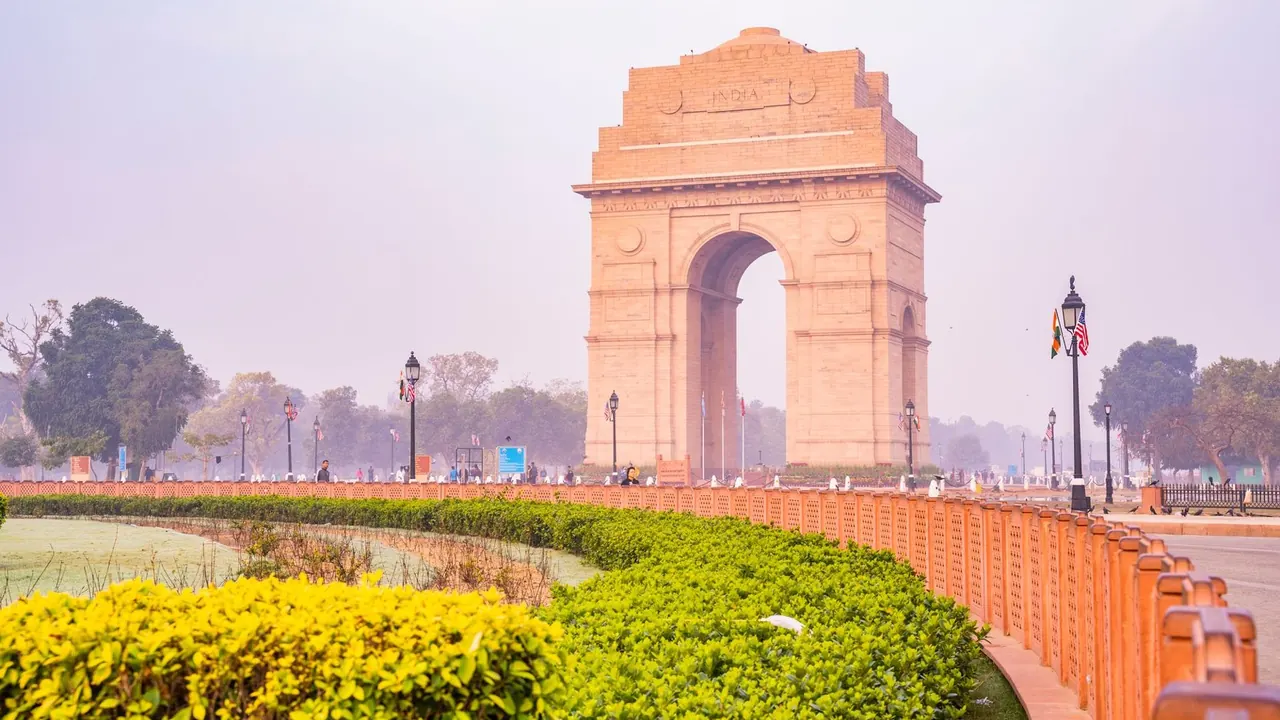
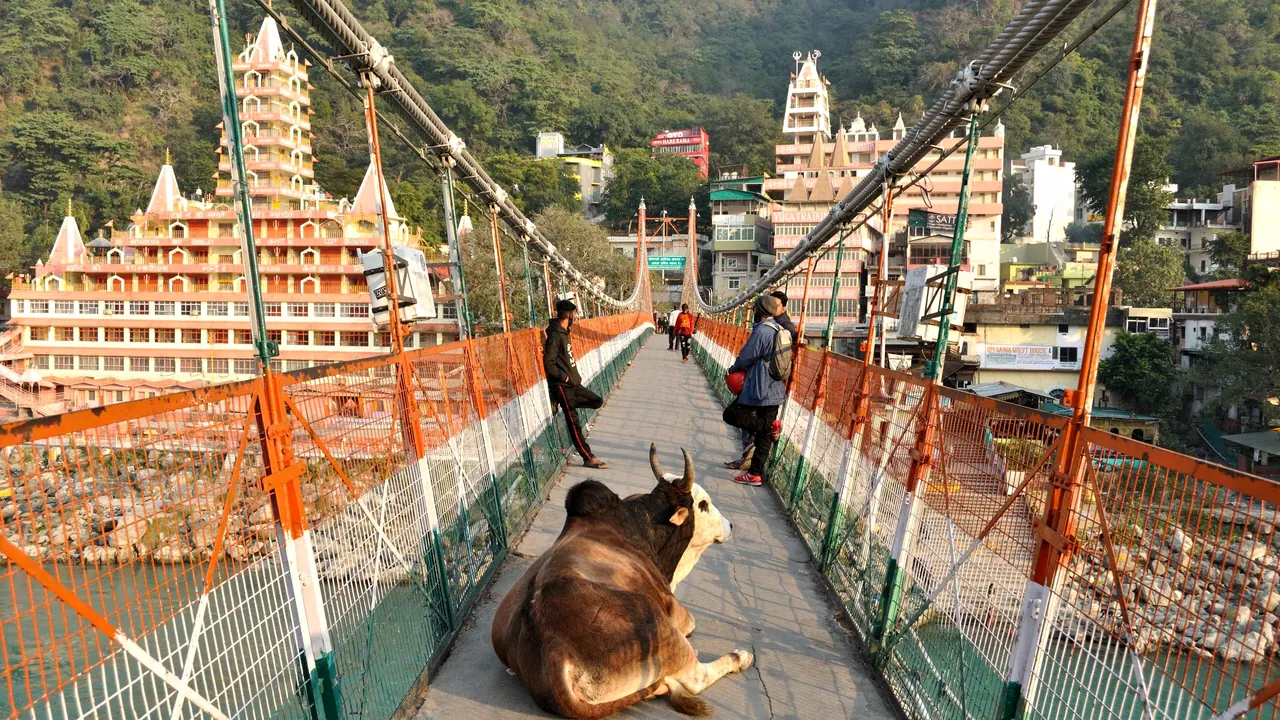
Photos: Delhi by shalender kumar, Pexels License; Rishikesh by Dey.sandip, CC BY-SA 4.0, cropped.
Delhi or Rishikesh?
Our verdict in twelve categories, each scored against the same fixed benchmark cities, and the climate month by month, so you can choose for your trip.
Choose Delhi for
- food and drink
- shopping
- culture and sights
Delhi suits the traveller who wants each day to be full: Mughal tombs and great mosques, Old Delhi's street food, craft bazaars from every corner of India and a winter season of classical music and dance. You will need patience with traffic, long distances and the air. In return you get far more to see, eat and buy than Rishikesh can offer, and the Taj Mahal is a day trip away by train.
Choose Rishikesh for
- wellness
- nature and the outdoors
- beaches
Rishikesh is the better pick for slowing down. Days there are built around dawn yoga, ashram courses, Ayurvedic treatments and the evening aarti by the Ganges, with rafting, forest trails and jeep safaris in Rajaji close by. Expect vegetarian food, no alcohol and early nights. Two or three days cover the sights, so come for the practice and the river rather than the monuments.
Scoreboard
Twelve categories on one fixed scale from 0 to 100. The shaded stretch is the gap between the two.
Your match
Pick a travel style or drag the sliders, and both match scores follow your weighting.
Wins on food and drink and shopping with your weighting.
Wins on wellness and nature and the outdoors with your weighting.
What matters to you?
Category by category
What the scores mean for a trip.
Beaches & swimming
Neither city is a place to swim. Delhi lies far inland on the plains and the Yamuna is no place to go in the water, so swimming means a hotel pool, which you will be glad of before the monsoon.
Rishikesh at least has the Ganges, with white sand banks to sit on and the camp beaches near Shivpuri. The cold Himalayan current is strong and dangerous, though, so most visitors go no further than a dip at the ghats, holding on to the chains.
Food & drink
This is one of the widest gaps between the two. Delhi is one of India's great food cities, from nihari, kebabs and stuffed parathas in the lanes around Chandni Chowk to the butter chicken and dal makhani it invented, and on to regional kitchens and tasting menus in South Delhi.
Rishikesh is strictly vegetarian and sells no alcohol. Its thalis, dhaba dal and café terraces over the river are pleasant and cheap. The menus of smoothie bowls and wood-fired pizza repeat from café to café, though, and anyone who cares about food will find the choice thin within a week.
Culture & sights
Delhi has the monuments of several capitals spread across it: the Red Fort, Humayun's Tomb, the Qutb Minar, the Lodi tombs, the imperial avenue running from India Gate and the national art collections. The catch is that the sights are far apart, so a visit takes planning.
Rishikesh offers atmosphere rather than monuments. Its highlights are the painted ashrams of Swarg Ashram across Ram Jhula, the tiered Tera Manzil temple, the evening Ganga aarti and the mural-covered Beatles ashram in the forest. It is memorable, but there are no museums of note and a few days are enough.
Nightlife
Delhi does have nights out, though they are spread around the city: rooftop bars at Hauz Khas Village, pubs under the colonnades of Connaught Place, and the bigger clubs and brewpubs of Gurugram, reached by taxi and liveliest at weekends. Rishikesh has none of this. As a holy town it sells no alcohol and has no bars or clubs, so an evening means the aarti, dinner on a terrace and an early night.
Nature & outdoors
Here Rishikesh is far ahead. The forested Shivalik ridges rise straight from the edge of town, and the Ganges offers white-water rafting from Shivpuri. Waterfall walks and the sunrise over snow peaks from Kunjapuri are short trips, and the elephants and deer of Rajaji National Park are next door.
Delhi sits on a flat plain, where nature means Lodhi Gardens, Sunder Nursery and the scrubby Ridge forest. Its best outdoor season is winter, when waterbirds arrive at Okhla and Sultanpur, but heat, monsoon and smog limit time outside for much of the year.
Day trips
Delhi has the stronger day out: the Taj Mahal and Agra Fort, under two hours away by express train, with Fatehpur Sikri, Mathura and Vrindavan as further options. Rishikesh's trips are smaller but varied, from the great aarti at Har Ki Pauri in Haridwar to Dehradun's Forest Research Institute, the hill views at Mussoorie and the meeting of the rivers at Devprayag. Most of them mean winding hill roads rather than a comfortable train.
Good for families
Neither city is easy with small children, though Delhi has a little more to keep them busy: the steam engines of the National Rail Museum, the zoo, the science centre and the water parks on the city's edges. Against that you have heat, smog, traffic and broken pavements.
Rishikesh has nothing designed for children, and its fast, cold river, food-snatching macaques and steep lanes need watching. It can work well with teenagers who are old enough for rafting, ziplines and a jeep safari in Rajaji.
Getting around
Delhi's metro gives it the edge. It is air-conditioned, signed in English and has an airport express and stations near most monuments, with app taxis and autos to fill the gaps. The difficulty is the sheer size of the city and its jammed roads.
Rishikesh is small enough to cover on foot, but along both riverbanks, over footbridges and often uphill. Shared vikrams run along the main road and ferries cross near Ram Jhula. Anything outside town, from rafting put-ins to hilltop temples, needs a taxi, and the airport and railheads are a drive away.
Shopping & style
Delhi is one of India's great shopping cities. It has crafts from every state at Dilli Haat and the government emporiums, the spice and fabric bazaars of Old Delhi, designer boutiques at Khan Market and Shahpur Jat, and cheap clothes on Janpath. Rishikesh sells one theme well: yoga clothes, malas, singing bowls, incense, Ayurvedic oils and spiritual books. That is useful if you are staying for a course, but much of it repeats from stall to stall.
Affordability
Both are very cheap by international standards, so the difference lies in what you spend on. In Delhi the savings come from street food, the metro and plenty of mid-range hotels, while the grand hotels, smart restaurants and imported drinks can push a budget up.
Rishikesh offers fewer ways to spend: ashram rooms and simple guesthouses, thalis and shared autos that cost almost nothing. The main expenses are rafting, teacher trainings and the upmarket riverside retreats.
Live music & performing arts
Delhi has a real performing arts scene, centred on the auditoriums of Mandi House and Lodhi Road, with Hindustani recitals, Kathak and Bharatanatyam through the cooler months. The National School of Drama is here too, though most plays are in Hindi. For many visitors the high point is the qawwali at the Nizamuddin shrine.
Music in Rishikesh is devotional, and visitors take part rather than just listen: chanting at the aarti, kirtan in ashrams and cafés, and the occasional sitar or bansuri recital. It suits someone who wants to join in, not someone looking for a concert programme.
Wellness & relaxation
Wellness is the reason Rishikesh exists as a destination. Its ashrams run daily yoga, silent meditation and long teacher trainings, and Ayurvedic clinics offer treatments lasting several days. The whole town keeps early hours without alcohol, even if the bridges and main road are noisy.
Delhi offers only pockets of calm: hotel spas, yoga centres in South Delhi, and quiet mornings in Lodhi Gardens or inside a gurudwara. Many visitors use the capital as a gateway and head north to Rishikesh for a proper retreat.
When should you go?
Pick your month. The climate figures are measured averages, not a forecast.
Delhi in July
Rishikesh in July
Daytime high, °C
Rainfall in the month, mm
Where the figures come from
Rishikesh has no weather station within reach, so its figures come from a gridded climate model rather than a measured record, and read a broad area rather than the city itself.
Temperature and rainfall are climate normals, averaged over the years shown. Delhi: 1991-2020 normals, New Delhi / Safdarjung (9.4 km from centre). Rishikesh: 2001-2020 normals, NASA POWER reanalysis grid, no weather station within 90 km.
Both cities are best visited in the dry months between the monsoon and the summer heat, but the comfortable window is narrower in Delhi. The best time for walking between its monuments is November to February, with daytime highs of about 20°C to 28°C and almost no rain, though smog often hangs over the city in late autumn and winter. October and March are warm shoulder months: bright and dry, but already hot by midday. From April the heat builds to 40°C in May, far too hot for sightseeing on foot. The monsoon arrives in late June and is wettest in July and August, when there is also less sunshine. Neither city has a beach season at any time of year.
Rishikesh stays a few degrees cooler than Delhi all year, so October, November, February and March are mild there rather than hot. These are its best months, dry and pleasant for rafting, hiking and outdoor yoga, and on clear winter mornings you can see the snow peaks. Its monsoon is much heavier than Delhi's, reaching around 381mm in July, and the swollen Ganges stops rafting until the rains have passed.
Which traveller are you?
For a culture and arts trip, Delhi is the clear choice. Three UNESCO sites, Jama Masjid, the national collections and a winter season of Kathak and Hindustani recitals around Mandi House give you weeks of material. Rishikesh's ashrams and riverside temples fill two or three days.
On a relaxing and wellness trip, Rishikesh wins easily. Ashram classes, silent meditation, teacher trainings and Ayurvedic detox programmes are what the town exists for, and its alcohol-free, early-to-bed rhythm helps you unwind. Delhi's noise and smog work against rest.
For an outdoors trip, Rishikesh has river and forest right on its doorstep: rafting through real rapids from Shivpuri, walks to waterfalls, sunrise at Kunjapuri and jeep safaris in Rajaji National Park. In Delhi the outdoors means gardens, the Ridge forest and winter birdwatching at Sultanpur.
Before you go
| Measure | Delhi | Rishikesh |
|---|---|---|
| Official language | Hindi, English | Hindi, English |
| Currency | Indian Rupee (INR) | Indian Rupee (INR) |
| Sockets | CM230 V, 50 Hz | CM230 V, 50 Hz |
| Driving side | Left | Left |
| Time zone | UTC+5:30 | UTC+5:30 |
| Emergency number | 108 or 112 | 108 or 112 |
| Elevation | 221 m | 372 m |
| Main airport | Indira Gandhi International Airport (DEL)17 km from centre144 non-stop destinations | Dehradun Jolly Grant Airport (DED)14 km from centre13 non-stop destinations |
By the numbers
| Measure | Delhi | Rishikesh |
|---|---|---|
| City population | 26,495,000 | 70,499 |
| People per km² | 18,962 | 133 |
| Museums within 10 km | 23 | 0 |
| UNESCO World Heritage sites within 50 km | 4 | 0 |
Where else could you go?
Every comparison below shares a destination with this one, so you can follow Delhi or Rishikesh somewhere new.