Photos: Amritsar by Ken Wieland, CC BY-SA 2.0, cropped; Rishikesh by Dey.sandip, CC BY-SA 4.0, cropped.
Amritsar or Rishikesh?
Our verdict in twelve categories, each scored against the same fixed benchmark cities, and the climate month by month, so you can choose for your trip.
Choose Amritsar for
- food and drink
- culture and sights
- shopping
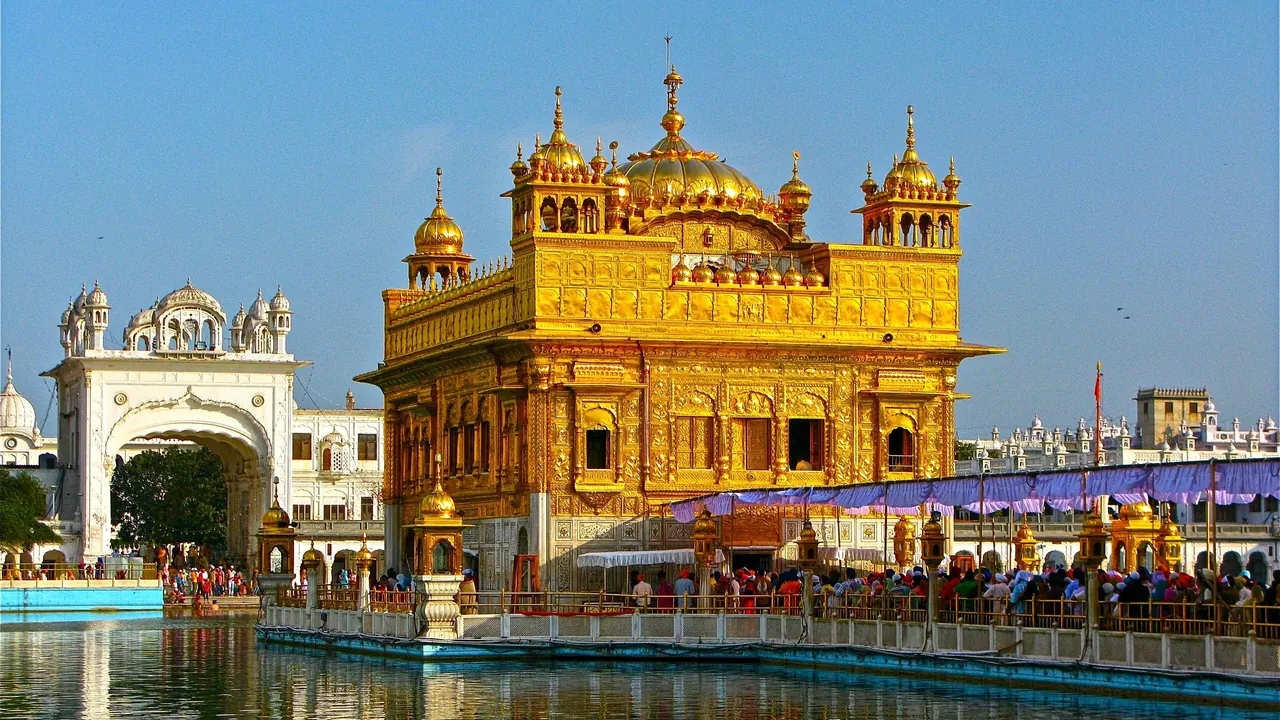
Amritsar suits a traveller who wants one extraordinary sight and the food that surrounds it. The Golden Temple rewards a visit at dawn, at midday and again after dark. Jallianwala Bagh and the Partition Museum add real historical weight, and the old city's dhabas and bazaars make Amritsar the richer stop for eating, history and shopping over a few days.
Choose Rishikesh for
- wellness
- nature and the outdoors
- day trips
Choose Rishikesh if the point of the trip is to slow down or to get outdoors. Its ashrams, yoga courses and Ayurvedic clinics have nothing to match them in Amritsar, and the forested ridges, Ganges rapids and Rajaji National Park begin at the edge of town. Haridwar and Mussoorie also make better outings than anything within reach of the Punjab plains.
Scoreboard
Twelve categories on one fixed scale from 0 to 100. The shaded stretch is the gap between the two.
Your match
Pick a travel style or drag the sliders, and both match scores follow your weighting.
Wins on food and drink and culture and sights with your weighting.
Wins on wellness and nature and the outdoors with your weighting.
What matters to you?
Category by category
What the scores mean for a trip.
Beaches & swimming
Neither city is a beach destination, but Rishikesh at least has water worth sitting beside. There are white sand banks along the Ganges and camp beaches upstream near Shivpuri. The river runs cold and fast, so most people go no further than a dip at the ghats, holding on to the chains.
Amritsar, on the Punjab plains, has nothing like this. Its only water is the sacred pool of the Golden Temple, which is for devotion and not for swimming. In both cities, a real swim means a hotel pool.
Food & drink
Amritsar is the city to eat in. Long-established dhabas in the old city spend the morning on one dish, such as butter-laden Amritsari kulcha, fried river fish or lassi in steel tumblers. The free langar at the Golden Temple, eaten on the floor beside pilgrims, is a meal you will not have anywhere else.
Rishikesh sells no meat or alcohol, so meals are thalis, puri and jalebi, plus pizza and Tibetan dishes on café terraces above the Ganges, aimed at yoga students. It is pleasant and cheap, but the menus repeat from café to café. Amritsar's cooking is much richer, even if it rarely goes beyond Punjabi food.
Culture & sights
Amritsar has one of India's great sights in the Golden Temple, which repays a return visit at dawn or after dark. The history around it is heavy: Jallianwala Bagh, with bullet marks still in its walls, and the Partition Museum's personal accounts of 1947.
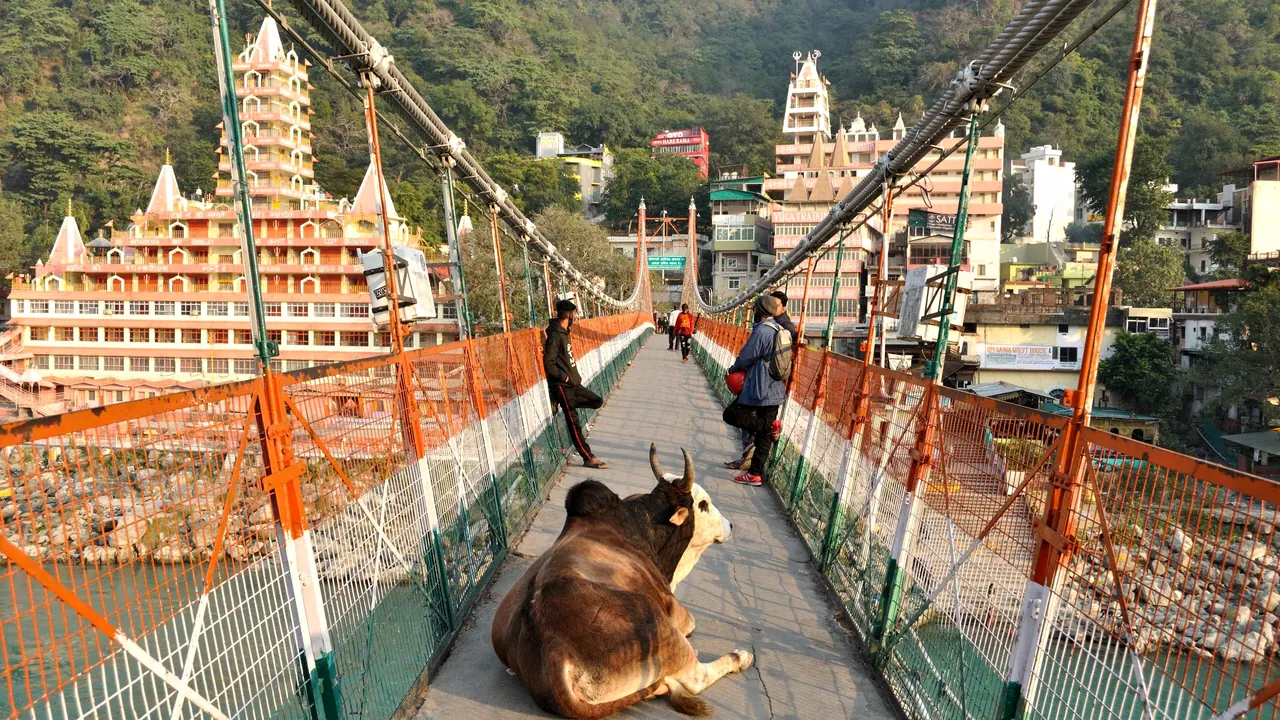
Rishikesh offers atmosphere rather than monuments. You can cross Ram Jhula to Swarg Ashram, watch the Ganga aarti at Triveni Ghat and wander the overgrown ashram where the Beatles stayed. Two or three days cover it, and it has no museums to match Amritsar's.
Nightlife
Amritsar has at least a few hotel bars and lounges, out in the newer districts and well away from the temple. The best night there costs nothing: a walk around the temple pool after dark, when it is lit up and calmer than by day.
Rishikesh sells no alcohol at all and has no bars or clubs. An evening there means the aarti on the ghats, dinner on a café terrace and an early night before dawn yoga. If you want a drink, you have to leave town.
Nature & outdoors
Nature is Rishikesh's strength. Forested Shivalik ridges rise from both banks, rafting runs through serious rapids from Shivpuri, and there are waterfall hikes and ziplines. Rajaji National Park runs jeep safaris for elephants and deer, and leopards and tigers if you are lucky.
Amritsar sits in flat wheat and mustard country, with only Ram Bagh and Company Bagh for a walk in the city. Its one real nature outing is the Harike wetland, about an hour and a half away, which is worth the trip in winter for the migratory waterbirds.
Day trips
Rishikesh has more within reach. Haridwar's huge aarti at Har Ki Pauri is under an hour away. Dehradun has the Forest Research Institute and the Mindrolling monastery, and Mussoorie and Devprayag make longer days out into the hills.
From Amritsar, the highlight is the flag-lowering ceremony at the Wagah border, about 30km west, a loud afternoon in front of cheering crowds. Beyond that, Tarn Taran Sahib and the French-style palace at Kapurthala appeal mainly to visitors interested in Sikh history and Punjab's princely past.
Good for families
Neither city is really made for a family vacation, and what separates them is the kind of teenager each one suits. Older children who enjoy spectacle will remember Amritsar best, from eating in the langar beside pilgrims to the stamping, cheering ceremony at Wagah. Those who would rather be doing something will get more from Rishikesh, with rafting (subject to minimum ages), jeep safaris in Rajaji and ziplines.
With young children, both are hard work in different ways. In Amritsar the trouble is the city itself: crowded, traffic-filled lanes in the old town and constant care over water and street food. In Rishikesh it is the setting, with a fast, cold river, steep lanes shared with motorbikes and macaques that snatch food, although the vegetarian cooking is gentler on small stomachs.
Getting around
Both are easy to walk at the centre and awkward beyond it, and neither has a metro. Amritsar's main sights sit together around a pedestrianised heritage street, and everything else means a rickshaw through heavy traffic. Rishikesh stretches along both banks, so you use footbridges and uphill paths, shared vikrams on the main road and ferries near Ram Jhula, with taxis for rafting and the hilltop temples.
Shopping & style
Amritsar is the better place to shop. Hall Bazaar and Katra Jaimal Singh are full of Punjabi suits, shawls, phulkari embroidery and stacks of juttis. The food shops sell papad and warian to take home.
Rishikesh sells to a single theme: yoga clothes, malas, singing bowls, incense and Ayurvedic oils in the lanes around the two jhulas. Some of it is good, but much of it repeats from stall to stall. Neither city has design or luxury shopping.
Affordability
Both are about as cheap as travel gets, so the difference is where the money goes. In Amritsar the temple and its langar are free and pilgrim rest houses take visitors, and hiring a car for Wagah is the main extra cost. In Rishikesh, ashram rooms and shared autos cost very little, but rafting, teacher trainings and the upmarket riverside retreats can add up.
Live music & performing arts
In both cities the music is devotional, but Amritsar's is the more remarkable. At the Golden Temple, gurbani kirtan is sung to harmonium and tabla from before dawn until late at night, and anyone can sit by the pool and listen. There are also occasional bhangra and folk shows.
Rishikesh has the singing and drums of the aarti, kirtan sessions in ashrams and cafés, and the odd sitar recital. It is also the easier place to take music lessons.
Wellness & relaxation
Rishikesh is built for this. Dozens of ashrams run daily yoga, silent meditation and long teacher trainings, Ayurvedic clinics offer oil massages and detox treatments, and the International Yoga Festival takes place each spring. Even so, the bridges and main road are noisy, and the real peace is in the ashram gardens and upriver.
Amritsar has only a few hotel spas. Its calm comes from the Golden Temple at dawn or late at night, sitting on the cool marble with hymns in the background. That is deeply restful, but it is not a retreat.
When should you go?
Pick your month. The climate figures are measured averages, not a forecast.
Amritsar in July
Rishikesh in July
Daytime high, °C
Rainfall in the month, mm
Where the figures come from
Rishikesh has no weather station within reach, so its figures come from a gridded climate model rather than a measured record, and read a broad area rather than the city itself.
Temperature and rainfall are climate normals, averaged over the years shown. Amritsar: 1991-2020 normals, Amritsar (1.2 km from centre). Rishikesh: 2001-2020 normals, NASA POWER reanalysis grid, no weather station within 90 km.
Both cities are at their best from October to March, and both are hard work in late spring, when Amritsar reaches 40°C in May and Rishikesh is barely cooler. Amritsar has the colder winter of the two, with January highs near 17°C and foggy mornings. The dry, bright days of November and of February and March are ideal for walking its old city. Neither place has a beach season.
The monsoon is where they part. Amritsar gets around 190mm in each of July and August. Rishikesh, up against the hills, gets about twice that, with 381mm in July, and the swollen river brings the rafting season to an end. October is the best month in Rishikesh, warm at 28°C and dry, while Amritsar is still hot then and is at its best a month later.
Which traveller are you?
On a culture and arts trip, Amritsar is the stronger choice. The Golden Temple, the Akal Takht, Jallianwala Bagh and the Partition Museum tell the story of Sikhism and Punjab with real force. Rishikesh's ashrams and ghats offer atmosphere more than history.
For an outdoors trip, Rishikesh is far ahead. Rafting through Ganges rapids, waterfall hikes, jeep safaris in Rajaji and sunrise at Kunjapuri are all close to town. Around Amritsar the farmland is flat, and the main outing is birdwatching at Harike in winter.
On a relaxing and wellness trip, Rishikesh is the obvious choice, with ashram classes, silent meditation, Ayurvedic treatments and quiet, alcohol-free evenings. In Amritsar the calm is found only on the marble walkway around the temple pool, and the rest of the city is loud.
Before you go
| Measure | Amritsar | Rishikesh |
|---|---|---|
| Official language | Hindi, English | Hindi, English |
| Currency | Indian Rupee (INR) | Indian Rupee (INR) |
| Sockets | CM230 V, 50 Hz | CM230 V, 50 Hz |
| Driving side | Left | Left |
| Time zone | UTC+5:30 | UTC+5:30 |
| Emergency number | 108 or 112 | 108 or 112 |
| Elevation | 234 m | 372 m |
| Main airport | Sri Guru Ram Das Ji International Airport (ATQ)12 km from centre17 non-stop destinations | Dehradun Jolly Grant Airport (DED)14 km from centre13 non-stop destinations |
By the numbers
| Measure | Amritsar | Rishikesh |
|---|---|---|
| City population | 1,159,227 | 70,499 |
| People per km² | 6,819 | 133 |
| Museums within 10 km | 3 | 0 |
| UNESCO World Heritage sites within 50 km | 1 | 0 |
Where else could you go?
Every comparison below shares a destination with this one, so you can follow Amritsar or Rishikesh somewhere new.