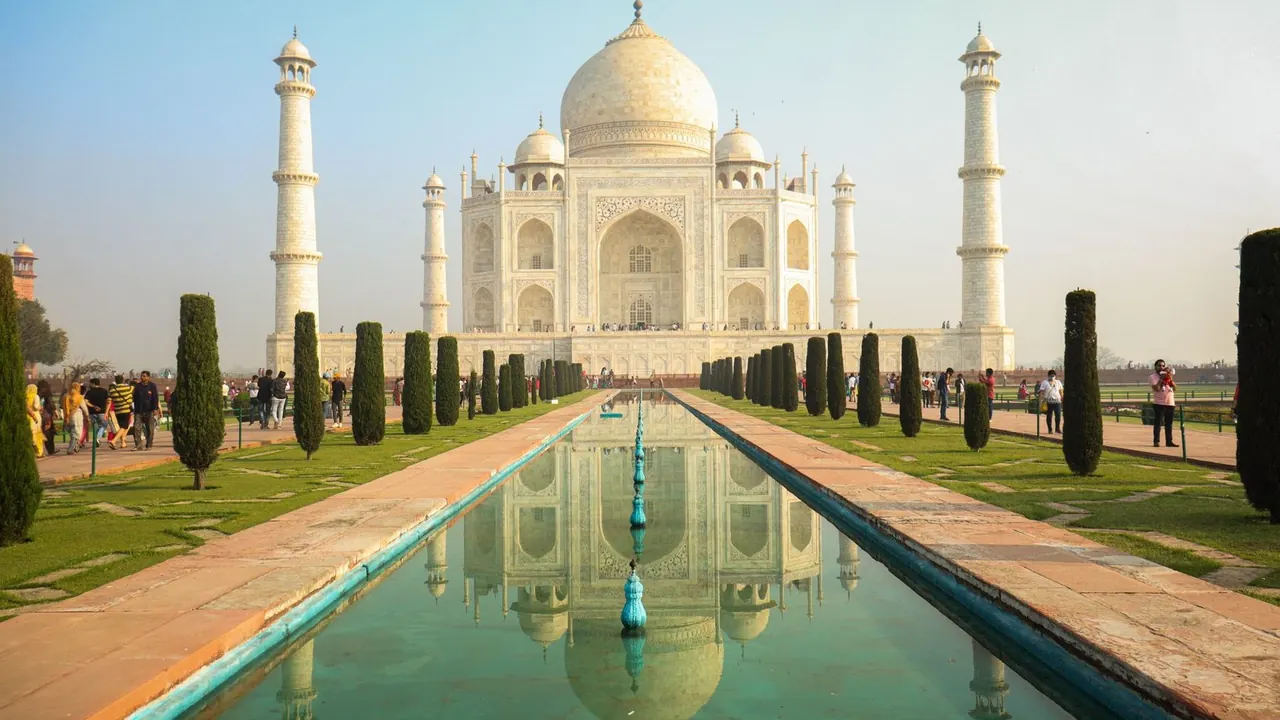
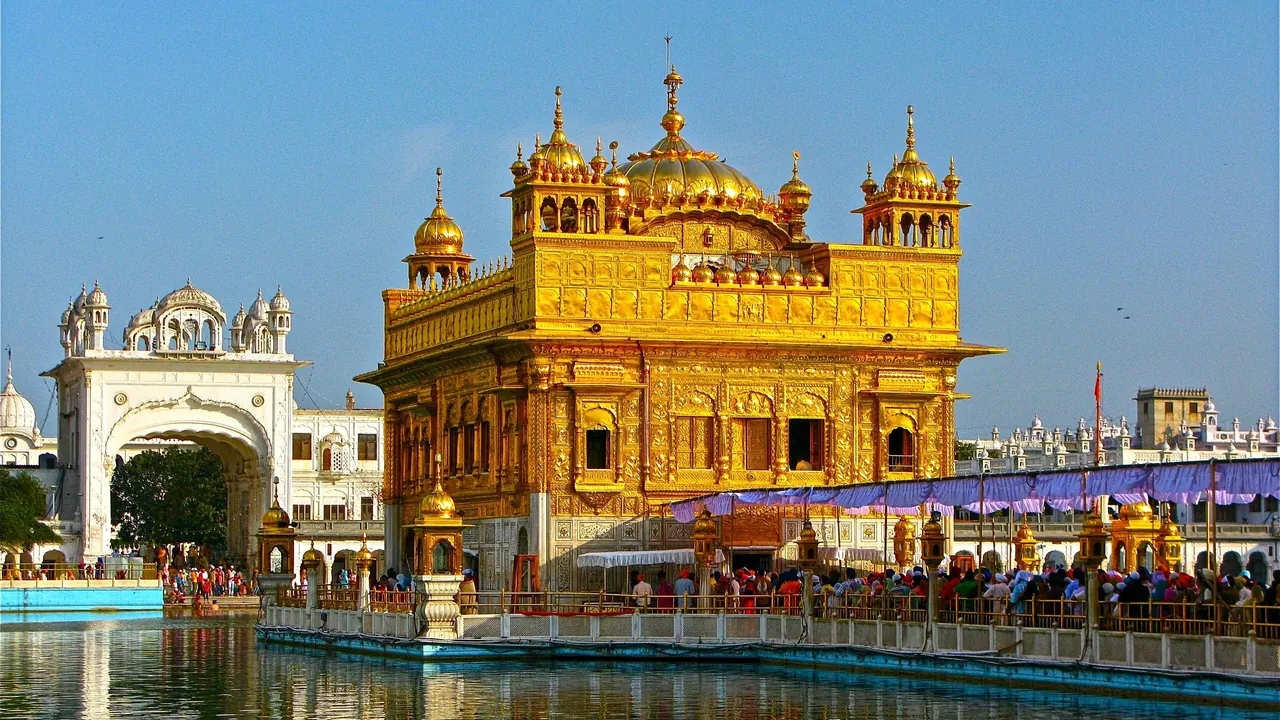
Photos: Agra by Sanket Sawale, Pexels License; Amritsar by Ken Wieland, CC BY-SA 2.0, cropped.
Agra or Amritsar?
Our verdict in twelve categories, each scored against the same fixed benchmark cities, and the climate month by month, so you can choose for your trip.
Choose Agra for
- day trips
- culture and sights
- nature and the outdoors
Agra is the choice for a traveller who wants great Mughal architecture and plenty to see within an hour or two. The Taj Mahal comes first, but Agra Fort, the inlay of Itimad-ud-Daulah and Akbar's tomb at Sikandra fill a second day. After that, Fatehpur Sikri, the Bharatpur wetlands and the temple towns of Mathura and Vrindavan give you a third and fourth day out. Go for the monuments and the excursions. Don't go for the food or the evenings.
Choose Amritsar for
- food and drink
- live music and the arts
- families
Amritsar suits someone who would rather sink into one extraordinary place than tick off many. The Golden Temple feels different at dawn, at noon and at midnight, its kirtan plays all day and its langar feeds everyone. Meanwhile the dhabas of the walled city make it the better trip for eating. The sights are fewer, but the main one is free and moving, and the temple quarter is small enough to walk.
Scoreboard
Twelve categories on one fixed scale from 0 to 100. The shaded stretch is the gap between the two.
Your match
Pick a travel style or drag the sliders, and both match scores follow your weighting.
Too close to call, 1 point apart
Wins on day trips and culture and sights with your weighting.
Wins on food and drink and live music and the arts with your weighting.
What matters to you?
Category by category
What the scores mean for a trip.
Beaches & swimming
Neither city has a beach or any water you can bathe in for pleasure. Both sit far inland on the northern plains, and in either place swimming means a hotel pool. The only difference is what the water means. In Agra the Yamuna is a river you look at from the Taj gardens. In Amritsar the pool around the Golden Temple is sacred, and pilgrims enter it to pray, not to swim.
Food & drink
Amritsar is the better place to eat. People travel there for its Punjabi cooking, which means stuffed kulcha with chole and butter, batter-fried fish, slow-cooked dal and thick lassi from old dhabas that have made one dish every morning for generations. Eating at the langar, sitting in rows beside pilgrims, is an experience Agra cannot match.
Agra has its moments: bedai and jalebi for breakfast near the Jama Masjid, chaat in Sadar Bazaar and petha in endless flavours. Beyond the bazaars, though, you mostly eat in hotels and restaurants geared to tour groups. One or two days of curious eating will cover it.
Culture & sights
Agra has more to see and more of it is world class. Beyond the Taj Mahal there is the red sandstone Agra Fort, the fine inlay of Itimad-ud-Daulah, Akbar's tomb at Sikandra and the sunset view from Mehtab Bagh. That is two full days of Mughal architecture.
Amritsar has fewer sights, but they grip you in a different way. The Golden Temple is a living shrine you can return to at any hour, and the bullet-marked walls of Jallianwala Bagh and the personal stories in the Partition Museum bring a much more recent past into view. Agra is about grand monuments, Amritsar about faith and modern history.
Nightlife
Both cities are quiet after dark, with no clubs and only a handful of hotel bars. Agra's evenings end early because everyone is up before dawn for the Taj, and a rooftop drink looking at the dome is about as far as it goes. Amritsar has the better reason to stay out: a late walk around the lit temple pool, which is calmer at night than in the day.
Nature & outdoors
Agra has more outdoor options, almost all of them about birds and wildlife. Keoladeo at Bharatpur, about an hour away, is one of Asia's great wetlands for migrant birds, best explored by bicycle or rickshaw in winter. The Chambal sanctuary adds gharials and river dolphins.
Amritsar's surroundings are flat wheat and mustard fields. Apart from walks in Ram Bagh, the main outing is the Harike wetland, where waterbirds gather in winter. It is a good half-day, but there is far less choice. Neither city has hills or hiking trails nearby.
Day trips
Agra is much the better base for day trips. Fatehpur Sikri, Akbar's abandoned capital about 40km away, pairs with Bharatpur or the water palaces of Deeg. Mathura and Vrindavan bring Krishna's temples and ghats within an hour, and Gwalior's hilltop fort is a fast train ride south.
From Amritsar, the one trip almost everyone makes is the evening flag ceremony at the Wagah border, which is loud, crowded and great fun. Beyond that, the outings are mostly Sikh shrines such as Tarn Taran, plus the French-style palace at Kapurthala. These suit pilgrims and history buffs more than general sightseers.
Good for families
Neither city is easy with children, but Amritsar is a little kinder. Families are welcomed warmly at the Golden Temple, and older children usually love the busy langar kitchens and the stamping guards at Wagah.
Agra asks more of parents. Touts and crowds at the monument gates and long distances between sights add to the strain, though the Taj and the fort ramparts impress older children and the bear rescue centre is a real treat. In both cities, plan a short visit with an early start and an afternoon at the hotel pool.
Getting around
Amritsar is the easier city to get around because its main sights are close together. The Golden Temple, Jallianwala Bagh and the Partition Museum all lie around a pedestrianised heritage street, so the heart of a visit can be done on foot.
Agra spreads its monuments along and away from the Yamuna, with broken pavements and heavy traffic in between, so every sight means an auto-rickshaw or taxi. Only the last stretch to the Taj is on foot or by electric cart. In both cities, a car and driver for the day is the simplest way to reach places outside town.
Shopping & style
Amritsar is the better place to shop, because its bazaars sell what Punjab actually wears and uses, while Agra's offer rests largely on one craft. That craft is pietra dura, the same stone inlay you admire on the Taj, and a marble box or small tabletop is the classic thing to take home, along with leather shoes and carpets. Buying it well takes some resolve, since a guided tour tends to end in a large showroom where the price carries someone else's cut and the quality is uneven. Kinari and Sadar bazaars are cheaper and more relaxed, but beyond wedding finery, trinkets and petha they have less to tempt you.
In Amritsar the draw is textiles, and the lanes of the walled city around Hall Bazaar and Katra Jaimal Singh can easily fill a morning. Bright phulkari embroidery and embroidered jutti slippers are the souvenirs with the most local character. Closer to the temple the stalls turn devotional, with the steel bangles and turban cloth of Sikh dress, and the food shops pack dried warian for the journey home. Haggling is part of the fun, and neither city has designer or luxury shopping.
Affordability
Both cities are very cheap for meals, rickshaws and mid-range rooms. The difference is where the costs come from. In Agra the big expense is the entry fees foreigners pay at the Taj and other Mughal monuments, which add up over two days. In Amritsar the Golden Temple and its langar cost nothing, and pilgrim rest houses offer basic beds, so the sightseeing itself is almost free.
Live music & performing arts
Amritsar has more live performance, and most of it is sacred. Gurbani kirtan is sung to harmonium and tabla in the Golden Temple from before dawn until late at night, and anyone can sit by the pool and listen. Bhangra and folk shows round it out.
Agra's evenings are mostly staged for tourists: musicals about Shah Jahan and Mumtaz Mahal, and dance evenings in hotels. The exception is the Taj Mahotsav each spring at Shilpgram, which is worth timing a trip around.
Wellness & relaxation
Neither city is a place to unwind, and both are noisy beyond their quiet corners. Agra's calm sits behind walls: Ayurvedic massages and pools in the better hotels, or a shaded bench in the gardens of Itimad-ud-Daulah or Sikandra in late afternoon. Amritsar has only a few hotel spas, but it has the Golden Temple, and sitting on the cool marble by the pool at dawn or late at night, with hymns playing, is more restful than anything Agra offers.
When should you go?
Pick your month. The climate figures are measured averages, not a forecast.
Agra in July
Amritsar in July
Daytime high, °C
Rainfall in the month, mm
Temperature and rainfall are climate normals, averaged over the years shown. Agra: 1942-2025, 10 years observed (rainfall 1971-2000) normals, Agra (6.2 km from centre). Amritsar: 1991-2020 normals, Amritsar (1.2 km from centre).
Both cities are at their best from late October to early March, when days are dry and comfortable for walking. Agra warms up sooner, so by March afternoons are already hot for sightseeing. Amritsar stays mild a few weeks longer and has the colder winter, with highs around 17°C in January and foggy mornings, plus a little more winter rain than Agra. Its shortest sunshine comes in December, at about 132 hours.
From April to June both are fiercely hot, with May highs near 40°C, so outdoor visits have to be squeezed into early mornings. The monsoon then arrives in both cities from late June to September. It hits Agra harder, with about 230mm in each of July and August, while Amritsar is a little drier in those months. Neither city has a sea, and swimming in any season means a hotel pool.
Which traveller are you?
On a culture and arts trip, Agra is the stronger pick. It has the Taj Mahal, Agra Fort, the Baby Taj and Sikandra, with Fatehpur Sikri and Gwalior close enough for day trips. Amritsar's temple and Partition Museum are moving, but there are fewer of them.
For a food and nightlife trip, choose Amritsar for the food. It has buttery kulcha, fried river fish, lassi in steel tumblers and the Golden Temple langar. Neither city has much going on at night, so plan long dinners rather than bars.
On an outdoors trip, Agra has more to offer. Keoladeo at Bharatpur, the Chambal sanctuary with its gharials and river dolphins, and Sur Sarovar give birders and wildlife watchers several outings. Amritsar has flat farmland and only the Harike wetland.
Before you go
| Measure | Agra | Amritsar |
|---|---|---|
| Official language | Hindi, English | Hindi, English |
| Currency | Indian Rupee (INR) | Indian Rupee (INR) |
| Sockets | CM230 V, 50 Hz | CM230 V, 50 Hz |
| Driving side | Left | Left |
| Time zone | UTC+5:30 | UTC+5:30 |
| Emergency number | 108 or 112 | 108 or 112 |
| Elevation | 171 m | 234 m |
| Main airport | Agra Airport / Agra Air Force Station (AGR)6 km from centre2 non-stop destinations | Sri Guru Ram Das Ji International Airport (ATQ)12 km from centre17 non-stop destinations |
By the numbers
| Measure | Agra | Amritsar |
|---|---|---|
| City population | 1,585,705 | 1,159,227 |
| People per km² | 8,417 | 6,819 |
| Museums within 10 km | 0 | 3 |
| UNESCO World Heritage sites within 50 km | 4 | 1 |
Where else could you go?
Every comparison below shares a destination with this one, so you can follow Agra or Amritsar somewhere new.