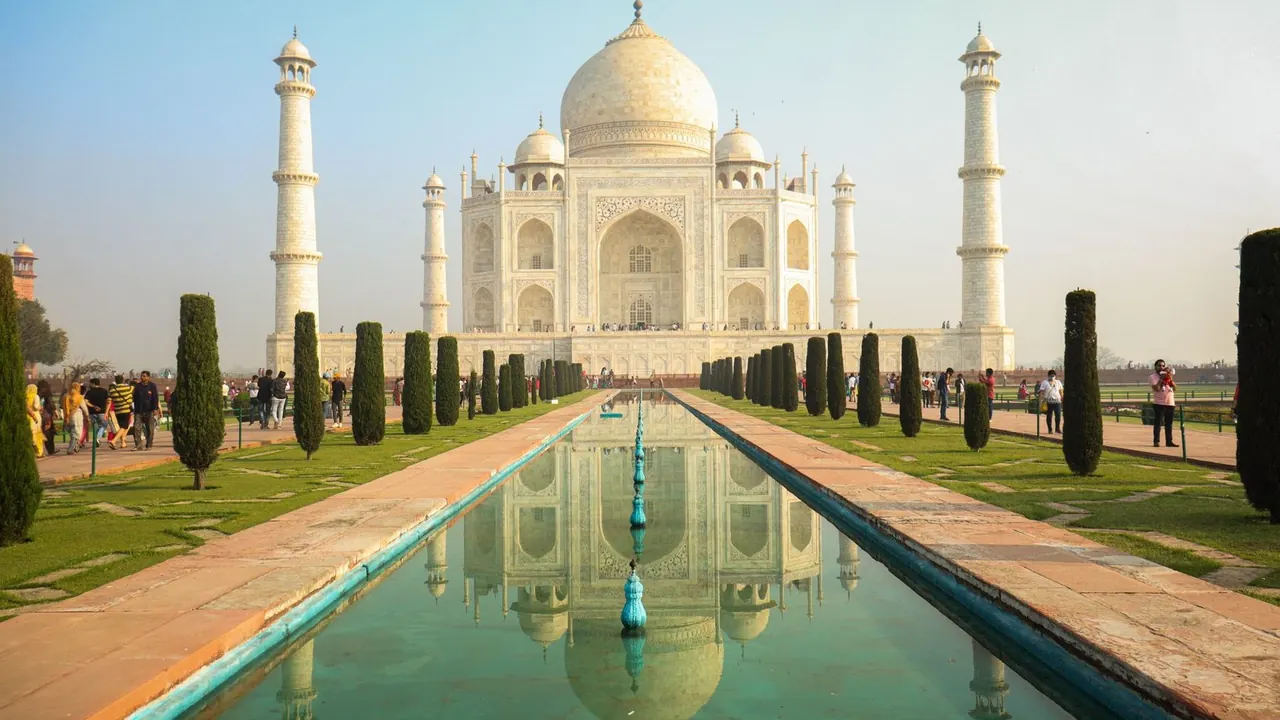
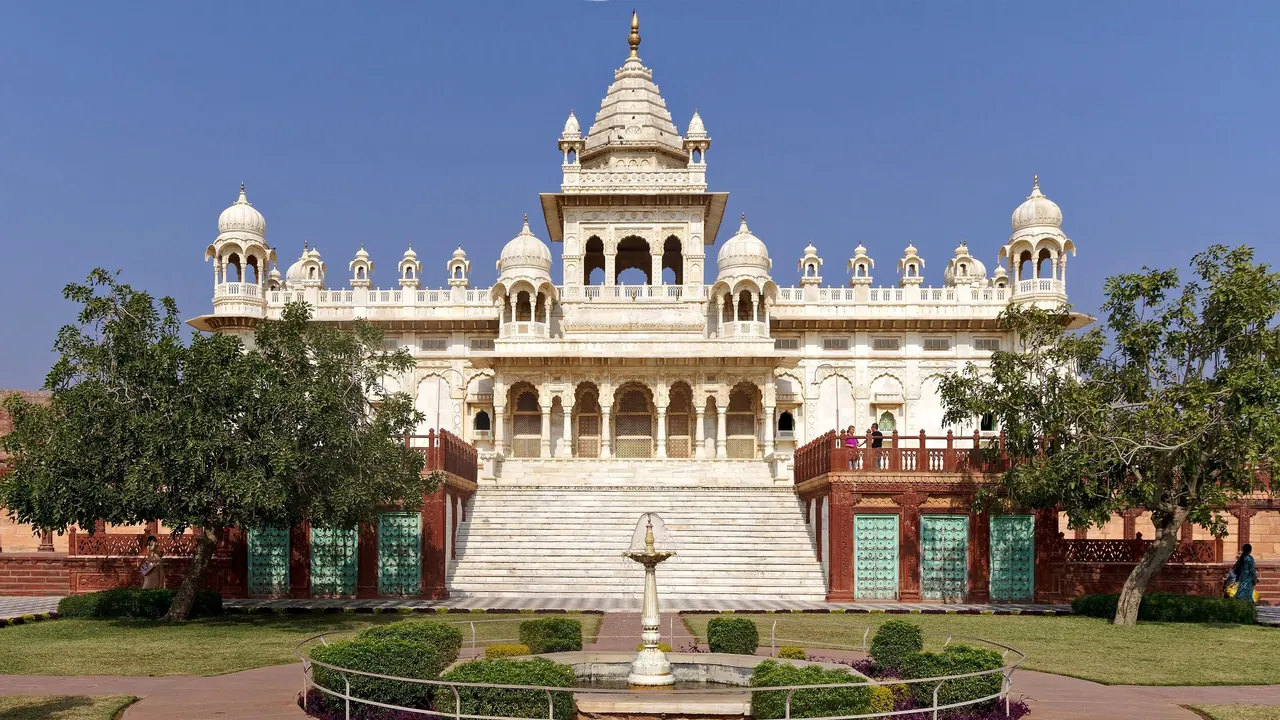
Photos: Agra by Sanket Sawale, Pexels License; Jodhpur by Jakub Hałun, CC BY-SA 4.0, cropped.
Agra or Jodhpur?
Our verdict in twelve categories, each scored against the same fixed benchmark cities, and the climate month by month, so you can choose for your trip.
Choose Agra for
- day trips
- culture and sights
- prices
Agra is the choice when the monuments are the point of the trip. The Taj Mahal, Agra Fort and the Baby Taj make up one of the great sets of Mughal architecture, and Fatehpur Sikri, the bird wetlands at Bharatpur and the Krishna towns of Mathura and Vrindavan are all within easy reach. Treat it as a focused stop of a couple of days, with early starts and quiet evenings, rather than a place to settle into.
Choose Jodhpur for
- live music and the arts
- shopping
- food and drink
Jodhpur makes the better stay for travellers who want more than sightseeing. Mehrangarh and the blue old city are a smaller set of sights than Agra's, but the city eats better, its markets and antique warehouses are more rewarding, and the desert folk music on fort and hotel terraces gives the evenings some life. It is also gentler with children and easier to unwind in, so it suits a slower trip.
Scoreboard
Twelve categories on one fixed scale from 0 to 100. The shaded stretch is the gap between the two.
Your match
Pick a travel style or drag the sliders, and both match scores follow your weighting.
Wins on day trips and culture and sights with your weighting.
Wins on live music and the arts and shopping with your weighting.
What matters to you?
Category by category
What the scores mean for a trip.
Beaches & swimming
Neither city has anywhere to swim outdoors. Agra's Yamuna and Jodhpur's Kaylana lake are both views rather than places to bathe, so on both sides a pool is the only way to cool off. In Agra that usually means a modern hotel pool, while in Jodhpur it is often a courtyard pool inside a heritage hotel.
Food & drink
Agra cooks in the rich Mughlai style, with kormas, biryani and tandoor breads. Its best local eating is in the old bazaars: bedai and jalebi for breakfast near the Jama Masjid, chaat in Sadar Bazaar in the evening, and petha to take away. Away from those streets, meals tend to be tour-group restaurants and hotel dining rooms.
Jodhpur has more to explore. Marwari desert cooking is distinctive, from mirchi vada and pyaaz kachori at the Clock Tower stalls to saffron makhaniya lassi, ker sangri on a thali and the fiery laal maas of the royal kitchens. Both cities serve tourist menus near the main sight and little alcohol, but Jodhpur keeps a curious eater interested for longer.
Culture & sights
Agra has the greater monuments. The Taj Mahal alone justifies the trip, and Agra Fort, the fine inlay of Itimad-ud-Daulah and Akbar's tomb at Sikandra make it a whole Mughal city rather than one sight. Its weakness is museums: there are few, and once the monuments are seen there is little more.
Jodhpur's set is smaller but more varied. Mehrangarh is a dramatic fort with one of Rajasthan's best museums inside, and below it the indigo lanes of the old city, the carved stepwell of Toorji ka Jhalra and the Art Deco Umaid Bhawan show a living city rather than a set of tombs.
Nightlife
Both cities are quiet after dark, and neither has clubs or a bar district. Agra's evenings are shaped by the pre-dawn start at the Taj, so most people eat early and turn in. In Jodhpur a long rooftop dinner facing the floodlit fort, followed by a drink in a heritage hotel bar, makes the evening feel a little more like an outing.
Nature & outdoors
Neither city offers hills, forest or proper hiking, but the outdoor experience differs. Agra's strength is wildlife: Keoladeo at Bharatpur is a superb winter wetland for birds, and the Chambal sanctuary adds gharials and river dolphins by boat.
Jodhpur gives you the desert itself. You can walk the volcanic rock trails of the Rao Jodha park under the fort, see blackbuck and chinkara in Bishnoi country, and ride camels near the dunes. Birdwatchers lean towards Agra, and those after landscape lean towards Jodhpur.
Day trips
Agra is far better placed. Fatehpur Sikri, Akbar's abandoned sandstone capital, is about 40km away and combines easily with Bharatpur or the water palaces of Deeg. Mathura and Vrindavan are about an hour north, and Gwalior's hilltop fort is an easy train ride south.
From Jodhpur the close outings are smaller: the carved temples and dunes of Osian, Bishnoi villages and the rug weavers of Salawas. The region's major sights, Ranakpur, Kumbhalgarh and Jaisalmer, are long drives that work better as stops on a route than as returns in a day.
Good for families
Jodhpur is the more manageable choice for families. Mehrangarh's armour, cannons and elephant howdahs hold children's attention, and ziplines, camel rides and a blackbuck safari add some adventure.
Agra has less for children. Older ones may be impressed by the scale of the Taj and the fort ramparts, and the bear rescue centre towards Mathura is a real treat, but the crowds and touts at the gates are tiring. In both cities a winter visit and a hotel pool for the afternoons make the biggest difference.
Getting around
Getting around takes effort in both cities, with heavy traffic and broken or missing pavements, so the real difference is the layout. Agra's monuments are scattered along and away from the Yamuna. That makes it a city of rides between sights rather than walks, and a car with a driver is the simplest way to fill a whole day.
Jodhpur's core is more compact. In the cooler hours you can walk between the Clock Tower, the blue lanes and the stepwell, and the fort is a steep climb above them. You only need wheels for Umaid Bhawan, Mandore and trips out of town, and it is best to agree rickshaw fares before setting off.
Shopping & style
Jodhpur gives you more to buy and more ways to buy it. Sardar Market sells spices, bangles and silver, the lanes around it specialise in bandhani and leheriya cloth and embroidered mojari, and warehouses on the outskirts sell antique doors and chests and can ship them home.
Agra's speciality is pietra dura, the marble inlay of the Taj, along with leather and carpets, and Kinari Bazaar is a lively market. The commission showrooms that drivers steer you to are a bigger problem in Agra, though bargaining patiently pays off in both cities.
Affordability
Both are very cheap, with street food, guesthouses and rickshaw rides costing little. Where the money goes is different. In Agra the unavoidable expense is the foreigners' entry fees at the Taj and the other Mughal monuments. In Jodhpur the fort is modest to visit, and the big cost is optional: a night in a converted palace or haveli priced like a fine hotel anywhere.
Live music & performing arts
Jodhpur has a real musical tradition. Hereditary Manganiyar and Langa musicians play kamaicha, dholak and khartal in the fort courtyards and on hotel terraces, often with Kalbeliya dancers, and the autumn folk festival at Mehrangarh draws players from across the desert.
Agra's performances are mostly made for visitors: stage shows retelling the story of Shah Jahan and Mumtaz Mahal, and dance evenings in the larger hotels. The spring Taj Mahotsav at Shilpgram is its one real festival.
Wellness & relaxation
Neither city is restful outside closed doors, but Jodhpur offers more ways to slow down. Ayurvedic massage centres in the old town add to the palace hotel spas, and shaded courtyards and rooftop terraces at dusk make calm easy to find.
In Agra, rest mostly means the hotel spa and pool after an early, hot morning at the monuments. The quiet walled gardens of Itimad-ud-Daulah and Sikandra are the main exception, and they are pleasant late in the afternoon.
When should you go?
Pick your month. The climate figures are measured averages, not a forecast.
Agra in July
Jodhpur in July
Daytime high, °C
Rainfall in the month, mm
Temperature and rainfall are climate normals, averaged over the years shown. Agra: 1942-2025, 10 years observed (rainfall 1971-2000) normals, Agra (6.2 km from centre). Jodhpur: 1991-2020 normals, Jodhpur (1.3 km from centre).
Both cities are winter destinations. From November to February the days are dry and comfortable for walking, but Agra is noticeably cooler, with highs around 20°C in January and hazy mornings, while Jodhpur stays pleasantly warm at about 25°C. By April both are too hot for sightseeing beyond the early morning, and in May they peak at around 40°C, with Jodhpur slightly hotter.
The monsoon then divides them. Agra gets heavy rain in July and August, well over 200mm a month, while desert Jodhpur gets about half that and dries out sooner. October is still hot in both, and in Jodhpur the heat lingers longer into autumn, so November is when each city really opens up again.
Which traveller are you?
On a culture and arts trip built around great buildings, Agra is the stronger pick. Its Mughal monuments are among the finest anywhere, and with Fatehpur Sikri close by it offers a deeper run of architecture than Jodhpur can match.
On a family trip with children, Jodhpur is the easier city. Its fort and desert outings turn sightseeing into an adventure for older children, and its compact old city is far less draining than Agra's scattered sights, crowds and touts.
For a shopping trip, Jodhpur is well ahead. Its markets and craft lanes offer much more range, from textiles to antiques. Agra's marble inlay is beautiful, but the commission trade there makes buying well harder work.
Before you go
| Measure | Agra | Jodhpur |
|---|---|---|
| Official language | Hindi, English | Hindi, English |
| Currency | Indian Rupee (INR) | Indian Rupee (INR) |
| Sockets | CM230 V, 50 Hz | CM230 V, 50 Hz |
| Driving side | Left | Left |
| Time zone | UTC+5:30 | UTC+5:30 |
| Emergency number | 108 or 112 | 108 or 112 |
| Elevation | 171 m | 231 m |
| Main airport | Agra Airport / Agra Air Force Station (AGR)6 km from centre2 non-stop destinations | Jodhpur Airport (JDH)5 km from centre7 non-stop destinations |
By the numbers
| Measure | Agra | Jodhpur |
|---|---|---|
| City population | 1,585,705 | 1,033,918 |
| People per km² | 8,417 | 4,437 |
| Museums within 10 km | 0 | 1 |
| UNESCO World Heritage sites within 50 km | 4 | 0 |
Where else could you go?
Every comparison below shares a destination with this one, so you can follow Agra or Jodhpur somewhere new.