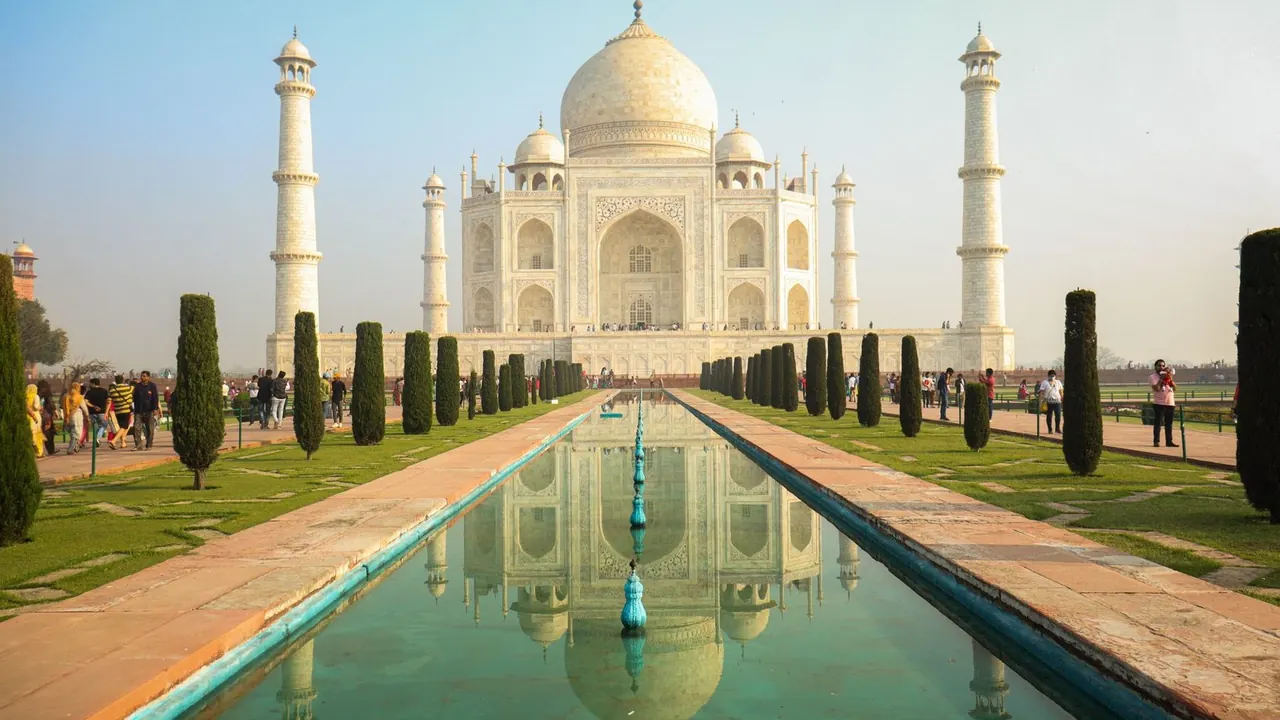
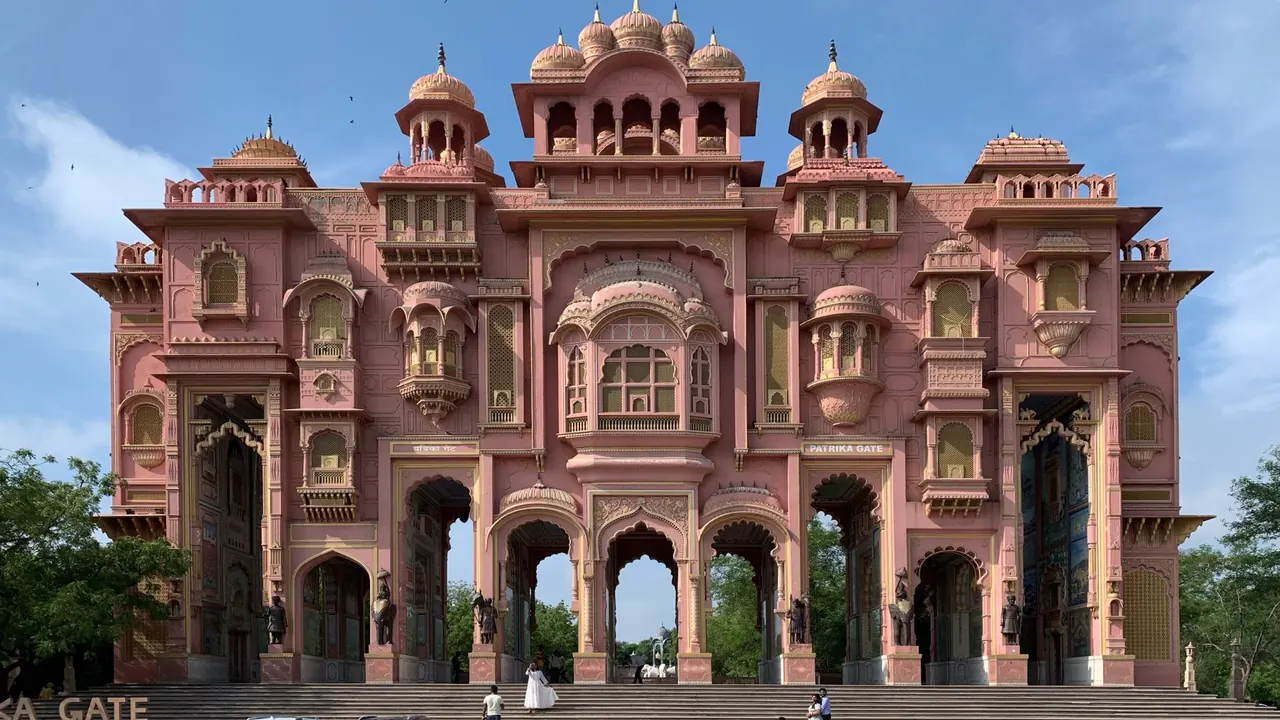
Photos: Agra by Sanket Sawale, Pexels License; Jaipur by Chainwit., CC BY-SA 4.0, cropped.
Agra or Jaipur?
Our verdict in twelve categories, each scored against the same fixed benchmark cities, and the climate month by month, so you can choose for your trip.
Choose Agra for
- day trips
- prices
Agra suits travellers who want the great Mughal monuments and little else. The Taj Mahal, Agra Fort and the Baby Taj fill two focused days, and the city makes a better base for excursions, with Fatehpur Sikri, the Bharatpur wetlands and the Krishna towns of Mathura and Vrindavan all close by. It is a place to get up early, sightsee hard and move on.
Choose Jaipur for
- shopping
- live music and the arts
- food and drink
Jaipur is the better pick for a longer stay with more to do once the sightseeing is over. Its monuments match Agra's for grandeur, and around them you get a far richer food scene, bazaars that rank among India's best for crafts and textiles, folk music and puppet shows in the evenings, and heritage hotels built for slow afternoons. Choose it if shopping, eating and a few days of settled exploring matter as much as the famous sights.
Scoreboard
Twelve categories on one fixed scale from 0 to 100. The shaded stretch is the gap between the two.
Your match
Pick a travel style or drag the sliders, and both match scores follow your weighting.
Wins on day trips and prices with your weighting.
Wins on shopping and live music and the arts with your weighting.
What matters to you?
Category by category
What the scores mean for a trip.
Beaches & swimming
Neither city has a beach or any water you would swim in. Agra's Yamuna is for gazing at from the Taj gardens and Jaipur has no swimming lake, so in both cities a hotel pool is the only option, and a welcome one in the hot months.
Food & drink
Agra's cooking is Mughlai, with kormas, biryani and tandoor breads, plus bedai and jalebi for breakfast in the old bazaars and the candied petha sold everywhere. Away from those streets, most visitors end up in hotel dining rooms or restaurants for tour groups, and a day or two covers it.
Jaipur gives you a deeper and more distinctive table. Rajasthani dishes such as ker sangri, gatte ki sabzi and fiery laal maas, street breakfasts of pyaaz kachori and lassi in clay cups, and long-established vegetarian canteens around Johari Bazaar and MI Road keep a food lover busy for days. In both cities alcohol is mostly confined to hotels.
Culture & sights
The two are equals in heritage but different in character. Agra rests on a single, unmatched masterpiece: the Taj Mahal, backed by Agra Fort, the fine inlay of Itimad-ud-Daulah and Akbar's tomb at Sikandra, all Mughal and all seen in about two days.
Jaipur is a whole planned city of 1727 rather than a set of tombs. The colour-washed grid of the Pink City, the City Palace, Hawa Mahal and the stone instruments of Jantar Mantar sit at its heart, with Amber, Jaigarh and Nahargarh forts on the ridges above and the Albert Hall Museum adding the museum depth Agra lacks.
Nightlife
Agra hardly has any nightlife. After a pre-dawn start at the Taj, evenings end with dinner and perhaps a drink in a hotel bar.
Jaipur offers a little more, though it's still not a place for big nights out. Rooftop lounges in the old city look out at the floodlit forts, and a few clubs in C-Scheme fill up at weekends and in the wedding season, but there is no bar street or late culture.
Nature & outdoors
Agra's landscape is a flat, dusty river plain with no hills, so its outdoor appeal lies just outside the city: the bird wetlands of Keoladeo at Bharatpur in winter and the gharials and river dolphins of the Chambal sanctuary.
Jaipur has a little more on its doorstep. The rocky Aravalli hills give views from Nahargarh, and Jhalana, on the city edge, offers jeep safaris with a real chance of seeing leopards. Balloon flights over the fort country and Sambhar salt lake add variety, though in both cities outdoor time belongs to the cool months.
Day trips
Agra is the stronger base for excursions. Fatehpur Sikri, Akbar's abandoned sandstone capital, is about 40km away and pairs easily with Bharatpur's wetlands or the water palaces at Deeg, while Mathura and Vrindavan are an hour north and Gwalior's hilltop fort is a short train ride south.
Jaipur has photogenic places close by, including the Chand Baori stepwell, Samode's painted palace, ruined Bhangarh and the block-printing villages of Sanganer and Bagru. Its better-known destinations, Pushkar, Ajmer and the Taj itself, are long days on the road rather than easy outings.
Good for families
Neither city is easy with children, and both share heat, chaotic traffic, few pavements and persistent touts. In Agra the highlights are the scale of the Taj and the bear rescue centre on the Mathura road, and a short stay works best.
Jaipur gives children a few more things to enjoy, with fort ramparts and passages to explore, puppet shows and leopard safaris at Jhalana, so it can hold a family for a little longer in the cool season.
Getting around
Getting around is much the same in both cities: neither is walkable, and auto-rickshaws, ride-hailing taxis or a car and driver do the work. In Agra the sights are strung along the river, and the vehicle-free zone around the Taj means finishing by foot, electric cart or cycle rickshaw.
Jaipur has a short metro line, though it misses most sights. Its bazaars can be walked within the Pink City, but Amber lies about 11km north, so a driver for the day is the easiest way to see it.
Shopping & style
Agra's speciality is pietra dura, the marble inlay used on the Taj, sold alongside leather goods, carpets and sweets in Kinari and Sadar bazaars. The range is narrow, and the commission showrooms that drivers steer you to are hard to avoid.
Jaipur is one of the reasons people travel to Rajasthan at all. Each old city bazaar has its trade, gems and silver on Johari Bazaar, lac bangles in Maniharon ka Rasta, textiles in Bapu Bazaar, and blue pottery, miniature paintings and block prints are made nearby. The same commission trade applies, plus long-running gem scams, so choose sellers with care.
Affordability
Both are very cheap for a visitor, with low-cost guesthouses, street food and rickshaws, and in both cities the higher foreigners' entry fees at the main monuments are the biggest outlay. The splurges differ: in Agra it's the luxury hotels with Taj views, and in Jaipur the palace hotels and heritage havelis, where alcohol also feels pricey.
Live music & performing arts
Agra's performances are mostly staged for tourists: musicals telling the story of Shah Jahan and Mumtaz Mahal, hotel dance evenings and the spring Taj Mahotsav at Shilpgram.
Jaipur has living traditions of its own, Kathak dance, Kalbeliya dancing, Rajasthani folk music and string puppetry, and these are easy to catch in the evenings. Jawahar Kala Kendra and Ravindra Manch add theatre and classical concerts, though neither city runs a season you would plan a trip around.
Wellness & relaxation
In Agra, rest means hotel spas and pools, plus the walled gardens of Itimad-ud-Daulah and Sikandra, where the noise falls away late in the day. Outside those, the horns, haze and touts set the mood.
Jaipur offers more restful places to stay. Its heritage havelis and palace hotels are built around shaded courtyards and gardens, many with Ayurvedic massage and yoga, so the slow hours between early starts feel part of the trip rather than an escape from it.
When should you go?
Pick your month. The climate figures are measured averages, not a forecast.
Agra in July
Jaipur in July
Daytime high, °C
Rainfall in the month, mm
Where the figures come from
Agra has no rain gauge within 25 km of the centre, so its rainfall comes from a gridded climate dataset read at the city rather than from a gauge further away.
Jaipur has no rain gauge within 25 km of the centre, so its rainfall comes from a gridded climate dataset read at the city rather than from a gauge further away.
Temperature and rainfall are climate normals, averaged over the years shown. Agra: 1942-2025 (rainfall 1991-2020) normals, Agra (6.2 km from centre). Jaipur: 1993-2020 (rainfall 1991-2020) normals, Jaipur / Sanganer (11.1 km from centre).
Both cities are at their best from November to February, when days are warm and dry and comfortable for walking between monuments. Agra is the cooler of the two in midwinter, with January highs around 20°C against 23°C in Jaipur, and it gets a little more winter rain and haze. From April to June both turn fiercely hot, peaking near 42°C in Jaipur in May, and sightseeing shrinks to dawn and dusk.
The monsoon arrives in late June and peaks in July and August, when Agra is the wetter city, with up to 262mm in August. Jaipur dries out faster afterwards, so October there is almost rainless, while both are pleasant again by November.
Which traveller are you?
For a short city break, Agra makes more sense. Its essential sights, the Taj Mahal, Agra Fort and Itimad-ud-Daulah, can be seen properly in two days, while Jaipur's spread of palaces, forts and bazaars really needs three.
On a shopping trip, Jaipur is the clear choice. Its old city bazaars each specialise, in gems and silver, lac bangles or block-printed textiles, and C-Scheme's boutiques add modern design. Agra offers mainly marble inlay and leather, and the commission showrooms make buying harder work.
For a food and nightlife trip, Jaipur gives you much more. Rajasthani dishes like laal maas and dal baati, the morning kachori stalls and rooftop lounges over the lit forts beat Agra's narrower Mughlai menu and its early nights.
Before you go
| Measure | Agra | Jaipur |
|---|---|---|
| Official language | Hindi, English | Hindi, English |
| Currency | Indian Rupee (INR) | Indian Rupee (INR) |
| Sockets | CM230 V, 50 Hz | CM230 V, 50 Hz |
| Driving side | Left | Left |
| Time zone | UTC+5:30 | UTC+5:30 |
| Emergency number | 108 or 112 | 108 or 112 |
| Elevation | 171 m | 431 m |
| Main airport | Agra Airport / Agra Air Force Station (AGR)6 km from centre2 non-stop destinations | Jaipur International Airport (JAI)10 km from centre27 non-stop destinations |
By the numbers
| Measure | Agra | Jaipur |
|---|---|---|
| City population | 1,585,705 | 3,073,350 |
| People per km² | 8,417 | - |
| Museums within 10 km | 0 | 6 |
| UNESCO World Heritage sites within 50 km | 4 | 3 |
Where else could you go?
Every comparison below shares a destination with this one, so you can follow Agra or Jaipur somewhere new.