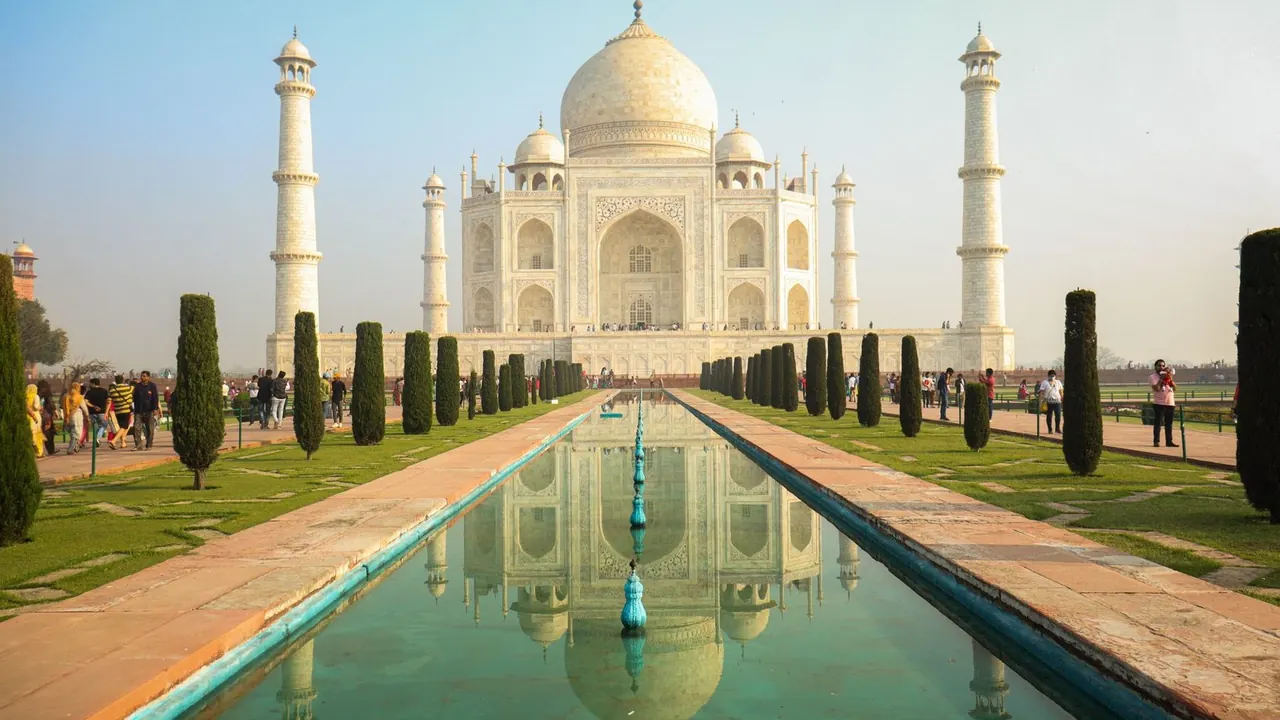
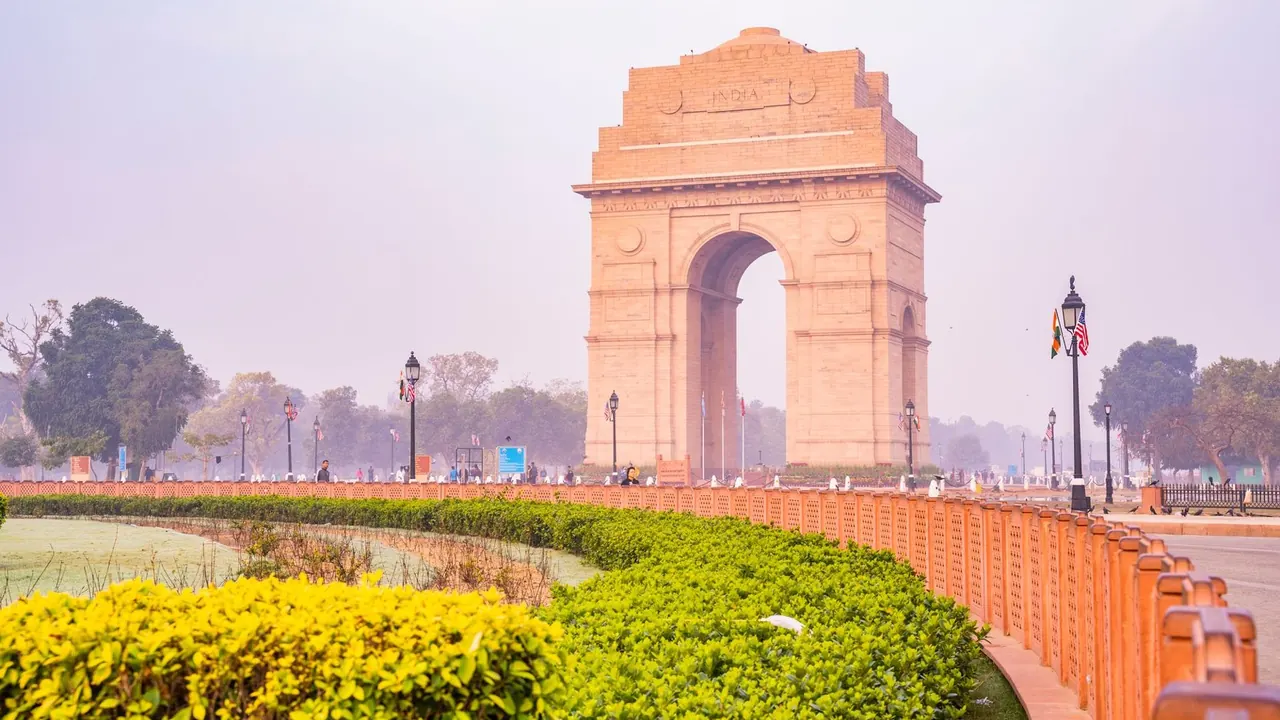
Photos: Agra by Sanket Sawale, Pexels License; Delhi by shalender kumar, Pexels License.
Agra or Delhi?
Our verdict in twelve categories, each scored against the same fixed benchmark cities, and the climate month by month, so you can choose for your trip.
Choose Agra for
- nature and the outdoors
- day trips
Agra suits a traveller who has the Taj Mahal at the top of the list and a day or two to give it. The great Mughal monuments are a short ride apart, Fatehpur Sikri and the Bharatpur wetlands are close by, and evenings are quiet by design. It works best as a focused stop rather than a base for a long stay.
Choose Delhi for
- live music and the arts
- food and drink
- shopping
Choose Delhi for a fuller trip where eating, shopping and evenings out matter as much as the sights. The food lanes of Old Delhi, the craft emporiums and designer courtyards, the classical music season and a metro that reaches most monuments give it much more depth. The Taj is still within a day's reach by fast train.
Scoreboard
Twelve categories on one fixed scale from 0 to 100. The shaded stretch is the gap between the two.
Your match
Pick a travel style or drag the sliders, and both match scores follow your weighting.
Wins on nature and the outdoors and day trips with your weighting.
Wins on live music and the arts and food and drink with your weighting.
What matters to you?
Category by category
What the scores mean for a trip.
Beaches & swimming
Neither city has a coast or a river fit for swimming, so in both a swim means a hotel pool, which is welcome from April until the monsoon. The difference is what comes next. Delhi's flights to Goa and Kerala make it the natural place to start a beach leg, while Agra is a stop between other places rather than a gateway.
Food & drink
Agra's Mughlai cooking deserves a morning in the lanes around Kinari Bazaar for bedai and hot jalebi, an evening of chaat in Sadar Bazaar and a box of petha to take home. After that, most meals are in hotel dining rooms or tour-group restaurants near the Taj, and a drink is harder to find.
Delhi takes the same northern tradition much further. The lanes around Chandni Chowk serve nihari, stuffed parathas and kulfi, and butter chicken and dal makhani were invented in the city. South Delhi adds regional kitchens from Kerala to Kashmir and modern Indian tasting menus, so a trip built around food can last a week here.
Culture & sights
Both are outstanding for Mughal architecture, but they offer it in different ways. Agra is concentrated: the Taj Mahal, Agra Fort and the inlay of Itimad-ud-Daulah are among the finest buildings in India, Mehtab Bagh gives the sunset view, and two days covers it all.
Delhi spreads its history across many centuries and a much larger area, from the Qutb Minar to Humayun's Tomb, the model for the Taj, and on to the imperial avenue of Kartavya Path. It also has the national collections of art and antiquities and living places of worship such as Bangla Sahib and Akshardham, which Agra, with its few museums, cannot match.
Nightlife
In Agra an evening means dinner and perhaps a rooftop drink facing the dome, because everyone is up before dawn for the Taj. Delhi has a real night out, with rooftop bars in Hauz Khas Village, pubs under the Connaught Place colonnades, and larger clubs and brewpubs in Gurugram.
Delhi's nightlife is spread out, people go from door to door by taxi, and it ends earlier than in many big cities. Still, it exists in a way Agra's does not.
Nature & outdoors
Neither city is green or hilly. Both sit on the flat Yamuna plain, with heat in summer and haze in winter. Agra comes out ahead for wildlife: Keoladeo at Bharatpur is one of Asia's great bird wetlands, and the Chambal sanctuary adds gharials and river dolphins seen from a boat.
Delhi's outdoors is mostly gardens such as Lodhi Gardens and Sunder Nursery, the scrubby Ridge forest, and winter birdwatching at Okhla and Sultanpur. From late autumn the smog often makes outdoor exercise unwise, and for real walking people go to the Himalayan hill stations.
Day trips
Both have strong day trips, and Mathura and Vrindavan, the holy towns of Krishna, are within reach of either. From Agra, the abandoned capital of Fatehpur Sikri is only about 40km away and pairs with the Bharatpur wetlands or the water palaces of Deeg. Gwalior's hilltop fort is a train ride to the south.
From Delhi, the standout trip is Agra itself, a long day at the Taj by express train. The hilltop fort at Neemrana, on the road to Rajasthan, is a closer option. Roads out of Delhi are slow, so its excursions depend on the railway.
Good for families
Neither city is easy with children, given the heat, the traffic and the missing pavements, but Delhi has more to keep them busy. The steam locomotives at the National Rail Museum, the zoo beside Purana Qila, the science centre and the water parks in Noida and Gurugram give families something besides monuments, and the Akshardham water show makes a good evening.
Agra has the sheer size of the Taj and the fort ramparts for older children and the bear rescue centre towards Mathura, and very little else. Families there tend to sightsee early and spend the afternoon by the hotel pool.
Getting around
Delhi has the metro: clean and air-conditioned, signed in English, with an airport express line and stations near most major monuments, which makes a sprawling city manageable. Agra has nothing like it. Its sights are scattered along the river on congested roads, so visitors rely on auto-rickshaws, app taxis or a car and driver hired for the day.
In both cities, heat and broken pavements limit walking. Agra's one exception is the area around the Taj, where polluting vehicles are kept out and the last stretch is covered on foot or by electric cart.
Shopping & style
Agra's speciality is pietra dura, the marble inlay used on the Taj, along with leather, carpets and petha, and Kinari and Sadar bazaars are cheap places to browse. The drivers who steer visitors to commission showrooms make it hard to shop well.
Delhi is a marketplace for the whole country. Dilli Haat gathers crafts from many states, the emporiums on Baba Kharak Singh Marg sell at fixed prices with guaranteed quality, and Khari Baoli and Chandni Chowk cover spices and fabric. Khan Market and Shahpur Jat add Indian designers and block-print homeware, which Agra lacks entirely.
Affordability
Both are very cheap to visit, with low-cost guesthouses, street food and inexpensive rickshaw rides. Where they differ is in what costs the most. In Agra the biggest bill is often the foreigners' entry fee at the Taj and the other monuments. In Delhi the metro keeps getting around cheap, and the expense comes from grand hotels, smart South Delhi restaurants and imported alcohol.
Live music & performing arts
Agra's live performance is mostly put on for visitors: musicals about Shah Jahan and Mumtaz Mahal, dance evenings in the larger hotels, and the Taj Mahotsav at Shilpgram each spring.
Delhi has a genuine performing culture. Through the cooler months there are Hindustani recitals and Kathak and Bharatanatyam dance around Mandi House, and the National School of Drama makes it India's theatre capital. The Thursday evening qawwali at the Nizamuddin shrine is free and stays with visitors long afterwards.
Wellness & relaxation
In Agra, rest is something you arrange inside the hotel: a spa with Ayurvedic oil treatments and a quiet lawn after a pre-dawn start at the Taj. Out in the city, real calm is limited to the walled gardens of Itimad-ud-Daulah and Akbar's tomb at Sikandra, where the horns fade and a shaded bench is easy to find late in the afternoon.
Delhi offers more beyond its hotel spas, with yoga and Ayurveda centres across South Delhi, early walks in Sunder Nursery and the hush inside a gurudwara or Sufi shrine. Its noise and winter smog are just as wearing, though, and travellers who want a proper retreat go on to Rishikesh or Kerala.
When should you go?
Pick your month. The climate figures are measured averages, not a forecast.
Agra in July
Delhi in July
Daytime high, °C
Rainfall in the month, mm
Where the figures come from
Agra has no rain gauge within 25 km of the centre, so its rainfall comes from a gridded climate dataset read at the city rather than from a gauge further away.
Temperature and rainfall are climate normals, averaged over the years shown. Agra: 1942-2025 (rainfall 1991-2020) normals, Agra (6.2 km from centre). Delhi: 1991-2020 normals, New Delhi / Safdarjung (9.4 km from centre).
The two cities share almost the same climate, and neither has a beach season. The pleasant stretch runs from October to March. January highs of around 20°C make long days of sightseeing comfortable, though winter haze hangs over both. Agra warms up a little faster in February. From April to June both are punishing, with highs near 40°C, and walking between monuments is best kept to the early morning.
The monsoon arrives in late June, peaks in August and lingers through September. Agra is slightly wetter, with 262mm in August against Delhi's 236mm. Delhi's sunniest weeks come in spring and October, and December is its dullest month, when the sun is often lost in the haze.
Which traveller are you?
On a food and nightlife trip, Delhi is the clear choice. Old Delhi's nihari, parathas and kebabs, South Delhi's restaurants and the rooftop bars of Hauz Khas fill several days and nights. Agra's food runs thin after a day, and its evenings end at dinner.
For a shopping trip, Delhi brings crafts from across India together at Dilli Haat and the state emporiums, adds designer boutiques in Shahpur Jat and Khan Market, and has Old Delhi's spice and fabric bazaars. Agra's marble inlay is lovely, but the choice is narrow.
On an outdoors trip, Agra has the edge, mainly for its wildlife. Keoladeo at Bharatpur, about an hour away, is a winter bird wetland explored by bicycle, and the Chambal sanctuary has boat trips among gharials and river dolphins. Delhi's green spaces are mostly gardens.
Before you go
| Measure | Agra | Delhi |
|---|---|---|
| Official language | Hindi, English | Hindi, English |
| Currency | Indian Rupee (INR) | Indian Rupee (INR) |
| Sockets | CM230 V, 50 Hz | CM230 V, 50 Hz |
| Driving side | Left | Left |
| Time zone | UTC+5:30 | UTC+5:30 |
| Emergency number | 108 or 112 | 108 or 112 |
| Elevation | 171 m | 221 m |
| Main airport | Agra Airport / Agra Air Force Station (AGR)6 km from centre2 non-stop destinations | Indira Gandhi International Airport (DEL)17 km from centre144 non-stop destinations |
By the numbers
| Measure | Agra | Delhi |
|---|---|---|
| City population | 1,585,705 | 26,495,000 |
| People per km² | 8,417 | 18,962 |
| Museums within 10 km | 0 | 23 |
| UNESCO World Heritage sites within 50 km | 4 | 4 |
Where else could you go?
Every comparison below shares a destination with this one, so you can follow Agra or Delhi somewhere new.