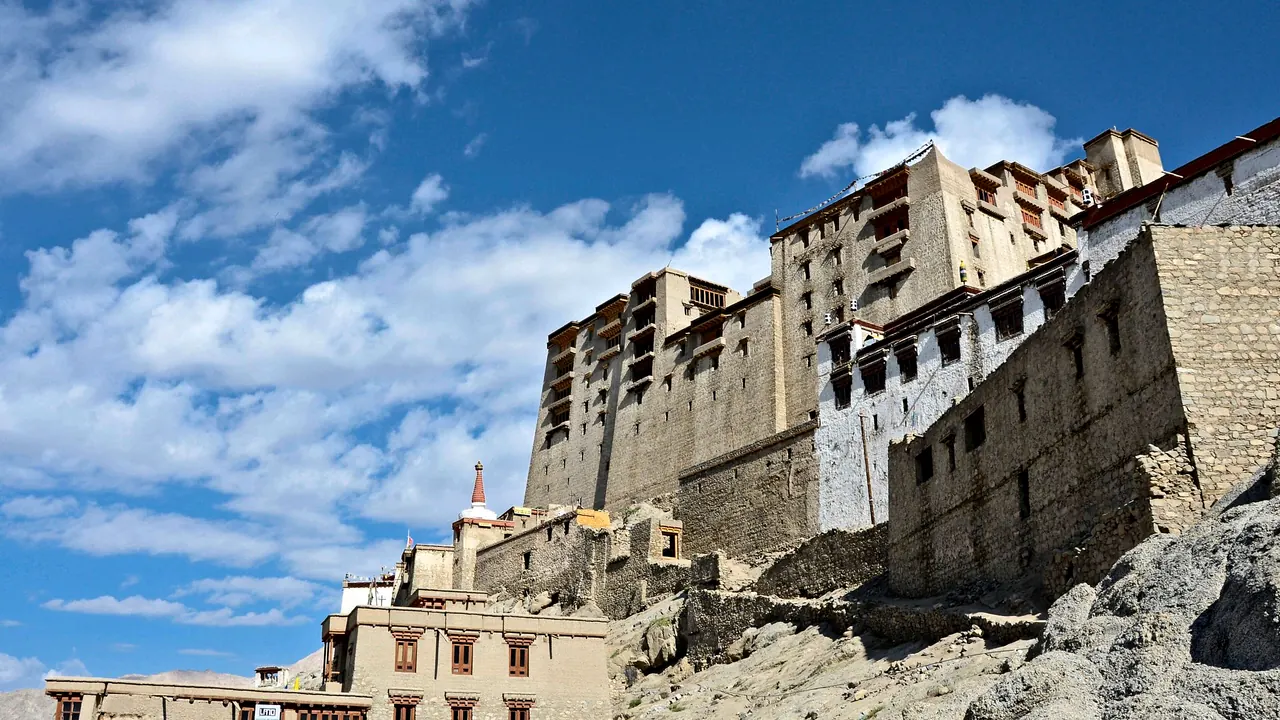
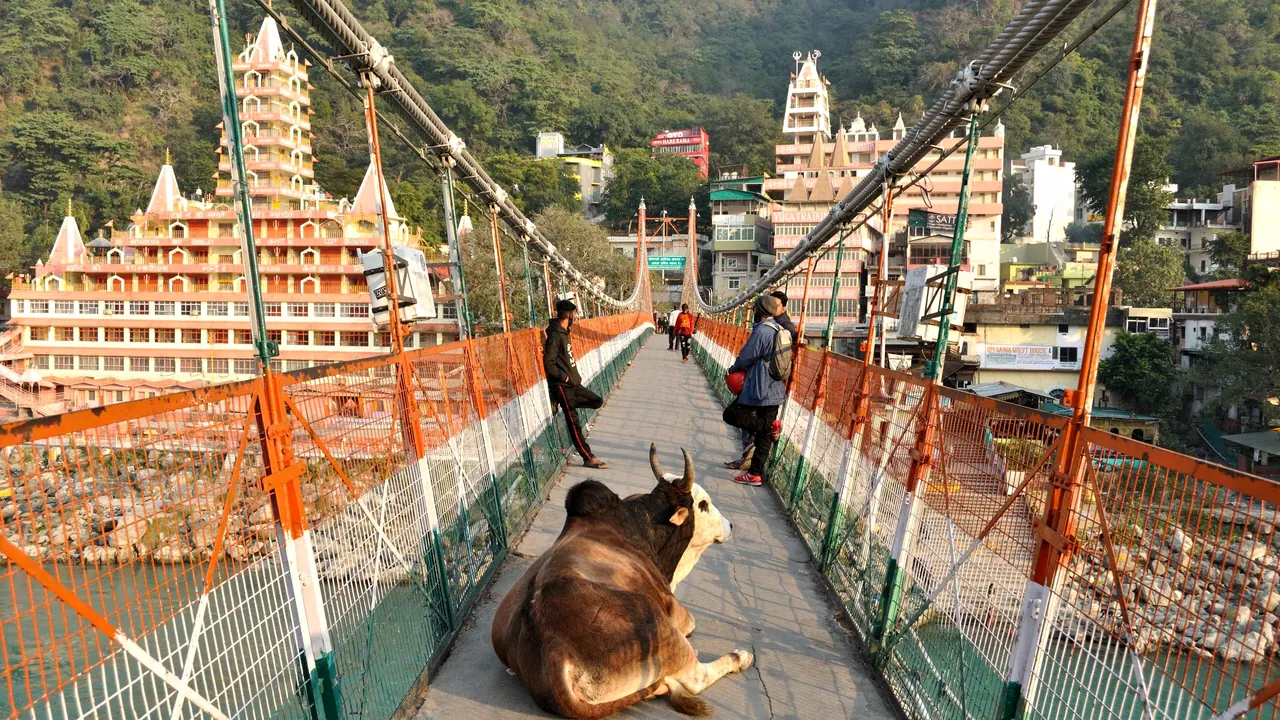
Photos: Leh by Rayan Naqash, CC BY-SA 3.0, cropped; Rishikesh by Dey.sandip, CC BY-SA 4.0, cropped.
Leh or Rishikesh?
Our verdict in twelve categories, each scored against the same fixed benchmark cities, and the climate month by month, so you can choose for your trip.
Choose Leh for
- nature and the outdoors
- day trips
- culture and sights
Leh is the choice for travellers who want the mountains themselves. From a town at about 3,500m you reach treks through Hemis National Park, passes above 5,000m, rafting gorges and a ring of painted monasteries that ranks among the finest Buddhist art anywhere. It suits fit, unhurried adults who will give up a few days to acclimatising and don't mind long drives on mountain roads.
Choose Rishikesh for
- wellness
- getting around
- families
Anyone after rest, routine and a low daily cost should pick Rishikesh. Its ashrams, yoga schools and Ayurvedic clinics make it a place to stay put and slow down, and it is cheaper and easier to get around than Leh. The outdoors here is gentler, with forested ridges, river rafting and jungle safaris, and the town is a much easier start for anyone arriving from the plains.
Scoreboard
Twelve categories on one fixed scale from 0 to 100. The shaded stretch is the gap between the two.
Your match
Pick a travel style or drag the sliders, and both match scores follow your weighting.
Wins on nature and the outdoors and day trips with your weighting.
Wins on wellness and getting around with your weighting.
What matters to you?
Category by category
What the scores mean for a trip.
Beaches & swimming
Neither town is a place to swim. Leh has nothing at all: the Indus and the high lakes are fed by snowmelt and are for looking at or rafting.
Rishikesh at least has the white sand banks of the Ganges and the camp beaches near Shivpuri, where you can sit by the water. Its fast current means a ritual dip at the ghats, holding the chains, is as far as most people go.
Food & drink
Both kitchens are simple and filling, and the rooftop cafés serving trekkers and yoga students offer much the same pizza and Israeli menus. Rishikesh has a little more depth. Its vegetarian thalis, puri and jalebi breakfasts and chai stalls by the bridges give a fuller day of eating, though meat and alcohol are not sold in the holy town.
Leh's draw is Tibetan and Ladakhi comfort food, such as momos, thenthuk, skyu and salty butter tea, along with its famous apricots. Much of its café scene closes outside summer.
Culture & sights
Both towns hold about the same amount to see, but of very different kinds. Leh has real architecture: the nine-storey Leh Palace modelled on the Potala, the Namgyal Tsemo fort ridge above it, a mud-brick old town of chortens and lanes, and the Shanti Stupa at sunset. Its town sights take a day or two.
Rishikesh offers atmosphere rather than monuments. There are the painted ashrams of Swarg Ashram, the tiered Tera Manzil temple, the nightly aarti at Triveni Ghat and the overgrown Beatles ashram in the forest. Seeing it all takes a little longer, two or three days.
Nightlife
Neither town has any nightlife to speak of. Leh at least has a few rooftops where you can have a beer with a late dinner. In Rishikesh there is no alcohol at all, and evenings mean the aarti, a café terrace and perhaps a chant session before bed.
Nature & outdoors
Leh has the bigger landscape. The bare, multicoloured Indus valley lies beneath the Stok range, with the Markha valley trek, the road up Khardung La and rafting on the Zanskar close by. Further out are the Nubra dunes and Pangong Tso, and in winter there is snow leopard tracking and the Chadar trek. Plan on a few days of acclimatising first.
Rishikesh is greener and lower. It has forested Shivalik ridges, strong rapids above Shivpuri, waterfall hikes, and jeep safaris for elephants in Rajaji National Park. It also adds organised thrills such as bungee jumping and ziplining.
Day trips
Leh has the richer list of day trips, though nearly every outing is a monastery or palace. Thiksey and Shey are close, Hemis is about an hour away, and a full day west reaches the thousand-year-old painted temples at Alchi.
Rishikesh offers more variety but less brilliance. There is the vast evening aarti at Haridwar, the Forest Research Institute in Dehradun, the hill station of Mussoorie and the river confluence at Devprayag.
Good for families
Both towns are hard going with small children, but Rishikesh is the easier of the two. Teenagers can raft, zipline and join Rajaji safaris, and the vegetarian food is gentle on young stomachs, though the fast river, the macaques and the motorbikes need watching.
Leh adds the risk of altitude sickness, reached in a single flight, and long mountain drives. That makes it realistic only for robust older teenagers.
Getting around
Rishikesh is the easier town to move around. Footbridges, riverside paths, river ferries and cheap shared vikrams link its quarters, even if the paths are often uphill.
Leh's centre can be walked, but the slopes are tiring in the thin air. Anything beyond town means the fixed-rate taxi union, a hired motorbike or a shared jeep on long mountain roads, and some passes close in winter.
Shopping & style
Each town has one theme of its own, and neither is a reason to travel. Leh's Main Bazaar sells pashmina, thangkas, turquoise jewellery and good trekking gear. The lanes of Rishikesh are given over to yoga clothes, malas, Ayurvedic oils and philosophy books. In both, stock repeats from stall to stall, so take your time choosing.
Affordability
Both are inexpensive, but Rishikesh is cheaper to live in day to day. Ashram rooms, thalis and nearly free shared autos keep costs low, and the bigger bills are rafting and long courses.
In Leh, guesthouses and momos are cheap enough. Transport is what adds up: high taxi union fares, car hire for every outing, permits for the outer valleys, and higher hotel rates in the short summer season.
Live music & performing arts
Neither town has a theatre or concert hall, and in both the performance tradition is devotional. Rishikesh offers a little more on an ordinary evening, with drums at the aarti, kirtan sessions with harmonium and tabla, and the occasional sitar recital.
Leh's highlight comes only on festival days: masked cham dances in monastery courtyards, above all at the summer Hemis festival.
Wellness & relaxation
This is where the two differ most. Rishikesh is built around wellbeing. Dozens of ashrams offer dawn yoga, silent meditation and teacher trainings, and there are Ayurvedic detox treatments and an International Yoga Festival each spring. You find real calm in the ashram gardens and upriver, away from the noisy bridges.
Leh offers quiet guesthouse roofs, Buddhist meditation courses and amchi doctors of Tibetan medicine. The thin air and broken sleep of the first days still make true rest hard.
When should you go?
Pick your month. The climate figures are measured averages, not a forecast.
Leh in July
Rishikesh in July
Daytime high, °C
Rainfall in the month, mm
Where the figures come from
Leh has no weather station within reach, so its figures come from a gridded climate model rather than a measured record, and read a broad area rather than the city itself.
Rishikesh has no weather station within reach, so its figures come from a gridded climate model rather than a measured record, and read a broad area rather than the city itself.
Temperature and rainfall are climate normals, averaged over the years shown. Leh: 1991-2020 normals, TerraClimate 4 km grid at the town, no weather station within 90 km. Rishikesh: 2001-2020 normals, NASA POWER reanalysis grid, no weather station within 90 km.
The two towns have almost opposite seasons. Leh is a summer destination. From June to September daytime highs reach about 22°C to 25°C and it is dry all year, so it is good weather for trekking and long drives. By November it is cold, and in January the daytime high stays below freezing at around -3°C. Winter suits only those coming for snow and frozen rivers.
Rishikesh is at its best from October to March, when the days are warm but comfortable for walking the ghats. April and May turn very hot, with highs near 39°C. The monsoon follows, bringing around 381mm in July and almost as much in August, and the swollen river stops the rafting until autumn. Put simply, go to Leh in high summer and to Rishikesh in the cooler half of the year.
Which traveller are you?
For an outdoors trip, Leh is the stronger choice. Multi-day treks, high passes, mountain biking and rafting through deep gorges all start close to town. Rishikesh offers good rafting and forest safaris, but the high Himalaya is several days away from there.
On a relaxing and wellness trip, Rishikesh suits far better. It has daily yoga, silent meditation, residential courses and Ayurvedic treatments within a calm daily rhythm. In Leh, thin air and broken sleep work against rest for the first days.
On a trip with a tight budget, Rishikesh goes further. Ashram rooms, thalis and shared autos cost almost nothing. In Leh, rooms and meals are cheap too, but fixed taxi fares, car hire and permits add up quickly.
Before you go
| Measure | Leh | Rishikesh |
|---|---|---|
| Official language | Hindi, English | Hindi, English |
| Currency | Indian Rupee (INR) | Indian Rupee (INR) |
| Sockets | CM230 V, 50 Hz | CM230 V, 50 Hz |
| Driving side | Left | Left |
| Time zone | UTC+5:30 | UTC+5:30 |
| Emergency number | 108 or 112 | 108 or 112 |
| Elevation | 3,500 m | 372 m |
| Main airport | Leh Kushok Bakula Rimpochee Airport (IXL)5 km from centre5 non-stop destinations | Dehradun Jolly Grant Airport (DED)14 km from centre13 non-stop destinations |
By the numbers
| Measure | Leh | Rishikesh |
|---|---|---|
| City population | 30,870 | 70,499 |
| People per km² | - | 133 |
| Museums within 10 km | 2 | 0 |
| UNESCO World Heritage sites within 50 km | 0 | 0 |
Where else could you go?
Every comparison below shares a destination with this one, so you can follow Leh or Rishikesh somewhere new.
- Delhivs Rishikesh
- Agravs Rishikesh
- Amritsarvs Rishikesh
- Amritsarvs Leh
- Jaipurvs Rishikesh
- Pokharavs Rishikesh