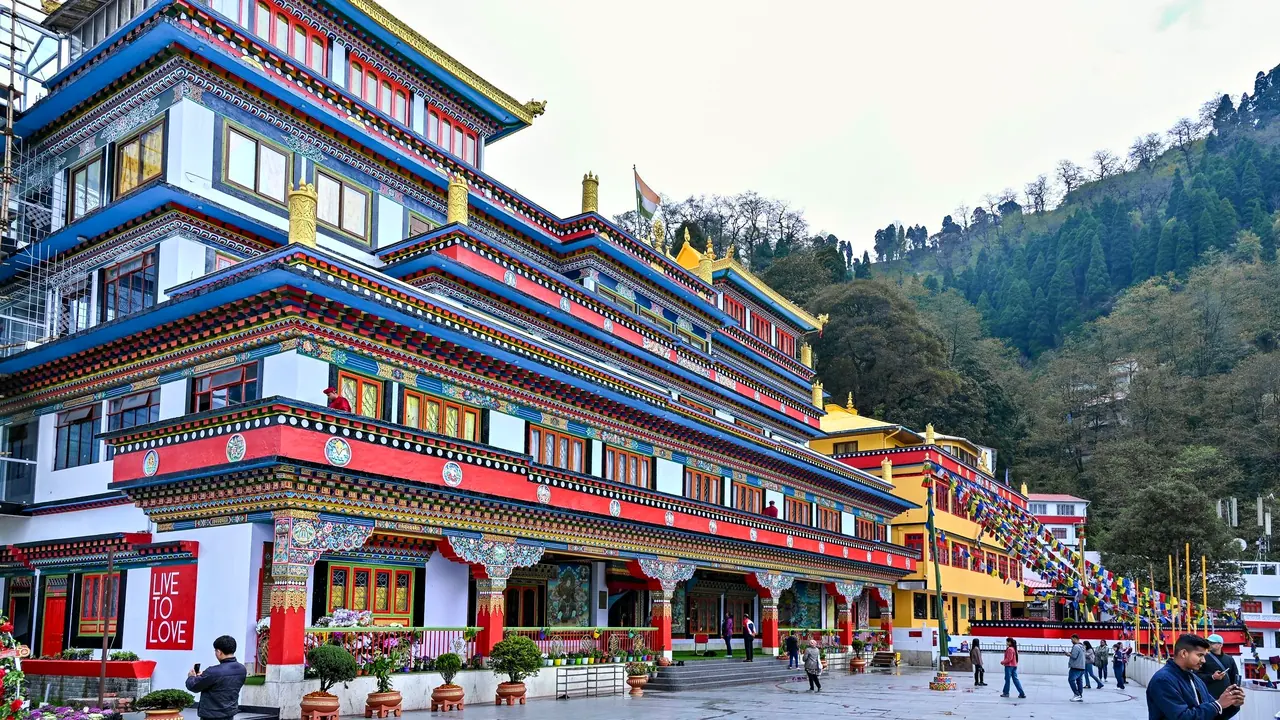
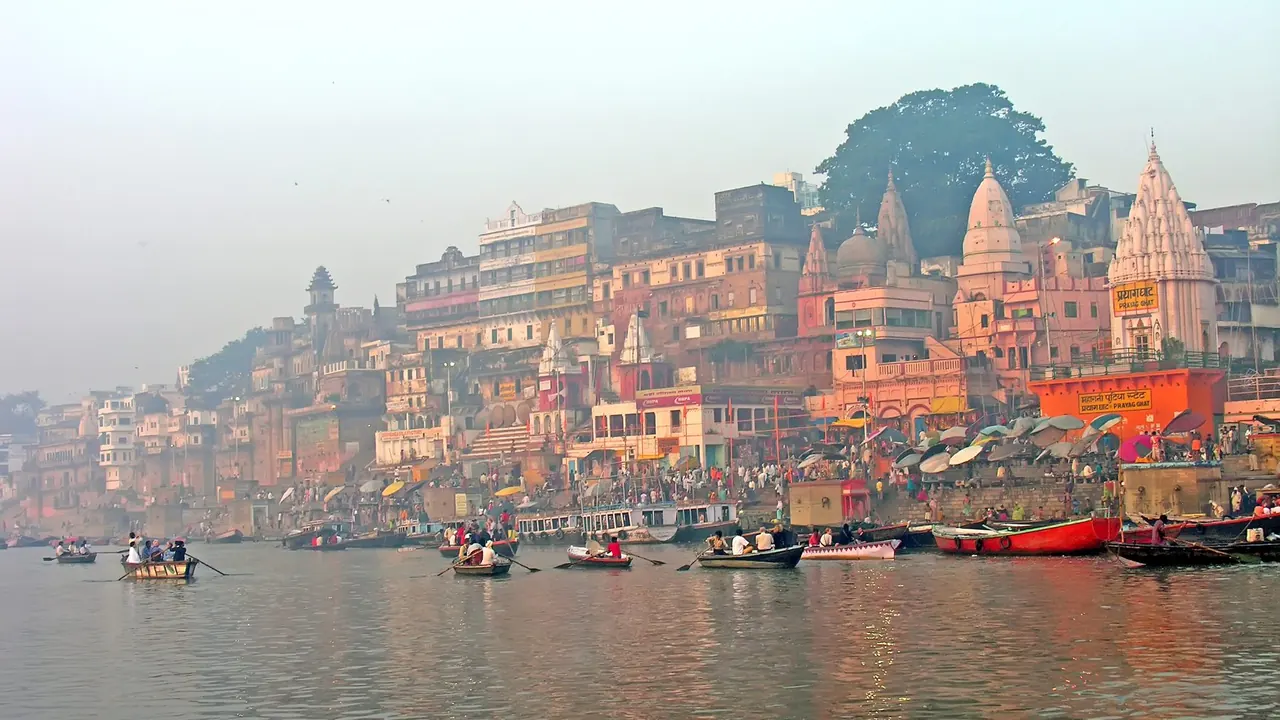
Photos: Darjeeling by Krishnendu Biswas, Pexels License; Varanasi by Dennis G. Jarvis, CC BY-SA 2.0, cropped.
Darjeeling or Varanasi?
Our verdict in twelve categories, each scored against the same fixed benchmark cities, and the climate month by month, so you can choose for your trip.
Choose Darjeeling for
- nature and the outdoors
- families
- wellness
Darjeeling is for travellers who want mountains, fresh air and a slower pace. Its draw is the view of Kangchenjunga from the ridge, walks through tea estates and forest, and the Singalila trek for those with more time. It is also the easier of the two with children, thanks to the toy train and the zoo, and a cool retreat when the plains are hot. Expect a quiet town that goes to bed early, with tea rather than a great food scene as its pleasure.
Choose Varanasi for
- live music and the arts
- culture and sights
- shopping
Varanasi suits those who travel for culture, ritual and music. The ghats along the Ganges, the lanes of the old city, the evening aarti and the classical music tradition make it one of the most intense places in India to watch daily life and devotion. It is noisy, crowded and hard on small children, with almost nothing green nearby, but for adults who want to be moved rather than rested it gives far more to see and hear, and it is a little cheaper still.
Scoreboard
Twelve categories on one fixed scale from 0 to 100. The shaded stretch is the gap between the two.
Your match
Pick a travel style or drag the sliders, and both match scores follow your weighting.
Too close to call, 1 point apart
Wins on nature and the outdoors and families with your weighting.
Wins on live music and the arts and culture and sights with your weighting.
What matters to you?
Category by category
What the scores mean for a trip.
Beaches & swimming
Neither city offers any swimming. Darjeeling's valley rivers are cold and fast, and the Ganges at Varanasi is a place of ritual bathing that is too polluted and swift for visitors.
The only practical difference is that in Varanasi a few larger hotels away from the old city have pools, which can be welcome in the heat. In cool Darjeeling you will hardly miss one.
Food & drink
Varanasi gives the hungry visitor more to seek out. Dawn kachori and jalebi, tamatar chaat, lassi in clay cups, winter malaiyo and paan rolled to order around Godowlia make for a memorable, almost entirely vegetarian street-food circuit, even if alcohol is scarce and the range is narrow.
Darjeeling's pleasures are different: tasting first and second flush teas around the Mall or on an estate, then momos, thukpa and sel roti in small kitchens near Chowk Bazaar. The colonial tea rooms add long breakfasts, but beyond that there is less to explore than in Varanasi.
Culture & sights
Varanasi is in another league here. More than eighty ghats along the Ganges, cremations at Manikarnika, the golden Kashi Vishwanath temple and the maze of the old city add up to a spectacle of living ritual that can fill many days. Sarnath and the Bharat Kala Bhavan add depth, even if museums are not the point.
Darjeeling's heritage is smaller and gentler: the UNESCO-listed toy train, the old Yiga Choeling monastery at Ghoom, St Andrew's Church and the Himalayan Mountaineering Institute's Everest museum. It is charming, but two or three days covers it.
Nightlife
Both are early-to-bed towns, for different reasons. Darjeeling empties once the cold sets in, leaving a few pubs and hotel bars with a fire, while Varanasi is a holy city where alcohol is frowned on near the ghats. Its evenings centre on the aarti and the chai-and-music cafés at Assi Ghat, which feel a little more sociable than Darjeeling's hotel bars.
Nature & outdoors
Darjeeling wins by a long way. Kangchenjunga fills the sky on clear mornings, tea estates and oak and rhododendron forest begin at the edge of town, and the Singalila Ridge leads through red panda country to a panorama of four of the five highest peaks.
Varanasi's outdoors is the river itself: a sunrise boat along the ghats and a walk on the sandbank opposite. Beyond lies flat farmland, and the nearest real scenery, the Chandraprabha sanctuary, is about two hours away.
Day trips
The outings are about equally rewarding but quite different in kind. From Darjeeling they lead to other hill towns such as Kurseong, lakeside Mirik and Kalimpong, pleasant but similar to the base, on slow, winding roads.
Varanasi's outings add history. Sarnath, where the Buddha first preached, is only half an hour away, and Chunar Fort and Jaunpur's fifteenth-century mosques make good half or full days.
Good for families
Darjeeling is far easier with children. The toy train, the zoo's red pandas and snow leopards, the ropeway and pony rides on Chowrasta give them plenty to enjoy, though steep steps, few pavements and a winding drive up suit older children better than toddlers.
Varanasi is very hard going for families. Crowded lanes with cattle and open drains, cremations in plain view, extreme summer heat and nothing designed for children mean most families keep it to a short stay.
Getting around
Both are hard work to get around, and in each the best part is on foot. In Darjeeling that is the car-free ridge of Chowrasta and the Mall, beyond which steep lanes, shared jeeps and a three-hour drive up from the plains test your patience.
In Varanasi it is the long riverside path along the ghats, with boats on the same stretch. Away from the river the old city's lanes are confusing, and the newer town means noisy traffic and bargaining with rickshaws, but at least the ground is flat.
Shopping & style
Varanasi has the more distinguished thing to buy: Banarasi silk brocade, available straight from the weavers' quarters or from the silk houses around Godowlia. Brass ritual ware, wooden toys and musical instruments add to it, though touts and repetitive devotional stock take some navigating.
Darjeeling's best buy is tea, tasted and compared by estate and flush in shops along the Mall and Nehru Road. The Tibetan Refugee Self Help Centre's carpets and thangkas are worth a visit, but the market stalls repeat one another.
Affordability
Both are very cheap, and Varanasi is slightly cheaper. Its greatest sights, the ghats and the aarti, cost nothing, and guesthouses, chai and boat rides cost very little. The main temptation is silk.
In Darjeeling the daily basics are just as cheap, but private taxis for Tiger Hill, heritage hotels and rooms with a mountain view in peak season push budgets up more often.
Live music & performing arts
Varanasi is one of the homes of Hindustani classical music, with its own vocal, tabla and dance traditions. Visitors can catch small recitals in music schools, all-night concerts at the Sankat Mochan festival, the Dhrupad Mela on Tulsi Ghat, the month-long Ramlila at Ramnagar and the nightly aarti on the steps.
Darjeeling has little to plan around beyond masked cham dances at monastery festivals and the odd evening of Nepali and Lepcha music.
Wellness & relaxation
Darjeeling is the more restful of the two. A few days in a tea-estate bungalow with mountain mornings, cool air and long walks restores you, provided you stay away from the jeeps and crowds on the Mall.
Varanasi offers yoga, meditation and Ayurvedic massage around Assi Ghat, and dawn on the river can be deeply calming. But the city is loud and emotionally intense, so rest has to be planned into the day rather than found in the place.
When should you go?
Pick your month. The climate figures are measured averages, not a forecast.
Darjeeling in July
Varanasi in July
Daytime high, °C
Rainfall in the month, mm
Where the figures come from
Darjeeling has no weather station within reach, so its figures come from a gridded climate model rather than a measured record, and read a broad area rather than the city itself.
Varanasi has no weather station within reach, so its figures come from a gridded climate model rather than a measured record, and read a broad area rather than the city itself.
Temperature and rainfall are climate normals, averaged over the years shown. Darjeeling: 1991-2020 normals, TerraClimate 4 km grid at the town, no weather station within 90 km. Varanasi: 2001-2020 normals, NASA POWER reanalysis grid, no weather station within 90 km.
The two cities have almost opposite seasons. Darjeeling is at its best from October to early December and again from March to May, when skies are clearest for the mountain views and days are mild for walking. Winter is clear but chilly, with highs around 15°C in January and colder mornings. From June to September the monsoon is very heavy, peaking at around 778mm in July, and cloud can hide the peaks for weeks.
Varanasi is best from November to February, with dry days and highs near 24°C that make walking the ghats and lanes comfortable, though mornings can be hazy. By April and May it is fiercely hot, up to 43°C, too hot for sightseeing outside early morning. The monsoon follows from July to September, wetter than the rest of the year but far lighter than in Darjeeling, at around 249mm at its height. That makes spring a good time to head for the hills and winter the time for the river.
Which traveller are you?
For an outdoors trip, Darjeeling is the clear choice. Sunrise over Kangchenjunga from Tiger Hill, walks through tea terraces and rhododendron forest, and the Singalila Ridge trek to Sandakphu have no match on the flat, hazy plain around Varanasi.
On a culture and arts trip, Varanasi wins easily. The ghats, cremation grounds, temples and old city lanes, together with nightly aarti and a living tradition of Hindustani classical music, give far more depth than Darjeeling's railway, monasteries and colonial church.
On a family trip with children, Darjeeling is much the gentler option. The toy train, red pandas at the zoo, pony rides and cool air keep children happy, while Varanasi's crowded lanes, open cremations and summer heat make it hard going with young ones.
Before you go
| Measure | Darjeeling | Varanasi |
|---|---|---|
| Official language | Hindi, English | Hindi, English |
| Currency | Indian Rupee (INR) | Indian Rupee (INR) |
| Sockets | CM230 V, 50 Hz | CM230 V, 50 Hz |
| Driving side | Left | Left |
| Time zone | UTC+5:30 | UTC+5:30 |
| Emergency number | 108 or 112 | 108 or 112 |
| Elevation | 2,115 m | 76 m |
| Main airport | Bagdogra Airport (IXB)40 km from centre13 non-stop destinations | Lal Bahadur Shastri International Airport (VNS)21 km from centre16 non-stop destinations |
By the numbers
| Measure | Darjeeling | Varanasi |
|---|---|---|
| City population | 118,805 | 1,198,491 |
| People per km² | 11,208 | 14,598 |
| Museums within 10 km | 7 | 2 |
| UNESCO World Heritage sites within 50 km | 1 | 1 |
Where else could you go?
Every comparison below shares a destination with this one, so you can follow Darjeeling or Varanasi somewhere new.
- Kathmanduvs Darjeeling
- Pokharavs Varanasi
- Kathmanduvs Varanasi
- Pokharavs Darjeeling
- Agravs Varanasi
- Delhivs Varanasi