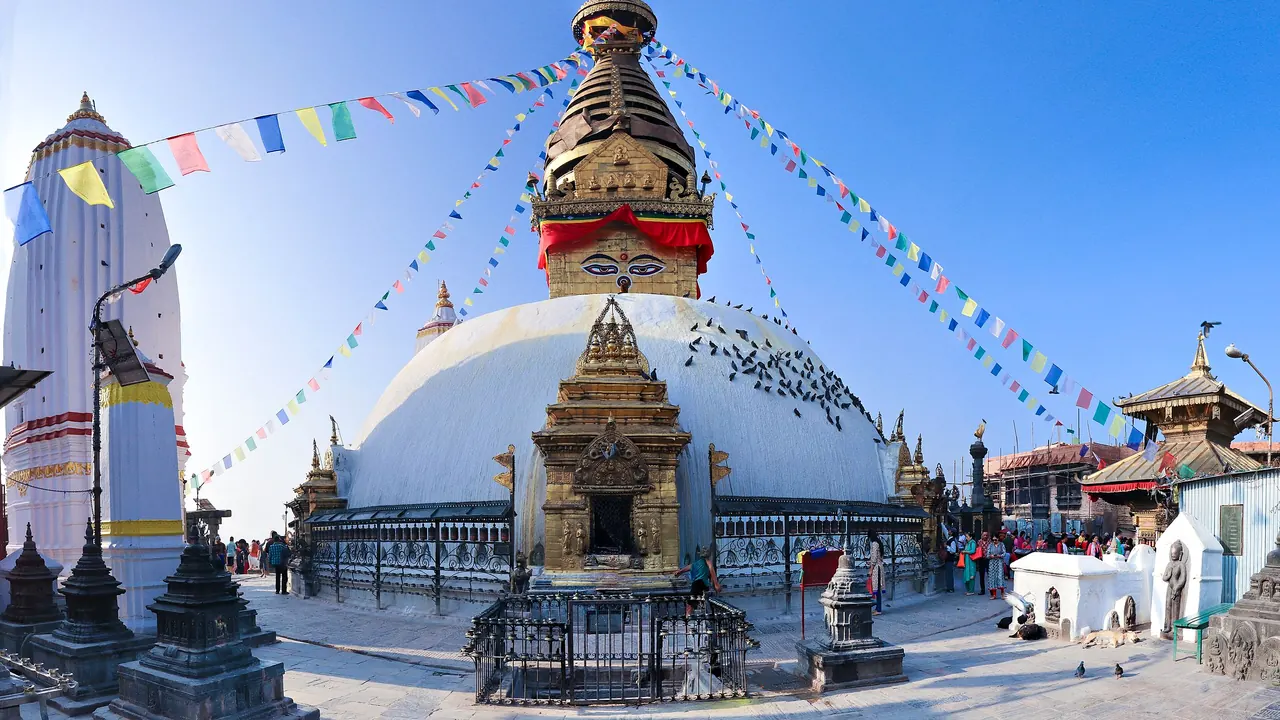
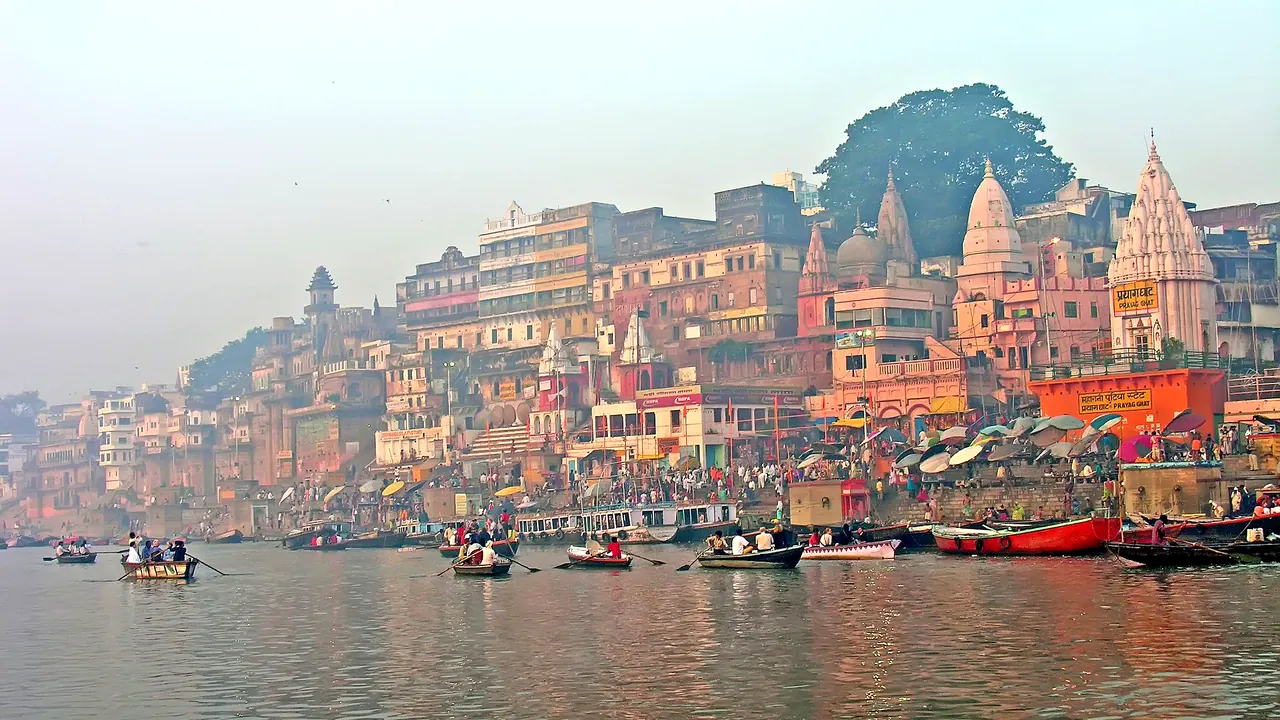
Photos: Kathmandu by Nabin K. Sapkota, CC BY-SA 4.0, cropped; Varanasi by Dennis G. Jarvis, CC BY-SA 2.0, cropped.
Kathmandu or Varanasi?
Our verdict in twelve categories, each scored against the same fixed benchmark cities, and the climate month by month, so you can choose for your trip.
Choose Kathmandu for
- nature and the outdoors
- nightlife
- families
Kathmandu suits travellers who want temples and mountains in the same trip. Its Durbar Squares and stupas match anything on the river at Varanasi, but here the Himalaya stand just beyond the valley rim, Bhaktapur makes a superb day out and Thamel gives you somewhere for a beer after a trek. It is also the better place to slow down, with monastery meditation courses and quiet garden courtyards to retreat to.
Choose Varanasi for
- live music and the arts
- getting around
Choose Varanasi if ritual and music matter more to you than scenery. Life on the ghats, the cremation fires at Manikarnika and the evening aarti make for a short, intense stay, and the city's Hindustani classical tradition gives its evenings a depth Kathmandu cannot match. In return you get early mornings, no night out to speak of, a flat landscape and a city that is even harder going with children.
Scoreboard
Twelve categories on one fixed scale from 0 to 100. The shaded stretch is the gap between the two.
Your match
Pick a travel style or drag the sliders, and both match scores follow your weighting.
Wins on nature and the outdoors and nightlife with your weighting.
Wins on live music and the arts and getting around with your weighting.
What matters to you?
Category by category
What the scores mean for a trip.
Beaches & swimming
Neither city has anywhere to swim except a hotel pool. In Kathmandu the cold mountain rivers are for rafting a few hours out of town. In Varanasi the Ganges is for pilgrims' ritual dips and is too polluted and fast for a visitor to swim in. Pools are scarcer there too, found mainly in the larger hotels away from the old city.
Food & drink
The two cities eat equally well but very differently. Kathmandu has more range: Newari cooking such as buffalo choila, bara and yomari in Patan and Kirtipur, momos on every corner, Tibetan thukpa around Boudhanath, and rice beer to go with it.
Varanasi is vegetarian and lives on street snacks and sweets: kachori and jalebi at breakfast, lassi in clay cups, malaiyo at winter dawns and paan rolled to order. Meat eaters and anyone who wants a drink with dinner will be happier in Kathmandu. If you like grazing from stall to stall, Varanasi's lanes are the more rewarding.
Culture & sights
These are two of the most absorbing religious cities in Asia, and what differs is how their heritage is laid out. Kathmandu's is spread across separate monuments: the Durbar Squares of Kathmandu and Patan, hilltop Swayambhunath and the great stupa of Boudhanath. The Patan Museum is there to explain Newari bronze and woodwork.
Varanasi gathers everything along one riverfront. More than eighty ghats, the cremation grounds at Manikarnika and the lanes leading up to Kashi Vishwanath make daily ritual the main sight. Both cities hold open cremations, at Pashupatinath and on the ghats, but in Varanasi the fires burn day and night at the heart of the city.
Nightlife
Kathmandu has a real night out, if a narrow one. Thamel's rooftop bars, pool halls and handful of dance clubs fill with trekkers, and most places wind down around midnight.
Varanasi has almost nothing. Alcohol is scarce and frowned upon in the holy city, and evenings end with the aarti, a rooftop dinner and an early night before the dawn start. The Assi Ghat cafés stay sociable over chai and music, but for a drink you have to go to a hotel bar in the cantonment.
Nature & outdoors
This is where the two cities differ most. Kathmandu's valley is ringed by forested hills with the Himalaya behind them. Within an hour or two you can hike in Shivapuri Nagarjun, ride the cable car up Chandragiri or watch sunrise over the snow peaks from Nagarkot, and Everest flights and white-water rivers lie further out.
Varanasi sits on the flat, farmed Gangetic plain. Being outdoors mostly means a sunrise boat on the river or a walk on the sandbank opposite. The nearest real scenery is the Chandraprabha sanctuary in the Vindhya hills, about two hours away.
Day trips
Kathmandu has the stronger day out in Bhaktapur, a royal town of brick squares and five-tiered temples, which pairs easily with the carvings of Changu Narayan on the ridge above. After that come Newari villages such as Bungamati and Khokana and the cave shrines of Pharping. They are pleasant but much alike, and traffic slows every outing.
Varanasi's one essential trip is Sarnath, half an hour away, where the Buddha gave his first sermon, with the Dhamek Stupa and the Ashokan lion capital. Chunar Fort and the mosques of Jaunpur make good outings too, but then the choice thins quickly: Prayagraj is a long day, and Bodh Gaya is too far to do in one.
Good for families
Neither is an easy city with young children, but Kathmandu is the gentler of the two. The monkeys at Swayambhunath and the prayer wheels at Boudhanath hold children's attention, there is a small zoo in Patan and the Garden of Dreams for a quiet hour, and older children can go on to a trek.
Varanasi has almost nothing made for children. The crowded lanes, open drains, cremations in plain view and summer heat are hard on them. Families who do come usually keep it short: a dawn boat ride, Sarnath and a hotel away from the ghats.
Getting around
Both are cities for walking and neither has a metro, so the difference is where walking works. In Kathmandu that means the old city and Thamel, where you share the lanes with motorbikes. To reach Patan, Boudhanath or the airport you need a taxi or a ride-hailing motorbike through heavy traffic.
Varanasi has a better backbone. The ghats link up for several kilometres along the river from Assi to Raj Ghat, and boats run the same stretch. Behind them, the old city's lanes are too narrow for cars and easy to get lost in, and anything further means a cycle rickshaw, an e-rickshaw or an auto.
Shopping & style
Both are craft cities with no fashion shopping, and each has its own speciality. Kathmandu's range is wider: pashmina and trekking gear in Thamel (much of it copies), Tibetan carpets and thangkas around Boudhanath, and bronze statues cast in Patan's own workshops.
Varanasi has one outstanding product, Banarasi silk brocade, best bought from the weaving workshops or the silk houses around Godowlia. Brass ritual ware and musical instruments make good extras. You bargain in both cities, but in Varanasi watch for touts steering you to particular silk shops.
Affordability
What decides the bill is not daily life, which costs very little in either city, but the extras each one tempts you into. In Kathmandu those are trekking permits and mountain flights, along with the entry fees foreigners pay at the Durbar Squares, Pashupatinath and Bhaktapur. A Thamel guesthouse, plates of momos and taxi rides barely register.
Varanasi's greatest sights, the ghats and the evening aarti, cost nothing at all. Money goes on a restored palace hotel on the river, private boats and guides, or a length of Banarasi silk haggled over near Godowlia.
Live music & performing arts
Kathmandu's stage life is thin: rock and folk bands in Thamel bars, dinner shows of regional dance and an autumn jazz festival. Its best performances follow the religious calendar, above all the masked dances of Indra Jatra.
Varanasi is in another league for music. Banaras has its own gharanas of vocal, tabla and dance, small recitals in music schools, and festivals such as the Sankat Mochan Sangeet Samaroh, where classical masters play through the night in a temple courtyard. The nightly Ganga aarti and the month-long Ramlila at Ramnagar add performance on a grand scale.
Wellness & relaxation
Kathmandu is the more restful base. Kopan and the other monasteries above Boudhanath teach meditation and Buddhist philosophy to foreigners, massage is offered on every Thamel lane, and the valley rim has hill retreats away from the dust.
Varanasi has yoga, meditation teachers and Ayurvedic massage around Assi Ghat, and dawn on a quiet ghat can be deeply calming. But spas are limited to a few hotels, and the city's emotional intensity wears people out. In both cities you have to look for calm, because the streets will not give it to you.
When should you go?
Pick your month. The climate figures are measured averages, not a forecast.
Kathmandu in July
Varanasi in July
Daytime high, °C
Rainfall in the month, mm
Where the figures come from
Varanasi has no weather station within reach, so its figures come from a gridded climate model rather than a measured record, and read a broad area rather than one spot.
Temperature and rainfall are climate normals, averaged over the years shown. Kathmandu: 1991-2020 normals, Kathmandu Airport (4.7 km from centre). Varanasi: 2001-2020 normals, NASA POWER reanalysis grid, no weather station within 90 km.
Kathmandu sits in a high valley, so its temperatures stay moderate all year and the real question is rain. The monsoon runs from June to September and peaks at about 384mm in July, with cloud hiding the mountains. October and November are the best months: dry and sunny, with highs around 27°C falling into the low twenties, and the clearest Himalayan views. Winter days stay mild enough for walking, though haze often softens the skyline. Spring is warm and fairly dry until the rains start building in May.
Varanasi has a much harsher year. From April to June it is fiercely hot, reaching around 43°C in May, far too hot for the lanes except at dawn, and the monsoon follows from late June to September. The comfortable months are November to February, dry with highs of 24°C to 28°C. That makes late autumn the time when both cities are at their best together, while spring belongs firmly to Kathmandu.
Which traveller are you?
On an outdoors trip, Kathmandu is the clear choice. You have forest trails in Shivapuri Nagarjun, sunrise over the snow peaks from Nagarkot, mountain flights and rafting rivers all within reach. In Varanasi the outdoors mostly means a boat on the river and the flat plain around it.
For a relaxing and wellness trip, Kathmandu does better again. The monasteries above Boudhanath teach meditation, skilled massage is easy to find and hill retreats on the valley rim offer real quiet. Varanasi has yoga at Assi Ghat, but most visitors find it exhausting.
On a culture and arts trip, Varanasi has the edge. The sights are evenly matched, Durbar Squares against ghats, but Banaras adds one of India's great classical music traditions, with night-long temple concerts and the nightly aarti. Kathmandu's stage life is thin by comparison.
Before you go
| Measure | Kathmandu | Varanasi |
|---|---|---|
| Official language | Nepali | Hindi, English |
| Currency | Nepalese Rupee (NPR) | Indian Rupee (INR) |
| Sockets | CM230 V, 50 Hz | CM230 V, 50 Hz |
| Driving side | Left | Left |
| Time zone | UTC+5:45 | UTC+5:30 |
| Emergency number | Police 100, ambulance 102, fire 101 | 108 or 112 |
| Elevation | 1,300 m | 76 m |
| Main airport | Tribhuvan International Airport (KTM)4 km from centre38 non-stop destinations | Lal Bahadur Shastri International Airport (VNS)21 km from centre16 non-stop destinations |
By the numbers
| Measure | Kathmandu | Varanasi |
|---|---|---|
| Population | 845,767 | 1,198,491 |
| People per km² | 17,121 | 14,598 |
| Museums within 10 km | 9 | 2 |
| UNESCO World Heritage sites within 50 km | 1 | 1 |
Where else could you go?
Every comparison below shares a destination with this one, so you can follow Kathmandu or Varanasi somewhere new.
- Pokharavs Kathmandu
- Darjeelingvs Kathmandu
- Pokharavs Varanasi
- Thimphuvs Kathmandu
- Agravs Varanasi
- Darjeelingvs Varanasi