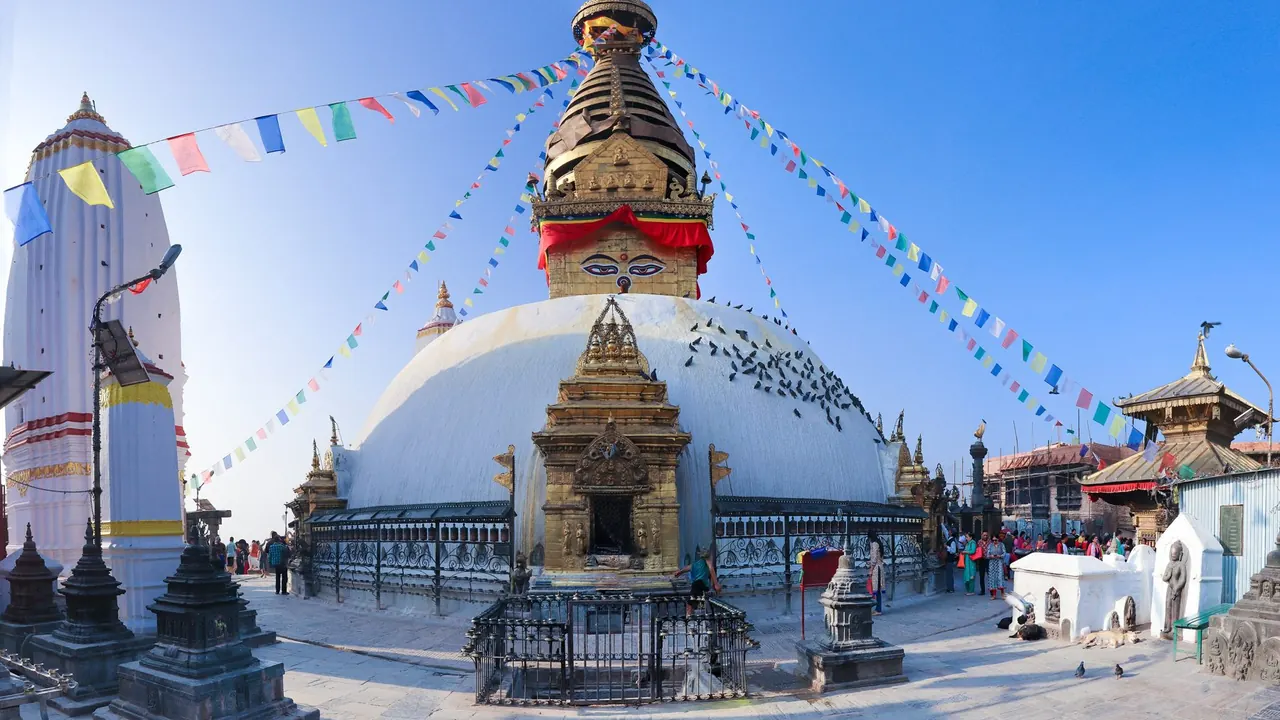
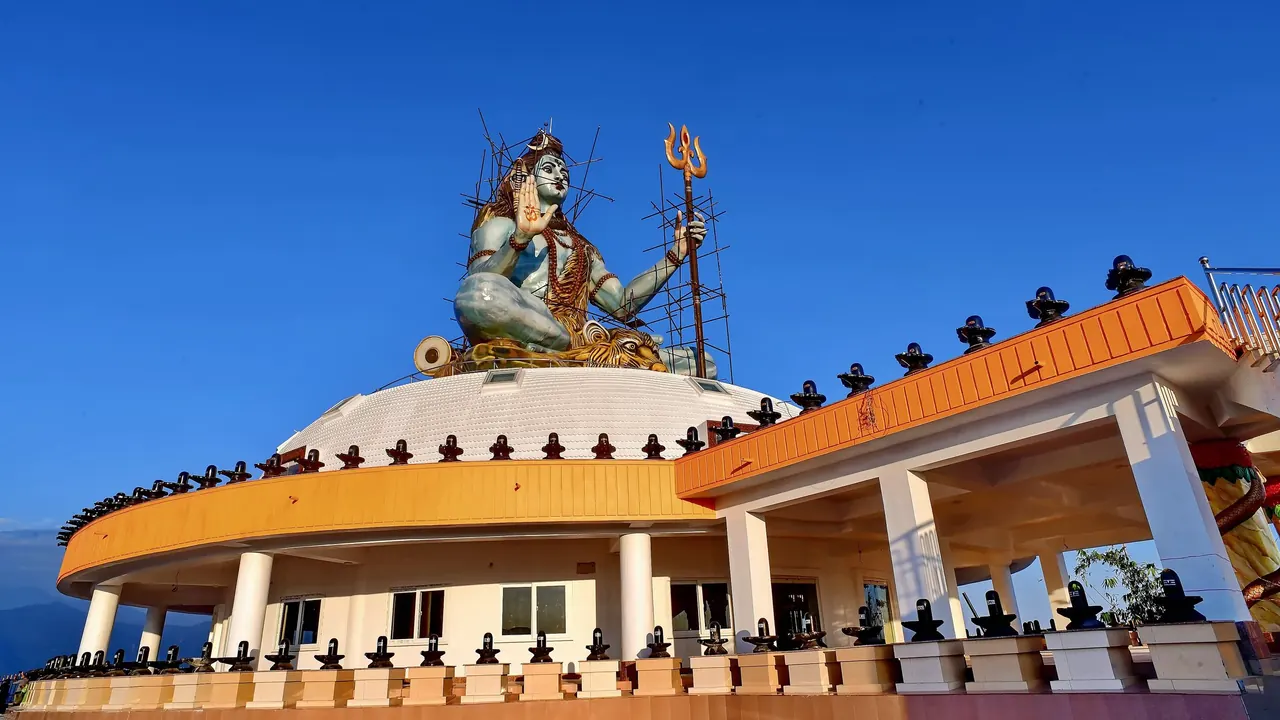
Photos: Kathmandu by Nabin K. Sapkota, CC BY-SA 4.0, cropped; Pokhara by Rajesh Dhungana, CC BY-SA 4.0, cropped.
Kathmandu or Pokhara?
Our verdict in twelve categories, each scored against the same fixed benchmark cities, and the climate month by month, so you can choose for your trip.
Choose Kathmandu for
- culture and sights
- day trips
- shopping
Kathmandu is for travellers who come for temples, stupas and royal squares more than for views. Durbar Square, Boudhanath and Pashupatinath fill days on their own, Patan and Bhaktapur add two more old towns close by, and the Newari cooking and craft workshops give the city a depth no lakeside resort can match. The price is noise, dust and slow, heavy traffic.
Choose Pokhara for
- nature and the outdoors
- families
- getting around
Pick Pokhara if the mountains are the point of the trip. The Annapurnas stand over Phewa Lake, paragliders lift off from Sarangkot, and the trailheads for Poon Hill and Annapurna Base Camp are a short drive away. Lakeside is calmer and easier to get around than the capital, which suits rest after a trek and families with teenagers who like the outdoors. Its sights, though, take only a couple of days.
Scoreboard
Twelve categories on one fixed scale from 0 to 100. The shaded stretch is the gap between the two.
Your match
Pick a travel style or drag the sliders, and both match scores follow your weighting.
Wins on culture and sights and day trips with your weighting.
Wins on nature and the outdoors and families with your weighting.
What matters to you?
Category by category
What the scores mean for a trip.
Beaches & swimming
Neither city is a place to swim, and the difference is only in what replaces it. Kathmandu has no open water fit for bathing at all, just cold rafting rivers hours away. Pokhara at least has Phewa Lake for rowing in painted boats, plus an occasional dip at Begnas Lake.
Food & drink
Kathmandu is the better place to eat. Newari cooking, with choila, bara pancakes, yomari and rice beer, is found in small places around the old bazaars, in Patan and in Kirtipur. The Tibetan streets by Boudhanath add thukpa and butter tea, and momos are everywhere.
Pokhara eats mostly along Lakeside, where long menus are aimed at hungry trekkers. The rewarding meals are Thakali dal bhat and charcoal-grilled sekuwa away from the shore, and its real strength is a slow breakfast with the mountains in view.
Culture & sights
This is Kathmandu's great advantage. Temples, palace courtyards and the Kumari's house sit among working markets, pilgrims circle Boudhanath at dusk, and cremations take place in the open at Pashupatinath. Patan's Durbar Square and museum add a second layer just across the river.
Pokhara offers a pleasant half day or two: the island temple of Tal Barahi, the Peace Pagoda on the ridge, and the mountaineering and Gurkha museums. Most of the town is modern, and nobody goes there for its sights.
Nightlife
Both towns go out in the same way: trekkers celebrating at rooftop bars, with most places closing around midnight. Thamel has a little more to offer, with pool halls, a handful of dance clubs and lounge bars in Jhamsikhel. Pokhara's evenings are smaller and gentler, with cover bands and long happy hours by the lake.
Nature & outdoors
Pokhara has the finer setting. Machhapuchhre and the Annapurnas, peaks above 7,000m, fill the sky over Phewa Lake. Sunrise at Sarangkot, paragliding, lake kayaking and short treks like Australian Camp are all close by, and the classic Annapurna routes begin a short drive away.
Kathmandu's nature lies on the valley rim: forest trails in Shivapuri Nagarjun, the Chandragiri cable car, and sunrise at Nagarkot or Dhulikhel about an hour and a half out. Mountain flights to Everest make up some of the distance.
Day trips
Kathmandu has the better day out by far. Bhaktapur, the best preserved of the valley's old royal towns, is about an hour away and pairs easily with the carvings of Changu Narayan. Pharping, Bungamati and Panauti add quieter Newari villages for anyone with extra days.
From Pokhara, the slow mountain roads keep the choice short. Bandipur's car-free hilltop street is worth the two-hour drive, but Gurung villages, Gorkha and Tansen work better as stops on a trek or overnight on the road.
Good for families
Pokhara is easier with children, though neither city is made for them. Lakeside has light traffic, rowing boats and short walks to the caves, the waterfall and the Peace Pagoda, and older children can try tandem paragliding.
In Kathmandu, the monkeys at Swayambhunath and the prayer wheels catch young eyes, but the lanes without pavements, the traffic, the dust and the winter air make long days tiring.
Getting around
Pokhara is simpler day to day. Lakeside is small and flat, and the shore road is easy on foot or by rented bicycle. Kathmandu's old city and Thamel are walkable too, but you share the lanes with motorbikes, and any trip to Patan, Boudhanath or the airport means a taxi stuck in heavy traffic. Beyond the centre, both rely on taxis and hired drivers rather than their confusing minibuses.
Shopping & style
Kathmandu is the stronger craft market. Patan casts its own bronze and copper statues, the shops around Boudhanath sell Tibetan carpets and thangkas, and Asan's old bazaar is worth the walk even without buying.
Pokhara's shopping is mainly practical: trekking gear to buy or rent along Lakeside, plus shawls and singing bowls. Its distinctive stop is the Tibetan settlements on the edge of town, where you can visit the carpet workshops.
Affordability
Both are among the cheapest places anywhere, so the real difference is where the money goes. In Kathmandu it goes on the entry fees at the Durbar Squares, Pashupatinath and Bhaktapur, and on mountain flights. In Pokhara it goes on paragliding, guided treks and Annapurna permits, while a cheap lakeside room often comes with a mountain view.
Live music & performing arts
Kathmandu has a little more, mostly through its religious calendar. There are masked dances at Indra Jatra, evening devotional singing at temples and an autumn jazz festival. Pokhara has almost no stage life, just cover bands in Lakeside bars and dinner shows of Gurung and Magar dances put on for visitors.
Wellness & relaxation
Pokhara is the more restful stay. Its slow lakeside pace, yoga retreats on the far shore and massages for sore trekkers' legs make rest easy. Kathmandu is the place for deeper study, with meditation and Buddhist philosophy courses at Kopan and the hill monasteries. Outside those retreats, though, the city is loud and dusty.
When should you go?
Pick your month. The climate figures are measured averages, not a forecast.
Kathmandu in July
Pokhara in July
Daytime high, °C
Rainfall in the month, mm
Where the figures come from
Pokhara has no weather station within reach, so its figures come from a gridded climate model rather than a measured record, and read a broad area rather than the city itself.
Temperature and rainfall are climate normals, averaged over the years shown. Kathmandu: 1991-2020 normals, Kathmandu Airport (4.7 km from centre). Pokhara: 1991-2020 normals, TerraClimate 4 km grid at the town, no weather station within 90 km.
Both cities are at their best in October and November, when the monsoon has cleared, the air is dry and the Himalayan views are at their sharpest. Winter stays dry and mild enough for walking, around 19°C by day in January in both, though mornings are cold. Spring warms quickly, and by May both are close to 30°C and often hazy.
The monsoon is where they part. Kathmandu takes heavy rain from June to September, about 384mm in July, but still gets a fair share of sunshine between the downpours. Pokhara sits right under the Annapurna wall and is far wetter, with about 674mm in July. Its rain is already above 300mm in May, so its good season closes earlier in spring than Kathmandu's.
Which traveller are you?
On a culture and arts trip, Kathmandu is the clear choice. Its Durbar Squares, the great stupas, Pashupatinath's riverside rites and the Patan Museum give it a living heritage that Pokhara's lake temple and two small museums cannot approach.
For an outdoors trip, Pokhara wins. The Annapurnas rise straight above the lake, Sarangkot is one of the world's great paragliding launches, and the major trailheads start an hour or two away, while Kathmandu's best mountain views mostly mean a drive out of the valley.
On a relaxing and wellness trip, Pokhara suits better. Lakeside is unhurried, with retreats on the quiet far shore and slow mornings on the water. Kathmandu's monastery courses are more serious, but the city around them is loud and dusty.
Before you go
| Measure | Kathmandu | Pokhara |
|---|---|---|
| Official language | Nepali | Nepali |
| Currency | Nepalese Rupee (NPR) | Nepalese Rupee (NPR) |
| Sockets | CM230 V, 50 Hz | CM230 V, 50 Hz |
| Driving side | Left | Left |
| Time zone | UTC+5:45 | UTC+5:45 |
| Emergency number | Police 100, ambulance 102, fire 101 | Police 100, ambulance 102, fire 101 |
| Elevation | 1,300 m | 900 m |
| Main airport | Tribhuvan International Airport (KTM)4 km from centre38 non-stop destinations | Pokhara International Airport (PHH)4 km from centre9 non-stop destinations |
By the numbers
| Measure | Kathmandu | Pokhara |
|---|---|---|
| City population | 845,767 | 353,841 |
| People per km² | 17,121 | 762 |
| Museums within 10 km | 9 | 2 |
| UNESCO World Heritage sites within 50 km | 1 | 0 |
Where else could you go?
Every comparison below shares a destination with this one, so you can follow Kathmandu or Pokhara somewhere new.
- Varanasivs Pokhara
- Varanasivs Kathmandu
- Delhivs Kathmandu
- Jaipurvs Kathmandu
- Luang Prabangvs Pokhara
- Bangkokvs Kathmandu